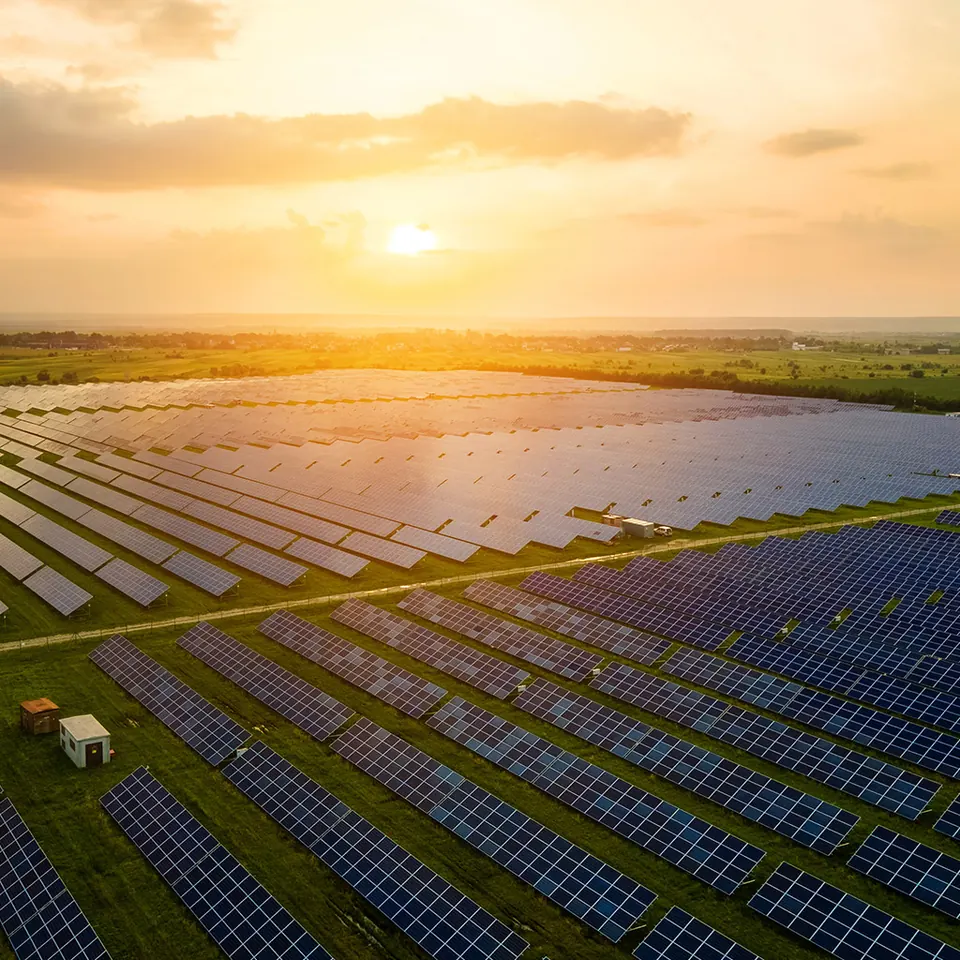
Short answer
An agricultural irrigation solar application in Antalya is made on AEDAŞ's LUS platform; as of October 2026, agricultural irrigation facilities can build an unlicensed solar plant of up to twice their contract power. On the support side, the interest-subsidized loan under Communiqué 2024/15 ends on 31.12.2026; IPARD calls must be followed separately.
Key takeaways
- Agricultural irrigation facilities can build solar plants of up to twice their contract power (5/1/h).
- From 2026, a separate contract power floor applies for agricultural irrigation (Art. 28/5-b).
- The interest-subsidized loan period ends on 31.12.2026; no new decision for 2027 has been verified.
- According to PVGIS, annual specific production is 1,655 kWh/kWp in Korkuteli and 1,719 in Elmalı.
- Net metering for non-residential facilities has been hourly since 01.05.2026.
If you are a farmer in Antalya running a well, pump or drip irrigation system, an agricultural irrigation solar application is one of the most concrete ways to cut your electricity bill. As of October 2026, agricultural irrigation facilities can build an unlicensed solar plant of up to twice their contract power; the application is made on AEDAŞ's (the local electricity distribution company) LUS platform. In this article we explain the application steps, capacity rules and verifiable support channels in plain terms.
Who is an agricultural irrigation solar application suitable for?
The system is suitable for facilities that use electricity for agricultural irrigation, that is, facilities whose subscriber group is agricultural irrigation. This scope includes well pumps, irrigation pond pumps, and drip and sprinkler irrigation stations. For DSİ (State Hydraulic Works) and irrigation unions, the regulation also has special clauses. If you have a system, first confirm from your bill which group your subscription is in.
In Antalya, a significant share of these applications comes from inland areas such as Korkuteli and Elmalı, and also from greenhouses and citrus orchards around Kumluca, Finike and Serik. According to PVGIS data, annual specific production is 1,655 kWh/kWp in Korkuteli and 1,719 kWh/kWp in Elmalı (European Commission JRC, PVGIS 5.3, 14% system losses, optimum tilt, south). In the summer months, when irrigation is at its most intense, production also reaches its highest level of the year: about 168 kWh/kWp in July in Antalya.
The capacity rule: twice the contract power
Under clause 5/1/h of the regulation, municipalities, industrial facilities and agricultural irrigation facilities can install a facility of up to twice their contract power. Other persons are limited to their contract power. The facility can be at the same or a different metering point from the consumption facility. This flexibility is a critical option for farmers who do not have enough space next to the well.
There is also the contract power floor that came with the 2026 amendment. For facilities that received a connection approval letter (çağrı mektubu) after 12.05.2019, the total contract power of the associated consumption facilities cannot be lower than the installed capacity; a separate floor formula applies for agricultural irrigation (Art. 28/5-b, Official Gazette 02.04.2026). If the condition is not met, generation is counted as an unpaid contribution to YEKDEM, meaning no payment is made for it. For this reason, before sizing the system, always check your contract power and how the formula applies to you together with your engineer.
| Subject | Rule (October 2026) | What it means in practice |
|---|---|---|
| Maximum installed capacity | Twice the contract power (5/1/h) | The well transformer and contract power must be clear from the start |
| Annual generation ceiling | Twice the annual total of associated consumption (Art. 26/17) | An oversized system can create unpaid generation |
| Contract power floor | Separate formula for agricultural irrigation (Art. 28/5-b) | If the condition is not met, generation is counted as unpaid |
| Net metering | Hourly for non-residential facilities, since 01.05.2026 | Daytime irrigation load raises self-consumption |
Agricultural irrigation solar application step by step
The application authority is the grid operator, AEDAŞ. AEDAŞ has accepted applications only through the LUS platform since 01.10.2023. The general flow is similar to a rooftop solar plant; for details, take a look at our rooftop solar application guide. The typical sequence for agricultural irrigation is as follows:
- Subscription and contract power check: The subscriber group, contract power and transformer situation are examined.
- Land and right-of-use documents: The title deed, lease or right-of-use document and records showing the land's agricultural nature are prepared.
- LUS application: The online application is made with the connection application form, ID and facility information.
- Connection approval letter and project approval: After the connection approval letter there are 90 days for project approval; if the period passes, the letter becomes void.
- Connection agreement and acceptance: After project approval the connection agreement is signed within 15 days; acceptance must be completed within 1 year.
- System usage agreement: Signed within 3 days after acceptance; the assessment of surplus energy starts from this date.
According to AEDAŞ's 2026 tariff, application fees are 0 TL for 0-50 kW and 3,970.8 TL including VAT for 50-250 kW. The project approval and acceptance fee is 0 TL for 50 kWe and below; between 50-100 kWe, project approval is 2,161 TL and acceptance is 4,113 TL (EPDK Decision 14165-12). These figures are updated annually. There is no official figure for how many weeks the total period takes; for this reason, a commitment to a specific completion date would not be right.
Support for solar irrigation: verified channels
Many promises of "zero-interest solar loans" circulate in the market. The official framework is more limited. The channels we could verify are these:
Interest-subsidized agricultural loans
The Ministry of Agriculture and Forestry's Communiqué No. 2024/15 covers the period 01.01.2024-31.12.2026. Investment loans based on a test report can be given for renewable energy systems that meet the enterprise's energy needs; irrigation unions' requests for solar equipment and installation are also considered. "Use of renewable/waste energy" also appears as an additional interest discount criterion. Applications are made to Ziraat Bank. We could not reliably read this item's discount rate and upper limit from the official table, so we write no figure. The program ends on 31.12.2026 and no new decision for 2027 has been verified. Phrases such as "0% interest, 5-year term" are the marketing language of installation companies; the official condition is a criterion-based interest discount.
TKDK IPARD III
According to the TKDK (Agriculture and Rural Development Support Institution) ranking criteria document, construction and equipment items for renewable energy generation aimed at self-consumption are taken into account in scoring; the check is made through the connection agreement. Secondary sources say Antalya falls within IPARD III, but we could not verify grant rates by measure or call dates. When a call opens, check the TKDK announcements directly.
Construction and permit matters
Cases in which an agricultural irrigation solar plant is to be built in unplanned areas are common. According to a secondary source, the 2022 amendment to the Unplanned Areas Zoning Regulation exempts from permits systems for agricultural irrigation purposes, with a total panel surface not exceeding 125 m², with a metal structure without a reinforced concrete foundation and with a favorable opinion obtained from the provincial directorate of agriculture and forestry. Because this information comes from a secondary source, the exact text must be confirmed from the Official Gazette; in practice you need to act together with the provincial agriculture directorate and the municipality.
The land's agricultural land class, the well document or DSİ permits, and other records specific to agricultural irrigation should also be reviewed before applying. Because these documents vary by region and land type, getting the current requirements from the relevant body is the most reliable way.
Planning around the pump and irrigation schedule
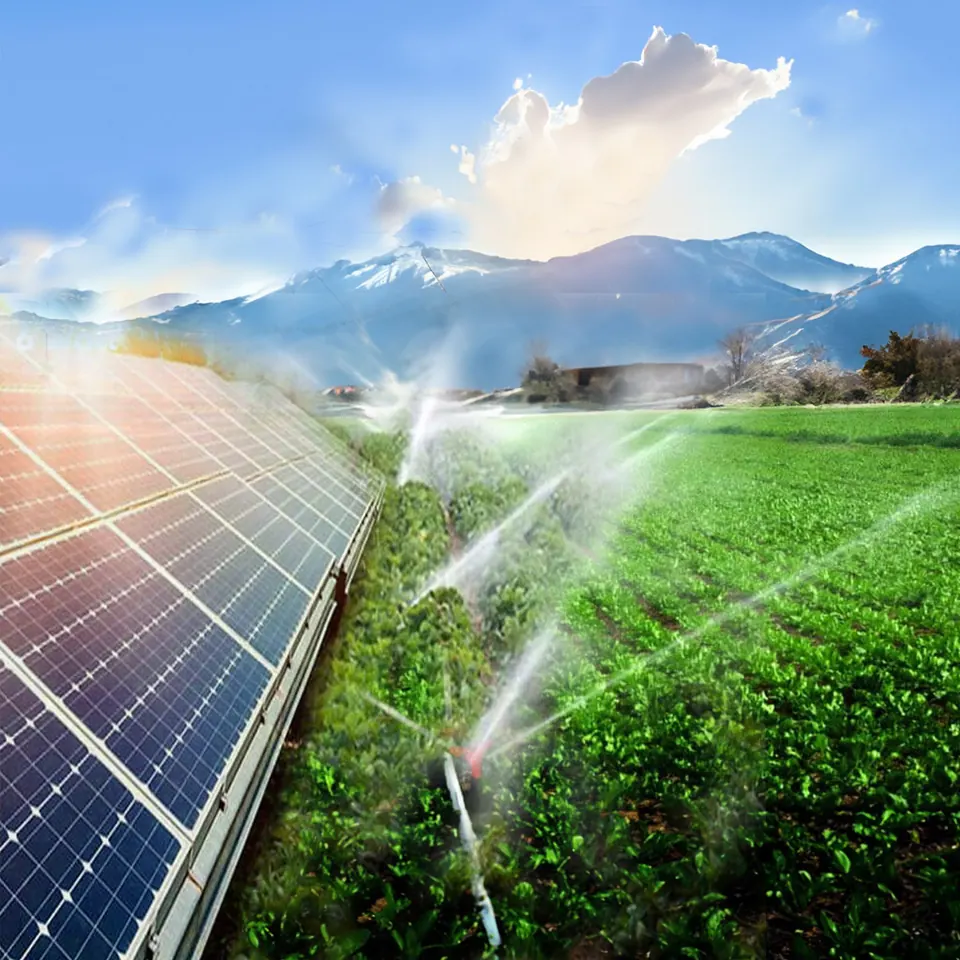
Before applying, working out the pump's power, operating hours and irrigation calendar is necessary to size the system correctly. Well depth and flow determine pump power; in drip irrigation the load is more continuous, while in flood irrigation it can be shorter and higher. Because the pump load that runs in the daytime already overlaps with solar production, self-consumption stays high even without a separate battery.
For orchards with no grid or a weak grid, a grid-independent solution can be considered; but in that case it is not an unlicensed application, it is your own system, and the design is different. To choose capacity correctly, you need to learn from AEDAŞ both the existing contract power at the connection point and the suitability of the transformer in your area. For an agricultural irrigation solar application, this preparation reduces the risk of rejection or revision.
A look at tariffs and payback
EPDK raised retail sales prices from 4 April 2026; the increase for agricultural activities was 24.8%. Increases of this kind make meeting pump electricity from the sun more meaningful. However, surplus energy is paid only the single-rate active energy unit price of the relevant tariff; this amount is lower than the total unit price on the bill. In other words, the higher the self-consumption ratio, the greater the system's economic value. In orchards where irrigation is done in the daytime, this ratio is naturally high.
When the tariff changes, the calculation changes too; so for an investment decision take the value from that day's EPDK table. For the general framework, see our financing article, and for technical detail our article on solar-powered agricultural irrigation systems. Local information for Korkuteli and Elmalı is collected in a separate article.
The solar irrigation process with Solar Nexo
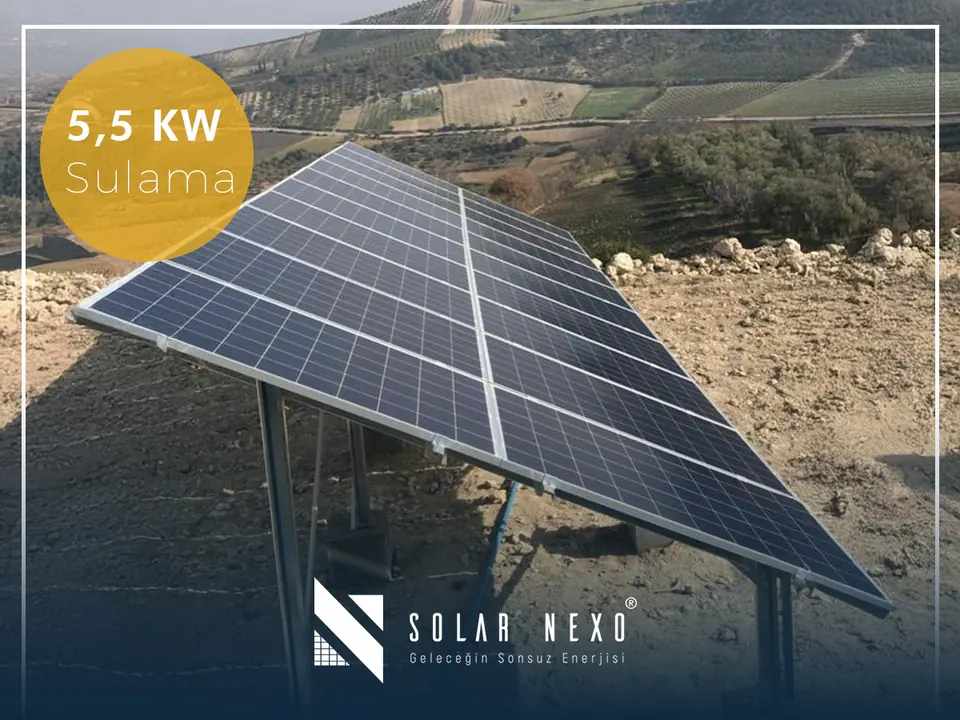
Solar Nexo offers solar-powered irrigation systems among its services; the references on its website include a 5.5 kW solar-powered agricultural irrigation project. The process starts with a free site survey, followed by project design, installation and commissioning, and maintenance. For the scope of the service, you can take a look at our irrigation systems page and, for a site-specific assessment, leave a survey request.
Conclusion
The agricultural irrigation solar application is a process made on the AEDAŞ LUS platform, allowing capacity of up to twice the contract power, with official support channels that are limited but real. The interest-subsidized loan program ends on 31.12.2026; on IPARD and permit matters, the current text must be confirmed with the institutions. Assessing capacity, the contract power floor and supports together is the key to building the investment soundly.
Frequently asked questions
Where is an agricultural irrigation solar application made?
In Antalya, the application is made to the grid operator AEDAŞ through the LUS platform; AEDAŞ has accepted unlicensed generation applications only through this portal since 01.10.2023. Application through e-Devlet (Turkey's e-government portal) has not been verified in official sources. The connection form, ID, land right-of-use document and facility information are needed. Before applying, it is useful to check from your bill your contract power and whether your subscription is in the agricultural irrigation group.
How large can a solar plant for agricultural irrigation be?
Under clause 5/1/h of the regulation, agricultural irrigation facilities can build an unlicensed solar plant of up to twice their contract power. Annual generation cannot exceed twice the associated consumption. The 2026 amendment also introduced a separate contract power floor for agricultural irrigation; do the sizing with your engineer. For this reason, system size should be determined by an engineering calculation according to the well pump power, transformer situation and consumption profile.
Is there an interest-subsidized loan for solar irrigation?
The Ministry of Agriculture and Forestry's Communiqué No. 2024/15 provides interest-subsidized loans for renewable energy investments between 01.01.2024 and 31.12.2026; applications are made to Ziraat Bank. We could not verify the discount rate and limit. The program ends on 31.12.2026; no new decision for 2027 has been verified.
Can I get a zero-interest solar loan from Ziraat?
The official condition is a criterion-based interest discount; the phrase "zero interest, 5-year term" is the marketing language of installation companies and has not been verified in official sources. The real rate and term depend on your application's criteria and the bank's assessment. Learn the current conditions directly from the bank branch. Learning the current interest, term and limit conditions directly from the bank branch is a far more reliable approach than trusting marketing promises.
Is a permit required for an agricultural irrigation solar plant?
According to secondary sources, in unplanned areas, systems for agricultural irrigation purposes, with a panel surface not exceeding 125 m², with a metal structure without a reinforced concrete foundation and with a favorable opinion from the provincial agriculture directorate, are not subject to a permit. Because this information has not been confirmed from the Official Gazette, learn the current practice from the municipality and the agriculture directorate. Because panel surface, foundation type and land nature can affect the permit situation, we recommend consulting the municipality or agriculture directorate in writing.
Can surplus production be sold from an irrigation solar plant?
Yes, but surplus energy is assessed at the single-rate active energy unit price of the relevant tariff, and this amount is lower than the total unit price on the bill. For non-residential facilities, net metering has been hourly since 01.05.2026. For this reason, sizing the system so that the daytime irrigation load is met by self-consumption is economically advantageous.
How much does a solar irrigation plant produce per year in Antalya?
According to PVGIS 5.3 data, annual specific production at the optimum tilt facing south is 1,655 kWh/kWp in Korkuteli and 1,719 kWh/kWp in Elmalı (with 14% system losses). Real production varies with shade, tilt, orientation and temperature. Production is high in the summer months, which coincides with the period when the irrigation load is heavy.
Sources
- AEDAŞ Unlicensed Generation page (LUS, application fees)
- Amendment to the Unlicensed Electricity Generation Regulation, Official Gazette 02.04.2026
- Ministry of Agriculture and Forestry Communiqué 2024/15, Official Gazette 01.05.2024 (interest-subsidized loans)
- PVGIS (European Commission JRC) - photovoltaic production calculator
- TKDK IPARD III ranking criteria statement
Want a clear calculation for your roof?
The Solar Nexo team carries out a free site survey at your address in Antalya and designs the system that suits your roof, consumption and budget.