Short answer
A half-cut panel is made by splitting a standard solar cell in two, which halves the current per cell. Because resistive loss is proportional to the square of the current, it falls to a quarter at cell level. Thanks to two parallel sub-strings, it works in a more controlled way under the chimney and tank shadows on Antalya roofs; the percentage gain varies by model.
Key takeaways
- In a half-cut panel the cell is split in two; 144 half cells are equivalent to 72 full cells.
- When current is halved, the P = I² × R loss falls to a quarter at cell level.
- The shade advantage comes not from cutting the cell but from dividing the panel into two parallel sub-strings.
- TT605-144TN10: 144 half cells, 23.42% efficiency, Isc 14.48 A, −0.30 %/°C temperature coefficient.
- There is no single official figure for the percentage gain at module level; the datasheet and warranty should be read together.
A half-cut panel is a type of panel made by laser-cutting a standard-size solar cell in two and placing the two half cells in the module. Because the cell is halved, the current through each cell is halved too. Since resistive losses are proportional to the square of the current, heating and conduction loss at cell level drop markedly. In this article we explain half-cut panel logic, the 144-cell panel example and the shading situation on Antalya roofs from an engineering point of view.
What is a half-cut panel and how is it made?
A classic solar panel consists of full-size cells connected in series. In half-cut production, the finished cell is cut through the middle with a laser, giving two half pieces. These pieces are positioned in the module as two separate zones, top and bottom; so the panel behaves like two half panels.
That is why the half-cell count looks even. For example, a module equivalent to 72 full cells carries 144 half cells. The phrase "144-cell panel" that you see on the market usually describes this structure; that is, the panel has 144 separate power-producing cells, but each is half the size of a full cell.
- The cell count doubles and the current per cell is halved.
- The panel is divided into two parallel sub-strings, top and bottom.
Why do resistive losses fall when current is halved?
Power loss in a conductor is found with the formula P = I² × R. When current is halved, (1/2)² = 1/4, so at the same resistance the loss falls to a quarter. EnergySage's review of half-cut cells also states that the loss reduction comes from this ratio at cell level.
Let us make this concrete with an example. In the manufacturer's TT605-144TN10 datasheet the panel's short-circuit current is given as 14.48 A and its maximum power point current as 13.77 A. Since the panel consists of two parallel sub-strings, each string carries roughly half of this current, about 7.2 A (calculation). In a full-cell design with the same cell size, about 14.5 A would circulate.
This gain is not by itself a big leap at module level. Even if loss in the inter-cell ribbons falls, the module's total power also depends on cell quality, temperature coefficient, glass transmittance and the interconnection method. What percentage the gain at module level is varies from manufacturer to manufacturer, and some sources cite small single-digit percentages. This should not be read as a guaranteed value.

Shade tolerance: where is the real advantage?
A half-cut panel's advantage against shading does not come from cutting the cells. The real contribution comes from the panel being divided into two parallel sub-strings. In a classic full-cell module, three bypass diodes protect three long series strings. If one cell is shaded, the whole of that string can drop out with it.
In a half-cut design, the top and bottom halves work independently of each other. If shade covers only the lower edge, the upper half keeps producing. As a result, the panel's power loss in partial shade is more controlled. This effect is more pronounced when a low-angle sun casts shade on the panel's bottom row in the morning and evening hours.
Typical shade sources in Antalya are the following:
- Water tanks, solar water heaters and stair-head housings on apartment roofs in Kepez and Muratpaşa.
- Chimneys and skylights on tile roofs.
- Mature trees and neighbouring buildings in villa gardens in Döşemealtı, Belek and Manavgat.
- Poles, wire fences and plants near fields and greenhouses.
The distribution of these shadows can affect the bottom or top row of the panel. The real solution lies in the layout plan. On shaded roofs it is worth evaluating microinverter and power optimizer solutions separately. Also take a look at the article where we cover the effect of shade on production in detail: the effect of shading on solar panels.
A 144-cell panel example: 605 W TOPCon data
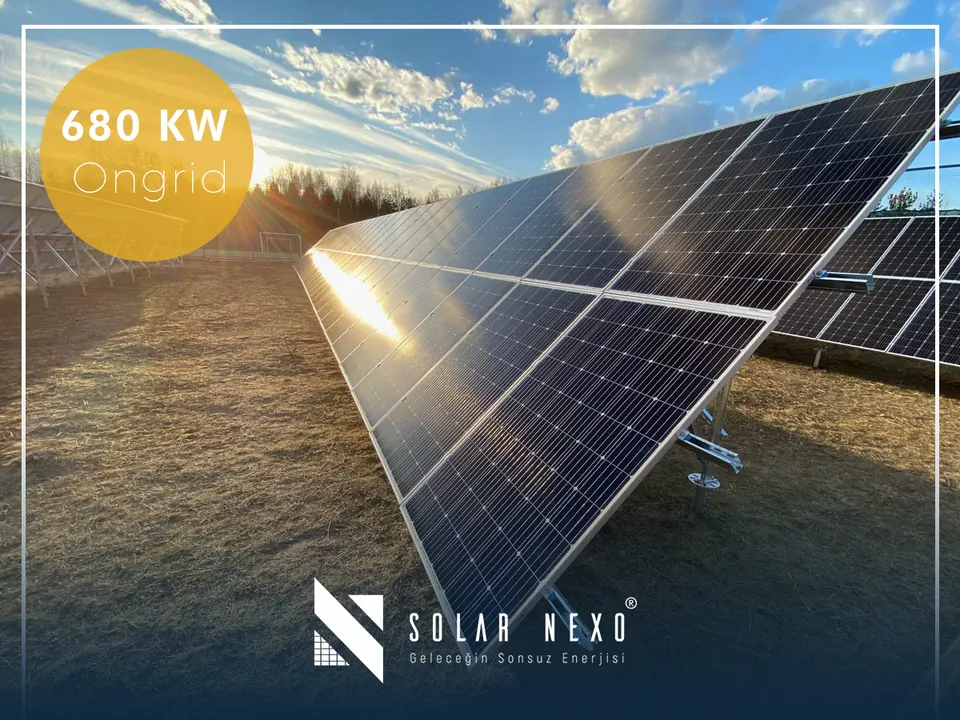
605 W TommaTech TOPCon panels are used in the Manavgat, Belek and Döşemealtı installations that Solar Nexo shared on Instagram (@solarnexotr). The datasheet of the TT605-144TN10 model in this power class shows the half-cell design, and its specifications are as follows:
| Feature | Value |
|---|---|
| Cell count and type | 144 half cells (182.2 × 91.8 mm), n-type TOPCon, 16BB |
| Maximum power (Pmax) | 605 Wp |
| Module efficiency | 23.42% |
| Imp / Isc | 13.77 A / 14.48 A |
| Vmp / Voc | 43.95 V / 52.58 V |
| Size and weight | 2278 × 1134 × 35 mm, 29.0 kg |
| Power temperature coefficient | −0.30 %/°C |
This combination, that is half cells, a TOPCon cell structure and multi-busbar (16BB) interconnection, has become standard in today's top power-class panels. We covered the TOPCon side in detail in our what is a TOPCon panel article. What matters here is that the phrase half-cut panel is not by itself an indicator of quality. Two panels that use the same structure can differ from each other in cell efficiency and warranty terms.
What to look at when choosing a half-cut panel
- Bypass diode and sub-string structure: Look in the datasheet or installation manual at how the panel is divided into two sub-strings. On a shaded roof this architecture makes a difference.
- Power and current compatibility: In high-power panels such as 605 W, current values rise. The inverter's MPPT input current must accommodate the panel's Isc.
- Size and weight: Large panels of around 2.6 m² call for more careful installation on roofs with limited load-bearing capacity and in places with high wind exposure.
- Warranty: Read the product and performance warranties separately. For the TT605-144TN10 the manufacturer states a 15-year product and a 30-year performance warranty.
- Manufacturing date: In an unlicensed generation application, the main equipment must have been manufactured within the last five years (the April 2026 amendment).
Before installation, your roof's orientation, tilt and shading must be assessed together. For a free site survey you can contact us; our team takes on-site measurements on the roof and draws up the layout plan accordingly.
Managing shade in the layout plan
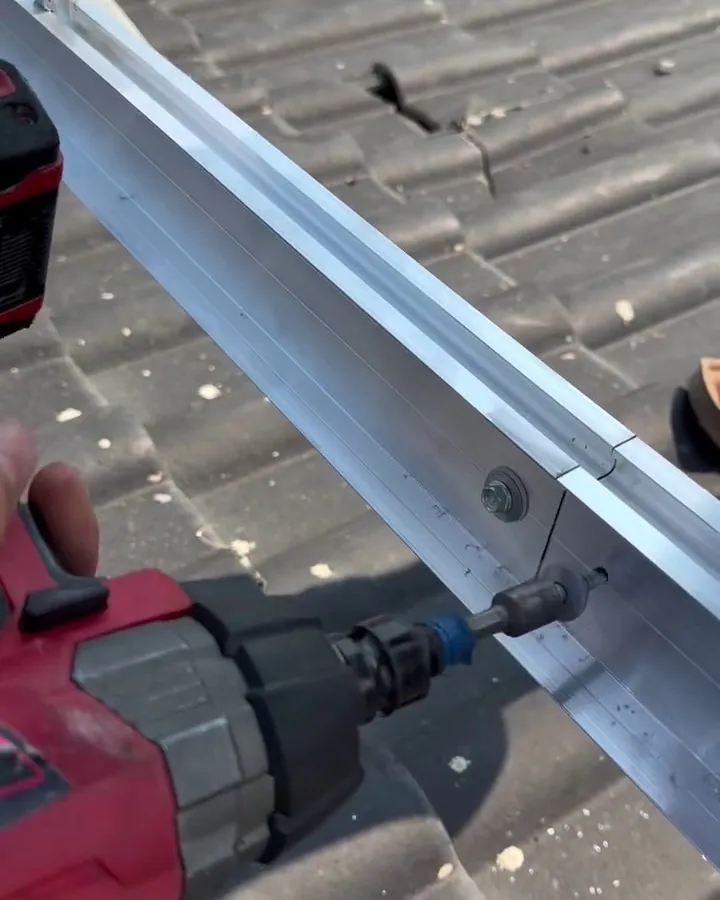
Independent of panel technology, the cheapest way to reduce shade is the layout plan. The following steps are followed during the survey:
- Areas that receive shade through the day are marked hour by hour; because the longest shadows form in December and January, the winter sun is taken as the basis.
- If shade-free roof area is not enough, the panels are placed not in the shaded zone but in a cleaner area and a different array.
- Shaded and unshaded panels are not left in the same series string; they are connected to separate MPPT inputs.
- The positions of chimneys, aerials and ventilation outlets on the roof are planned relative to the edges of the panel rows.
According to PVGIS data for Antalya city centre, specific yield in December and January is only 99 kWh/kWp. In July this value rises to 168 kWh/kWp. Because the low winter sun angle lengthens shadows, the same obstacle that causes no problem in summer can noticeably reduce the array's production in winter months.
The limits of half-cut panels
Half-cell technology does not solve every problem. Most of a system's losses arise outside the panel: inverter conversion, cable losses, soiling, temperature and orientation errors. In Antalya, panel temperature can rise above 60 °C at summer midday, and temperature loss is independent of the half-cell structure. You can find the calculation of this effect in our solar panel efficiency article.
In addition, half-cell panels still lose power in full shade (for example, the shadow of a chimney covering the whole bottom row). Where problems partially shade a single panel, bypass diodes come into action; but the current of all the panels in a string is limited by the current of the weakest panel. For this reason shade needs to be factored into system design from the start.
In short, a half-cut panel is a sound choice; but the whole system matters more than the technology name on the panel's label. Remember that, according to PVGIS, the panel carries a production potential of about 1,656 kWh/kWp a year in Antalya city centre at optimum tilt (33°), and that realising it depends on a shade-free and clean roof.
Conclusion
A half-cell panel cuts resistive loss at cell level to a quarter by halving the current, and works in a more controlled way in partial shade thanks to its two parallel sub-strings. Most TOPCon panels in the 605 W class today use this structure. Even so, the size of the gain varies by model; rather than promising an official percentage, reading the datasheet, the warranty and your roof's shade map together is the safest route.
Frequently asked questions
What is the difference between a half-cut panel and a standard panel?
In a half-cut panel the cells are split in two with a laser and placed as two half cells. Because current per cell is halved, resistive losses fall to a quarter at cell level. The panel is also divided into two parallel sub-strings, top and bottom, so it works in a more controlled way in partial shade. In outward appearance the two panels look very similar; you can only tell the difference from the cell layout and wiring diagram in the product catalogue.
Does a 144-cell panel really contain 144 full cells?
No. A 144-cell panel usually carries 144 half cells, which is equivalent to 72 full cells. For example, the TT605-144TN10 model has 144 half cells of 182.2 × 91.8 mm. A high cell count does not mean the panel is more powerful; power depends on cell efficiency, cell size and panel area. In a quotation, compare the watt value and module efficiency along with the cell count.
Does a half-cut panel work more efficiently in shade?
Partly, yes. The advantage comes not from cutting the cells but from the two parallel sub-string structure. If shade covers only the lower half of the panel, the upper half can keep producing. By contrast, a chimney or tree that shades the panel from end to end still causes serious power loss. On shaded roofs a microinverter or optimizer should also be considered.
By what percentage does a half-cut panel increase module power?
There is no single official percentage. Conduction loss at cell level falls to a quarter, but the module's total power also depends on cell efficiency, temperature coefficient and the interconnection method. Some sources mention small single-digit gains; do not take this as a guaranteed value and look at the manufacturer's datasheet.
Is a half-cut panel suitable for roofs in Antalya?
Yes. Chimneys on tile roofs, water tanks on apartment roofs and tree shade in villa gardens are common; the two-sub-string structure works in a more controlled way in these situations. Even so, the layout plan, panel orientation and tilt are more decisive. In Antalya city centre the optimum tilt according to PVGIS is 33°. For shading analysis, the hourly movement of the shadows of all obstacles on the roof is examined at the survey.
Are half-cut panels more fragile or shorter-lived?
There is no official data supporting this. Half-cut panels are widely used in the 605 W class today, and life depends largely on glass, frame, lamination and cell quality. When choosing, look at the manufacturer's warranty, lamination quality and the installation manual; for example, a 15-year product and 30-year performance warranty is stated for the TT605-144TN10.
Does inverter selection change when installing half-cut panels?
The panel itself does not change the inverter type, but the current of high-power panels such as 605 W is high. The inverter's MPPT input current must accommodate the panel's short-circuit current (for example 14.48 A). The voltage range must also be checked. This calculation should be part of the installer's system design. In hybrid systems, battery input and charge current limits are also checked separately.
Sources
Want a clear calculation for your roof?
The Solar Nexo team carries out a free site survey at your address in Antalya and designs the system that suits your roof, consumption and budget.