Short answer
Solar panel efficiency depends on eight factors: cell technology, temperature, tilt and orientation, shade, dirt and dust, cable losses, the inverter and degradation over time. For Antalya city centre, PVGIS gives 1,656 kWh/kWp a year with 14% system loss. The biggest gain usually comes from correct layout, a suitable panel and regular maintenance.
Key takeaways
- According to PVGIS 5.3, annual specific yield in Antalya city centre at optimum tilt of 33°, south orientation and 14% system loss is 1,656 kWh/kWp.
- At a cell temperature of 65 °C, power loss is about 12% in the TOPCon example and about 13.6% in the PERC example (calculation).
- In July and August the average number of rainy days a month is about 0.5; soiling can rise in the dry season (MGM).
- In a 10 kWp system, a 1% cable loss comes to about 166 kWh a year (calculation).
- For the TT605-144TN10, the linear performance warranty falls from 99% in year 1 to 87.4% in year 30.
Solar panel efficiency depends on eight main factors: cell technology, temperature, tilt and orientation, shade, soiling, cable and connection losses, the inverter and degradation over time. The efficiency percentage on the panel's label describes only the laboratory condition (STC); on the roof, real energy is the combined result of these eight factors. The European Commission's PVGIS tool gives a production potential of 1,656 kWh/kWp a year for Antalya city centre, assuming 14% system loss. In this article we explain each factor according to Antalya conditions and worked calculations.
Panel efficiency and system efficiency are not the same thing
Panel efficiency shows what percentage of the light falling on the panel is converted into electricity. For example, module efficiency in the TommaTech TT605-144TN10 model is 23.42%. System efficiency is the part of the energy the panel produces that can actually be used in the home or on the grid. In between are temperature, shade, soiling, cable and inverter losses.
The 14% system loss assumption used in PVGIS represents the total of these losses. To raise solar panel efficiency, you first need to find which loss is the largest. The eight factors below help you make that ranking.
8 critical factors that determine solar panel efficiency
1. Cell technology
The cell type determines the panel's efficiency and temperature behaviour. In the datasheet examples reviewed, a TOPCon module's efficiency is in the 21.68-22.45% range, 23.42% in the TommaTech 605 W TOPCon model, and up to 21.5% in the PERC example. We covered the technology comparison in detail in our what is a TOPCon panel article. On the same roof area, a high-efficiency panel means more installed capacity and therefore more energy.
2. Temperature
As the cell heats up, power falls. In Antalya the average maximum temperature in July is 34.2 °C (MGM, the Turkish State Meteorological Service). In a calculation using the NOCT approach, taking ambient 34 °C, irradiance 1000 W/m² and NOCT 45 °C, the cell is at about 65 °C. In that case power loss is about 12% in a TOPCon panel with a −0.30 %/°C coefficient and about 13.6% in a PERC panel with a −0.340 %/°C coefficient (calculation, not measurement). Leaving enough air circulation behind the panel is important so as not to add to this loss.
3. Tilt and orientation
According to PVGIS, the optimum tilt in Antalya city centre is 33° and the orientation is south. As the roof departs from this value, annual production falls. On a tile roof the panel is mostly installed at the existing roof pitch; on flat terrace roofs, an adjustable structure can approach the optimum angle. For more information see our solar panel tilt and orientation in Antalya article.
4. Shade
In a series-connected string, current is limited by the weakest panel; for this reason shading of a single panel can affect the whole array. Chimneys, water tanks, trees and neighbouring buildings are the most common shade sources. In winter, because the sun angle drops, shadows lengthen. Loss is reduced with the layout plan and, where needed, panel-level solutions. For details take a look at our the effect of shading on solar panels article.
5. Dirt, dust and pollen
In Antalya most rain falls between November and February, and according to MGM data the average number of rainy days a month in July and August is about 0.5. That is, in the summer months when production is highest, the panels go without natural rain cleaning. Dust and pollen build-up can reduce efficiency in this period; cleaning frequency is set by the surroundings (fields, roads, construction). We covered panel cleaning in our solar panel cleaning article.
6. Cable and connection losses
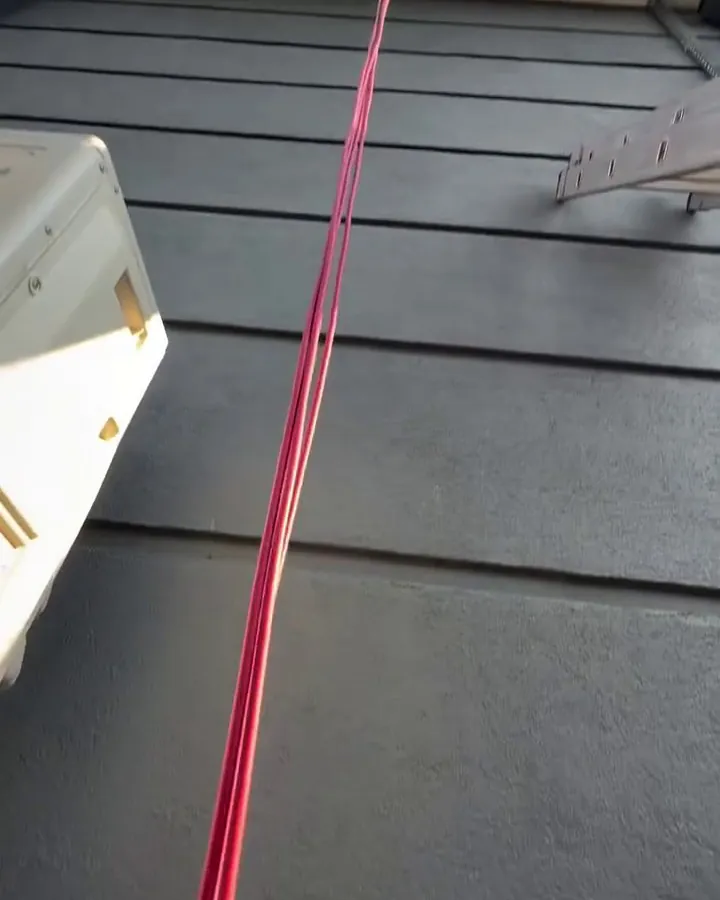
Power loss in cables is calculated with I² × R; as current and resistance rise, loss grows. Under-sized cable, a loose connector and a long cable run increase loss. A simple example: a 10 kWp system produces about 16,560 kWh a year in Antalya city centre according to PVGIS; even if cable and connection loss is one percent, that comes to about 166 kWh a year (calculation). For this reason cable cross-section and connector quality matter. For details you can look at our solar cables and connection components article.
7. The inverter
The inverter incurs a small loss when converting DC to AC. For example, in the Huawei SUN2000-10KTL-M1 datasheet, maximum efficiency is 98.6% and European weighted efficiency is 98.1%. More important than efficiency is that the inverter does not limit power at high temperature and that MPPT is configured correctly. In an Antalya summer, the inverter's mounting location matters for this reason.
8. Degradation over time
Every panel loses some power over the years. For the TommaTech TT605-144TN10, the manufacturer gives a 30-year performance warranty; the linear curve falls from 99% in the first year to 87.4% in year 30, which means a drop of about 0.4% a year (calculation). In NREL's 2012 literature review, median degradation for field modules was found to be 0.5% a year; this study is old and covers older-generation modules.
Monthly production in Antalya: how do the factors change with the season?
According to PVGIS data, specific monthly yield in Antalya is 99 kWh/kWp in January, 159 in June, 168 in July and 167 in August. That is, the most productive months of the year are also the hottest. In summer, efficiency per unit of light falls because of panel temperature, but irradiance is so high that total production still peaks.
In winter, because irradiance is low, the effect of shade and soiling can be proportionally more pronounced. For monthly distribution and district comparison, PVGIS charts are used as above; Antalya city centre is 1,656, Manavgat 1,649, Alanya 1,615, Kaş 1,664, Korkuteli 1,655 and Elmalı 1,719 kWh/kWp (PVGIS 5.3, optimum tilt, south).
Measuring efficiency: compare expected and real production
The first step in managing solar panel efficiency is measuring. After installation you can compare your monthly production with the specific yield PVGIS gives for the same month. For example, a 10 kWp system aims to produce about 1,680 kWh (10 × 168) in July according to PVGIS. If real production falls markedly below this value, causes such as shade, soiling, connections or inverter settings should be investigated.
This comparison should be made not with a single month but with several; because cloudiness and temperature change month by month. You can read production data from the inverter's monitoring app and keep it in a table through the year. The PVGIS value is an estimate, not a guarantee; weather differs from year to year. Even so, if you see a consistent deviation over consecutive months, the system needs to be checked.
A practical list for raising solar panel efficiency
| Factor | Effect | What can be done |
|---|---|---|
| Cell technology | Efficiency, temperature coefficient | Choose from the current datasheet |
| Temperature | About 12-13.6% power loss in summer (65 °C cell) | Low-coefficient panel, air circulation |
| Tilt and orientation | Annual production difference | Optimum 33° and south; nearest value for the roof |
| Shade | The whole array can be affected | Layout plan, panel-level solution if needed |
| Dirt and dust | Rises in the dry summer season | Regular, safe cleaning |
| Cable and connection | Small but continuous loss | Correct cross-section, quality connectors |
| Inverter | Conversion loss, derating | Suitable power, cool mounting location |
| Degradation | About 0.4-0.5% a year | Warranty and monitoring |
To monitor efficiency after the system is installed, check production data regularly; when production is lower than expected, the cause is most often shade, soiling or a connection problem. To see which factor causes the biggest loss on your roof you can use our solar energy calculation page or contact us for a free site survey.

If you will make an unlicensed application, remember also that the panel, inverter and battery must have been manufactured within the last five years (the 2 April 2026 amendment). The regulation is as described as of October 2026 and may change.
Conclusion
Solar panel efficiency cannot be reduced to a single number. In Antalya, temperature in summer, soiling in the dry season, shade in winter and cable and inverter losses in every season are decisive. The biggest gain usually comes from correct layout, suitable panel selection and regular maintenance. Measure losses, find their cause and prioritise them; that way you use every kWh more efficiently. If you have an existing system, comparing your production data with the PVGIS expectation is the most practical way to understand which factor is causing a problem.
Frequently asked questions
What does solar panel efficiency depend on?
It depends on eight main factors: cell technology, temperature, tilt and orientation, shade, dirt and dust, cable and connection losses, the inverter and degradation over time. The efficiency on the panel's label shows only the laboratory condition. Real energy on the roof is determined by the total of these factors; PVGIS assumes this total as 14% system loss. Real loss may differ from this value depending on the roof and equipment.
How much does high temperature reduce panel efficiency?
The drop depends on the temperature coefficient. With the NOCT approach, at 34 °C ambient and 1000 W/m² irradiance, the cell is at about 65 °C. In that case power loss is about 12% in a TOPCon panel with a −0.30 %/°C coefficient and about 13.6% in a PERC panel with a −0.340 %/°C coefficient. This is a calculation, not a measurement; the real value varies with panel ventilation, wind and mounting height.
What are the most suitable tilt and orientation for panels in Antalya?
According to PVGIS 5.3, the optimum tilt in Antalya city centre is 33° and the orientation is south. With these values, annual specific yield is found as 1,656 kWh/kWp. As the roof departs from this value, production falls; however, installation at the existing pitch on a tile roof can be considered economically. A roof-specific calculation is made at the survey and evaluated together with the shading analysis.
How much does cleaning the panels affect efficiency?
The effect varies with the surroundings; there is no single official percentage. In Antalya rainfall is concentrated between November and February, and in July and August the average number of rainy days a month is about 0.5. Dust and pollen build-up can rise in summer. Cleaning frequency should be set according to surroundings such as fields, roads and construction and done by safe methods. Cleaning should not be done in the hot hours.
Do cable losses really matter?
Yes, because the loss is continuous and proportional to I² × R. A 10 kWp system produces about 16,560 kWh a year in Antalya city centre according to PVGIS; a one percent cable and connection loss comes to about 166 kWh a year (calculation). Correctly sized cable and quality connectors limit this loss. Keeping the cable run short also helps.
How much efficiency does a solar panel lose over the years?
It varies by product. For the TommaTech TT605-144TN10, the manufacturer's linear performance warranty falls from 99% in year 1 to 87.4% in year 30; that means about 0.4% a year (calculation). In NREL's 2012 review, median degradation in field modules was found to be 0.5% a year; this study is old and should not be taken as a firm conclusion for new-generation modules.
What can I do to raise panel efficiency?
First identify the source of loss. Reduce shade, choose layout and orientation correctly, prefer a low-temperature-coefficient panel, leave air circulation behind the panel, check cable cross-section and connector quality, clean regularly and monitor production. A site survey is needed for roof-specific advice. Small improvements make a meaningful difference not alone but together.
Sources
- PVGIS (European Commission JRC)
- TommaTech TT605-144TN10 datasheet
- Turkish State Meteorological Service (MGM), Antalya statistics
- Huawei SUN2000-3/4/5/6/8/10KTL-M1 technical specifications
- NREL: Photovoltaic Degradation Rates, An Analytical Review
- Official Gazette, 2 April 2026 amendment to the Unlicensed Electricity Generation Regulation
Want a clear calculation for your roof?
The Solar Nexo team carries out a free site survey at your address in Antalya and designs the system that suits your roof, consumption and budget.