Short answer
Hotel solar energy in Antalya largely overlaps with demand because air-conditioning and pool loads peak in summer; per PVGIS, 1 kWp produces about 168 kWh in July. For the right size, assess contract power, hourly net metering, roof structure and night load together; the most reliable starting point is the facility's own meter data.
Key takeaways
- According to PVGIS, central Antalya produces 168 kWh/kWp in July and 99 kWh/kWp in December; summer output is about 1.7 times winter output.
- For non-residential installations, net metering has been hourly since 1 May 2026; daytime self-consumption is worth more than surplus.
- For facilities such as hotels, the installable power is limited by contract power.
- Panels, inverters and batteries must have been manufactured within the last five years.
- No payment is made for energy fed from the battery to the grid; the battery is for evening self-consumption.
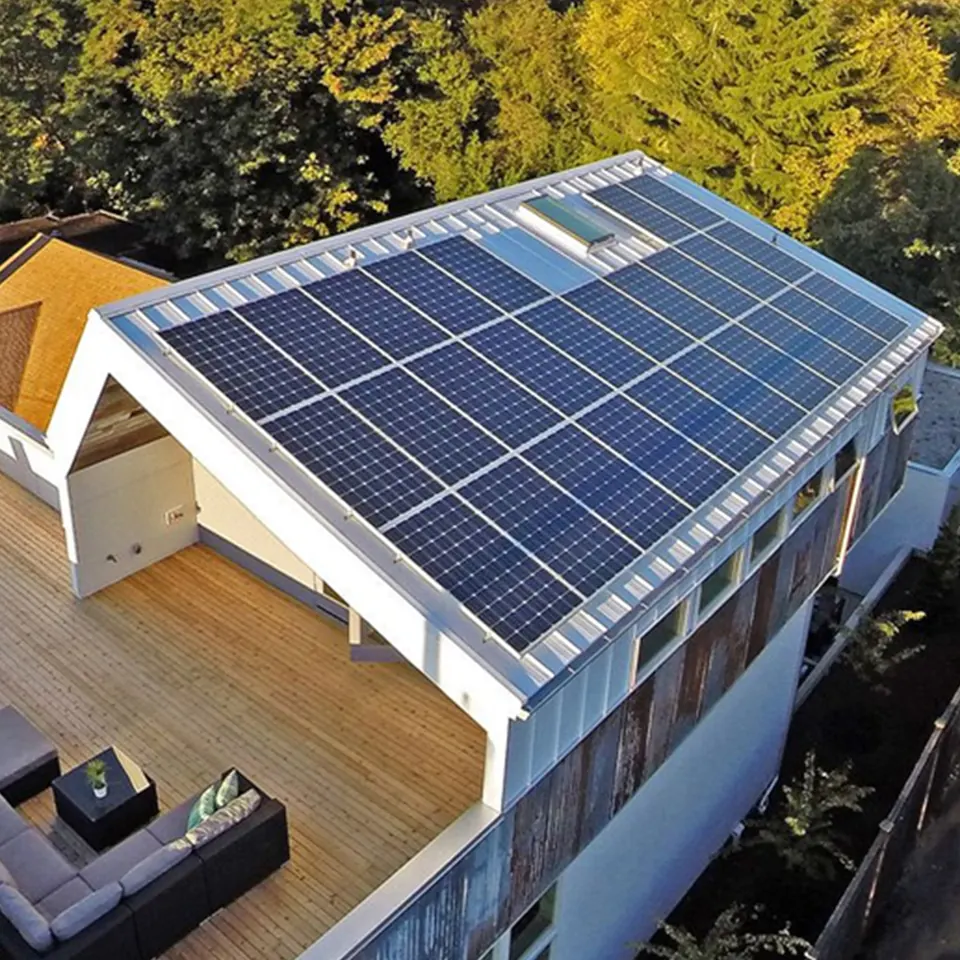
Hotel solar energy in Antalya is a sensible option for a facility whose air-conditioning, kitchen and pool loads peak in summer, because the months of highest production coincide with the months of highest consumption. This overlap does not make the investment profitable by itself. Roof area, contract power, night load and regulatory limits decide the outcome. In this article we list the points a facility manager should know before a feasibility study.
How summer peak overlaps with production in hotel solar energy
According to PVGIS data, 1 kWp of installed power in central Antalya produces about 168 kWh in July, 167 kWh in August and 159 kWh in June. In December this value is 99 kWh. That is, summer output is about 1.7 times winter output (calculation). The consumption curve of a hotel whose season is busy between April and October largely resembles this shape.
According to the General Directorate of Meteorology (MGM), average daily sunshine duration in Antalya in July is 11.7 hours. The average maximum temperature reaches 34.2 °C. At this temperature the air-conditioning load rises, while panels also lose some efficiency because of heat. The 14% system loss that PVGIS uses includes this effect.
Hotel load profile: day, evening and night
Solar energy produces only in the daytime. You therefore first need to draw up the facility's 24-hour load profile. In general, these loads are spread across the daytime hours:
- Air conditioning of lobbies, corridors and meeting areas
- Laundry, kitchen and cold-room equipment
- Pool circulation and filter pumps
- Ventilation and booster pump systems
Evening and night loads stay high because of room air conditioners, lighting and restaurant service. A battery is needed to meet this part directly from solar production. We touch on the battery's role and the storage rule below. Meter data (15-minute or hourly consumption) is the first input of the feasibility study. With a year of data you can see the summer-winter difference and the weekday-weekend difference.
An electricity-focused approach, not hot water
This article covers only photovoltaic systems that generate electricity. Solar collectors for hot-water needs in hotels are a separate subject and require a different engineering calculation. The production of a photovoltaic system is assessed against consumption on the facility's electricity bill. If you have electrically powered hot-water equipment, it naturally appears in the load profile, but the basis of the solution is still the kWh balance.
Roof, car park and open-space options
Three types of surface stand out in tourism facilities in Antalya: hotel block roofs, technical-room roofs and open car parks. On roofs, assessing the supporting structure is essential. The load-bearing capacity of the roof needs to be assessed by a civil engineer. The distribution company and the municipality may ask for a structural suitability certificate.
Car-park canopies (carports) can be an alternative for facilities with insufficient roof. They provide shade for vehicles and also create a generation area. For details, see our article on carport solar energy systems. If your facility is in a heritage site or protected zone, additional permits may be needed. Clarify the facility's location at the very start of the feasibility study.
First steps for a feasibility study
A hotel solar energy project should be built on data, not on estimates. Collecting the following information before the survey speeds up the process:
- Electricity bills for the last 12 months and, if possible, an hourly or 15-minute consumption profile
- Subscription type, unique code and contract power information
- Roof plans, roof covering type and any structural reports
- The facility's title deed or right-of-use document
- Structures casting shadows, trees and roof equipment such as chimneys and vents
When this data is combined with an on-site survey, it becomes clear which part of the roof will be used and what power the system can carry. Project design and application steps then begin.
Capacity and regulatory limits
Under the rules in force as of October 2026, the following points are decisive for non-residential facilities such as hotels. Because regulations change often, we recommend confirming the current text before applying.
- Consumers other than municipalities, industrial facilities and agricultural irrigation are limited to their contract power. The size of a system installed on a hotel roof therefore cannot exceed the facility's contract power.
- For installations that received a connection approval letter (çağrı mektubu) after 12 May 2019, production in a calendar year cannot exceed twice the associated consumption.
- From 1 May 2026, net metering (mahsuplaşma) for these non-residential installations is hourly. Producing in the daytime and consuming in the same hour is worth more than relying on surplus.
- Main equipment such as panels, inverters and batteries must have been manufactured within the last five years.
An installation run without acceptance has its connection cut and its owner cannot apply for three years. An approach of "let's run it first and complete the paperwork later" is therefore risky even in the tourism season. For the application steps, see our article on the rooftop solar application.
Why self-consumption is critical under hourly net metering
In non-residential installations, production and consumption are netted separately for every hour. Surplus is valued at the single-rate active energy unit price of the relevant tariff. This amount is lower than the total unit charge on the bill, because the bill amount also includes the distribution charge and taxes. Sizing a hotel solar energy system to the facility's daytime consumption, rather than to selling surplus production, is therefore often the sounder approach. This interpretation rests on the payment principles in Decision 14531. The net metering rules are explained in a separate article.
Battery: an option that enlarges the investment but covers the evening load
The owner of a licence-exempt installation can install a storage unit up to the electrical power of the generation plant. No payment is made for energy fed from the battery to the grid. The battery is therefore not a sales tool but a way to consume the daytime surplus in your own facility in the evening. In a hotel solar energy system, a battery is mostly considered to back up critical loads (lighting, reception, cold room) or to cut the evening peak. Battery warranty varies by brand and model. For example, in one manufacturer's low-voltage battery series the product warranty is 60 months. Be sure to ask for this period in writing in the quote. For the technical background, see our article on LiFePO4 batteries.
A sample calculation: a 100 kWp rooftop system
The table below shows a hypothetical calculation. The figures are based on PVGIS's value for a south-facing system at optimum tilt in central Antalya. On a real roof, the result may come out lower because of tilt, orientation and shading. This is not a price or savings promise.
| Input | Value | Note |
|---|---|---|
| Installed power | 100 kWp | About 165 panels of 605 W (calculation) |
| Annual specific yield | 1,656 kWh/kWp | PVGIS, central Antalya |
| Theoretical annual production | about 165,600 kWh | Ideal conditions, calculation |
| July production | about 16,800 kWh | 168 kWh/kWp x 100 |
| December production | about 9,900 kWh | 99 kWh/kWp x 100 |
How much of this production will be consumed in the facility depends on the load profile. For the payback calculation you can also use the method in our article on the payback period of solar energy.
Implementation and operating notes for a tourism facility
If the facility is closed or has low occupancy outside the season, production appears as surplus on the meter side. In winter months production is low anyway, but the facility's consumption may also fall. How production will be treated in this period, that is, how much will be consumed in the facility and how much counted as surplus, should be planned from the start. In tourism facilities the system size is therefore set by looking at the balance of summer and winter load, not just the peak of the season. The installation timetable matters too. Installing before the season, in the November-March period when the hotel is quiet, protects guest comfort. A monitoring system lets you see how much each block produces. Also, for fire safety, panels must be mounted on a fire-resistant surface with a ventilation gap left behind them. Installation contrary to the installation manual can void the warranty.
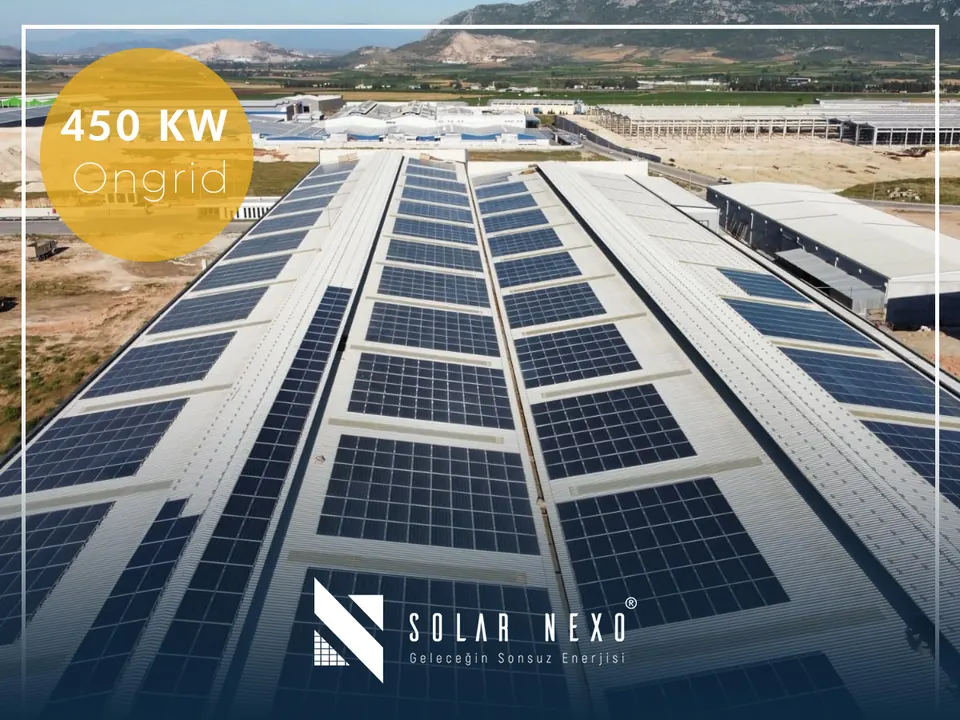
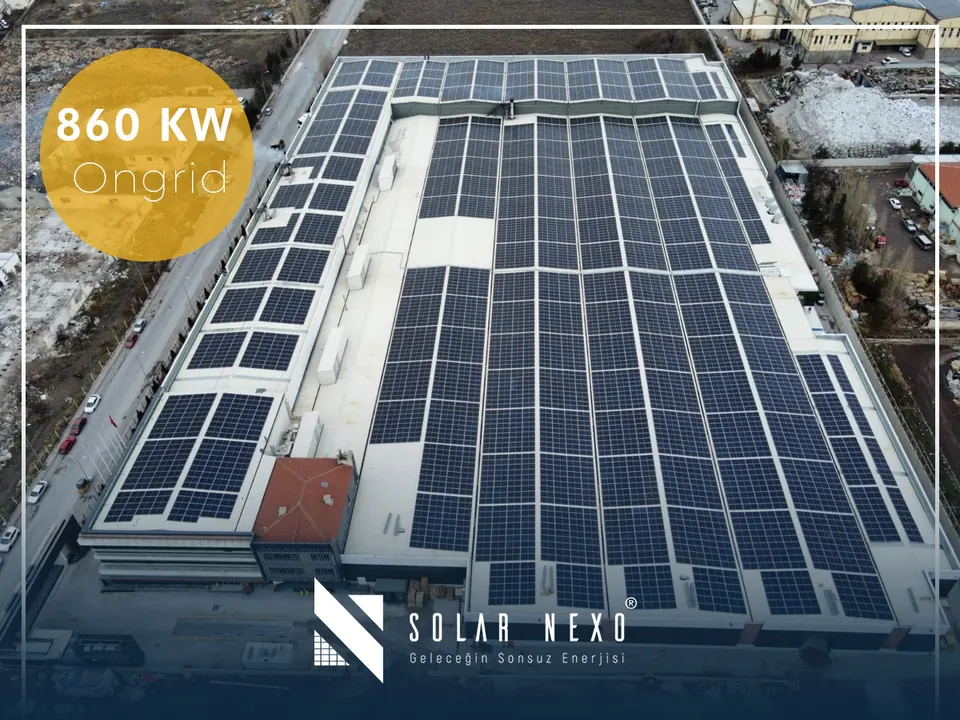
Among the references on Solar Nexo's website are a 450 kW commercial building roof, an 860 kW industrial roof and a 970 kW factory roof. These are commercial and industrial references, not hotels. However, the survey, design and application process for large roofs follows similar steps. For factory and commercial roof experience, you can review our references.
Conclusion
A hotel solar energy investment has a strong basis in Antalya thanks to the overlap of summer load and production. However, the right size must be assessed together with contract power, hourly net metering and night load. Load data comes first, then roof and structure, then regulation and application steps. To carry out a realistic feasibility study for your facility, you can request a free site survey.
Frequently asked questions
Does a solar energy system for a hotel make sense in Antalya?
In most cases it does, because in Antalya both production and hotel consumption peak in summer. According to PVGIS, 1 kWp produces about 168 kWh in July. Even so, night load, roof area, contract power and hourly net metering should be examined together. At least a year of the facility's meter data is needed for the decision. At the free survey we can review this data together.
How much solar power can be installed on a hotel roof?
For consumers other than municipalities, industry and agricultural irrigation, the power to be installed is limited by contract power. Roof area and the supporting structure are also decisive. The load-bearing capacity of the roof must be assessed by a civil engineer, and the distribution company and municipality may ask for a structural suitability certificate. Confirm the current limit before applying. The first step is therefore to examine the roof and meter data together at the survey.
Can surplus solar production from hotels be sold?
Yes, but to a limited extent and at a low price. Surplus is valued at the single-rate active energy unit price of the relevant tariff, which is lower than the total unit charge on the bill. In non-residential installations netting is hourly and annual production cannot exceed twice consumption. Sizing to daytime consumption is therefore recommended. Only an engineering calculation specific to the facility can give an exact figure.
Is it necessary to add a battery to a hotel solar energy system?
It is not mandatory. A battery is added to consume daytime surplus in the facility in the evening or to back up critical loads. No payment is made for energy fed from the battery to the grid, and the battery must also have been manufactured within the last five years. Because it raises cost, the decision should be made on the load profile. This decision should be made at the feasibility stage together with the load profile and budget.
Can a tourism facility solar installation be done during the season?
Technically it can, but because work on the roof needs noise and safety measures, it can affect guest comfort. For most facilities it is easier to plan installation in the off-season, that is, between November and March. Application and acceptance processes also take time, so work needs to start before the season. Since every facility's occupancy and maintenance calendar differs, the plan should be made with facility management.
What documents are needed for a hotel solar energy system?
The main application documents are the consumption facility's unique code, identity or authority documents, a title deed or right-of-use document and a declaration of no prohibition on activity. In Antalya the application is made through the LUS platform of AEDAŞ (the regional electricity distribution company). The current document list should be confirmed with the distribution company. Project approval and acceptance steps follow. Because regulations and document lists can change, be sure to confirm the current list before applying.
Do solar panels on a hotel roof pose a fire risk?
When installed correctly, panel-related fire risk can be reduced. The manufacturer's datasheet requires the panel to be mounted on a fire-resistant surface with sufficient ventilation left behind it. Cable, connector and fuse quality also matter. Installation contrary to the installation manual can void the warranty. From a fire regulation standpoint, the facility's project must be assessed by the relevant authority. It is therefore useful to ask for a written checklist before and after installation.
Sources
- PVGIS - Photovoltaic Geographical Information System (European Commission JRC)
- Amendments to the Regulation on Unlicensed Electricity Generation in the Electricity Market (Official Gazette, 2 April 2026)
- EPDK Board Decision 14531 - Net Metering Procedures and Principles (Official Gazette, 5 May 2026)
- General Directorate of Meteorology - Antalya provincial statistics
Want a clear calculation for your roof?
The Solar Nexo team carries out a free site survey at your address in Antalya and designs the system that suits your roof, consumption and budget.