

Short answer
The last resort supply tariff applies to consumers whose annual consumption exceeds the limit and who have no bilateral agreement. According to EPDK, the 2026 limit is 4,000 kWh a year for residences and 15,000 kWh for other groups. In Antalya, homes with heavy air-conditioning and pool loads can exceed it. Solar can reduce grid consumption, but the calculation method should be confirmed with the distribution company.
Key takeaways
- The SKTT limit for residences in 2026 is 4,000 kWh a year (it was 5,000 kWh in 2025); for other groups it is 15,000 kWh.
- The tariff applies from the first day of the third month following the month in which the limit was exceeded.
- The active energy charge (PTF + YEKDEM) is multiplied by a coefficient; the coefficient means a 5% increase for residences and 9.38% for other groups.
- According to PVGIS, 1 kWp in central Antalya produces about 1,656 kWh a year; the theoretical power needed to offset the excess is calculated from this.
- Which consumption the limit is calculated on should be confirmed with the distribution company before a solar application.
The last resort supply tariff (SKTT) is an electricity tariff, calculated differently from the national tariff, that applies to consumers whose annual consumption exceeds a certain limit and who have no bilateral agreement with their supplier. According to the frequently asked questions published by EPDK (Turkey's Energy Market Regulatory Authority), for 2026 this limit is 4,000 kWh a year for residences and 15,000 kWh a year for other consumer groups. In Antalya, it is no surprise for homes with a high air-conditioning load to approach this threshold. This article explains how the last resort supply tariff works and how you can reduce the consumption you draw from the grid with solar energy.
What is the last resort supply tariff and who does it apply to?
SKTT is a tariff calculated using a method set by EPDK. It applies to a consumer who exceeds the limit and has no bilateral agreement from the first day of the third month following the month the limit was exceeded. That is, the tariff does not change on the day you exceed the limit; it changes a few months later. If your consumption falls below the limit the next year, you return to the national tariff.
This information is based on EPDK's SKTT frequently asked questions page as of October 2026. Limits can be updated every year. Indeed, the residential limit was lowered from 5,000 kWh in 2025 to 4,000 kWh in 2026. For your own situation, confirm the current value with your supplier or on EPDK's page.
2026 limits and the calculation method
| Consumer group | Annual limit (2026) | 2025 value |
|---|---|---|
| Residential | 4,000 kWh | 5,000 kWh |
| Other non-residential consumer groups | 15,000 kWh | Not verified |
The active energy charge of SKTT is found by multiplying the sum of the period's average market clearing price (PTF) and average YEKDEM (Renewable Energy Support Mechanism) unit cost by a coefficient. This coefficient means a 5% increase for residences and 9.38% for other groups. The distribution charge, however, does not change. So when you move to SKTT, not your whole bill but only the active energy item is calculated differently.
How much SKTT will differ from the national tariff depends on market prices and the period. We give no amounts in this article because the tariff changes every period. You can see the current unit price on your bill or in your supplier's notification.
Why do consumers in Antalya approach the limit?
In Antalya the July average summer temperature is 28.6 °C and the average maximum 34.2 °C. The record value has reached 45.0 °C. The long air-conditioning season between May and October quickly raises a home's annual consumption. In villa-type homes, when a pool pump, air conditioning and multiple coolers combine, the 4,000 kWh residential limit can easily be exceeded. On the commercial side, cooling, lighting and workshop machinery strain the 15,000 kWh limit.
To see your own consumption, add up your last 12 months of bills. If your bills do not state annual total consumption, it is enough to add up the monthly kWh values. Cumulative consumption through the year shows when you are approaching the limit.
Bringing consumption under the limit with solar energy
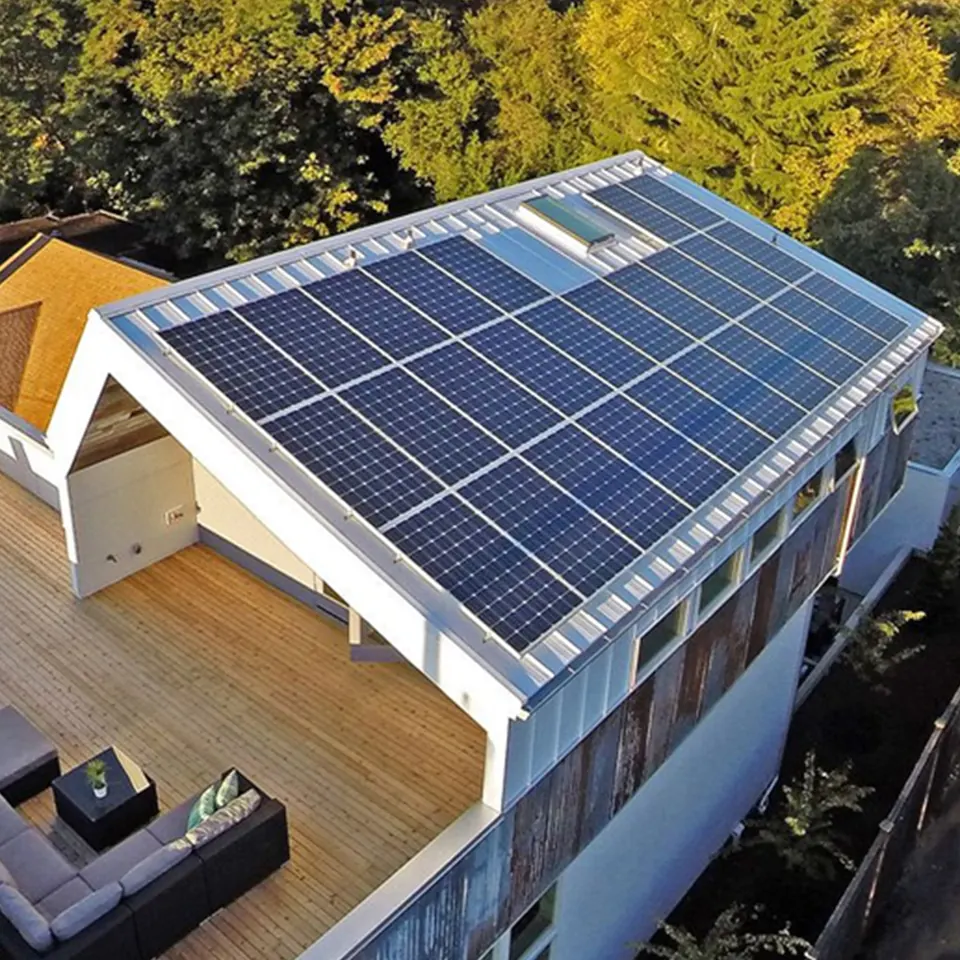
Rooftop solar lowers the energy you draw from the grid because you consume the energy you produce on site. In central Antalya, according to PVGIS, a 1 kWp system produces about 1,656 kWh a year. Using this value you can calculate the theoretical power needed to offset the amount above the limit. The table below shows example calculations for the residential limit (4,000 kWh).
| Annual consumption | Excess over limit | Reduction needed | Theoretical minimum power |
|---|---|---|---|
| 5,000 kWh | 1,000 kWh | 1,000 kWh | about 0.6 kWp |
| 7,000 kWh | 3,000 kWh | 3,000 kWh | about 1.8 kWp |
| 10,000 kWh | 6,000 kWh | 6,000 kWh | about 3.6 kWp |
These figures are calculations and rest on two assumptions. The first is that all production is consumed in the same installation; the second is PVGIS's ideal of a south-facing system at optimum tilt. On a real roof, production falls because of orientation, shading and tilt. Also, part of production cannot be consumed in the daytime and goes to the grid. The real system is therefore chosen above the theoretical value in the table. To do the sizing with your own bill data, see our article on how many kW of solar panels you need.
Confirm which consumption counts towards the limit
There is an important caveat in the last resort supply tariff calculation. We could not verify in this article, from the official texts, which meter data the limit is calculated on, that is, whether net consumption drawn from the grid or gross consumption is the basis. Logically, solar production consumed through the same meter reduces the amount drawn from the grid. However, we recommend asking the distribution company and your supplier, before a solar application, how this calculation will be applied in the SKTT assessment. The definitive result depends on this confirmation.
It is therefore sounder to see solar energy not merely as a tool to avoid SKTT but as an investment that lowers your total electricity cost. Hourly or monthly net metering rules also affect how surplus is calculated. For details, see our article on the net metering system rules.
Three typical scenarios from Antalya
The scenarios below are hypothetical and are not real customer data. The aim is to show where last resort supply tariff risk arises.
- An apartment flat in Muratpaşa: Annual consumption is usually below the limit. Families using more than one air conditioner can approach it. A decision by the unit owners is needed for an apartment roof.
- A villa in Konyaaltı or Belek: A pool pump, multiple air conditioners and laundry load can push annual consumption far above the limit. Because the roof area is large, reduction with solar is possible.
- A small business in Serik or Kumluca: Cooling and pump loads can strain the 15,000 kWh limit. Because the daytime load is high, the self-consumption ratio is also high.
In every scenario the first step is the same: see real consumption and compare it with the limit. Then the lowest-cost reduction path is chosen.
Ways to cut consumption other than solar
A solar panel is not the only solution. A consumer approaching the limit can also consider these steps:
- Replacing old air conditioners with inverter-technology models
- Reviewing the pool pump's operating hours and speed settings
- Reducing standby-mode appliances and unnecessary lighting
- Shifting use of the water heater, washing machine and dishwasher to the daytime
- Lowering the cooling need with insulation and shading
These measures shrink the system and reduce the investment. Solar is then sized for the remaining need. Getting the order right keeps you from installing an unnecessarily large system.
The 15,000 kWh limit for businesses
For commercial premises, agricultural activity and other groups, the annual limit is 15,000 kWh. In Antalya, a restaurant, a small hotel, a cold store or a business operating in a greenhouse can exceed this limit. For these consumers, rooftop solar can both reduce SKTT risk and directly cover daytime consumption. Because net metering for non-residential installations has been hourly since 1 May 2026, daytime self-consumption is especially valuable. For an industrial or commercial roof, see our on-grid systems service.
What should you do if you approach the limit during the year?
Because there is a delay between exceeding the limit and moving to SKTT, monitoring your consumption mid-year gives you a warning. What you can do is as follows:
- Add up your monthly consumption and work out a year-end estimate.
- Ask your supplier in writing for your current tariff type and your limit status.
- Start measures (efficiency, solar) that will keep next year's consumption under the limit.
- Discuss the bilateral agreement option with your supplier. Conditions vary by supplier and period.
If you fall below the limit in a year, you return to the national tariff. The effect of a solar investment is therefore seen at the end of the first full year. Even so, an expectation that the bill will drop to zero is not realistic. Night consumption, fixed charges and taxes always remain. Our article on bill expectations with solar energy covers this in detail.
What to do before deciding
To assess last resort supply tariff risk at your home or business in Antalya, we at Solar Nexo can review your consumption data, your roof situation and your expected daytime consumption together at a free survey. Always confirm current tariff and limit information with EPDK and your supplier. The regulation changed several times in 2026, so the limits in this article are valid as of October 2026 and may change.
Conclusion
The last resort supply tariff affects consumers whose annual consumption exceeds the limit and who have no bilateral agreement. In 2026 the residential limit is 4,000 kWh and for other groups 15,000 kWh. Solar energy can help you stay below this threshold by reducing the consumption drawn from the grid, but the practical details of the calculation method need to be confirmed. Efficiency first, then a correctly sized solar system, is the sounder order.
Frequently asked questions
What is the last resort supply tariff?
The last resort supply tariff is the tariff applied to consumers whose annual consumption exceeds the limit set by EPDK and who have no bilateral agreement with their supplier. The active energy charge is found by multiplying the PTF and YEKDEM cost by a coefficient. The distribution charge does not change. The tariff applies from the first day of the third month following the month in which the limit was exceeded. Always check current values with EPDK.
What is the SKTT limit in 2026?
According to EPDK, the annual limit for residences in 2026 is 4,000 kWh. In 2025 this value was 5,000 kWh. For other consumer groups, the annual limit is 15,000 kWh. Limits can be updated every year, so you should confirm the current value on EPDK's SKTT page or with your supplier, including after October 2026. It is therefore necessary to review the tariff at least once a year.
How much does the bill rise when you move to SKTT?
Because the increase depends on market prices and the period, it would not be right to give a fixed rate. The active energy charge is calculated by applying a coefficient to the sum of the period's average PTF and average YEKDEM cost; the coefficient means a 5% increase for residences and 9.38% for other groups. You can learn the current unit price from your bill or supplier. This information is for calculation purposes and contains no price promise.
Does a solar panel save you from SKTT?
A solar panel can help you stay below the limit because it reduces the annual consumption you draw from the grid. However, since which meter data the limit is calculated on has not been verified from official texts, you need to ask the distribution company and your supplier before installing solar. The result also depends on how much of the production you consume on site. It is sound to get written confirmation before deciding.
How many kWp of panels does a home exceeding the 4,000 kWh limit need?
Theoretically you need to produce as much energy as the excess over the limit. According to PVGIS, 1 kWp in central Antalya produces about 1,656 kWh a year. For example, for a home consuming 7,000 kWh, a reduction of 3,000 kWh comes to about 1.8 kWp. On a real roof a larger system is needed because of shading, orientation and the self-consumption ratio. The exact size is set by the survey and consumption data.
Does SKTT start immediately after you exceed the limit?
No. According to EPDK, SKTT applies from the first day of the third month following the month in which the limit was exceeded. That is, there are a few months between the date you exceed the limit and the date the tariff changes. In this period you can monitor your consumption and talk to your supplier. If you fall below the limit the next year, you return to the national tariff. This gives you time to take measures to reduce consumption.
What is the SKTT limit for businesses?
For consumer groups other than residences, the 2026 annual limit is 15,000 kWh. Businesses such as restaurants, small hotels, cold stores or greenhouses can exceed this limit. In businesses, rooftop solar can cover daytime consumption. It should also be taken into account that net metering for non-residential installations has been hourly since 1 May 2026. Since every business's load profile differs, it is calculated separately at the survey.
Sources
- EPDK - Last Resort Supply Tariff (SKTT) Frequently Asked Questions
- PVGIS - Photovoltaic Geographical Information System (European Commission JRC)
- General Directorate of Meteorology - Antalya provincial statistics
- Amendments to the Regulation on Unlicensed Electricity Generation in the Electricity Market (Official Gazette, 2 April 2026)
Want a clear calculation for your roof?
The Solar Nexo team carries out a free site survey at your address in Antalya and designs the system that suits your roof, consumption and budget.


