Short answer
The difference between on-grid, off-grid and hybrid solar lies in the grid and the battery: on-grid is grid-connected without a battery, off-grid is grid-independent with a battery, and hybrid has both. In Antalya, on-grid suits daytime-heavy use, hybrid suits outage-sensitive loads and off-grid suits sites without a grid; the load profile decides
Key takeaways
- On-grid has no battery and does not work in an outage; off-grid has no grid; hybrid has both the grid and a battery.
- On-grid and hybrid systems require a licence-exempt generation application (AEDAŞ LUS in Antalya); off-grid installations are exempt from licence and company-formation obligations.
- The system type does not change the energy the panels produce; per PVGIS, 1 kWp in central Antalya produces about 1,656 kWh a year.
- No payment is made for energy fed from the battery to the grid.
- The choice is assessed in this order: grid access, outage-sensitive load, evening consumption and budget.
The difference between on-grid, off-grid and hybrid solar lies in how each of the three systems relates to the grid and the battery. An on-grid system is connected to the grid and has no battery. An off-grid system is completely independent of the grid and stores energy in a battery. A hybrid system is both connected to the grid and has a battery. Which one suits Antalya is decided by whether the grid is reachable, outage frequency, daytime and night consumption and budget. This article aims to make your choice easier with a comparison table and a simple decision flow.
On-grid vs off-grid vs hybrid: comparison table
| Feature | On-grid | Off-grid | Hybrid |
|---|---|---|---|
| Grid connection | Yes | No | Yes |
| Battery | No | Yes, the centre of the system | Yes |
| When the power goes out | Does not work (anti-islanding) | Works (there is no grid anyway) | Critical loads work |
| Night use | From the grid | From the battery | From the battery, from the grid if it runs short |
| Surplus production | Fed to the grid, netted | Stored in the battery, wasted when full | Battery first, then the grid |
| Distribution company application | Required | Not required (licence and company-formation exemption) | Required |
| Investment items | Panels, inverter, installation | Panels, inverter, large battery, installation | Panels, hybrid inverter, battery, installation |
| Design complexity | Low | High (load analysis is critical) | Medium-high |
| Typical user | Homes and workplaces with high daytime consumption | Vineyard houses, plateau and rural places with no grid | Outage-sensitive villas and businesses |
When choosing, look not only at price but also at outage risk, night consumption and future expansion needs. The application information in the table rests on the regulation in force as of October 2026. Off-grid installations are exempt from licence and company-formation obligations because they are not connected to the transmission or distribution system, but zoning, structural and fire obligations are separate. Regulations may change.
On-grid system: simple and economical
An on-grid system uses the grid like a battery. Surplus production goes to the grid and any shortfall comes from it. With no battery, it is the simplest system to install and maintain. It suits homes, workplaces, factories and agricultural irrigation with high daytime consumption. Its disadvantage is that the inverter stops for safety when the grid is cut.
For the detailed working logic, see our article on what an on-grid solar system is.
Off-grid system: a battery for independence
There is no grid in an off-grid system. The whole load is met by panels and battery. Sizing is therefore done on the month with the lowest production. According to PVGIS, in central Antalya December is the lowest month at 99 kWh/kWp, while July is 168 kWh/kWp. Batteries are the most critical and most expensive item in the system.
It suits vineyard houses, plateau houses and rural facilities where there is no grid. We covered the subject in detail in our article on what off-grid is.
Hybrid system: the combination of two worlds
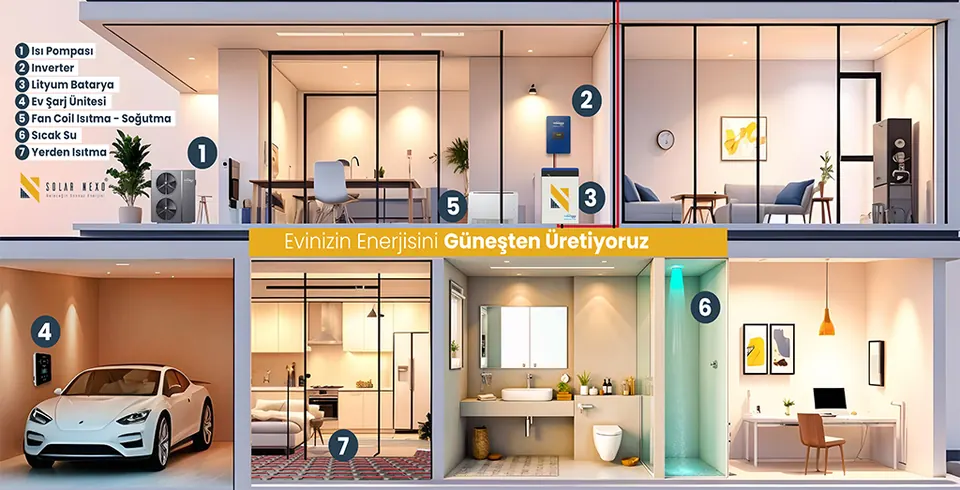
A hybrid system combines the economy of an on-grid system with the backup feature of an off-grid system. The grid remains as backup, while the battery carries daytime energy into the evening. In an outage, the appliances on the critical-load board keep running. It is therefore preferred for outage-sensitive loads such as villas, holiday homes and cooling.
The Manavgat, Belek and Döşemealtı villa installations Solar Nexo shared on Instagram are hybrid examples. For details, see our article on the hybrid solar energy system.
Decision flow: which one should you choose?
If you answer the questions below in order, you arrive at the suitable system:
- Is there a grid at your site, or can one be brought in within a reasonable time? If not, off-grid. If yes, go to question 2.
- Do you have loads that must work during a power cut (cold room, pump, medical device, etc.)? If yes, hybrid. If not, go to question 3.
- Is your evening and night consumption high and do you want to meet it from the sun? If yes, hybrid. If not, go to question 4.
- Is the weight of your consumption in the daytime? If yes, on-grid is generally enough.
This flow is a starting point. Knowing the difference between on-grid, off-grid and hybrid is not enough; the real decision is made by assessing the load profile, roof, budget and regulation. Also, if you plan to add a hybrid system later, it helps to ask about expansion options when an on-grid system is being installed.
Sample scenarios from Antalya
The profiles below are hypothetical and are not real customer data.
- A workshop working in the daytime in Kepez: Consumption is heavy in the day and the grid is reliable. On-grid is suitable.
- A holiday villa in Belek or Manavgat: Air conditioning, a pool pump and evening consumption all summer; outages happen occasionally. Hybrid is suitable.
- A vineyard house far from the grid in Korkuteli: Pulling a line is difficult. Off-grid is suitable.
- A mountain house on the Kemer plateau: Used only in summer. Off-grid is sized for seasonal use.
- A shared area of an apartment building in Muratpaşa: Lift and lighting are high in the daytime too. On-grid is suitable; the unit owners' decision from the resolution book and a notarised copy are required.
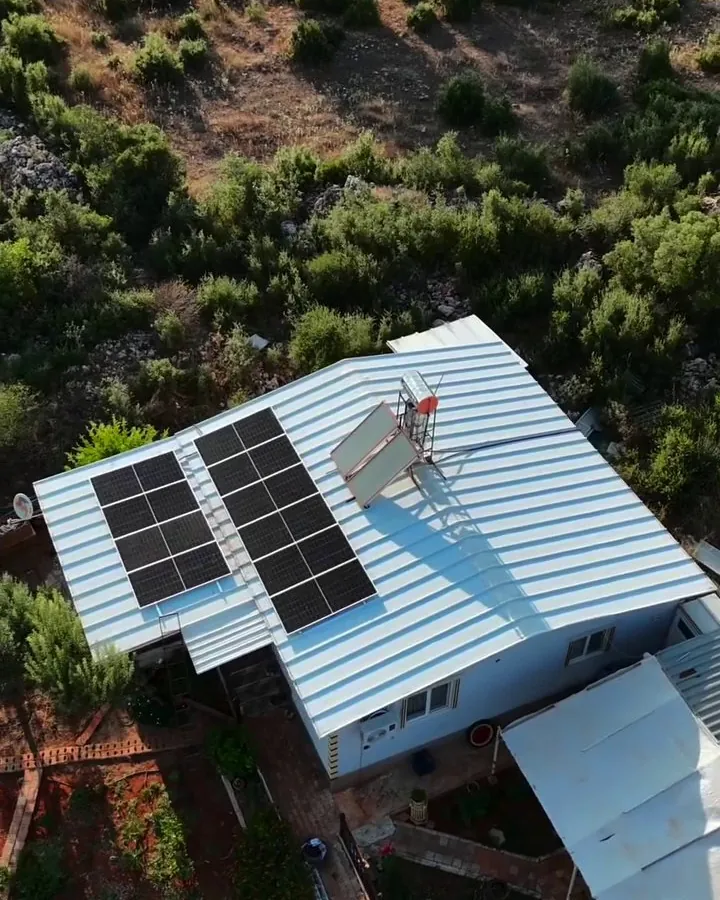
A day's energy flow: what happens in the three systems?
Looking at how the same home behaves in the three systems over the same day makes the difference concrete.
| Time | On-grid | Off-grid | Hybrid |
|---|---|---|---|
| Midday, strong sun | Panels feed the home, surplus goes to the grid | Panels feed the home, surplus fills the battery | Panels feed the home, the battery fills first, the rest goes to the grid |
| Evening, panels stop | Home is fed from the grid | Home is fed from the battery | Home is fed from the battery |
| Night, battery runs out | From the grid | The system stops or a generator steps in | From the grid |
| Daytime outage | System stops | Unaffected | Critical loads work |
| Night-time outage | No electricity | Continues from the battery | Critical loads from the battery |
The table shows how the difference between on-grid, off-grid and hybrid reflects in daily life. In an off-grid system, because there is no grid backup, no electricity is left when the battery runs out. The number of days of autonomy and a backup generator option are therefore important in off-grid designs. In a hybrid system the grid closes this gap.
The difference in cost items
We give no prices in this article, because cost varies with the project, equipment brand and time. But it is possible to say which items weigh most in which system. In an on-grid system most of the cost consists of panels, inverter and installation. In a hybrid system a battery and a more complex inverter are added. In an off-grid system the battery and backup capacity that keep the system standing are the most important items of the budget.
For details of the factors that affect cost and the method of comparing quotes, you can review the related articles on our site. In every case, a written quote should list the panel brand and datasheet, the inverter model, the battery capacity and the warranty periods separately.
Same production, different use
The system type does not change the amount of energy the panel produces. According to PVGIS, a 1 kWp system at optimum tilt in central Antalya produces about 1,656 kWh a year. The difference is how this energy is used. In on-grid, energy is used in the installation or on the grid. In hybrid, the battery shifts daytime energy into the evening. In off-grid, energy depends on the battery and surplus production is lost if the battery is full.
So even with the same panel count, the economic value of the system can differ. For example, in a system with a battery, it is possible to consume in the evening the energy produced in the daytime. However, no payment is made for energy fed from the battery to the grid; the battery is for your own consumption, not for sale.
Differences in regulation and process
On-grid and hybrid systems require a licence-exempt generation application because they connect to the grid. In Antalya, applications are taken through AEDAŞ's LUS platform. There are connection approval letter (çağrı mektubu), project approval, connection agreement and acceptance steps. Main equipment, batteries included, must have been manufactured within the last five years. Running the system without acceptance leads to disconnection and a three-year application ban. For residential subscriptions net metering (mahsuplaşma) is monthly, and for non-residential it has been hourly since 1 May 2026. This information is as of October 2026 and may change.
No grid application is needed for an off-grid system. However, zoning, structural and fire obligations apply. The roof's load-bearing capacity should be assessed by a civil engineer, and the distribution company and municipality may ask for a structural suitability certificate.
The most common selection mistakes
- Making an unnecessarily large battery investment in a place with a reliable grid
- Choosing a battery-free on-grid system on the assumption that it will work during an outage
- Sizing an off-grid system on summer consumption and falling short in winter
- Not defining critical loads from the start in a hybrid system
- Making the choice by looking only at price
If you would like to see the scope of our service for each system type, see our on-grid, off-grid and hybrid system pages.
Conclusion
The difference between on-grid, off-grid and hybrid in short: on-grid is economical but does not work in an outage, off-grid is independent but depends on the battery, and hybrid combines the two and requires a higher investment. In Antalya, on-grid is enough for most daytime-heavy consumption. Hybrid suits outage-sensitive loads and off-grid suits places with no grid. To make the choice on your load profile, you can request a free survey.
Frequently asked questions
What is the difference between on-grid, off-grid and hybrid systems?
An on-grid system is connected to the grid and has no battery; an off-grid system is independent of the grid and stores energy in a battery; a hybrid system is both grid-connected and battery-equipped. On-grid is more economical but does not work in an outage, hybrid feeds critical loads in an outage, and off-grid is used where there is no grid. At the free survey we can compare the three options together on your load profile.
Which solar energy system is more economical?
Generally an on-grid system, having no battery, is the most economical option. A hybrid system requires a higher investment because of the battery, and an off-grid system because of its large battery and sizing needs. However, the economical choice is the one that meets your need; if you have outage-sensitive loads, on-grid is not enough. Economy should be assessed together with outage risk and night consumption as well as investment cost.
Should I choose on-grid or hybrid for my home?
If the grid is reliable and your consumption is daytime-weighted, on-grid is generally enough. If you suffer frequent outages, your evening consumption is high or you have loads that must work in an outage, hybrid is more suitable. To decide, your load profile, roof and budget need to be assessed together at the survey. It is also important for the system to be expandable for future needs; the initial design should therefore plan the inverter and mounting infrastructure accordingly.
When is an off-grid system preferred?
It is preferred where there is no grid or bringing one is difficult. In Antalya, vineyard houses, plateau and mountain houses, rural facilities, boats and caravans are typical examples. An off-grid system should be sized on the month with the lowest production, and the battery and inverter should rest on load analysis. In seasonal use, the system can also be sized only for the consumption of the period used, which avoids unnecessary battery and panel investment.
Does a hybrid system feed the whole house during an outage?
Generally no; it feeds only the lines connected to the critical-load board. Loads such as the refrigerator, lighting, internet and pump are backed up. High-power appliances such as an air conditioner can be backed up only if the inverter power and battery capacity are enough. The critical-load list should be decided in advance. If you want to back up appliances beyond this limit, you must state it at the design stage and enlarge the inverter and battery capacity accordingly.
Can a battery be added to an on-grid system later?
Often this is possible. An AC-coupled battery system can be added next to the existing inverter, or the on-grid inverter can be replaced with a hybrid inverter. The choice depends on the brand and warranty of the existing inverter. Before adding, the acceptance documents, connection agreement and storage rules should be checked. This information is valid as of October 2026 and the regulation may change.
Is a distribution company application needed for an off-grid system?
Under the Regulation on Unlicensed Electricity Generation, installations with no grid connection are exempt from licence and company-formation obligations; a connection approval letter (çağrı mektubu) application to the distribution company is not needed. Even so, zoning, structural and fire obligations apply. We recommend confirming the current position before applying. The regulation is as described as of October 2026; because rules change often, be sure to confirm the current position with the distribution company.
Sources
- PVGIS - Photovoltaic Geographical Information System (European Commission JRC)
- Amendments to the Regulation on Unlicensed Electricity Generation in the Electricity Market (Official Gazette, 2 April 2026)
- Regulation on Unlicensed Electricity Generation in the Electricity Market (Official Gazette, 12 May 2019 - original text)
- AEDAŞ - Licence-Exempt Generation Applications
Want a clear calculation for your roof?
The Solar Nexo team carries out a free site survey at your address in Antalya and designs the system that suits your roof, consumption and budget.