Short answer
A hybrid solar energy system works connected to the grid, stores surplus production in a battery and feeds critical loads during an outage. A single hybrid inverter manages the panels, battery and grid. In Antalya, installations of 12 to 22 kWp have been built in villas in Manavgat, Belek and Döşemealtı. No payment is made for energy fed from the battery to the grid.
Key takeaways
- In a hybrid system production first feeds the home, surplus charges the battery and the remainder goes to the grid; critical loads are backed up in an outage.
- Solar Nexo's Instagram examples: Döşemealtı 36 panels/20 kW/30 kWh, Manavgat 20 panels/15 kW/15 kWh, Belek 24 panels/20 kW/15 kWh.
- Under the regulation, storage can be installed up to the electrical power of the generation plant; energy fed from the battery to the grid is not paid for.
- According to PVGIS, Manavgat yields 1,649 kWh/kWp; for 12.10 kWp the theoretical annual production is about 19,950 kWh (calculation).
- Battery and inverter compatibility, the critical-load board and a ventilated battery location are the basic checkpoints of installation.
A hybrid solar energy system is a system that is both grid-connected and battery-equipped and keeps feeding the loads you choose even when the power goes out. Through a single hybrid inverter, the panels on the roof first feed the home, write the surplus into the battery and, once the battery is full, feed the grid. In Antalya, because of the long air-conditioning season in summer and occasional outages, it is preferred especially in villas and holiday homes. In this article we cover the logic of the system, real installation examples and the checkpoints for a correct installation.
How does a hybrid solar energy system work?
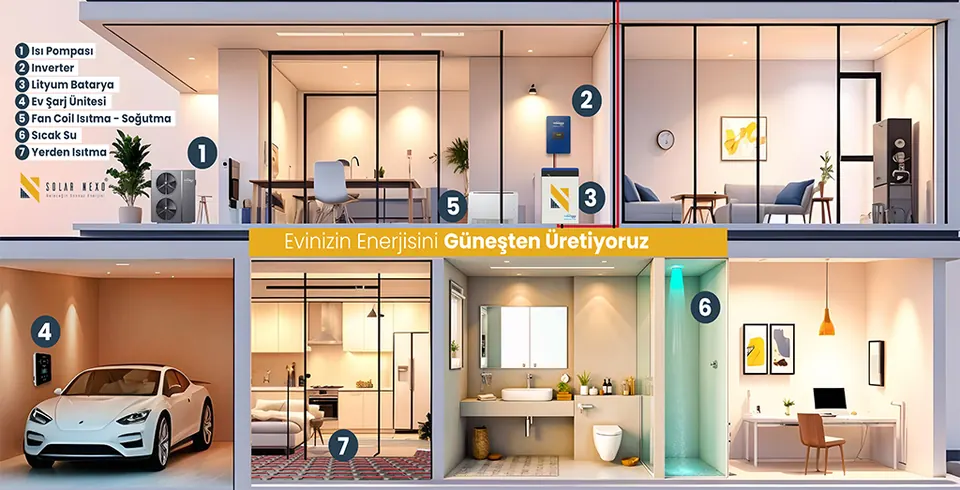
At the centre of the system is the hybrid inverter. This device combines the functions of an on-grid inverter and an off-grid inverter. It manages the direct current from the panels, charges the battery, works in synchrony with the grid and provides a backup output during an outage. The typical priority order of energy flow is as follows:
- Production first meets the home's instantaneous consumption.
- Surplus production charges the battery.
- Once the battery is full, the remaining energy is fed to the grid.
- At night or in cloudy weather, the home's need is met first from the battery and, if the battery is insufficient, from the grid.
- When the grid fails, the inverter switches to backup mode and feeds critical loads from the battery and the sun.
Priority settings can vary with the device and use. This order is a commonly used approach, not a rule valid for every device.
Outage backup: the critical-load logic
A battery-free on-grid system stops for safety when the grid is cut. In a hybrid system, the inverter isolates the grid and forms its own small grid. However, this backup output does not have to feed the whole home. Usually a critical-load board is installed. The refrigerator, lighting, internet, water pump and certain sockets are put on this board. High-power appliances such as an air conditioner, hob and electric heater are either left outside or the inverter power is enlarged accordingly.
The continuous and surge load capacity of the backup output varies with the inverter model. The starting current of compressor-driven appliances can be very high. The critical-load list should therefore be drawn up in writing from the start. For details on this topic, see our article on solar energy that works during a power cut.
Real installation examples: Manavgat, Belek and Döşemealtı
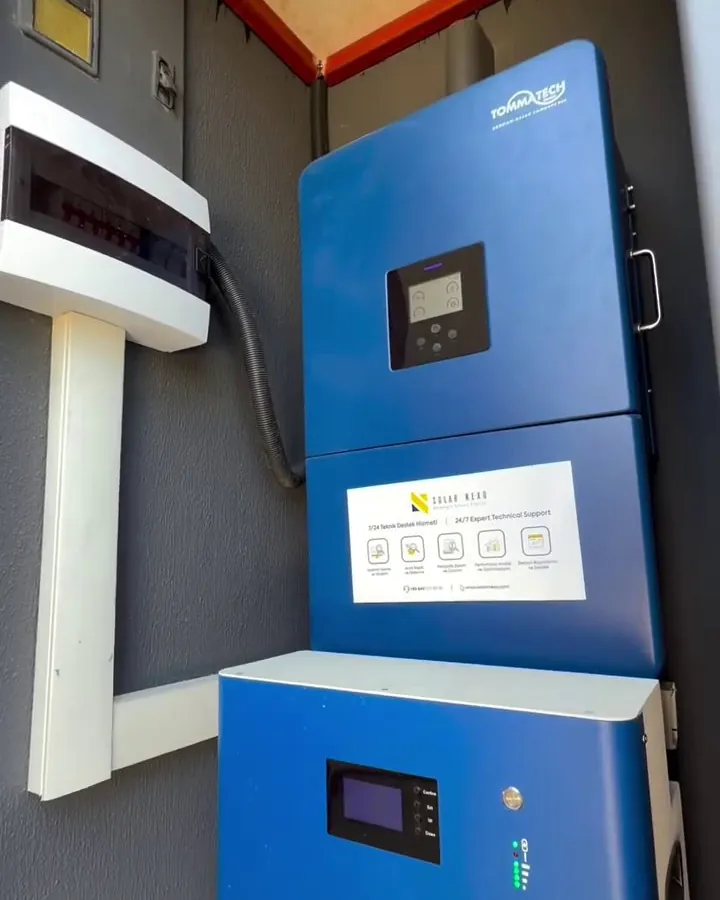
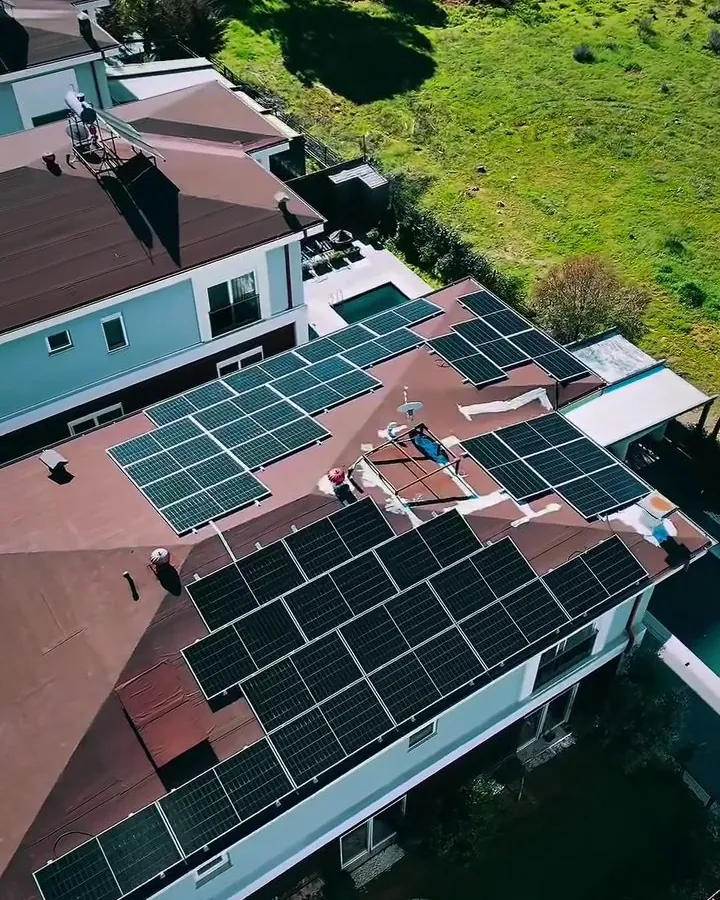
The three hybrid villa installations shared on Solar Nexo's Instagram account (@solarnexotr) show the difference in scale well. In all three, 605 W TommaTech panels were used and LiFePO4 was chosen as the battery.
| Location | Panels | Panel power | Hybrid inverter | Battery | Battery / panel ratio |
|---|---|---|---|---|---|
| Döşemealtı | 36 panels of 605 W | 21.78 kWp | 20 kW | 30 kWh | about 1.4 kWh/kWp |
| Manavgat | 20 panels of 605 W | 12.10 kWp | 15 kW | 15 kWh | about 1.2 kWh/kWp |
| Belek | 24 panels of 605 W | 14.52 kWp | 20 kW | 15 kWh | about 1.0 kWh/kWp |
Panel power is the product of the count and 605 W. The battery ratio was found by dividing the kWh value by kWp (calculation). Installations differ even in the same region, because each villa's consumption profile, roof and expectations differ. In Belek, for example, the battery ratio is low; this suggests that the load profile or budget may have been different. For the full story, see our article on hybrid solar energy in Döşemealtı.
Production estimate: theoretical values with PVGIS
According to PVGIS, annual specific yield for Manavgat is 1,649 kWh/kWp. For the 12.10 kWp system in Manavgat, the theoretical annual production comes to about 19,950 kWh (12.10 × 1,649, calculation). We do not have a separate PVGIS value for Döşemealtı and Belek. With the central Antalya value of 1,656 kWh/kWp, approximate results are 36,070 kWh (21.78 kWp) and 24,050 kWh (14.52 kWp) respectively. These are ideal-condition values at optimum tilt, facing south. On a real roof they may differ, and they are not a price or savings promise.
The monthly distribution shows the summer-winter difference. Production is 168 kWh/kWp in July and 99 in December. This difference means the battery will fill less in winter.
Battery and regulation: the rules you need to know
Under the Regulation on Unlicensed Electricity Generation, the owner of the installation can install a storage unit up to the electrical power of the generation plant. The important points are (as of October 2026; regulations may change):
- No payment is made for energy fed from the battery to the grid. The battery is for shifting your own consumption, not for sale.
- If the quantity supplied from storage cannot be determined, no surplus payment is made at all.
- A 10% tolerance applies at acceptance.
- Main equipment, batteries included, must have been manufactured within the last five years.
For residential subscriptions, net metering (mahsuplaşma) is monthly. For non-residential installations it has been hourly since 1 May 2026. Under hourly net metering, consuming the daytime surplus in the same installation in the evening makes economic sense; this is where the battery comes in. This is an interpretation, and the rule it rests on is that sales from storage to the grid are not paid. Battery warranty varies by brand and model; for example, in one manufacturer's low-voltage series the product warranty is 60 months.
Operating modes and seasonal behaviour in Antalya
Hybrid inverters usually offer several operating modes. In self-consumption priority mode, the battery is used to meet the home's needs. In backup priority mode, the battery is not drawn below a certain level in case of an outage. Some devices also support time-based charge-discharge schedules. Which mode is suitable depends on your outage frequency and evening consumption.
In Antalya the seasonal difference determines the battery's behaviour. In summer production is high, the battery fills every day and surplus energy goes to the grid. The air conditioner running in the evening uses battery energy quickly. In winter, according to PVGIS, December and January production falls to 99 kWh/kWp. In this period the battery may not fill every day and support from the grid is needed. A hybrid solar energy system therefore does not behave the same all year round. You can find detailed information on winter production in our article on solar panel performance in winter months.
In villas with continuous loads such as a pool pump, laundry or cold room, the battery acts as insurance for critical loads. Connecting high-power loads such as an air conditioner entirely to the battery quickly enlarges battery size. The critical-load list is therefore decided first, then the optional loads.
Checklist for a correct installation
In a hybrid system most problems come from equipment incompatibility and wrong sizing. Check the following in the quote:
- Battery and inverter compatibility: BMS communication, voltage range and charge-discharge current must be compatible with the inverter.
- Critical-load board: Which lines are backed up should be shown in the diagram.
- Backup output power: Continuous power and surge capacity should be chosen to suit the critical loads.
- Battery location: A ventilated area away from extreme heat and humidity should be chosen. Summer heat in Antalya makes this important.
- Phase structure: The choice of single phase or three phase must be compatible with the subscription.
- Expansion: The design should allow batteries or panels to be added later.
Our article on hybrid inverter selection, which explains inverter choice in detail, completes these checks. Also remember that panels must be mounted on a fire-resistant surface with a ventilation gap behind them and that the roof's load-bearing capacity must be assessed by a civil engineer.
Benefits and limitations
| Benefit | Limitation |
|---|---|
| Critical loads keep running in an outage | A battery investment raises cost compared with an on-grid system |
| Daytime surplus is used in your own installation in the evening | No payment is made for energy fed from the battery to the grid |
| The grid remains as backup, so the battery is not oversized | Critical-load separation and correct sizing are needed |
| Can be expanded later | Battery warranty and life vary by brand |
A hybrid system stands out in places sensitive to outages, such as villas, holiday homes, small businesses and cold chains. For product selection and process, see our hybrid systems page.
Can a battery be added to an existing on-grid system?
Often yes, but the method depends on the system. An AC-coupled battery system can be added next to the existing on-grid inverter. Alternatively, the on-grid inverter can be replaced with a hybrid inverter. Which is suitable depends on the brand, age and warranty status of the existing inverter. During the addition, topics such as storage rules, equipment age and notification to the distribution company also come up. Before adding, the existing acceptance documents and connection agreement therefore need to be examined.
Conclusion
A hybrid solar energy system combines panels, battery and grid in a single structure. It makes sense in places sensitive to outages and in homes with high evening consumption. Success depends on the right battery size, a critical-load plan and compatible equipment selection. You can request a free survey for your own home's or business's load profile.
Frequently asked questions
What is a hybrid solar energy system?
A hybrid system combines solar panels, a hybrid inverter, a battery and a grid connection. Production first feeds the home, the surplus is written into the battery and, once the battery is full, it goes to the grid. Night-time need is met from the battery. When the power goes out, critical loads keep being fed from the battery and the sun. At the free survey, a design suited to your roof and load profile can be drawn up together.
Does a hybrid system work when the power goes out?
Yes, but only for loads connected to the backup output. The hybrid inverter isolates the grid and feeds the critical-load board from the battery and the sun. High-power appliances such as an air conditioner, hob and electric heater can be backed up only if the inverter power and battery capacity suit them. The critical-load list should be decided in advance. The backup output's continuous power and surge capacity vary with the inverter model.
How is battery capacity chosen in a hybrid system?
Capacity is chosen on evening and night consumption and the backup duration wanted in an outage. For example, in the villas Solar Nexo shared, the battery ranged from 15 to 30 kWh. A battery's usable capacity is lower than its nominal value, and its life and warranty differ by brand. The choice should rest on the load profile. In every project this choice should be based on the datasheet and real load measurement.
Can the battery in a hybrid system sell electricity to the grid?
No, no payment is made for energy fed from the battery to the grid. Under the regulation, if the quantity supplied from storage cannot be determined, no surplus payment is made at all. The battery is for shifting your own consumption from sunny hours to the evening. This rule is valid as of October 2026 and may change, so the current text should be confirmed. The battery must also have been manufactured within the last five years.
How different is a hybrid system from an on-grid system?
An on-grid system has no battery and stops when the grid fails. A hybrid system includes a battery; it stores surplus production and feeds critical loads in an outage. In return, cost and design complexity rise. If the grid is reliable and daytime consumption is high, on-grid may be enough; in places sensitive to outages, hybrid is preferred. The choice should be made on budget, grid quality and backup expectations.
Can I convert my existing on-grid system to hybrid?
Often this is possible. An AC-coupled battery system can be added next to the existing inverter, or the on-grid inverter can be replaced with a hybrid inverter. Which is suitable depends on the inverter's brand, age and warranty. Before adding, the acceptance documents, connection agreement and storage rules should be examined. The age and warranty conditions of new equipment should also be checked at this stage.
How many kWp of panels does a hybrid system in Antalya have?
Size depends on consumption and the roof. In the villa installations Solar Nexo shared, panel power was 12.10 kWp (20 panels), 14.52 kWp (24 panels) and 21.78 kWp (36 panels). According to PVGIS, 1 kWp in central Antalya produces about 1,656 kWh a year. The right size is set at the survey with a load analysis. These values are for ideal conditions and real production varies with the roof.
Sources
- PVGIS - Photovoltaic Geographical Information System (European Commission JRC)
- Amendments to the Regulation on Unlicensed Electricity Generation in the Electricity Market (Official Gazette, 2 April 2026)
- TommaTech LV Battery Warranty Document
- TommaTech TT605-144TN10 TOPCon panel datasheet (Ver.2601.14)
Want a clear calculation for your roof?
The Solar Nexo team carries out a free site survey at your address in Antalya and designs the system that suits your roof, consumption and budget.