Short answer
An on-grid solar system is a grid-connected solar installation with no battery. The panels produce direct current, the inverter converts it to alternating current, the electricity is used on site first and any surplus goes to the grid. For safety, the inverter stops when the grid fails. In Antalya, per PVGIS, 1 kWp produces about 1,656 kWh a year.
Key takeaways
- An on-grid system has no battery; surplus energy goes to the grid and any shortfall is drawn from it.
- When the grid fails, the inverter shuts down through anti-islanding protection; running during an outage needs a hybrid system with a battery.
- According to PVGIS, 1 kWp in central Antalya produces about 1,656 kWh a year; for 5 kWp the theoretical value is about 8,280 kWh (calculation).
- In Antalya the application is made through AEDAŞ's LUS platform; main equipment must have been manufactured within the last five years.
- For residential subscriptions net metering is monthly; for non-residential it has been hourly since 1 May 2026.
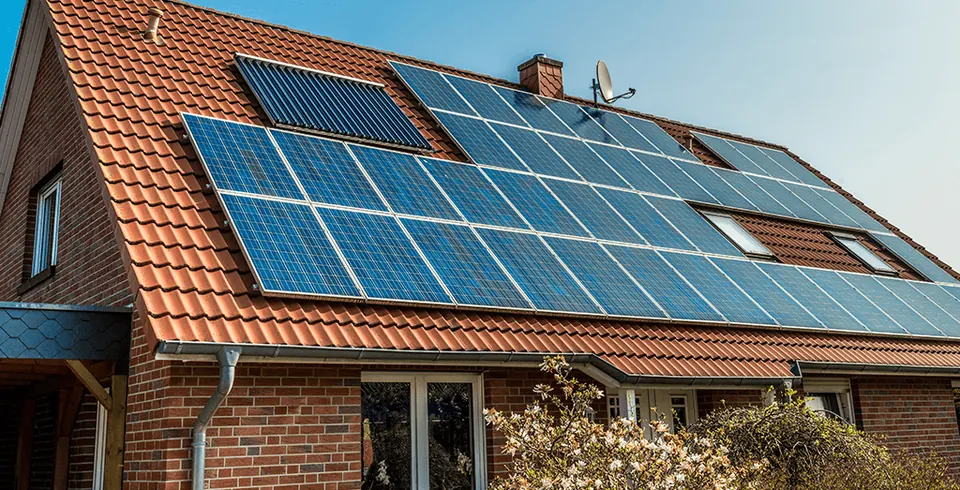
The short answer to what an on-grid solar system is: a battery-free solar energy system that works connected to the grid. The panels on the roof produce direct current, the inverter converts it to alternating current, and the electricity is first used by the installation's own loads. If the energy you produce exceeds your consumption, the surplus goes to the grid, and when it falls short you draw from the grid. This is the most common type of system on home, business and factory roofs in Antalya.
What is an on-grid solar system and what does it consist of?
The basic components of a grid-connected system are as follows:
- Solar panels: Convert light into direct current. For example, TommaTech's 605 W TOPCon panel has 23.42% efficiency according to the manufacturer's datasheet.
- On-grid inverter: Converts direct current into grid-compatible alternating current and works in synchrony with the grid.
- Mounting structure: Rails, hooks or a framework suited to the roof type.
- DC and AC protection elements: Fuses, surge protection, cables and earthing.
- Bidirectional meter: Measures both consumption and the energy fed to the grid.
- Monitoring system: Shows production on a phone or computer.
Its difference from battery systems is that it does not store energy. This is why its cost is lower and its maintenance simpler.
How does it work? The journey of energy
When the sun rises, the panels start producing. The inverter tracks the panels' operating point with an MPPT algorithm to extract the highest power. The electricity produced goes to the installation's main board and is first used by running appliances. A refrigerator, air conditioner, pool pump or production line is fed by solar production. If production exceeds consumption, the surplus passes to the grid. If production is insufficient, for example in the evening or in cloudy weather, the shortfall is drawn from the grid.
In official use, there is an hourly meter measuring in both directions at the connection point and a separate check meter measuring production. The distribution company commissions these meters after acceptance. We explained how surplus energy is valued in our article on the net metering system rules.
Why does it not work when the power goes out?
This is the most frequently asked feature of on-grid systems. When the grid goes down, the inverter switches itself off automatically. This is called anti-islanding. The reason is safety. Technical staff working on the lines during an outage must not encounter electricity back-fed into the line from your system.
So if the power fails on a sunny day, your battery-free on-grid system does not produce. If you need electricity during an outage too, you need a hybrid system and a battery. We covered this solution in detail in our article on solar energy that works during a power cut.
How much does it produce in Antalya?
According to PVGIS data, a 1 kWp system at optimum tilt (33°) facing south produces about 1,656 kWh a year in central Antalya. The values are 1,615 kWh/kWp in Alanya, 1,649 in Manavgat, 1,664 in Kaş, 1,655 in Korkuteli and 1,719 in Elmalı. These values include 14% system loss.
As an example, for a 5 kWp home system the theoretical annual production is about 8,280 kWh (5 × 1,656, calculation). The real value differs with roof orientation, tilt and shading. The monthly distribution is 99 kWh/kWp in December and 168 in July.
For detailed values, see our article on how much electricity solar panels produce in Antalya.
Inverter selection and sizing
The heart of an on-grid system is the inverter. The main points to watch in selection are:
- Power ratio: The ratio of panel power (DC) to inverter power (AC) is generally kept between 1.0 and 1.3. Because irradiance is high at midday in Antalya, an excessively large ratio is unnecessary.
- Number of MPPTs: If there are roof sections facing different directions, more than one MPPT input is needed.
- Phase structure: A single-phase or three-phase subscription determines the inverter type.
- Efficiency and warranty: Maximum and weighted European efficiency are stated in the catalogue. For example, in a 10 kW-class inverter, maximum efficiency is 98.6% and European weighted efficiency 98.1%.
- Monitoring and alarm: Monitoring is essential to notice production loss early.
Although an inverter may look like a device without mechanical parts, it is affected by heat and moisture. Mounting it in a shaded, ventilated place extends its life. In Antalya, summer heat and salty air are decisive in choosing the installation location.
Maintenance and monitoring
Because an on-grid system has no moving parts, its maintenance need is low. Even so, a visual and measured check at least once a year is recommended. Cleaning the panel surface of dust, pollen and bird droppings, checking cable and connector connections, examining inverter fault logs and the tightness of screws in the mounting structure are parts of this check. Mobile monitoring tells you of a sudden drop in production and keeps a problem from going unnoticed for long.
Common mistakes
- Thinking the system works during an outage: A battery-free system stops when the grid goes.
- Looking only at price: Equipment age, warranty documents and installation quality determine total lifespan.
- Not allowing for shading: Shadows from a chimney, antenna or neighbouring building lower production.
- Running it without an application: Running before acceptance carries the sanction of disconnection and an application ban.
- Sizing without calculating consumption: A very large system leads to low-value surplus.
Benefits and limitations
| Topic | Benefit | Limitation |
|---|---|---|
| Cost and maintenance | With no battery, the system is simpler and more economical | Provides no backup power in an outage |
| Efficiency | In modern inverters maximum efficiency is around 98% (for example 98.6% for one manufacturer) | Efficiency depends on roof conditions |
| Energy use | Meets daytime consumption directly from the sun | No production at night; drawn from the grid |
| Surplus production | Fed to the grid and netted | The value may be lower than the unit charge on the bill |
| Regulation | Can be installed under licence-exempt generation | Application, acceptance and equipment-age conditions apply |
Inverter warranty varies by brand. For example, the standard warranty on TommaTech's on-grid and hybrid inverters is 5 years from the invoice date. For panels, the manufacturer's linear performance warranty can go up to 30 years; the product warranty is 15 or 25 years depending on the model. Ask for these periods in writing in the quote.
Application and regulation: steps in Antalya
Grid-connected systems are installed under licence-exempt electricity generation. As of October 2026, the basic points are as follows:
- The application authority is the distribution company. In Antalya this is AEDAŞ (the regional electricity distribution company), and applications have been taken through the LUS platform since 1 October 2023.
- There is a simplified procedure for roof and facade systems up to 25 kW. The system cannot exceed the contract power of the consumption facility.
- After the application, the connection approval letter (çağrı mektubu), project approval, connection agreement and acceptance steps follow.
- Main equipment such as panels and inverters must have been manufactured within the last five years.
- Running the system without acceptance leads to disconnection and a three-year application ban.
For residential subscriptions net metering (mahsuplaşma) is monthly. For non-residential installations it has been hourly since 1 May 2026. You can find the whole process step by step in our article on the rooftop solar application. The load-bearing capacity of the roof must also be assessed by a civil engineer; the distribution company and the municipality may ask for a structural suitability certificate.
Who is it suitable for?
The practical answer to what an on-grid solar system is lies in who it suits. An on-grid system suits anyone who has daytime consumption and a reliable electricity grid. It stands out in these profiles:
- Detached homes and villas: Air conditioning, pool pump and daytime loads are fed from the sun.
- Workplaces and workshops: In businesses that work in the daytime, the self-consumption ratio is high.
- Factories and commercial buildings: A large roof area allows projects at MW scale.
- Agricultural irrigation: If the pump runs in the daytime, on-grid or a dedicated irrigation system can be preferred.
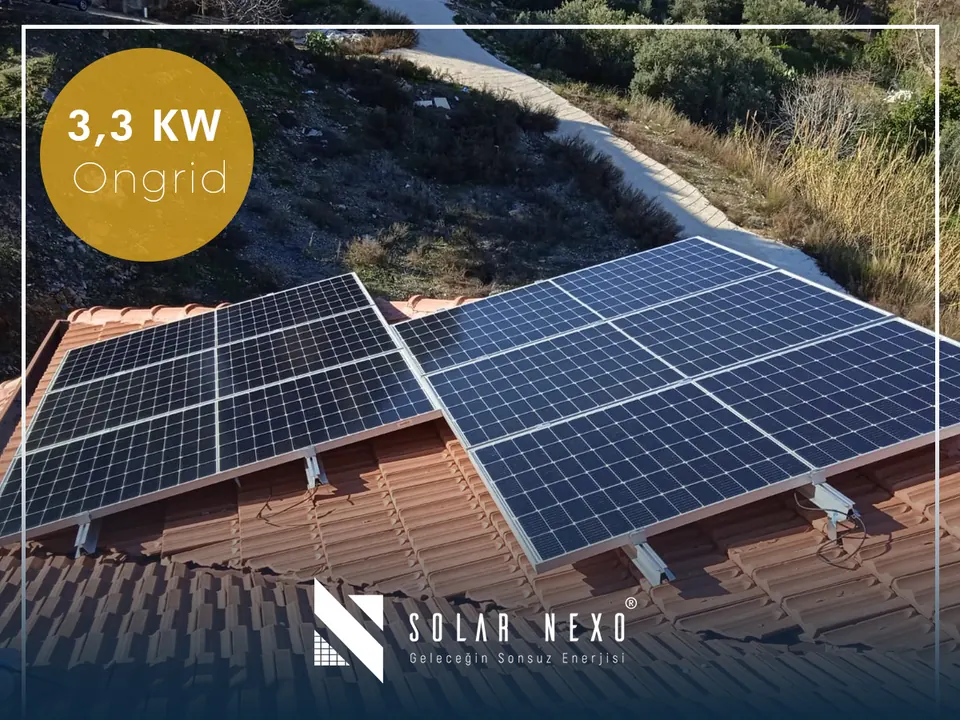
Among the references on Solar Nexo's website are on-grid projects from a 3.3 kW home roof to a 4.5 MW industrial roof. For the scope of the service, see the on-grid systems page.

When should you consider another system?
For a vineyard house, plateau house or boat with no grid, off-grid is more suitable; for places with frequent outages or critical loads that must run during an outage, a hybrid system is more suitable. We compared the three types in our article on the difference between on-grid, off-grid and hybrid. Before choosing, you need to assess your load profile, grid quality and budget together.
Conclusion
The summary of what an on-grid solar system is: an economical, battery-free solar solution that works alongside the grid. Antalya's high irradiance and daytime-weighted air-conditioning load make this system type attractive. Its disadvantage is that it does not work during an outage. To assess your roof, consumption and regulatory conditions together, you can request a free survey.
Frequently asked questions
What is an on-grid solar system?
An on-grid solar system is a grid-connected solar energy system with no battery. The panels produce electricity, the inverter makes it grid-compatible and the energy is first consumed on site. Surplus production goes to the grid and any shortfall is drawn from it. Having no battery makes it an economical solution with simple maintenance. At the free survey we can assess together whether your roof suits this system.
Does an on-grid system work when the power goes out?
No, a battery-free on-grid system does not work when the grid fails. The inverter switches itself off because of anti-islanding protection; the aim is to protect line workers from the danger of back-feed. If you want electricity during an outage too, a system with a hybrid inverter and a battery and a critical-load plan is needed. Hybrid system options for outage-resilient solutions should be examined separately.
What is the difference between on-grid and off-grid?
An on-grid system is connected to the grid and has no battery; an off-grid system is independent of the grid and stores energy in a battery. On-grid is more economical but does not work during an outage. Off-grid is used where there is no grid, but battery and inverter sizing is more critical and the cost is higher. A hybrid system combines the features of both. The choice should therefore be made on your grid quality and load profile.
How much electricity does an on-grid system produce in Antalya?
According to PVGIS, a 1 kWp system at optimum tilt facing south in central Antalya produces about 1,656 kWh a year. This comes to a theoretical 8,280 kWh for 5 kWp. Real production varies with roof orientation, tilt and shading. In summer, production is about 1.7 times winter production. These values are a PVGIS estimate and may differ slightly from year to year.
Can surplus electricity from an on-grid system be sold?
Yes, but to a limited extent and at a low price. Surplus production is fed to the grid and netted. Surplus is valued at the single-rate active energy unit price of the relevant tariff; this is lower than the total unit charge on the bill. Net metering is monthly for residential subscriptions and hourly for non-residential ones from 1 May 2026. Current rules are valid as of October 2026 and may change.
Is a permit needed to install an on-grid system?
Yes. The licence-exempt generation application is made to the distribution company; in Antalya the LUS platform of AEDAŞ is used. There are connection approval letter, project approval, connection agreement and acceptance steps. Even where a building-permit exemption exists in planned areas, conditions such as administrative permission, a project and the consent of the apartment owners also apply. You should confirm the current document list with the distribution company.
How many years does an on-grid system last?
For panels, the manufacturer's linear performance warranty goes up to 30 years; for example, in one TOPCon panel series, 87.4% of power is guaranteed in year 30. Inverter life is shorter and the standard warranty is 5 years for most manufacturers. The system's lifespan also depends on installation quality, maintenance and climate conditions. Because warranty scope varies by brand and model, ask for the documents in writing.
Sources
- PVGIS - Photovoltaic Geographical Information System (European Commission JRC)
- AEDAŞ - Licence-Exempt Generation Applications
- TommaTech TT605-144TN10 TOPCon panel datasheet (Ver.2601.14)
- Amendments to the Regulation on Unlicensed Electricity Generation in the Electricity Market (Official Gazette, 2 April 2026)
Want a clear calculation for your roof?
The Solar Nexo team carries out a free site survey at your address in Antalya and designs the system that suits your roof, consumption and budget.