Short answer
A cold storage solar plant covers the daytime share of the continuous energy need of compressors and evaporator fans with a rooftop solar plant. In Antalya, wide flat warehouse roofs and the refrigeration load that rises in summer heat make this solution suitable. Night load comes from the grid; an on-grid system does not run in an outage, so backup power must be planned separately for critical products.
Key takeaways
- In cold storage the load runs 24/7; solar covers the daytime share and night load is drawn from the grid.
- In summer heat compressor load rises and solar output also peaks; the two curves partly overlap.
- A standard on-grid system shuts down in a grid outage; a generator or battery should be considered separately for product safety.
- Net metering for non-residential sites has been hourly since 1 May 2026; if capacity is insufficient, applications with high consumption over the last year get priority.
- In central Antalya, annual specific yield with optimum installation is about 1,656 kWh/kWp (PVGIS 5.3).
A cold storage solar plant is a system in which part of the electricity feeding the compressors, condensers and evaporator fans of cold rooms is covered by solar energy produced on the roof. Because Antalya is an important hub in the wholesale market, storage and export chain for products such as greenhouse vegetables, citrus, fruit and flowers, cold storage investment is widespread in the region. These stores have high, continuous electricity consumption; their wide flat roofs offer natural potential for solar energy. In this article we take up the load profile, sizing, the need for backup power and regulation.
How is the electrical load distributed in cold storage?
The energy consumption of a cold store consists mainly of the following items:
- Compressors: The highest load; they run cyclically to maintain the temperature inside the store.
- Evaporator and condenser fans: They provide air circulation and are in circuit continuously.
- Defrost systems: They work at set intervals with an electric resistance or hot gas.
- Lighting, doors, loading ramp and office loads: Heavy in working hours.
There is a refrigeration load all year, but as outdoor temperature rises, the compressor runs more often and for longer. In Antalya the average maximum temperature in July is 34.2 °C and the record value has reached 45.0 °C; in these conditions refrigeration load reaches its highest level of the year. Because solar production also peaks in the same period, in summer months consumption and production rise in the same direction.
System sizing for a cold storage solar plant
Because the cold store load lasts 24 hours, the part that directly overlaps with solar production is the daytime hours. A hypothetical example: an average continuous load of 20 kW means 20 × 24 = 480 kWh a day and about 175,200 kWh a year. With the PVGIS 5.3 reference, a 100 kWp system in central Antalya produces about 100 × 1,656 = 165,600 kWh a year under optimum conditions. Although the annual totals look close, production happens only in the daytime; night consumption keeps coming from the grid.
Moreover, for non-residential sites, since 1 May 2026 generation and consumption are netted separately every hour. At midday, when the store's load is 20 kW, a 100 kWp system can produce several times that at its peak; the excess is valued as surplus at the single-rate active energy unit price of the relevant tariff, and this amount is lower than the total unit price on the bill. For this reason the system is usually sized to a power close to the daytime load level. Hourly load data is essential for sizing.
Increasing the daytime load: refrigeration programme and thermal mass
Cold stores can be regarded as a flexible load thanks to their thermal mass. As far as product requirements allow, the refrigeration programme can be shifted to the daytime hours; by cooling the store a little more at midday, the compressor load can be eased when solar production falls. The limit of this strategy is product safety: the store temperature and humidity range are set by the product and food safety rules must not be exceeded. This kind of control requires an automation system and engineering assessment.
This approach can provide a far cheaper kind of "storage" than a battery, but it does not suit every store. If doors are opened often, product intake is heavy or the store receives very warm product, flexibility is limited. At the survey, this option is assessed according to the type of store and product.
What happens when the grid is cut? The backup power question
This topic is critical for cold stores: a standard on-grid system without a battery shuts itself down for safety when the grid is cut. So a solar plant alone does not keep the store running during an outage. For stores at risk of product loss, a generator or a battery-supported hybrid solution is needed. A battery is an expensive solution for big loads like a store; so it is mostly designed to feed only critical loads (compressor, control system). To look at the subject in detail, you can read our article on solar energy that works during a power cut.
A note on regulation: no payment is made for energy fed from a battery to the grid. A battery only makes sense as in-store backup and for your own consumption.
| Backup option | Advantage | Point to watch |
|---|---|---|
| Generator | Feeds all critical load in a long outage | Fuel, maintenance and start-up delay; must be coordinated to work with the solar plant |
| Battery-supported hybrid system | Instant changeover, can be charged by the sun | Capacity and cost are high for big loads; considered only for critical loads |
| UPS for the control system | Keeps the automation and alarm system running | Does not feed the compressor; only for control and monitoring |
Which backup solution is suitable is determined by the sensitivity of the stored product, the frequency of outages and the amount of load. For the basics of the hybrid approach, you can look at our hybrid systems page.

Checklist for a cold storage solar plant
- Has hourly load data been obtained and the daytime average calculated?
- Have your subscriber type and contract power been confirmed with the distribution company?
- Has the roof's load-bearing capacity been assessed by a civil engineer?
- Is there a backup power plan for product safety in a grid outage?
- Is shifting the refrigeration programme to the daytime compatible with product requirements?
- Are the equipment brand-model, warranty and monitoring scope written in the quote?
Antalya's wholesale market and export chain: roof potential
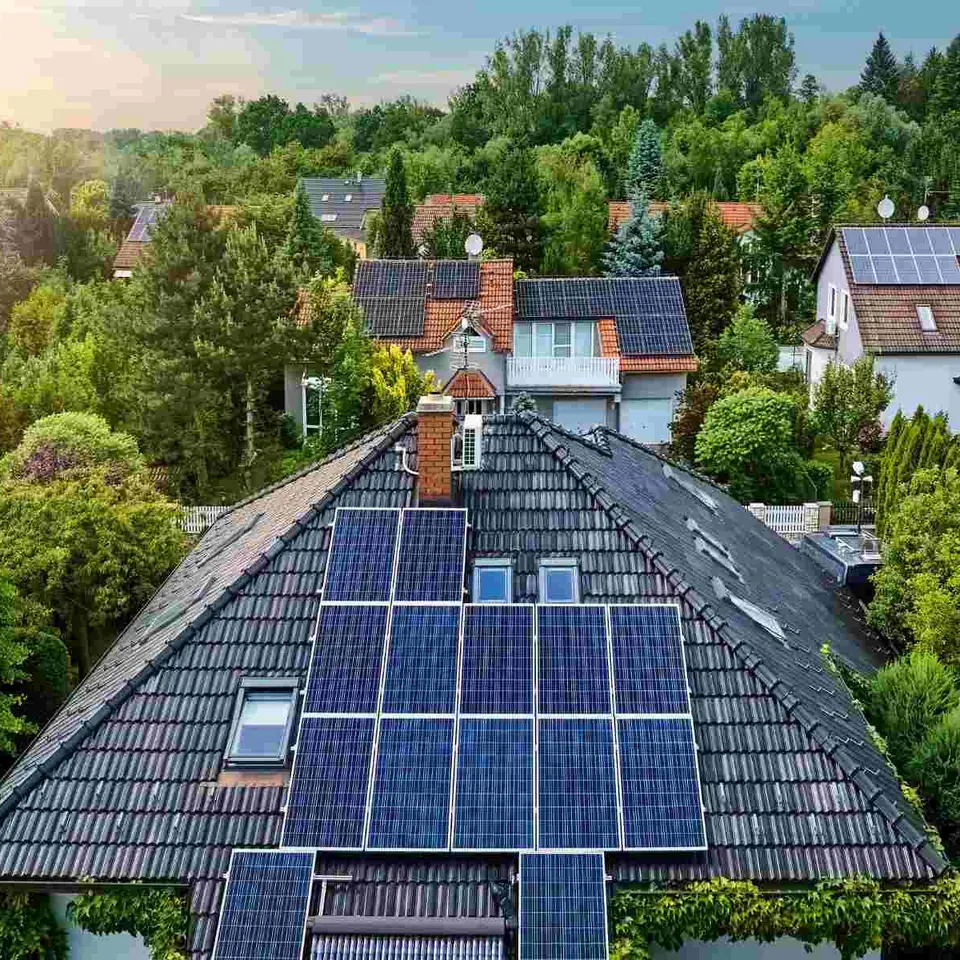
Cold stores generally have large, flat, unshaded roofs; this is an ideal condition for solar. On sandwich panel roofs the supporting structure and roof material are critical: the roof's load-bearing capacity must be assessed by a civil engineer, and the distribution company and the municipality may ask for a structural suitability document. According to the manufacturer's warning, the panel must be mounted on a fire-resistant surface with ventilation left behind it; panels must not be installed on vulnerable roofs such as plastic or PVC without a protective layer.
In facilities where greenhouse products are collected and stored along the Kumluca, Finike and Demre line, hail, storm and tornado events are recorded; it is important to choose the mounting structure for wind load. For the relationship between greenhouse and store in the region, you can read our article on solar energy for greenhouses in Kumluca and Finike. For large industrial-type roofs, the information in our article on factory solar plant installation also applies to cold stores.
Regulation and application for a cold storage solar plant
The capacity limit varies with the store's subscriber type: industrial sites can install an unlicensed plant of up to twice their contract power; for other subscriber groups the limit is contract power (5/1/h). For plants that received their connection approval letter (çağrı mektubu) after 12.05.2019, annual production cannot exceed twice the related consumption. You need to confirm with the distribution company which group your subscriber type falls into.
With the November 2025 amendment, a priority order was set for when grid capacity is insufficient: installation at the same metering point, high consumption over the last year, high contract power and not having received a favourable connection opinion before. Cold stores with continuously high consumption can be advantaged under these criteria. The application is made in Antalya through AEDAŞ's (Akdeniz Elektrik Dağıtım A.Ş., the local electricity distribution company) LUS platform, and main equipment must have been manufactured within the last five years. Running the system before acceptance is complete leads to disconnection and a 3-year application ban. For details, you can look at our article on selling surplus electricity.
Solar Nexo's experience at industrial scale
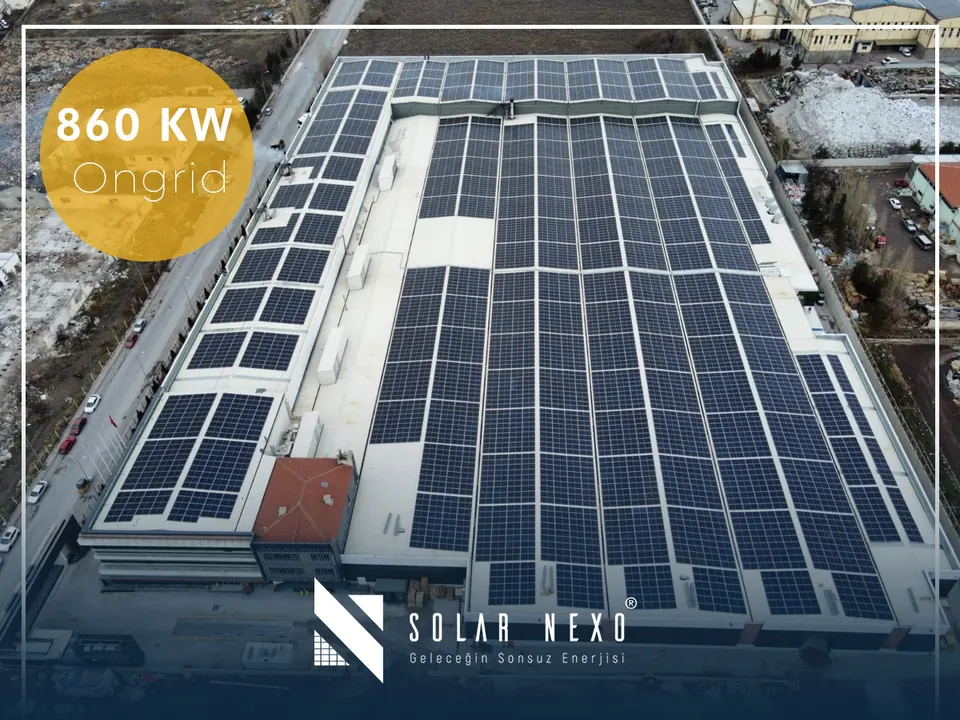
On its website, Solar Nexo shares on-grid references such as an 860 kW industrial roof, a 970 kW factory roof (self-consumption), a 1.3 MW industrial roof and a 4.5 MW large-scale industrial roof; none of them is presented as a cold store and they should be read as indicators of scale. The company states that it has 12+ MW of installed capacity and a 27-person field team. The survey is free; load data, roof, contract power and your backup power needs are assessed together. For all the references, see our references page.
Seasonal load change and product variety
The load of cold stores in Antalya changes with the season: in the greenhouse vegetable and citrus season, store occupancy and product movement rise, and out of season occupancy falls. This fluctuation may require the system to be planned not for the year-round average load but for a power close to the lowest seasonal daytime load. In stores that hold more than one product type (frozen, chilled, humid), the rooms work at different temperatures and the load varies. At the survey, these details are noted room by room.
Conclusion
A cold storage solar plant can reduce energy cost at Antalya sites with continuous high consumption by covering the daytime load with solar. Success depends on sizing based on hourly load data, a backup power plan that protects product safety, roof and structural suitability and regulatory compliance. Without forgetting that the system does not run alone in an outage, the healthiest path is to have a site-specific assessment done at a survey.
Frequently asked questions
Does solar energy make sense for cold storage?
It can make sense for cold stores with continuous high consumption and wide roofs. Solar produces only in the daytime; night load keeps coming from the grid. In summer heat, compressor load and solar production rise together. The decision should be made with a survey based on hourly load data and roof conditions. It is the hourly data, not the bill total, that is decisive.
Will a cold store keep running on solar if the grid is cut?
No, a standard on-grid system without a battery shuts itself down for safety when the grid is cut. If there is a risk of product loss, a generator or a battery-supported hybrid solution that feeds critical loads is needed. Which loads to back up should be determined at the survey and the extra equipment reflected separately in the quote. Your outage history directly affects this decision; it helps to bring past outage records to the survey.
Is a battery needed in cold storage?
It is not mandatory. A battery can be expensive for big loads like a store; it is often considered only for critical loads. Because no payment is made for energy fed from a battery to the grid, a battery makes sense not for sales but for backup power and your own consumption. As an alternative, the refrigeration programme can be shifted to the daytime. This option should be assessed within the limits of product safety.
How many kWp of solar does a cold store need?
Dividing annual consumption by specific yield gives a starting value; but because production happens only in the daytime, the system is usually sized close to the daytime load level. For example, 100 kWp in central Antalya produces about 165,600 kWh a year under optimum conditions. The exact size is set with hourly load data. On a real roof, tilt, orientation and shade can change production.
Can a solar plant be installed on a sandwich panel roof?
It can if the supporting structure and roof material are suitable. The roof's load-bearing capacity must be assessed by a civil engineer and installation must be done according to the manufacturer's instructions. The panel is mounted on a fire-resistant surface with a ventilation gap; on vulnerable roofs such as plastic or PVC, installation without a protective layer must not be done. Installation contrary to the manual voids the warranty.
How is the application for a cold storage solar plant made?
The application is made in Antalya through AEDAŞ's LUS platform. The connection approval letter (çağrı mektubu), project approval, connection agreement and acceptance steps are followed. Capacity varies with subscriber type; industrial sites can install up to twice their contract power. Main equipment must have been manufactured within the last five years, and the system must not be run before acceptance. Otherwise the connection may be cut.
How long does it take to install a cold storage solar plant?
There is no official figure for the total time. Installation time depends on system size, roof conditions and the progress of the grid application; the regulation defines step periods such as 90 days for project approval after the connection approval letter. Ask for the work programme in writing in the quote. Grid application times may vary with the distribution company. If an uninterrupted changeover is required, have that written into the quote too.
Sources
- European Commission JRC - PVGIS
- Turkish State Meteorological Service - Antalya Statistics
- Official Gazette - Amendment to the Unlicensed Electricity Generation Regulation (02.04.2026)
- Official Gazette - Amendment to the Unlicensed Electricity Generation Regulation (25.11.2025)
- Akdeniz Elektrik Dağıtım A.Ş. - Unlicensed Generation
Want a clear calculation for your roof?
The Solar Nexo team carries out a free site survey at your address in Antalya and designs the system that suits your roof, consumption and budget.