Short answer
A solar energy system that works during an outage is a hybrid inverter and battery system that keeps supplying selected loads when the grid goes down. A classic on-grid inverter shuts off because of anti-islanding protection. In Antalya, homes that expect outages install a critical load panel and a LiFePO4 battery. Battery capacity is calculated from the power and duration of the loads to be run.
Key takeaways
- An on-grid inverter switches itself off when the grid is cut because of anti-islanding protection.
- To work during an outage you need a hybrid inverter with a backup output, a battery and a critical load panel.
- Example calculation: an 8-hour night outage for a refrigerator, lighting, modem and booster pump needs about 2.1 kWh.
- With an air conditioner added, the same scenario rises to about 13.7 kWh.
- No payment is made for energy fed from the battery to the grid (Official Gazette, 02.04.2026).
A solar energy system that works during a power outage is a hybrid inverter and battery system that keeps supplying the loads you choose when the grid goes down. A classic on-grid system, by contrast, shuts itself off for safety when the grid is cut; even with panels on the roof, there is no electricity in the house. In Antalya, outages can occur because of storms, fallen trees, summer peak demand and the length of rural lines. In this article we explain, with examples, the technical logic of working through an outage, the critical load panel and the battery calculation.
Why does an on-grid system not work during an outage?
Anti-islanding protection is mandatory in grid-connected inverters. When grid voltage disappears, the inverter cuts its output within a few seconds. The reason is that if the panels kept feeding the line during an outage, technical staff working on the grid would be put in danger. So an on-grid system shutting down during an outage is not a fault but a deliberate safety feature.
This difference between system types is decisive for users who expect outages. We described this structure in detail in our on-grid system guide. If you want solar energy that works during an outage, you will either install a hybrid system or add a battery solution suited to your existing system.
How is a solar energy system that works during an outage installed?
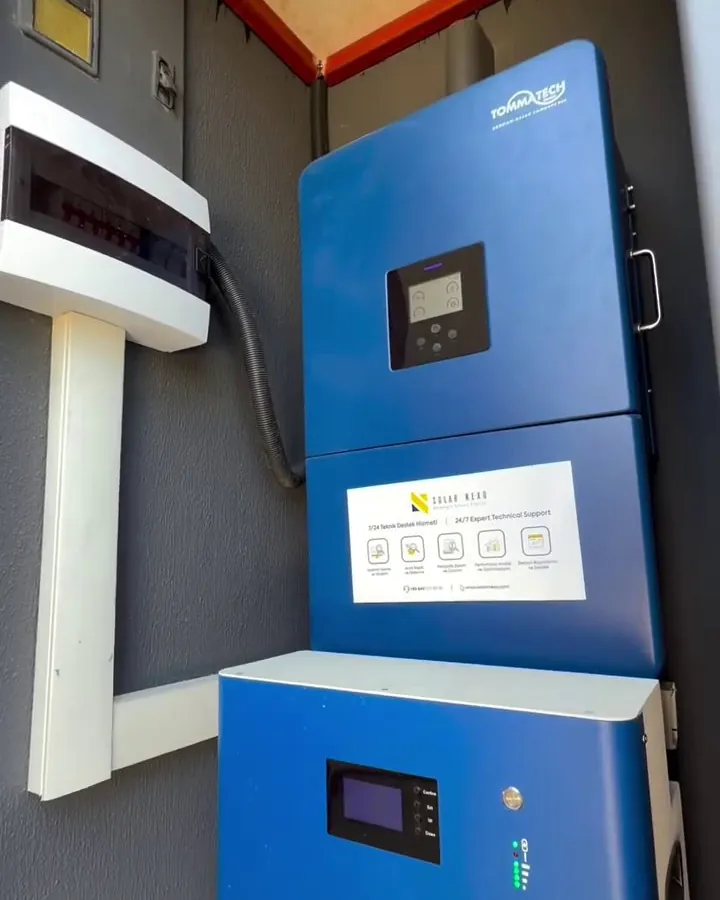
The system consists of panels, a hybrid inverter, a battery and a critical load panel. A hybrid inverter can both connect to the grid and, when there is no grid, supply a selected part of the home through a "backup output" (EPS or backup). When the grid is cut, the switching inside the inverter engages quickly; the transfer time varies by product and should be checked in the datasheet for sensitive devices.
The critical load panel is a small panel separated from the home's main panel; it contains only the circuits you want to keep running during an outage. Wanting to back up the whole house often means an unnecessarily large battery and inverter. For this reason it makes sense to divide the circuits into two groups:
- Critical loads: Refrigerator, lighting, modem, TV, chargers, booster pump, security cameras.
- Left off the backup: High-power and deferrable devices such as the oven, electric heater and tumble dryer.
- Optional loads: Air conditioning, pool pump. Because these are high-power, they greatly affect battery and inverter size.
During summer outages in Antalya, the air-conditioning need is decisive; whether the air conditioner will be put on backup is the most important decision in the design.
How is battery capacity calculated?
The battery calculation is based on which load you want to run for how many hours during an outage. The table below is a hypothetical example for an 8-hour night outage; use the values of your real devices.
| Load | Power | Duration | Energy |
|---|---|---|---|
| Refrigerator (average draw) | 100 W | 8 hours | 0.80 kWh |
| LED lighting | 100 W | 4 hours | 0.40 kWh |
| Modem and TV | 100 W | 5 hours | 0.50 kWh |
| Booster pump | 750 W | 0.5 hours | 0.375 kWh |
| Total | about 2.1 kWh |
The battery cannot use all of this energy efficiently because of depth of discharge and inverter efficiency. If we take usable capacity as 90% and inverter efficiency as 95%, the required nominal capacity is about 2.1 ÷ (0.90 × 0.95) = 2.4 kWh; that is, a 5 kWh battery leaves a comfortable margin for this scenario. If you add a 1.2 kW air conditioner for 8 hours to the same scenario, 9.6 kWh more is needed and the total rises to about 13.7 kWh. Adding air conditioning raises the battery requirement about sixfold.
On the power side, simultaneous load is decisive. The air-conditioner compressor and the booster pump motor draw much higher current than their nominal current when they first start; the hybrid inverter's backup output power must cover this starting current. On some models, backup output power can differ from the main nominal power; checking the datasheet is essential.
What does the system do step by step during an outage?
When the grid is cut, the hybrid inverter first disconnects from the grid, then begins supplying the critical load panel from the backup output. The duration of this transfer varies by product; for sensitive devices such as computers and servers, a separate uninterruptible power supply should also be considered. During the day, the panels keep producing and feed the load first, and the surplus goes to the battery. At night the battery carries the load down to the set lower charge level.
When the grid returns, the inverter reconnects after verifying that grid voltage and frequency are stable; this is automatic and usually takes a few minutes. An important concept in the settings is the "reserve charge level": if you set aside part of the battery only for outages, you ensure that capacity is not completely drained during an outage. This reserve reduces the energy you can use in daily operation; so set the percentage together with your load list.
Daytime outages, cloudy days and generators
In a daytime outage the panels both feed the home and charge the battery; for this reason a daytime outage causes far fewer problems than a night outage. On cloudy days production drops and the battery drains faster. In Antalya, rainy days fall mainly between November and February; according to PVGIS, 1 kWp of panels produces only 99 kWh in December, about 59% of July's 168 kWh.
In rural areas where long outages are frequent, some systems are designed with a generator input. The generator can charge the battery and covers the days when the panels fall short. For homes that must operate independently of the grid, you can also look at our hybrid systems and off-grid systems pages.
Can a battery be added to an existing on-grid system?
In most cases it is possible; however, the method depends on the type of the existing system. If the existing inverter is not battery-compatible, either the system is rebuilt with a hybrid inverter or a separate AC-coupled battery inverter is added. Which one is suitable is decided after a preliminary technical review. The unlicensed generation regulation gives the facility owner the option of installing integrated storage up to the electrical capacity of the generation plant; however, no payment is made for energy fed from the battery to the grid, and the main equipment must have been manufactured within the last five years.
Confirm with AEDAŞ (the regional distribution company) before applying whether notification or an application to the distribution company is needed when adding storage. A plant operated without acceptance can be disconnected and may be ordered removed; for this reason do not commission the system before acceptance. For battery types you can look at our LiFePO4 battery article, and for cost items our battery system cost article.
Real examples and who is it suitable for?
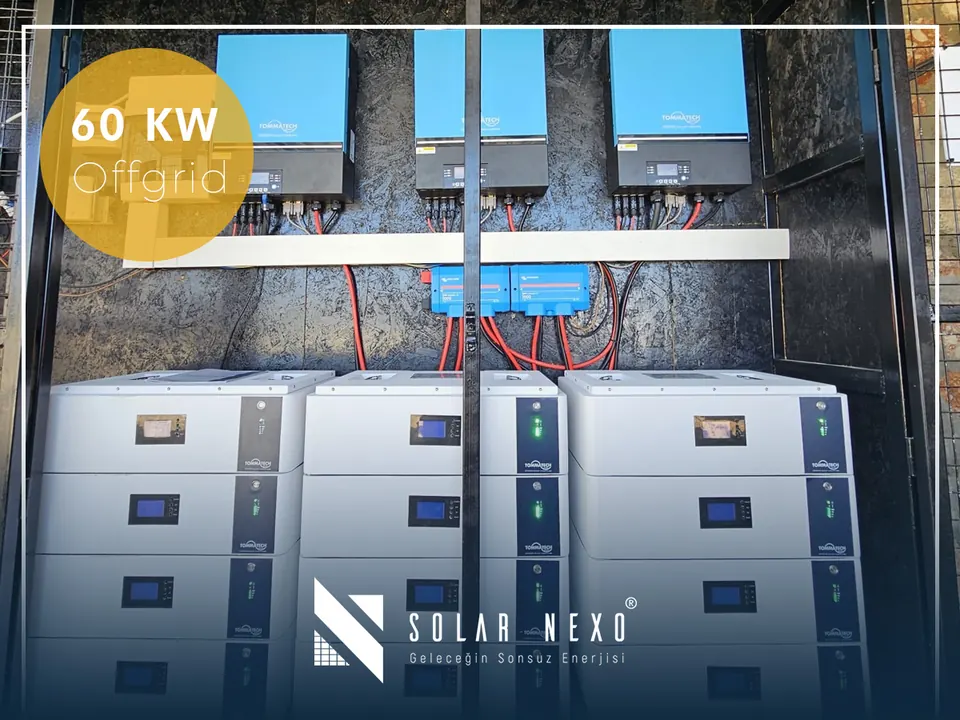
The Manavgat (15 kW hybrid inverter, 15 kWh LiFePO4), Belek (20 kW hybrid inverter, 15 kWh LiFePO4) and Döşemealtı (20 kW hybrid inverter, 30 kWh LiFePO4) installations that Solar Nexo shared on Instagram are villa-scale examples of this architecture. The 60 kW off-grid energy room reference with parallel inverters and lithium batteries on the site is a large-scale standalone system.
A system that works during outages makes particular sense for these users: those with loads that cannot tolerate interruption, such as medicine refrigeration or cameras, homes in rural areas with frequent outages, guesthouses and small businesses, people who work from home, and farmers with critical loads such as an irrigation pump or a cold room.
The expectation of outages in Antalya varies with local conditions. In rural districts, outages caused by long lines, storms and fallen trees may be more frequent; in tourism areas the grid can be strained at summer peak. For businesses such as guesthouses, small hotels and restaurants, protecting the cold chain and the till system is the most concrete reason to prepare for outages. In homes, the medicine cabinet, the modem and the water pump are the priority loads. We do not give an official statistic on outage frequency; it varies from region to region and year to year.
A few notes are also needed on the regulatory side. A system with storage requires that the main equipment (panel, inverter, battery) has been manufactured within the last five years and cannot be operated before acceptance. There are differences in warranty: for example, the standard warranty on TommaTech inverters is 5 years from the invoice date; on TommaTech LV batteries the product warranty is 60 months and the performance warranty is 24 months for at least 60% of nominal energy. Battery warranty varies by brand and model, so ask for the document at the quotation stage.
Conclusion
The basic formula for solar energy that works during an outage is simple: a hybrid inverter, a LiFePO4 battery of suitable capacity and a correctly divided critical load panel. In designing solar energy that works during an outage, whether high-power loads such as air conditioning are put on backup is the most important decision determining battery and inverter size. At the free site survey we can work out your load list together and recommend a suitable architecture.
Frequently asked questions
Why don't solar panels work when the power goes out?
Grid-connected (on-grid) inverters have anti-islanding protection; when grid voltage disappears, the inverter cuts its output. This is for the safety of personnel working on the line and is not a fault. To work during an outage you need a hybrid inverter with a battery and a backup output (EPS). Although the panels themselves keep working, the energy is not delivered to the house.
Which inverter is needed for a solar system that works during an outage?
You need a hybrid inverter with a backup output (EPS or backup). In selection, backup output power, transfer time and starting current matter; on some models the backup output power differs from the main nominal power. These values are written in the product datasheet. A margin should be allowed in the inverter for motor loads such as air conditioning and the booster pump.
Does the whole house work during an outage?
Only as far as the design allows. In practice a critical load panel is installed and only selected circuits such as the refrigerator, lighting, modem and booster pump are backed up; powerful loads such as the oven are left out. Backing up the whole house requires a very large battery and inverter. If high-power loads such as air conditioning are added, the battery requirement multiplies, so they should be listed in advance.
How many kWh of battery is enough for an outage?
It depends on the total energy of the loads you want to run and the duration. For a refrigerator, lighting, modem and booster pump, an 8-hour night outage needs about 2.1 kWh; allowing for efficiency and depth of discharge, nominal capacity comes to about 2.4 kWh. If an air conditioner is added, the requirement rises to about 13.7 kWh. The figures are only an example.
Can I add a battery to my existing on-grid system?
In most cases it is possible. If the existing inverter is not battery-compatible, rebuilding with a hybrid inverter or a separate AC-coupled battery inverter may be needed. A preliminary technical review is required. Under the regulation, storage may be installed up to the electrical capacity of the generation plant; energy fed from the battery to the grid is not paid for, and the main equipment must have been manufactured within the last five years.
How many hours does a solar energy system run during an outage?
The duration depends on battery capacity, the power of the loads being run and daytime solar production. In a daytime outage the panels both feed the loads and charge the battery; in a night outage only the battery is in circuit and the duration is limited by capacity. A load beyond capacity drains the battery quickly. For this reason loads are classified in advance and, if needed, a generator input is added.
Can a battery sell electricity to the grid?
No. Under the regulatory text dated 02.04.2026, no payment is made for the part of the surplus remaining after net metering that is fed from the battery to the grid. Storage makes sense for covering your own consumption and backup needs. Thinking of the battery as outage insurance and for evening consumption is the right approach; confirm the current rules with the distribution company.
Sources
Want a clear calculation for your roof?
The Solar Nexo team carries out a free site survey at your address in Antalya and designs the system that suits your roof, consumption and budget.