Short answer
Solar energy in Antalya offers roughly 1,656 kWh/kWp of annual production potential in the city centre according to PVGIS, thanks to irradiation above the Turkish average. System type (on-grid, off-grid, hybrid), roof structure, consumption profile and equipment quality determine the cost. Applications in Antalya go through AEDAŞ's LUS portal; a free site survey is the first step to correct sizing.
Key takeaways
- According to PVGIS 5.3, annual specific production in central Antalya at optimal tilt and south orientation is 1,656 kWh/kWp.
- According to MGM data (Turkish State Meteorological Service), Antalya gets about 2,967 hours of sunshine per year.
- Summer air-conditioning and tourism loads coincide with peak production months; winter production (December: 99 kWh/kWp) is about 60 percent of summer's.
- AEDAŞ has accepted unlicensed generation applications only through the LUS platform since 1 October 2023.
- Exact cost varies with roof, equipment and system type; the right method is an on-site survey and a comparison of written quotes.
Solar energy in Antalya is a strong proposition for rooftop investments: irradiation is about 8 percent above the Turkish average, and the PVGIS production figure reaches 1,656 kWh/kWp per year in the city centre. This guide summarises the potential, system types, cost factors, application process and company selection for homeowners, villa owners, businesses and farmers who are considering solar panels in Antalya. For every topic you want to explore in more depth, we have linked the relevant article.
Why does solar energy stand out in Antalya?
The potential of solar energy in Antalya rests on measured data. According to the Turkish State Meteorological Service (MGM), annual sunshine duration in Antalya is about 2,967 hours, rising to a daily average of 11.7 hours in July. According to the GEPA solar atlas (Turkey's national solar energy potential atlas), annual global radiation is about 1,650 kWh/m². Compared with the 1,527.46 kWh/m² that the Ministry of Energy and Natural Resources publishes as the Turkish average, Antalya receives about 8 percent more irradiation (calculation).
MGM records show about 73 rainy days a year, with most of the rain falling between November and February; July and August average only about 0.5 rainy days per month. In other words, clear skies dominate in the summer months when panels most need the sun. Summer heat does reduce panel efficiency somewhat; the average July maximum temperature is 34.2 °C. To limit this effect, a ventilation gap is left behind the panels.
The second advantage is the load profile. In Antalya, air-conditioning, pool pump, hotel and greenhouse loads rise in summer, and panel output peaks in the same months. This overlap makes it easier to consume most of the electricity you generate directly. Production falls in winter; according to PVGIS, you can expect 99 kWh/kWp in December and 168 kWh/kWp in July.
Antalya's geography is also varied, and that affects design. On the coastal strip (Konyaaltı, Muratpaşa, Kemer, Belek, Side, Alanya), villa and hotel roofs, salty air and high air-conditioning loads stand out. Kepez and Aksu have many detached houses, workshops and industrial roofs. In the interior, in Korkuteli and Elmalı, loads such as agricultural irrigation and cold storage are decisive; PVGIS gives high values of 1,655 and 1,719 kWh/kWp for these two districts. In Kumluca, Finike and Demre, greenhouse farming creates different energy needs in summer and winter.
Solar panel production in Antalya: PVGIS figures
PVGIS 5.3 (European Commission JRC), assuming 14 percent system losses, optimal tilt and south orientation, gives the following annual specific production by district. The last column shows roughly what annual output to expect from a 5 kWp system (calculation).
| Area | Annual production (kWh/kWp) | Approx. for 5 kWp (kWh/year) |
|---|---|---|
| Antalya centre | 1,656 | 8,280 |
| Alanya | 1,615 | 8,075 |
| Manavgat | 1,649 | 8,245 |
| Kaş | 1,664 | 8,320 |
| Korkuteli | 1,655 | 8,275 |
| Elmalı | 1,719 | 8,595 |
These values are a theoretical reference. Actual production varies with your roof's tilt and orientation, shading, soiling and equipment quality. For a calculation specific to your roof you can use the calculator on our site, and for a district-by-district reading of the figures see our article on production data.
Which types of solar power systems are installed in Antalya?
The right system type depends on how and when you need electricity:
- On-grid (grid-connected): Production covers consumption first, and the surplus is fed into the grid. It shuts down when the grid goes out, for safety reasons. On-grid systems suit homes and businesses with high daytime consumption.
- Off-grid (independent of the grid): Runs on batteries in highland homes, orchard houses and rural buildings the grid does not reach. Battery capacity and inverter power are the deciding factors here.
- Hybrid: Combines the grid with a battery and feeds critical loads during an outage. It is a frequent choice for villas and businesses.
- Net metering (mahsuplaşma): Based on the principle of matching production with consumption under the unlicensed generation regulation. Hourly and monthly netting rules differ by consumer type.
- Agricultural irrigation: Runs the pump directly on solar power; important for Korkuteli, Elmalı and the greenhouse regions.
If you want to see the three basic types side by side, the article on the differences between on-grid, off-grid and hybrid makes the decision easier.
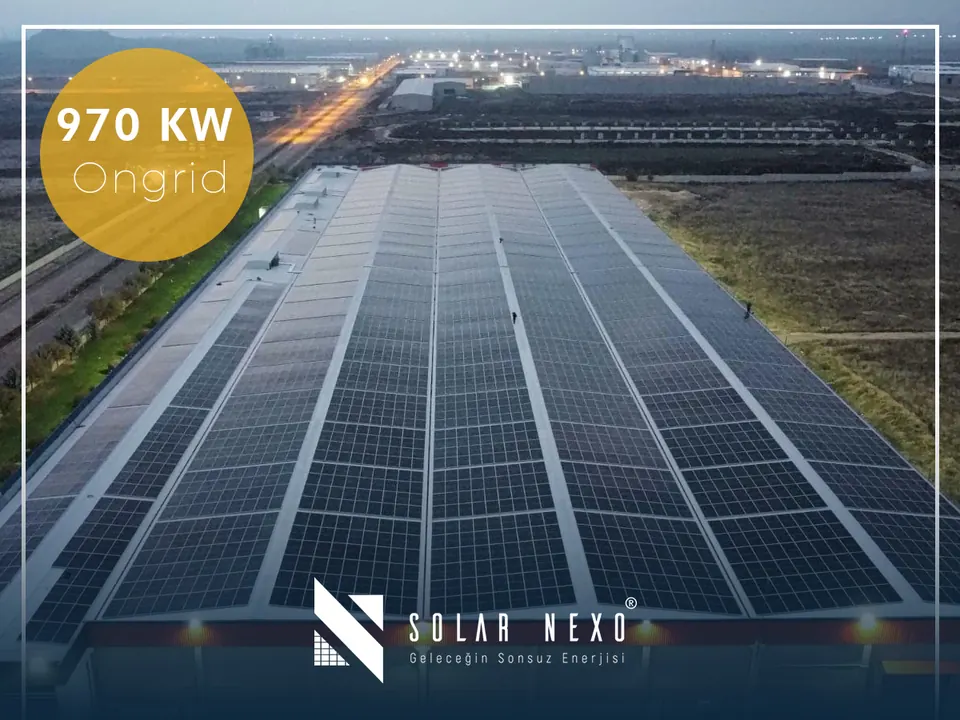
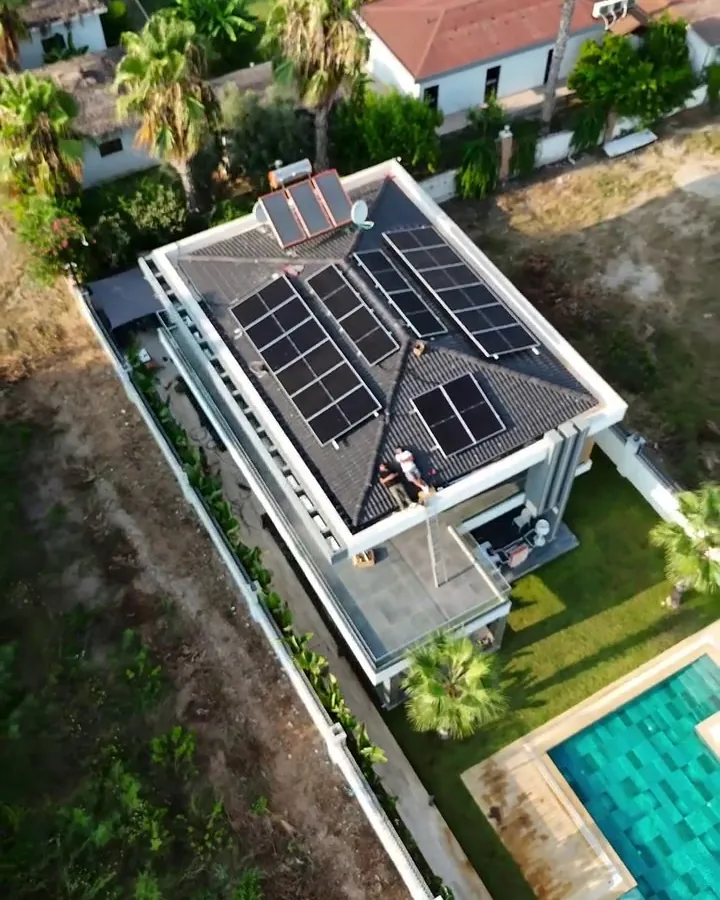
Roof type also affects system choice. In Antalya, hook-and-rail systems are used on tiled roofs, clamps fixed directly onto the sheet on trapezoidal sheet roofs, and tilted frames on flat reinforced-concrete terraces. On a flat terrace a tilted structure raises output but needs more space to avoid shading between panel rows. This is why the roof area required for the same capacity varies with roof type.
Factors that determine the cost
We do not quote prices in this guide, because even two systems of the same capacity can differ substantially in cost depending on the items below:
- Installed power (kWp) and number of panels; for example, with a 605 W panel you need about 17 panels for 10 kWp,
- Panel and inverter brand, technology (for example TOPCon) and warranty terms,
- Roof type: tile, trapezoidal sheet, flat reinforced-concrete terrace or ground, and the mounting structure required,
- Battery capacity (the decisive item in hybrid and off-grid systems),
- Cable distance, earthing, protection equipment and the monitoring system,
- Costs of the design, application and connection process.
Payback time depends on the tariff and your self-consumption rate. EPDK (Turkey's Energy Market Regulatory Authority) raised retail tariffs for residential customers by 25 percent from 4 April 2026; because tariffs can change, the calculation should be made with the current unit price.
How many kW do you need for your bill?Use the solar calculator to see system size, number of panels and annual production straight away.Regulation and application: what you need to know as of October 2026
Because the rules change often, the points below are current as of October 2026; confirm the current situation with the distribution company before applying.
- Antalya's distribution company is AEDAŞ, and it has accepted unlicensed generation applications only through the LUS platform since 1 October 2023.
- The simplified procedure for roof and facade systems applies up to 25 kW; the system cannot exceed the contracted power of the consumption facility.
- Main equipment such as panels, inverters and batteries must have been manufactured within the last five years (2026 amendment).
- Operating the system before acceptance can lead to disconnection and a ban on applying.
Net metering rules differ by consumer type. For facilities tied to a residential subscription, netting is done monthly and no production or sales limit applies. For non-residential facilities, production and consumption are netted hour by hour from 1 May 2026. The payment for surplus energy is determined on the basis of the single-rate active energy unit price of the relevant tariff, not the total unit price on the bill. For this reason, in solar energy investments in Antalya, payback time generally shortens as the self-consumption rate rises; this is an interpretation, and you should make your own calculation with the current tariff.
For the application steps, take a look at our rooftop solar application guide.
From survey to commissioning: the process
The process described on Solar Nexo's website works as follows: free site survey, project design, installation and commissioning, then maintenance and technical support. For net-metered systems, the connection approval letter (çağrı mektubu) application and project approval steps are added.
For step-by-step detail, see our article on the installation process.
What to look for when choosing a solar company in Antalya
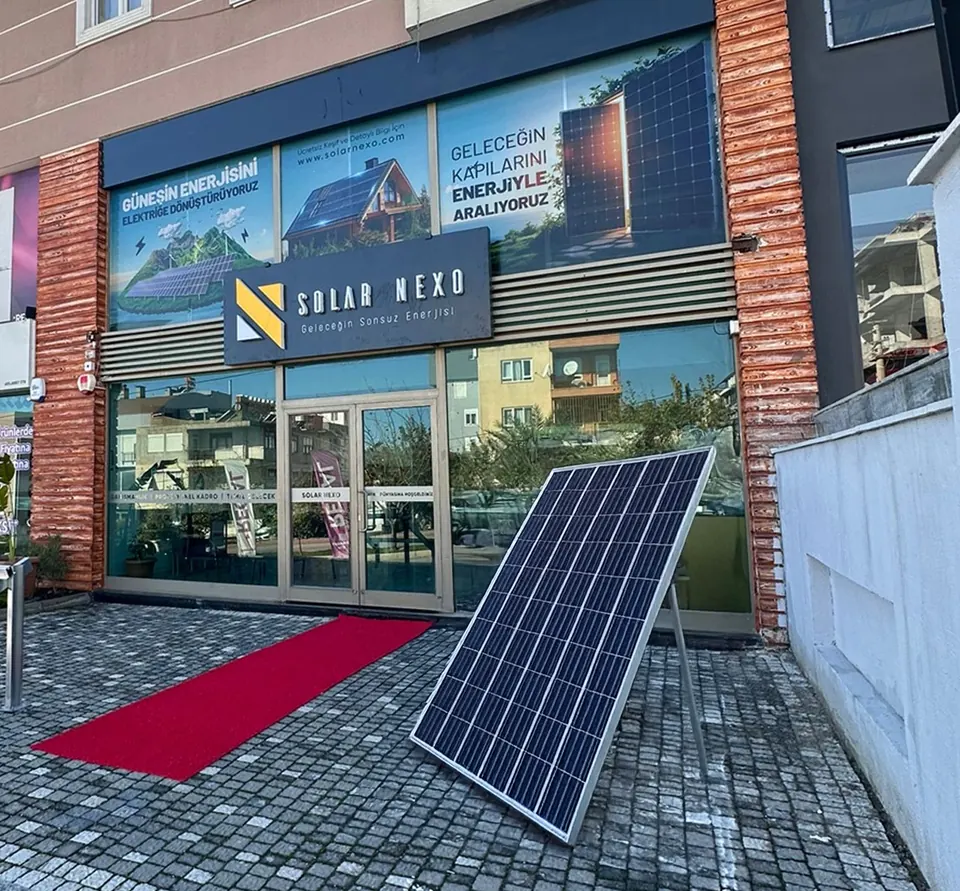
There are many firms in the solar energy market in Antalya, so comparisons need to be made on concrete documents. Reference projects, equipment datasheets, itemised written quotes, an on-site survey and after-sales support are the first things to check. Ask that the quote state the brand and model of the panel and inverter, the warranty period, and the distinction between product warranty and performance warranty. We have collected the documents to request when choosing a solar panel company in our 12-criteria checklist. As a Kepez-based team, Solar Nexo states on its website more than 12 MW of installed capacity and a 27-person field team; actual installations are listed on the references page.
Conclusion
Antalya is a favourable region for solar energy thanks to its high irradiation and summer loads, but the right capacity, system type and equipment choice differ for every roof. First pin down your last 12 months of consumption and your roof's orientation, tilt and shading; then request an itemised written quote, verify the equipment against datasheets, and ask from the start who handles the application process. You can request a free site survey through our contact page.
Frequently asked questions
How much electricity do solar panels produce per year in Antalya?
According to PVGIS 5.3, 1 kWp of panels in central Antalya at optimal tilt and south orientation produces about 1,656 kWh per year. This is a theoretical value that includes 14 percent system losses. Actual production varies with roof orientation, shading and soiling; for a 5 kWp system you can expect roughly 8,000 kWh (calculation).
Where do you apply for a solar energy system in Antalya?
In Antalya, you apply to AEDAŞ, the grid operator. AEDAŞ has accepted unlicensed generation applications through the LUS platform since 1 October 2023. This information is valid as of October 2026, and we recommend verifying it on AEDAŞ's unlicensed generation page before applying; documents, fees and procedures may be updated under the regulation. Solar Nexo supports its customers through the application steps.
Which type of solar energy system should I choose in Antalya?
On-grid suits you if your daytime consumption is high and you have a grid connection, hybrid if you want backup against outages, and off-grid if you have no grid access. The decision depends on your consumption hours, budget and roof structure. During the survey, your load list, outage frequency and roof are examined so the system type and battery need are settled together. If you may want to add a battery later, choosing a hybrid-compatible inverter is also worth considering.
Do solar panels also produce electricity in winter in Antalya?
Yes, production drops but continues. According to PVGIS, you can expect about 99 kWh per kWp in December and 168 kWh in July in Antalya. That means winter production is about 59 percent of summer production (calculation). For this reason, the annual total and seasonal consumption should be considered together when sizing a system.
What does the cost of solar panels in Antalya depend on?
Cost varies with installed power, panel and inverter brand, roof type, battery capacity, cable and protection equipment, and the application process. For this reason, quoting a single price would not be accurate. The healthiest way is to get an itemised written quote after an on-site survey and compare quotes on the same capacity and equipment.
How do I request a free site survey in Antalya?
You can call Solar Nexo's Kepez office on +90 540 007 63 96, write to info@solarnexo.com, or fill in the contact form on the website. During the survey, the roof, consumption and grid situation are examined on site; then the design and quote stage begins. The survey carries no purchase commitment; it lets you see whether the system suits your needs.
Do you need a building permit to install solar panels?
In planned areas, solar systems that do not affect the load-bearing structure and are installed for the building's own needs are not subject to a building permit; however, conditions such as preparing a project, obtaining permission from the authority and consent under condominium ownership apply. For your own situation you should consult the municipality and the distribution company; it is also recommended that a civil engineer assess the roof's load-bearing capacity.
Sources
Want a clear calculation for your roof?
The Solar Nexo team carries out a free site survey at your address in Antalya and designs the system that suits your roof, consumption and budget.