Short answer
Solar panel installation in Antalya follows six steps: free site survey, project design, application to AEDAŞ and the connection approval letter, rail, panel, cable and inverter mounting on the roof, acceptance and commissioning, and finally monitoring and maintenance. Official time limits are set in the regulation, but the total duration varies with the distribution company's workload.
Key takeaways
- Installation starts with a survey; roof orientation, tilt, load-bearing capacity and the last 12 months of consumption are the foundation of the project.
- AEDAŞ applications have been accepted through the LUS portal since 1 October 2023 (as of October 2026).
- Under the 25 kW procedure, there are 90 days from notification of the connection approval letter for project approval, and 15 days after approval for the connection agreement.
- Operating the system before acceptance is complete can lead to disconnection and a 3-year ban on applying.
- Main equipment such as panels, inverters and batteries must have been manufactured within the last five years.
Solar panel installation in Antalya starts with a free site survey and is completed through the design, application, mounting, acceptance and monitoring stages. The mounting work on the roof is only one part of the whole job; most of the time is spent on the application and acceptance steps handled with the grid operator AEDAŞ (the local electricity distribution company). In this article we walk through, step by step, what is done, which documents are requested and what you should watch out for.
Solar panel installation steps in Antalya
The general flow described on Solar Nexo's website is: free site survey, project design, installation and commissioning, then maintenance and 24/7 technical support. For net-metered systems, the connection approval letter (çağrı mektubu) application and project approval steps are inserted in between. Below we lay this flow out in more detail.
1. Free site survey: roof, consumption and grid
The survey is the foundation of correct sizing. On site, the engineer looks at the following: roof orientation and tilt, roof material (tile, trapezoidal sheet, flat reinforced-concrete terrace), shade cast by surrounding buildings, trees, water tanks and antennas, the condition of the electrical panel and the meter details. From you, the last 12 months of bills, your subscription type and your consumption habits are requested.
The load-bearing structure is a separate matter. The regulation sets no clear power threshold above which a structural report is mandatory; however, the roof's load-bearing capacity needs to be assessed by a civil engineer, and the distribution company and the municipality may request a structural suitability document. To go to the survey prepared, have the following with you: electricity bills for the last 12 months, your subscriber number and contracted power, access to the roof, the title deed or lease agreement if there is one, and, if you live in an apartment building, the decision of the owners' board. Because loads such as air conditioning and pool pumps raise consumption noticeably in Antalya's summer months, showing your summer and winter bills separately, not only the average, steers the sizing correctly.
To see the scope of the survey in detail, you can read our article on the free site survey.
2. Project design and quote
Engineering calculations are made with the survey data. The number and layout of panels, string arrangement, inverter power, DC and AC cable cross-sections, protection equipment and earthing are determined at this stage. As an example, a 605 W panel measures about 2.28 × 1.13 metres and weighs about 29 kg; as the number of panels grows, so do the roof area needed and the load on the structure.
| Design deliverable | Contents |
|---|---|
| Layout plan | Panel rows, rail lines, maintenance walkways, shading analysis |
| Electrical single-line diagram | Strings, inverter, panel board, protection devices, meter point |
| Production estimate | A kWh/kWp-based calculation using a sourced tool such as PVGIS |
| Equipment list | Brands and models of panels, inverter, battery and mounting structure |
| Written quote | Itemised scope, warranty terms, work schedule |
To make the sizing concrete, here is an example: a 10 kWp system means about 17 panels of 605 W. The surface these panels cover is about 44 m² (17 × 2.28 × 1.13 m, calculation); once rail lines, maintenance walkways and shading gaps are added, the roof area required goes above that. On tiled roofs the tilt and orientation are usually already given; on a flat terrace the panels' tilt angle can be chosen, but a shading allowance must be left between rows. The match between panel and inverter power is also checked at this stage.
Ask for the brand and model of the equipment to be written in the quote, because under the 2026 regulation, main equipment such as panels, inverters and batteries must have been manufactured within the last five years.
3. Application: AEDAŞ, the LUS portal and the connection approval letter
In Antalya the grid operator is AEDAŞ, and it has accepted unlicensed generation applications only through the LUS platform since 1 October 2023. For rooftop systems up to 25 kW, the application generally requires the following documents: the application form, ID, the title deed or a document showing the right of use, the unique code for the existing consumption facility and a statement on the activity ban. In apartment buildings and housing complexes, a notarised copy of the solar decision in the minutes book is also needed. For the current list, rely on the document list that AEDAŞ publishes; details are in the article on the documents and preparation checklist.
The official steps and time limits under the 25 kW procedure are as follows (EPDK procedures and principles, consolidated text; EPDK is Turkey's Energy Market Regulatory Authority):
- For a complete application, a positive connection opinion is issued and the connection approval letter is drawn up within the first 20 days of the following month.
- For project approval, there are 90 days from notification of the connection approval letter.
- The connection agreement is signed within 15 days after project approval.
- Acceptance must be completed within 1 year of the connection agreement.
- The system use agreement is signed within 3 days after acceptance.
There is no official figure for the total time from application to connection, so be cautious about promises that say it will be done in a set number of days. To read the application steps in more detail, see our rooftop solar application article.
4. Installation day: rails, panels, cables and inverter
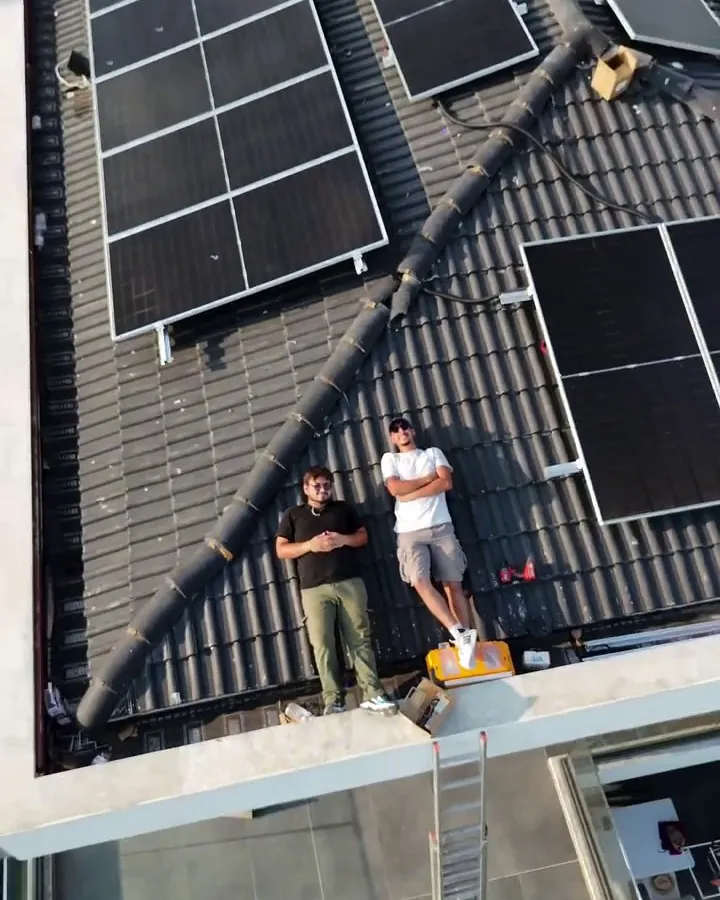
Mounting begins with the approved project. First, hooks on a tiled roof, clamps on trapezoidal sheet or the frame on a flat terrace are fixed in place, and then the aluminium rails are aligned. Panels are fixed to the rails with clamps; leaving a ventilation gap under the panels is important at this stage. Manufacturer manuals require panels to be mounted on a fire-resistant surface with adequate ventilation; mounting contrary to the manual can void the warranty.
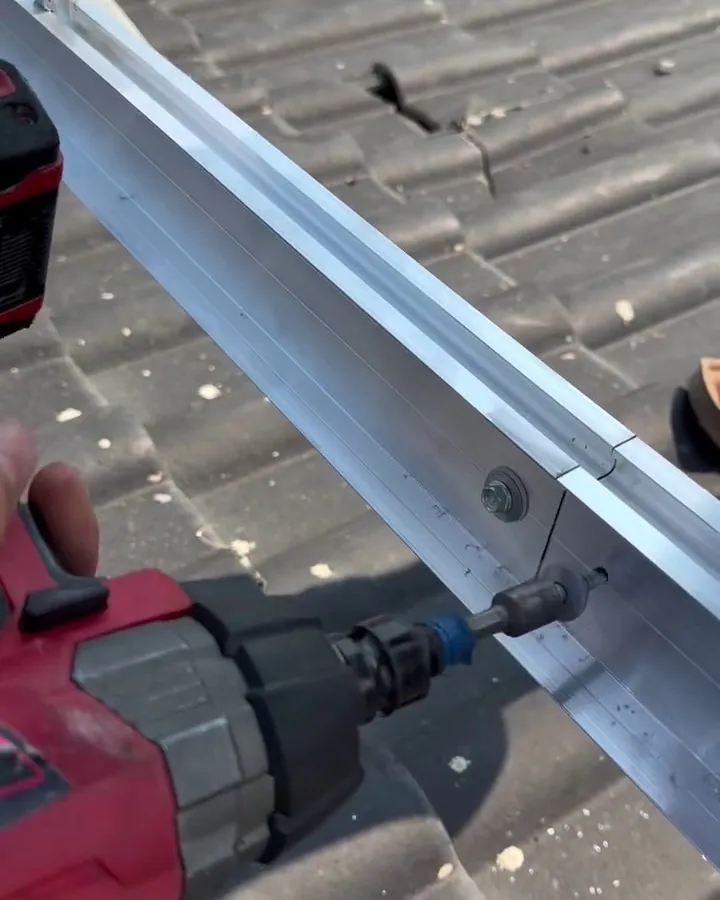
Safety at this stage matters as much as mounting quality. Panels produce voltage continuously under light; for example, since a panel's open-circuit voltage is about 52.6 V, the voltage in a string of 20 panels connected in series reaches about 1,050 V (20 × 52.58 V, calculation). For this reason DC connections must be made by trained crews and fall-protection measures must be taken on the roof. Because the roof surface gets very hot at midday in Antalya's summer, installation is usually shifted to cooler hours. Wind is also taken into account: the fastest wind in MGM records (the Turkish State Meteorological Service) is 43.2 m/s, while the typical wind load resistance in panel datasheets is 2400 Pa; for this reason the torque values of clamps and hooks are recorded.
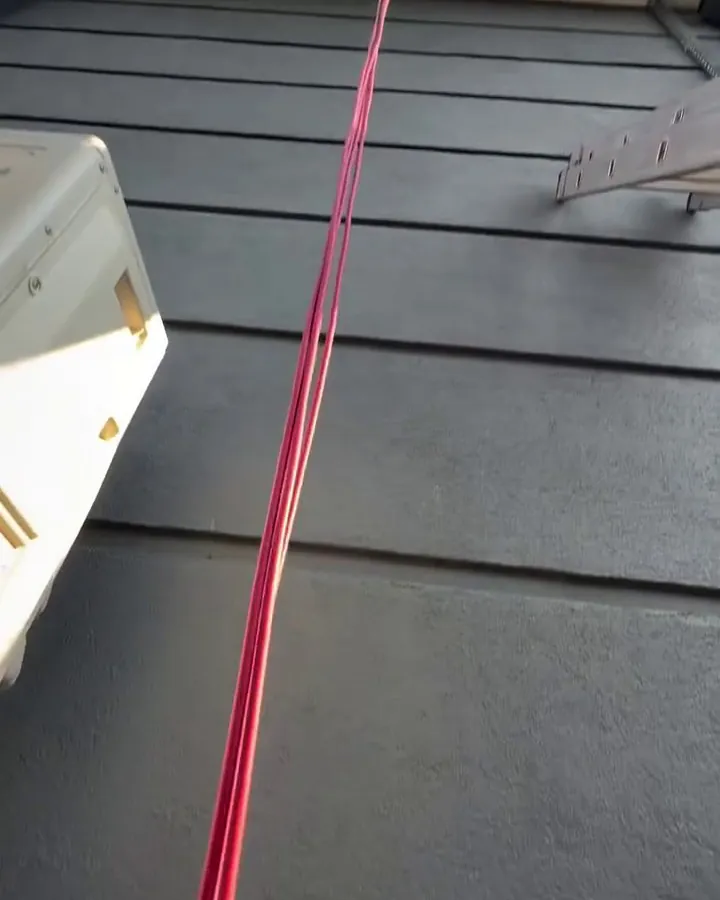
In the following steps, panels are connected in series with MC4 connectors, DC cables find their way through UV-resistant cable trays, the inverter and panel board are installed, and protection devices such as earthing and surge arresters are connected. You can find how mounting is classified and the roof types in our mounting systems article.

5. Acceptance and commissioning
Switching the system on as soon as mounting is finished is a mistake. Under the regulation, a facility operated without acceptance can be disconnected without notice, its equipment may have to be removed within 60 days, and its owner cannot apply under this regulation for 3 years. At acceptance, the distribution company's team inspects the facility and the bidirectional meter at the connection point. After that, the inverter is commissioned and the production values and protection functions are tested. There may also be a separate check meter where production and consumption are measured. Once acceptance is complete, the system use agreement is signed and the handling of surplus energy by the responsible supply company begins from that date.
At this stage you should also find out how the net metering rules in the regulation apply to your subscription. For facilities tied to a residential subscription, netting is monthly; for non-residential facilities it has been hourly since 1 May 2026. This difference affects system design and the role of the battery, particularly for businesses with low daytime consumption.
6. After installation: monitoring and maintenance
Commissioning is not the end of the relationship. With mobile monitoring you can follow daily production and possible fault alerts; production clearly below what is expected can be a sign of soiling, shading or an inverter problem. Regular checks and cleaning are the cheapest way to maintain efficiency. Because most of Antalya's rainfall comes between November and February, dust and pollen build up on the panel surface throughout summer; a cleaning and connection check at the end of summer is a good habit. Comparing production values with expected values such as PVGIS in the first year after installation helps you catch possible problems early. We have collected the annual check items in the maintenance checklist. Solar Nexo describes maintenance and 24/7 technical support on its website as the final step of the process.
Conclusion
Solar panel installation in Antalya is much more than a few days on the roof: it is a chain of survey, engineering, application and acceptance. Having every step in writing, documenting the equipment and waiting for acceptance protects both your safety and the value of your investment. If you would like to request a free site survey for your roof, you can reach us through the contact page.
Frequently asked questions
How many days does solar panel installation take in Antalya?
Mounting on the roof is usually short, depending on system size, but the total duration depends on the application and acceptance steps. The regulation sets time limits such as 90 days for project approval and 15 days for the connection agreement; there is no official total from application to connection. A firm schedule becomes clear after the survey and application, so question quotes that promise a fixed number of days.
What documents are needed for solar panel installation?
For rooftop systems up to 25 kW, you are generally asked for an application form, ID, a document showing the right of use such as a title deed or lease, the unique code for the existing facility and a statement on the activity ban. In apartment buildings, a notarised copy of the solar decision in the minutes book is also needed. For the current list, check the document list published by AEDAŞ.
Should I make the application myself, or does the company do it?
The application is made in the property owner's name, but the installation company often prepares the technical files and handles the LUS portal procedures. Solar Nexo describes the connection approval letter application on its website as part of the process. Whichever company you work with, ask in writing when getting a quote whether the application, project approval and acceptance steps are included in the scope and who follows them up.
What happens if the system is operated before acceptance?
Under the regulation, a facility found to be operating without acceptance can be disconnected by the distribution company without notice, its equipment may have to be removed within 60 days, the connection approval letter and agreements are cancelled and the owner cannot apply under this regulation for 3 years. So after installing the panels you need to wait patiently for acceptance; this information is based on the 2024 amendment and the current text should be confirmed.
Can solar panels be installed on any roof?
They can be installed if the roof's load-bearing capacity, material and shading are suitable. Installation on roofs that are not fire-resistant, such as plastic or PVC, is not recommended without a protective layer. A civil engineer's assessment is needed for structural suitability; the distribution company and the municipality may also request a structural suitability document. At the survey these points are examined on site, and a separate structural assessment of the roof is recommended if needed.
Can I monitor the panels after installation?
Yes, modern inverters show live and historical production through a mobile app or web dashboard. Production below what is expected can indicate soiling, shading or a fault. Solar Nexo describes mobile monitoring and 24/7 technical support on its website; we recommend asking in writing in the quote about the scope of monitoring, alarm features and the support period. It is also useful to find out which inverter brands the app works with.
Sources
Want a clear calculation for your roof?
The Solar Nexo team carries out a free site survey at your address in Antalya and designs the system that suits your roof, consumption and budget.