

Short answer
An air conditioner can run on solar panels, because in Antalya summer cooling load and panel output peak at the same hours. According to PVGIS, 1 kWp produces about 168 kWh in July, and a 605 W panel about 3.3 kWh a day. The daytime use of three air conditioners may need about 3 to 6 panels; the real number depends on AC power and the roof.
Key takeaways
- According to PVGIS, July output in central Antalya is 168 kWh/kWp; about 3.3 kWh a day for a 605 W panel (calculation).
- With the example assumption (0.8 kW average power, 8 hours a day), about 6 panels are needed for the daytime load of 3 air conditioners.
- If half of the evening consumption is met from the grid, the panel count falls to about 3.
- In a TOPCon panel at 34 °C ambient, cell temperature is about 65 °C and power falls about 12% (calculation).
- For residential subscriptions net metering is monthly; for non-residential it has been hourly since 1 May 2026.
When an air conditioner is powered by solar panels in Antalya, summer cooling consumption and panel production rise in the same hours. That is why the air conditioner is one of the household loads that benefits most from solar energy. For example, in July 1 kWp produces about 168 kWh (PVGIS), which comes to about 3.3 kWh a day for a single 605 W panel. In this article we calculate air-conditioning consumption and show step by step, with hypothetical examples, how many panels are needed.
Why is the air conditioner and solar panel match strong?
An air conditioner works hardest when the weather is hottest. A solar panel also produces most at midday and in the afternoon when irradiance is highest. In Antalya the July average temperature is 28.6 °C and the average maximum temperature 34.2 °C. Average sunshine duration in July is 11.7 hours a day. These two curves are close to each other.
The match is not perfect. The air conditioner also runs in the evening and at night, while the sun does not produce after sunset. When calculating the panel count, the daytime and night shares of the air conditioner must therefore be separated.
Summer panel production: PVGIS data
According to PVGIS, monthly specific yield in central Antalya is 159 kWh/kWp in June, 168 in July, 167 in August and 155 in September. These values describe a system at optimum tilt (33°), south-facing, with 14% system loss. Converting July to a daily value:
- 168 kWh/kWp ÷ 31 days ≈ 5.4 kWh/kWp/day
- For a 605 W (0.605 kWp) panel ≈ 3.3 kWh/day (calculation)
These figures vary with tilt, orientation and shading on a real roof. On a flat or east-west roof, production can be lower. For tilt and orientation, see solar panel angle and orientation for Antalya.
The effect of temperature on panels
Summer heat affects the panel itself too. As panel temperature rises, it loses power. In the datasheet of the TommaTech 605 W TOPCon panel, the Pmax temperature coefficient is given as -0.30 %/°C. With ambient 34 °C, irradiance 1000 W/m² and NOCT 45 °C, cell temperature is about 65 °C. In this case the panel's power falls about 12% relative to standard test conditions (calculation, not measurement).
PVGIS's 14% system loss includes this effect and cable and inverter losses. You therefore do not need to apply a separate temperature reduction in the summer production estimate. However, leaving a ventilation gap behind the panel helps lower cell temperature.
How do you calculate air-conditioning consumption?
An air conditioner's daily consumption is its average electrical power multiplied by running time. The nominal power on the AC label and the real average power are different. Inverter air conditioners run at low speed once they reach the target temperature. The most reliable way is to measure your own air conditioner's consumption over a few days with a plug-in meter or energy monitor.
In the examples below we assumed 0.8 kW as the average electrical power. This assumption may not fit your air conditioner.
| Scenario | Daily consumption | Daytime share | Power required | 605 W panel count |
|---|---|---|---|---|
| 1 air conditioner, 6 hours a day | 4.8 kWh | 100% | about 0.9 kWp | 2 |
| 3 air conditioners, 8 hours a day | 19.2 kWh | 100% | about 3.5 kWp | 6 |
| 3 air conditioners, 8 hours a day | 19.2 kWh | 50% | about 1.8 kWp | 3 |
The calculation is as follows: daily consumption ÷ 5.4 kWh/kWp ≈ required power. This value is then divided by 0.605 and rounded up. The table covers only the air-conditioning load. The home's other consumption (refrigerator, lighting, washing machine) is added separately.
If you want to calculate the power needed for the whole home, use the annual consumption method in our article on how many kW of solar panels you need. For a quick estimate you can also try the calculation tool on our site.
How many kW do you need for your bill?Use the solar calculator to see system size, number of panels and annual production straight away.Measuring real air-conditioning consumption
The weakest link in the calculation is the average power assumption. There are three ways to bring it closer to reality. The first is to use a plug-in energy meter for the air conditioner and read the kWh over three or four hot days. The second is to look at the difference between summer and winter months from a smart meter or the distribution company's consumption screen. The difference mostly shows the cooling load. The third is to take the annual energy consumption value on the AC label as a reference, but this value is based on a standard usage scenario.
For example, in a home that consumes 350 kWh in May and 750 kWh in July, the difference is about 400 kWh. This difference is an estimate of the effect of cooling and summer lifestyle and shows the home's extra consumption tied to air conditioning. You can roughly estimate the power needed by converting the difference to a daily value and dividing by 5.4 kWh/kWp/day: 400 ÷ 31 ÷ 5.4 ≈ 2.4 kWp.
Three typical home profiles in Antalya
The profiles below are hypothetical and contain no real customer data.
- A flat with a single air conditioner in Kepez or Muratpaşa: If no one is home during the day, the air conditioner runs in the evening. In this case the panel's benefit for the air conditioner is limited; production goes to continuous loads such as the refrigerator and to evening netting.
- A holiday villa in Manavgat or Alanya: Occupancy is high all summer and the air conditioner runs during the day too. Panel production overlaps with the load and the self-consumption ratio is high.
- A home office in Konyaaltı: In a home where people work during the day, the air conditioner is on all day. This profile is one of the best fits for panels.
That is, the same air conditioner needs a different solar solution depending on who is home and when. For a home left empty during the day, rather than buying panels for the air conditioner, it may be more reasonable to leave the daytime surplus to monthly net metering.
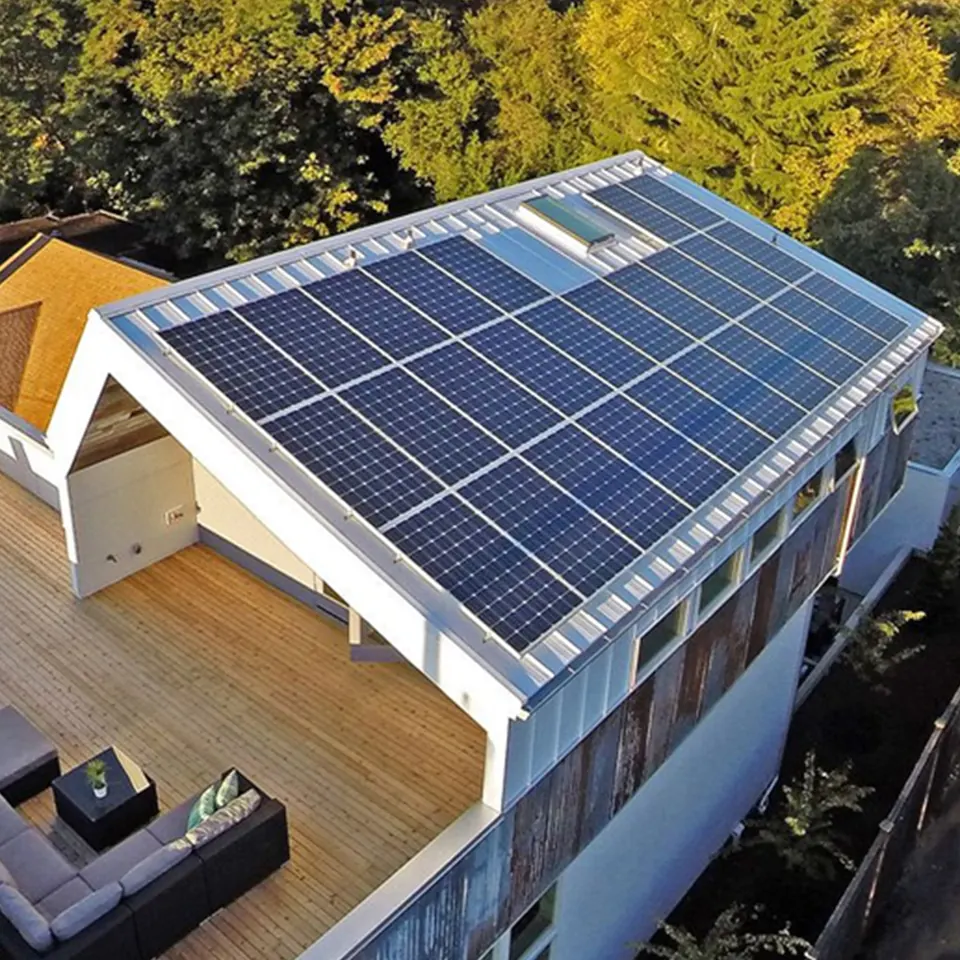
Evening and night air-conditioning load: is a battery needed?
If the air conditioner runs on solar panels, the evening load is met either by the grid or by a battery. For most homes the grid continues and the panels lower the daytime load. A battery is for those who also want to cover the evening load. It is costly and not necessary for every home.
In hybrid systems, battery capacity is chosen on evening consumption. In a scenario where 3 air conditioners run for 5 hours in the evening at an average of 0.8 kW, the energy required is 12 kWh (3 × 0.8 × 5). Because a battery's usable capacity is lower than its nominal value, the choice is made accordingly. For details, see our article on solar systems with batteries. Covering all air conditioners running until midnight with a battery is an expensive solution for most homes.
Monthly net metering for residential subscriptions
For installations connected to a residential subscription, net metering (mahsuplaşma) is monthly. That is, the energy you overproduce during the day is netted against the energy you draw from the grid in the evening within the same month. However, the value of surplus energy is set at the single-rate active energy unit price of the relevant tariff, which is lower than the total unit charge on the bill. It is therefore sound to size the system to the air conditioner and other daytime loads. This information is valid as of October 2026. Regulations may change; consult the distribution company for details.
In workplaces (non-residential), since net metering has been hourly from 1 May 2026, matching production to the hours the air conditioner runs becomes even more important.
Air-conditioner efficiency reduces the panel count
The cheapest way to reduce the panel count is to lower the air conditioner's consumption. The following are effective:
- Replacing an old fixed-speed air conditioner with an inverter model
- Keeping the outdoor unit out of direct sun and cleaning the filters regularly
- Using curtains or film on glass surfaces and reviewing roof and exterior wall insulation
- Not setting the thermostat to an unnecessarily low temperature
With these measures, annual air-conditioning consumption can fall. The panel count is then set on the remaining need. For the effect of Antalya's hot and humid climate on panel performance, see our article on Antalya's climate and panel performance.
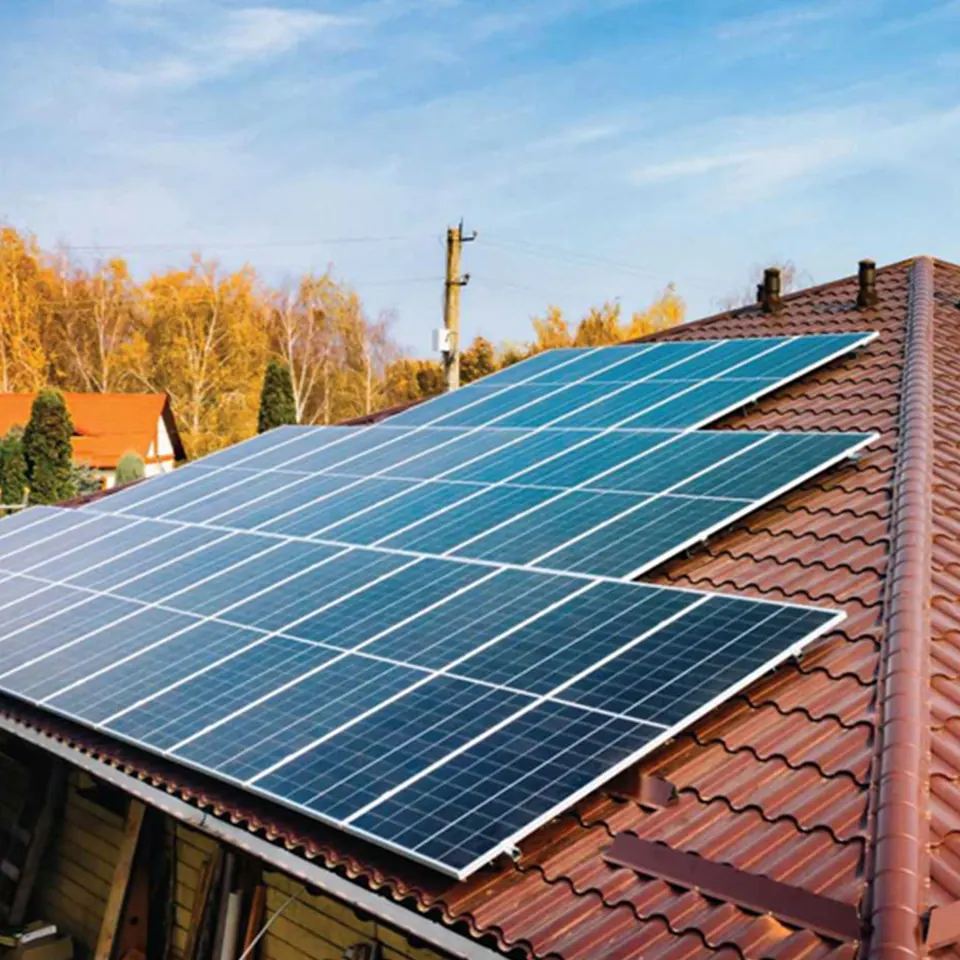
Points to watch in system design
In a solar system designed for an air conditioner, these points are critical. First, inverter power is chosen with the air conditioner's starting current in mind. In off-grid or hybrid systems this is a critical design point. Second, shading on the roof. Shadows of an outdoor unit, chimney or antenna on the roof lower production during the day. Third, cable cross-sections. DC and AC cable losses increase at high currents.
In grid-connected on-grid systems the inverter stops for safety during a power cut. If the air conditioner is to keep running during a cut, a hybrid system and a critical-load plan are needed. The Solar Nexo team assesses your roof, consumption habits and number of air conditioners together at the survey.
Conclusion
In Antalya, solar panels for air conditioning are a strong solution thanks to the overlap of summer production and cooling load. In July a 605 W panel produces about 3.3 kWh a day. About 3 to 6 panels may be enough to cover the daytime consumption of three air conditioners, but this number varies with AC power, running hours and the roof. The most accurate result comes from measurement and an on-site survey. You can request a free survey for your own home's air-conditioning load.
Frequently asked questions
Can an air conditioner run on solar panels?
Yes, an air conditioner can be powered from solar panels. In an on-grid system, panel production first covers the home's daytime loads, air conditioning included; the shortfall is drawn from the grid. If the air conditioner must run during a power cut, a hybrid inverter and, if needed, a battery are required. The system must be sized to the AC power and running hours. For sizing, share your number of air conditioners and running hours at the free survey.
How many solar panels does one air conditioner need?
It varies with your assumption. An air conditioner that draws an average of 0.8 kW and runs 6 hours a day consumes about 4.8 kWh a day. Since a 605 W panel produces about 3.3 kWh a day in Antalya in July, about 2 panels are enough to cover the daytime load. You need to measure your own air conditioner's real consumption. For a more accurate result, use a few days of measurement with an energy meter.
How much do solar panels produce in Antalya in summer?
According to PVGIS, a south-facing system at optimum tilt in central Antalya produces 159 kWh/kWp in June, 168 in July and 167 in August. These values include 14% system loss. On a real roof, tilt, orientation and shading affect the result. On a flat or east-west roof, production may fall below these values. These are PVGIS estimates and real production can differ slightly from year to year.
Does hot weather reduce solar panel efficiency?
Yes. As panel temperature rises, power falls. In a TOPCon panel the Pmax temperature coefficient is about -0.30 %/°C. At 34 °C ambient and 1000 W/m² irradiance, cell temperature is about 65 °C and power falls about 12% relative to standard conditions. This effect is accounted for within PVGIS's 14% system loss. Leaving a ventilation gap and choosing an acceptable tilt help limit this loss.
Is a battery necessary for an air conditioner?
No, it is not necessary. In an on-grid system the panel covers the daytime air-conditioning load and the grid covers the evening load. A battery is considered only for those who want to cover the evening or night air-conditioning load from solar too, or to run the air conditioner during an outage. Because a battery raises cost, the need should be set on evening consumption and budget. When installing a hybrid system, battery power and inverter type should be chosen together.
Will solar panels for air conditioning bring the bill to zero?
No, it would not be right to promise that. The panels reduce air-conditioning and other daytime consumption, but night consumption, fixed charges and taxes remain. For a residential subscription net metering is monthly; surplus is valued at an active energy price lower than the unit charge on the bill. For a realistic expectation you need to look at your consumption data. Some of the fixed charges and taxes on the bill continue regardless of production.
What is the best roof orientation for air-conditioning use?
According to PVGIS, the optimum orientation for Antalya is south and the optimum tilt is about 33°. In practice, because roof pitch and orientation are a given, the size of the loss must be calculated. On east-west roofs, production is lower than south but spread more through the day. The effect of obstacles such as shading, an outdoor unit and a chimney should also be checked at the survey. In Antalya roofs are usually tile or terrace, and both are assessed separately at the survey.
Sources
- PVGIS - Photovoltaic Geographical Information System (European Commission JRC)
- General Directorate of Meteorology - Antalya provincial statistics
- TommaTech TT605-144TN10 TOPCon panel datasheet (Ver.2601.14)
- Amendments to the Regulation on Unlicensed Electricity Generation in the Electricity Market (Official Gazette, 2 April 2026)
Want a clear calculation for your roof?
The Solar Nexo team carries out a free site survey at your address in Antalya and designs the system that suits your roof, consumption and budget.


