Short answer
Solar plant repowering usually starts with inverter replacement; panels are rarely replaced outright because of the 30-year performance warranty and low degradation. A capacity increase depends on rules such as the 25 kW simplified procedure, contract power, the 50 percent transformer limit and the five-year equipment requirement. In Antalya, talk to AEDAŞ before applying about the procedure to follow.
Key takeaways
- Panels carry a 30-year performance warranty (TommaTech TT605-144TN10: 87.4 percent in year 30); the standard inverter warranty in the example product is 5 years.
- At an existing plant in Gazipaşa, 5 faulty inverters were replaced (a service job, not a Solar Nexo installation).
- New equipment must have been manufactured within the last five years (Article 37/6, Official Gazette 02.04.2026).
- Under the 25 kW simplified procedure, the system cannot exceed contract power; the transformer total is bound by the 50 percent limit.
- For the procedure for adding capacity to an existing plant, consult AEDAŞ before applying; as of October 2026 the rules may change.
Solar plant repowering means renewing the ageing or failed parts of a solar energy system that has run for years, so that the system becomes efficient and safe again and, if necessary, its capacity is increased. Most often the first part renewed is the inverter; the panels, by contrast, usually keep working for many years. In this article we describe when your system needs renewing, what options exist and the limits that regulation sets on a capacity increase.
When does solar plant repowering come up?
The decision to renew is mostly made in one of four situations: an inverter failure or ageing after the warranty, a marked drop in panel performance, damage to many panels (hail, cracks, hot spots), and a business's consumption growing until it needs more capacity. Another reason is that the monitoring or protection equipment of old systems is inadequate by today's standards.
When planning a renewal, you first need to confirm whether the cause really is equipment age. Low output sometimes comes from simple causes such as soiling, shade or connectors; these do not require renewal. Working through the list of causes of solar panel efficiency loss first prevents unnecessary investment.
Panel or inverter? Which part is renewed when?
Inverter renewal
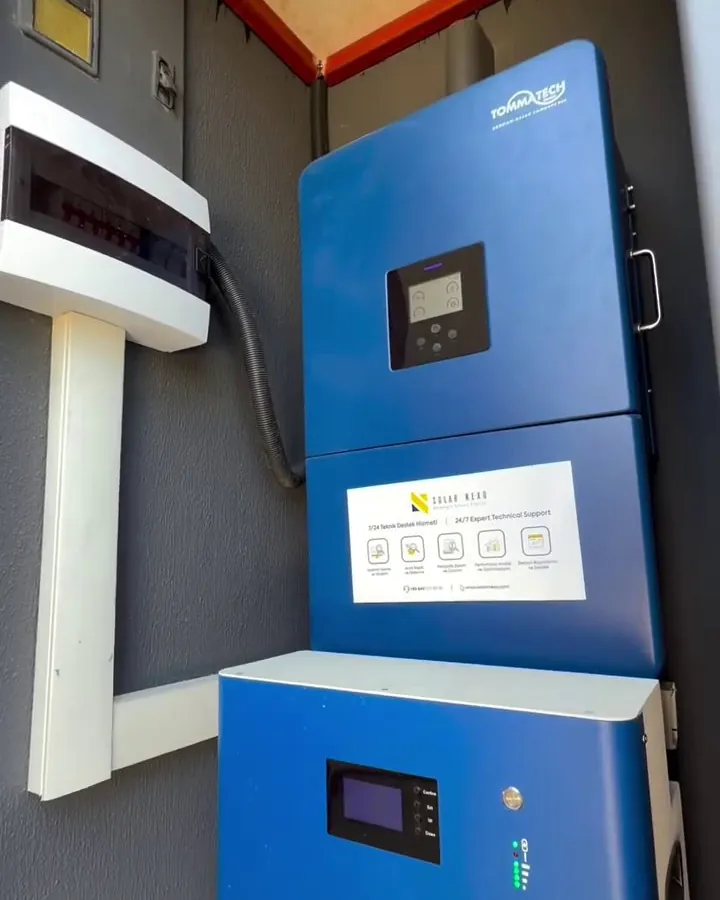
The inverter is the hardest-working electronic part of the system and has a shorter life than the panels. For example, the standard warranty on TommaTech on-grid and hybrid inverters is 5 years from the invoice date. After the warranty, the likelihood of failure rises; if repair is costly or spare parts cannot be found, replacement makes sense. Because the Antalya summer heat (average July maximum 34.2 °C, MGM) strains the inverter, this period can be even shorter in installations with inadequate ventilation.
The replacement of 5 faulty inverters after a technical inspection at an existing solar power plant in Gazipaşa is an example of this. It was a service job and the plant is not a Solar Nexo installation; but it shows that the panels and mounting structure can stay in place while only the inverters are renewed. For the types of faults, you can read our article on inverter faults and solutions.
Panel renewal
Panels are much longer-lived. According to the TommaTech TT605-144TN10 datasheet there is a 30-year performance warranty and 87.4 percent power is guaranteed in year 30; this means a decline of about 0.4 percent per year (calculation). In NREL's 2012 review, the median degradation of field modules is 0.5 percent per year. At these rates, panel replacement is rarely economical. Panel renewal is usually considered in these cases: physical damage such as hail, broken glass, a serious hot spot or a bypass diode failure, a product defect under warranty, or the wish to use the site with more efficient panels.
| Situation | General option | Point to watch |
|---|---|---|
| Inverter faulty or out of warranty | Inverter repair or replacement | Power class, DC voltage range, string compatibility |
| Individual panels damaged | Replace the damaged panels | Compatible power and current within the same string |
| Natural degradation, general decline | First cleaning, measurement, monitoring | Degradation is compared with the warranty curve |
| Consumption has grown | Capacity increase | Regulatory limits, possibility of a new application |
| Monitoring and protection are old | Update monitoring, SPD, earthing | Communication compatibility with the existing system |
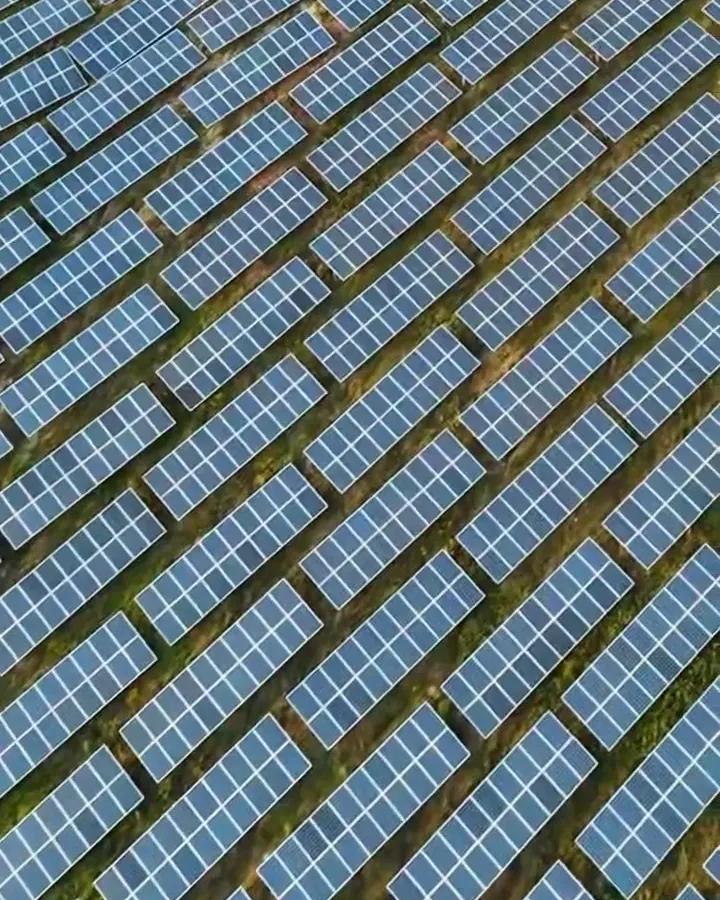
Technical compatibility when renewing an old system
When adding new equipment to an old system, the biggest risk is incompatibility. The DC input voltage range of the new inverter must fit the existing string layout; modern panel voltages can differ from older ones (for example, in the TT605-144TN10 the Voc is 52.58 V and the maximum system voltage is 1500 V DC). Mixing panels with different power and current values in the same string makes the weakest panel drag the array down. For this reason, if possible, new panels are connected to a separate string or a separate MPPT input.
The mounting structure, earthing and cabling must also be reviewed. Over the years, corrosion may have formed in fasteners, UV ageing in cables or oxidation in connectors. At recommissioning these items are measured and, if necessary, renewed. In coastal systems, for example in Alanya and Manavgat, this check matters even more because of salty air.
Capacity increase: regulatory limits
If you want to increase capacity during renewal, you must know the framework set by the unlicensed generation regulation. This framework follows the rules valid as of October 2026 and may change; for your own system you should confirm up-to-date information with the distribution company. In Antalya the grid operator is Akdeniz Elektrik Dağıtım A.Ş. (AEDAŞ, the local electricity distribution company), and unlicensed applications are taken through the LUS platform.
- 25 kW simplified procedure limit: For roof and facade systems up to 25 kW a simplified procedure applies; the system cannot exceed the contract power of the consumption facility.
- Contract power: Municipal, industrial and agricultural irrigation facilities can install up to twice the contract power; other consumers are limited to the contract power.
- Transformer capacity: The total of plants connected under the 25 kW procedure cannot exceed 50 percent of the distribution transformer's power.
- Annual production ceiling: For plants that received their connection approval letter (çağrı mektubu) after 12.05.2019, production in a calendar year cannot exceed twice the related consumption.
- New equipment requirement: Main equipment such as panels, inverters and batteries must have been manufactured within the last five years (Article 37/6, 02.04.2026).
- Ban on operating before acceptance: A plant found to be operating without acceptance may be disconnected; the equipment is removed and the owner faces a three-year application ban (Official Gazette 14.05.2024).
Because we could not determine with certainty from the regulation by which application procedure capacity is added to an existing plant or the equipment model is changed, the right course is to talk to AEDAŞ before applying. Whether the added capacity needs a connection approval letter, project approval and acceptance depends on the values in the existing connection agreement. For the general framework of the regulation, you can read our article on the unlicensed electricity generation regulation, and for the application steps, our article on how to apply for a rooftop solar plant.
Net metering (mahsuplaşma) rules matter too: since 1 May 2026, net metering is hourly for non-residential renewable plants that received their connection approval letter after 12.05.2019, while for residences it remains monthly. How much of the extra production from a capacity increase will go to self-consumption must therefore be calculated carefully.
What happens step by step in a renewal?
- Survey and measurement: The existing system's production history, fault logs, DC measurements, mounting structure and cabling are examined.
- Decision and project: It becomes clear which part will be repaired, which will be replaced and whether there will be a capacity increase; compatible equipment is selected.
- Talk to the distribution company: If the equipment model or capacity changes, AEDAŞ is informed and the required application procedure is confirmed.
- Execution: The system is safely taken out of service, the equipment is replaced, and connections and earthing are checked.
- Commissioning and records: Measurements are taken, monitoring is updated and documents are handed over.
Each of these steps can be short or long depending on the size of the system; we cannot give an exact figure for the total time because it depends on the distribution company's process and equipment delivery.
Cost and payback logic in the renewal decision
When evaluating a renewal investment, you need to look not only at the price of the device but also at the value of the lost production. Every day production stops because of a faulty inverter means missed self-consumption. For this reason, a quick response to a fault is often the most profitable item. For a capacity increase, you must calculate how long the extra investment will take to pay back through extra self-consumption. For your own system, you can start with our calculation tool.
How many kW do you need for your bill?Use the solar calculator to see system size, number of panels and annual production straight away.Instead of giving a price, let us list the items that affect cost: the power class and brand of the equipment to be replaced, the difficulty of access to the roof or land, the need for re-cabling and mounting structure, the application and acceptance steps arising from regulation, and warranty coverage. Quoting an exact percentage or amount without a survey would be misleading. Solar Nexo assesses the technical inspection and renewal options of existing systems in Antalya as part of a free survey; you can write to our contact page to request this.
Conclusion
Solar plant repowering often starts with inverter replacement; panels are rarely replaced outright because they have a 30-year performance warranty and low degradation. A capacity increase depends on regulatory limits, contract power, transformer capacity and the new equipment requirement; talking to the distribution company in advance about the procedure is essential. Measurement and diagnosis first, then renewal with compatible and documented equipment, is the safest path.
Frequently asked questions
When should an old solar panel system be renewed?
Renewal is usually considered when the inverter fails or ages after the warranty, when many panels are damaged, or when consumption grows and a capacity increase is needed. Because panels have a 30-year performance warranty, the first part replaced is generally the inverter. The real cause should first be confirmed with cleaning, measurement and monitoring data. In every case, it must first be determined whether the cause is equipment age or lack of maintenance.
Is it possible to replace only the inverter?
Yes, it is possible and often done. At an existing plant in Gazipaşa, 5 faulty inverters were replaced after a technical inspection (a service job). The power class and DC input voltage range of the new inverter must fit the existing string layout. Ask the distribution company whether a model change affects the connection agreement. This way the panels and mounting structure stay in place and only the faulty device is renewed.
Can I move old panels to a new system?
In an unlicensed application, main equipment such as panels, inverters and batteries must have been manufactured within the last five years (Article 37/6, Official Gazette 02.04.2026). So moving old panels to a new unlicensed plant runs into this requirement. For operations such as relocation within an existing plant, the distribution company should also be consulted. The age of the main equipment is also taken into account in the distribution company's acceptance process.
Do I need to apply to add capacity to my existing solar plant?
We could not determine with certainty from the regulation the procedure for adding capacity to an existing plant, so we recommend talking to AEDAŞ, the grid operator in Antalya, before applying. Rules such as contract power, transformer capacity, the 25 kW simplified procedure limit and the annual production ceiling restrict a capacity increase. Operating before acceptance is prohibited. Because operating before acceptance can lead to disconnection, this step must not be skipped.
When does panel degradation require replacement?
According to the warranty curve, panel power falls to 87.4 percent in year 30; this means a decline of about 0.4 percent per year (calculation). In the NREL review the median field degradation was found to be 0.5 percent per year. At these rates, replacing a panel because of degradation alone is rarely economical; a sudden drop, physical damage or a hot spot does need inspection.
Is a free survey provided for renewal?
Solar Nexo offers a free survey service in Antalya. The technical inspection, measurements and renewal options of the existing system are assessed as part of the survey. A price cannot be given without a survey, because equipment class, roof access, cabling and regulatory steps determine the cost. You can write through the contact page to request this. After the survey, a written technical report and a renewal proposal are provided.
Do warranty and documents matter in a renewal?
Yes. The warranty document of the new equipment, the installation record in line with the installation manual and measurement reports are decisive in later fault or warranty claims. According to the TommaTech datasheet, installation contrary to the installation manual voids the warranty. So documents must be kept and installation done in line with the manufacturer's instructions. These records also make later service and valuation processes easier.
Sources
Want a clear calculation for your roof?
The Solar Nexo team carries out a free site survey at your address in Antalya and designs the system that suits your roof, consumption and budget.