Short answer
Solar system maintenance consists of mechanical, electrical, inverter, battery and monitoring checks carried out at least once a year. In Antalya the end of summer and before winter are the two critical periods; an extra check is needed after a storm or hail. Leave electrical work to competent crews, keep dated and photographed records, and compare production data with expected values.
Key takeaways
- According to the TommaTech datasheet, panel power is guaranteed at 99% in year 1 and 87.4% in year 30.
- In field data, median degradation is about 0.5% per year (NREL, 2012).
- In Antalya, the end of summer and before winter are two critical maintenance periods.
- The standard inverter warranty on TommaTech is 5 years; the battery warranty is written by model.
- Panels produce voltage in daylight; electrical work should be left to competent crews.
Solar system maintenance is the set of planned checks that keeps your system running efficiently and safely throughout its life. Because solar systems have few moving parts, the maintenance burden is low, but it is not zero: connectors, cables, the inverter and the battery need checking over time. For a rooftop system in Antalya, we recommend a comprehensive check at least once a year, supported by seasonal observations. In this article we give an annual checklist under the headings of mechanical, electrical, inverter, battery and monitoring.
Why is solar system maintenance needed?
Panels degrade very little over the years; according to the TommaTech 605 W TOPCon panel datasheet, the guaranteed power is 99% in year 1 and 87.4% in year 30 (a decline of about 0.4% per year). In field data, NREL's 2012 literature review gives median degradation as 0.5% per year. In other words, panels age slowly; the real risks are the effects of the environment and of the connecting elements.
Temperature, wind, vibration, dust, humidity and salt can affect connectors, cables and fixings over time. A small looseness or wear, if unnoticed, can turn into production loss and even arc and fire risk. For this reason, maintenance is needed not only for efficiency but also for safety. Regular maintenance records also serve as documents in warranty and insurance claims.
Annual solar system maintenance checklist
The list below is a general framework. The scope varies with the system type (on-grid, hybrid, off-grid), its capacity and the manufacturer's instructions. Leave electrical work to competent technicians; panels produce voltage in daylight.
1. Mechanical checks
- Mounting structure: Is there looseness, rust or deformation in the rails, clamps, feet and fixings?
- Roof attachment points: Signs of water leakage at penetrations, slipped tiles or membrane damage.
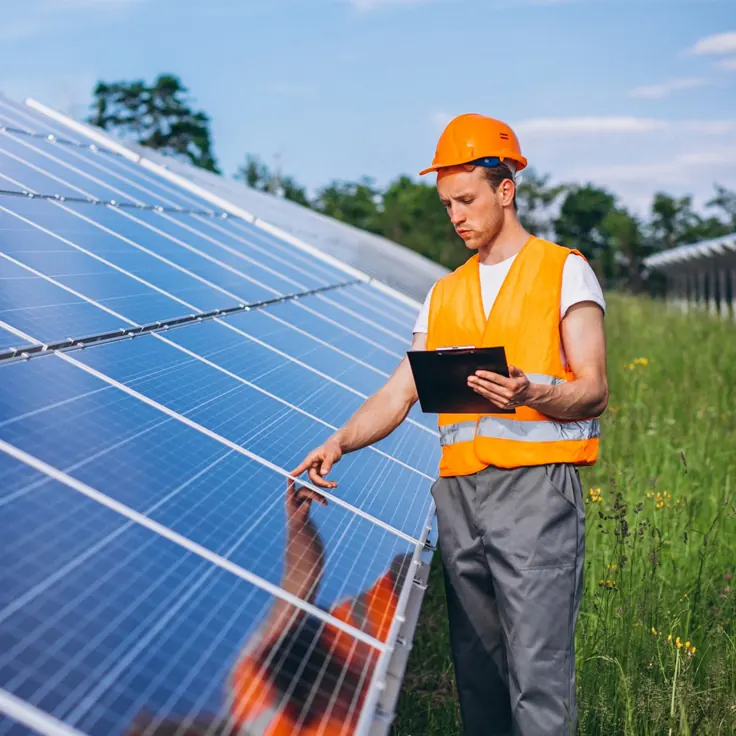
- Panels: Glass cracks, frame bending, delamination, discoloration or burn marks. If a hot spot is suspected on the panel surface, consider the method of checking panels with a thermal camera.
- Shade and surroundings: New shade sources such as growing trees, new buildings, antennas and chimneys.
- Cleaning: The state of dust, pollen, salt and bird droppings; for details, see our article on solar panel cleaning.
2. Electrical checks
- DC cables and connectors: Heating, melting, blackening, breakage, rodent damage or UV wear.
- Distribution board and protection devices: The condition of fuses, breakers, surge arresters and overvoltage protection.
- Grounding: Continuity and soundness of the connection.
- Cable routes: Pinching, chafing and moisture ingress.
- Meter and connection: Normal operation of the bidirectional meter and the control meter at the connection point.
3. Inverter checks
- Fault logs: The alarm and fault history of the last year. If there is a recurring warning, the cause should be investigated.
- Ventilation: Dust blockage in the fan, heat sink and air inlets; sufficient clearance around the inverter.
- Software and settings: Are the manufacturer firmware and grid settings up to date?
- Heating and mounting location: An inverter that sits in direct sun or in a stuffy place can experience performance limiting.
The inverter warranty is mostly shorter than the panel's; for example, on TommaTech on-grid and hybrid inverters the standard warranty is 5 years from the invoice date. For fault symptoms and solutions, take a look at our article on inverter faults and solutions.
4. Battery checks (hybrid and off-grid systems)
- Capacity and state of charge: Whether the battery's capacity has fallen below the expected level.
- BMS records: Cell imbalance, temperature and alarm history.
- Connections: Terminals, cable ends and connection looseness.
- Environment: Temperature, ventilation and placement away from humidity. In Antalya's hot summers it is important for the battery room to stay cool.
- Warranty terms: The battery warranty is written by brand and model; for example, the product warranty on TommaTech LV batteries is 60 months.
For details on lithium battery maintenance, see our article on battery maintenance. Because LiFePO4 cycle life claims differ greatly by source, assess lifetime assumptions against the manufacturer's official document.
5. Monitoring and performance check
- Expected versus actual production: According to PVGIS, the annual production of 1 kWp in Antalya city is about 1,656 kWh; monthly values are 99 kWh/kWp in January and 168 in July. Compare your system's production with these ratios.
- String-level data: A string producing clearly less than the others can be a sign of a shade, connector or panel problem.
- Connection and alerts: The monitoring system's internet connection, alarm notification and data logging.
When making an annual comparison, also take the weather difference into account; a clear and lasting deviation should be investigated. For monitoring tools, see our article on monitoring systems.
Maintenance calendar by season
| Period | Priority check | Why? |
|---|---|---|
| Spring (March-May) | Surface after pollen, shade sources, mounting after winter rain | Pollen sticking and growing vegetation |
| End of summer (September) | General cleaning check, inverter fan and heating, battery temperature | After the long dry and hot period |
| Before winter (October-November) | Connections, grounding, surge arrester, roof watertightness | The rain and storm season is starting |
| After a storm/hail | Panel cracks, mounting structure, cable damage | Sudden mechanical impact |
| Annual general check | The whole list, performance comparison | Record and trend tracking |
In Antalya most of the rain falls between November and February; July and August are very dry. For this reason, the end of summer and before winter are the two critical inspection periods. According to MGM (Turkish State Meteorological Service) records, the fastest wind measured was 43.2 m/s; it makes sense to carry out an additional check after extreme weather events.
Service example: inverter replacement in Gazipaşa
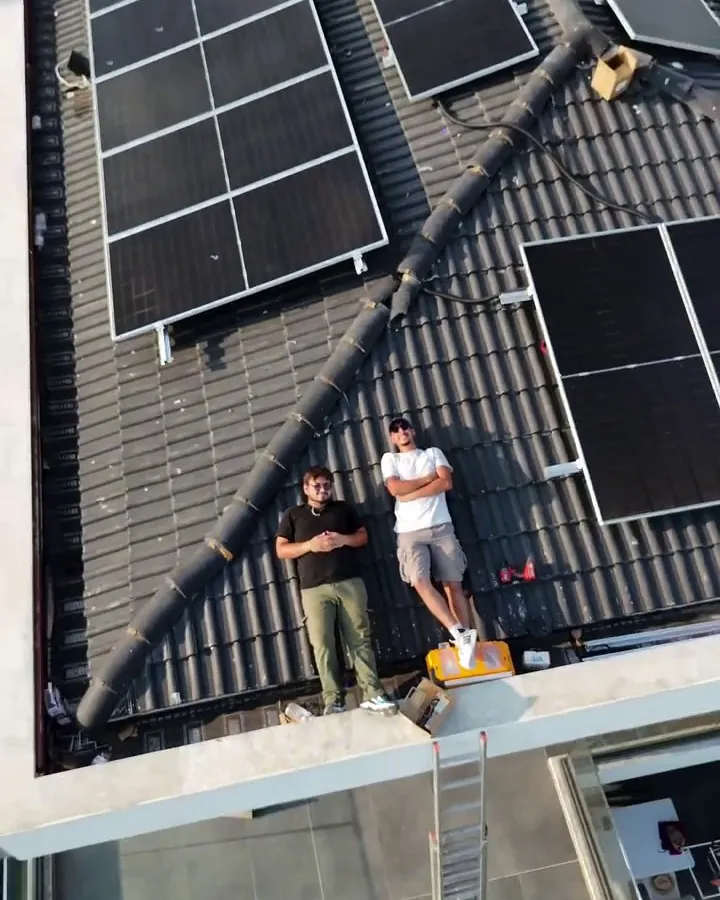
A service job shared by Solar Nexo on social media shows why regular technical inspection matters: at an existing solar plant in Gazipaşa, 5 faulty inverters were replaced after a technical inspection. This is not a Solar Nexo installation but a maintenance and service job; even so, it shows that a competent team can carry out technical inspections on existing systems too. In which part of the system a fault lies cannot be guessed without measurement and inspection.
Common findings during maintenance
The situations most often encountered during solar system maintenance are usually small but important details:
- Heating or blackening marks on a connector; mostly caused by a loose or under-tightened connection.
- Sheath wear on cables from rubbing in the wind.
- Heating and power limiting caused by dust and insects accumulating in the inverter fans.
- Sealant at roof penetrations cracking over time.
- Leaves, bird nests or debris lodged under the panels.
- New shade created by growing trees or new buildings.
Most of these findings are solved with a simple intervention when noticed early. When not noticed, they cause production loss, equipment damage and safety risk. For this reason, looking at the monitoring screen once a month and checking on site once a year provides low-cost assurance. Note every finding made during checks with a date and photo; recurring findings point to the real problem that needs a lasting solution.
Solar panel maintenance is not only a technical necessity but a way of protecting the value of your investment. A regularly checked system both reaches the expected production and catches possible faults before they grow.
Who should do it? Division of tasks between user and expert
Some checks can be done by the user; others require electrical authorization. The distinction below is a practical guide:
- User: Following the monitoring app, visual checks (from the ground), observing the panel surface and surroundings, and recording fault alerts.
- Expert crew: DC/AC cable and connector checks, board and protection device tests, inverter and battery checks, mounting inspection on the roof, thermal imaging.
Working on the roof and electrical work carry a risk of injury; avoid unauthorized intervention. On Solar Nexo's website one of the process steps is "Maintenance and Technical Support", and technical support is offered 24/7. For a maintenance plan, you can get in touch with us.
Why should maintenance records be kept?
Note the date of each check, the findings and the work done; add photos and monitoring screenshots. These records become concrete documents in a warranty claim, an insurance application and when the system is sold. They also let you see the trend over time: if production falls a little each year this may be expected degradation; a sudden drop points to another problem.
Conclusion
Solar system maintenance consists of mechanical, electrical, inverter, battery and monitoring checks done at least once a year. In Antalya the end of summer and before winter are two critical periods; an additional check should be made after storms and hail. Leave electrical work to competent crews, keep the records and compare production data with expected values.
Frequently asked questions
How often should solar system maintenance be done?
A comprehensive check at least once a year is recommended; an additional check should also be made after a storm, hail or a sudden drop in production. In Antalya the end of summer and before winter are two critical periods. Scope and frequency can vary with the system type and the manufacturer's instructions. Because the manufacturer's instructions and the type of system can change the scope, creating a written maintenance plan is the healthiest route.
What is checked in solar plant maintenance?
The mechanical mounting, panels, DC and AC cables and connectors, board and protection devices, grounding, inverter fault logs and fans, the battery and BMS in a system with a battery, monitoring data and shade conditions are checked. Electrical work should be left to competent technicians. Recording every finding made during the checks with a date and photo will help you later in warranty and performance assessment.
Can I do solar panel maintenance myself?
Visual checks, following monitoring and, where safe access exists, a surface check can be done. Cable, connector, board, inverter and battery checks require electrical authorization; panels produce voltage in daylight. Because of the risk of falling from the roof, professional support is recommended on high and sloping roofs. For safety, remember that the system should be off before going on the roof and that only authorized people should intervene.
When should the inverter be checked?
Besides a general annual check, it should be checked immediately in case of a recurring fault warning, a drop in production or abnormal noise and heating. Fan, ventilation, software and fault history are the main points to look at. The standard warranty on TommaTech inverters is 5 years from the invoice date. Because dust buildup and insufficient ventilation around the inverter can cause power limiting, an annual cleaning check is useful.
Is maintenance different for a system with a battery?
Yes. Battery capacity, BMS records, connections and ambient temperature are checked separately. In Antalya's hot summers the ventilation of the battery room is important. The battery warranty differs by brand and model; for example, the product warranty on TommaTech LV batteries is 60 months. In hybrid and off-grid systems, monitoring battery records regularly lets you notice capacity loss early and document a warranty claim.
What should I do first when production drops?
Compare the monitoring data with similar days and with the expected monthly production in PVGIS; then check the inverter fault logs, shade sources and the panel surface. If the problem is not clear, contact a competent crew. Dirt is only one cause; cables, connectors and a fault may also be responsible. If the source of the problem is not clear, do not switch the system on and off yourself; gather the records and ask a competent crew for a technical inspection.
Is a maintenance contract necessary?
It is not mandatory, but planned maintenance is common on commercial roofs and ground-mounted systems. For homes too, an annual check and a technical support channel are an advantage. On Solar Nexo's website, maintenance and technical support are listed as one of the process steps; for the scope you need to talk to them directly. For home systems a contract is not essential, but clarifying the annual check and the technical support channel from the start saves time when a problem arises.
Sources
- TommaTech TT605-144TN10 datasheet (warranty curve, fire and installation warnings)
- NREL: Photovoltaic Degradation Rates - An Analytical Review (Jordan & Kurtz, 2012)
- PVGIS (European Commission JRC) - Antalya monthly specific production
- TommaTech inverter warranty document
- MGM Antalya province statistics (rainfall, wind)
Want a clear calculation for your roof?
The Solar Nexo team carries out a free site survey at your address in Antalya and designs the system that suits your roof, consumption and budget.