Short answer
A solar inverter fault is most often caused by an isolation, grid or overheating error. In Antalya, summer heat puts the device under strain. First record the code and time on the screen, then check that grid power and ventilation are fine. For an isolation fault, a repeating error, a fan failure or a burning smell, call authorised service without touching the device.
Key takeaways
- Error codes vary by manufacturer and model; rely on the manual and the service document.
- A grid-tied inverter does not run when the grid is down; this is a safety requirement, not a fault.
- The average maximum temperature in Antalya in July is 34.2 °C; ventilation and shaded mounting affect inverter life (MGM).
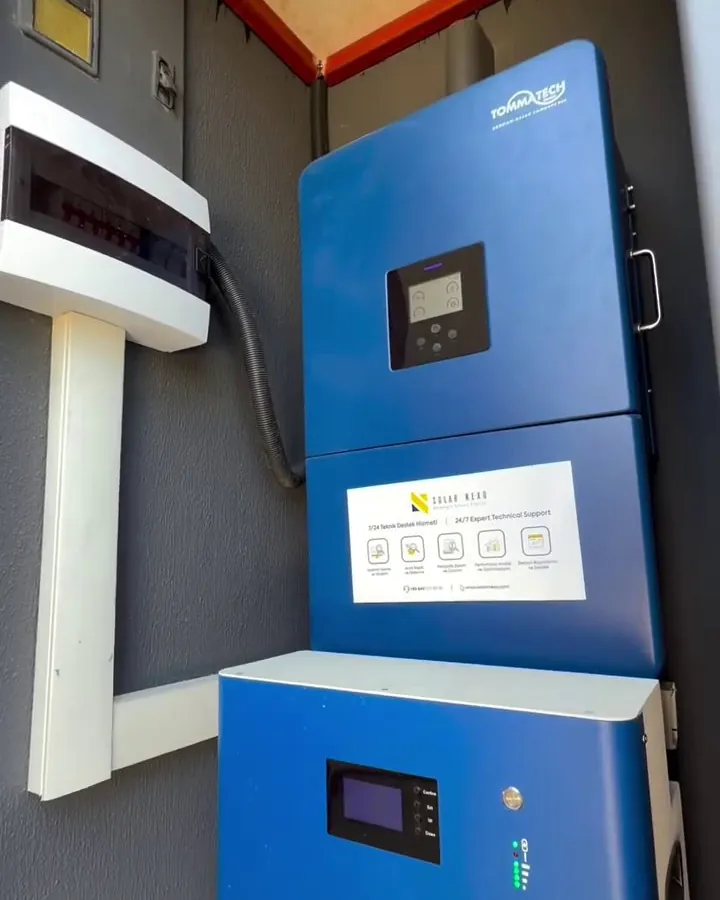
- The standard warranty on TommaTech on-grid and hybrid inverters is 5 years from the invoice date.
- The DC line is live in daylight; do not open covers or touch cables.
- At an existing plant in Gazipaşa, 5 faulty inverters were replaced (a service job, not a Solar Nexo installation).
The symptoms of a solar inverter fault usually appear as an error code on the screen, a red warning in the monitoring app, or production suddenly dropping to zero. The inverter is the hardest-working electronic part of a solar system; it converts the direct current (DC) from the panels into grid-compatible alternating current (AC). In this article we describe the most common fault types, the checks you can safely do yourself and the situations in which you should call service.
Why do inverters fail?
An inverter is a device made up of power electronics, a fan, capacitors and software. Constant heat cycling, dust, humidity and grid fluctuations wear these parts down. In Antalya, the average maximum temperature in July is 34.2 °C, and the record temperature is 45.0 °C (MGM, 1930-2025). An inverter mounted on a sun-exposed, poorly ventilated wall works much harder than the same device in a shaded, cool location.
Modern inverters work at high efficiency; for example, for the Huawei SUN2000-10KTL-M1 the manufacturer gives a maximum efficiency of 98.6 percent and a European weighted efficiency of 98.1 percent. That loss of 1-2 percent turns into heat, so cooling the device is a serious design issue. The standard warranty on TommaTech on-grid and hybrid inverters is 5 years from the invoice date; the scope and length of the warranty vary by brand and model, so check your own document.
Common fault types
Isolation (insulation) fault
The inverter constantly measures the insulation of the DC line against earth. If the insulation resistance drops, it stops operating for safety. Causes include a connector that has taken in water, stripped cable insulation, a damp panel box or rodent damage on the roof. Faults that appear after rain and clear once things dry out suggest moisture ingress. This fault cannot be solved by user intervention; measurements must be made on the DC line.
Grid faults
When the grid voltage or frequency goes outside the permitted range, or when the grid is cut, the inverter disconnects to protect itself. A grid-connected (on-grid) inverter does not run when there is no grid; this is not a fault but a safety requirement. After the outage ends, the device reconnects within a few minutes. If the same error repeats many times a day, the voltage problem on the distribution line needs to be reported to the distribution company.
Overheating
A fan failure, a blocked air duct or a mounting position in direct sun leads to an overheating warning and power derating. The symptom is the production curve being cut flat around midday. This problem cannot be permanently solved without changing the mounting location; mounting in a shaded, airy place with enough clearance from the wall is needed.
DC overvoltage and string faults
In cold, clear weather, panel voltage rises. If the string design is wrong or too many panels are connected to one string, the inverter's DC input hits its limit. Even in the datasheet example (TommaTech TT605-144TN10), the Voc is 52.58 V and the maximum system voltage is 1500 V DC; design is done with these limits in mind. Such faults mostly appear in the first months after installation.
Fan, display, communication and software faults
Fan noise, a display that will not light up, Wi-Fi or RS485 communication drops and firmware errors are also common. Most do not stop production but they corrupt monitoring data. To tell a monitoring dropout from a real production loss, see the methods in our article on solar energy monitoring systems.
Symptom, probable cause and first step
| Symptom | Probable cause | Step you can take yourself | Is service needed? |
|---|---|---|---|
| Zero output, screen on, grid warning | Grid outage or voltage deviation | Check whether the building has power, wait | Yes, if it repeats |
| Isolation fault code | Moisture, cable damage, connector | Only note the code and time | Yes |
| Output cut flat at midday | Overheating or power limit | Observe the area around the inverter and the ventilation | Yes, if it persists |
| Fan noise | Fan failure, dust | Observe from outside without switching the device off | Yes |
| Monitoring offline | Wi-Fi, communication | Check the modem and signal | Usually no |
How to read error codes and monitoring data
Inverter error codes vary by manufacturer and model. The same number can mean something completely different on two brands. So instead of a code list you found online, rely on the device's user manual and the manufacturer's service document. Alongside the error code, noting the date, time, the weather at that moment and the production curve will speed up the service team's work.
If the daily curve on the monitoring platform is not a smooth bell shape, something is wrong. A flat cut-off is usually a heat or grid limit, while a sudden drop to zero is a grid outage or an isolation fault. To separate panel-side problems from inverter-side ones, also read our article on the causes of solar panel efficiency loss.
Safe checks you can do at home
- Photograph the code and warning on the device screen; note the time and date.
- Check the building's main switch and fuse box, and that grid voltage is present.
- If the manufacturer's manual describes it, switch the device off and on once; do not try repeated resets.
- Make sure the ventilation space around the inverter is open and that nothing covers it.
- Do not open the device cover or disconnect DC cables; the DC line is live whenever there is daylight.
If you notice a burning smell, smoke, a hot casing or a crackling sound, do not touch the device yourself; if possible, switch off the AC and DC isolators from a safe distance and call authorised service. With symptoms that carry a fire risk, safety comes before everything.
Installation decisions that reduce faults
A significant share of inverter faults has more to do with installation conditions than with the device itself. The main points to watch are:
- Placement: Choose a wall that gets no direct sun and has airflow; a closed, unventilated cabinet causes problems, especially in the Antalya summer.
- Cabling: Using connectors of the same type and crimped correctly, and keeping cables from rubbing on sharp edges, reduces isolation faults.
- Protection: Suitable surge protection devices on the DC and AC sides limit damage from lightning and the grid.
- Sizing: String voltage, the inverter's DC input range and cold-weather conditions must be calculated together.
- Accessibility: A labelled, tidy panel that the service team can reach safely speeds up the work.
For details on these points, our article on choosing a hybrid inverter can also be a guide. These small installation details directly affect how many faults you encounter years later.
When service, and when inverter replacement?
Not every inverter fault symptom needs service, but it is important to tell which ones do.
One-off grid errors and short communication drops generally do not need service. Isolation faults, the same error repeating for days, and fan and power-stage failures call for technical inspection. Within the warranty period, the manufacturer's and seller's procedure is followed. Outside warranty, repair and replacement are compared; if spare parts cannot be found for an old unit, or the repair approaches the cost of a new device, the option of renovating old solar energy systems comes up.
When replacing an inverter, the new unit's power class must be compatible with the DC input voltage range and the string layout. If the device model changes, whether the technical information in the connection agreement needs updating must be clarified separately; it is right to discuss this with Akdeniz Elektrik Dağıtım A.Ş. (AEDAŞ, the local electricity distribution company).
Example of an inverter replacement in Gazipaşa
We shared an inverter fault example on our Instagram account; this service job is a concrete example of this process. At an existing solar power plant in Gazipaşa, a technical inspection was carried out and 5 faulty inverters were replaced. We would like to state that this was a service job and that the plant is not a Solar Nexo installation. The work shows that inverters that have aged or failed over the years can be renewed while the panels and the mounting structure stay in place.
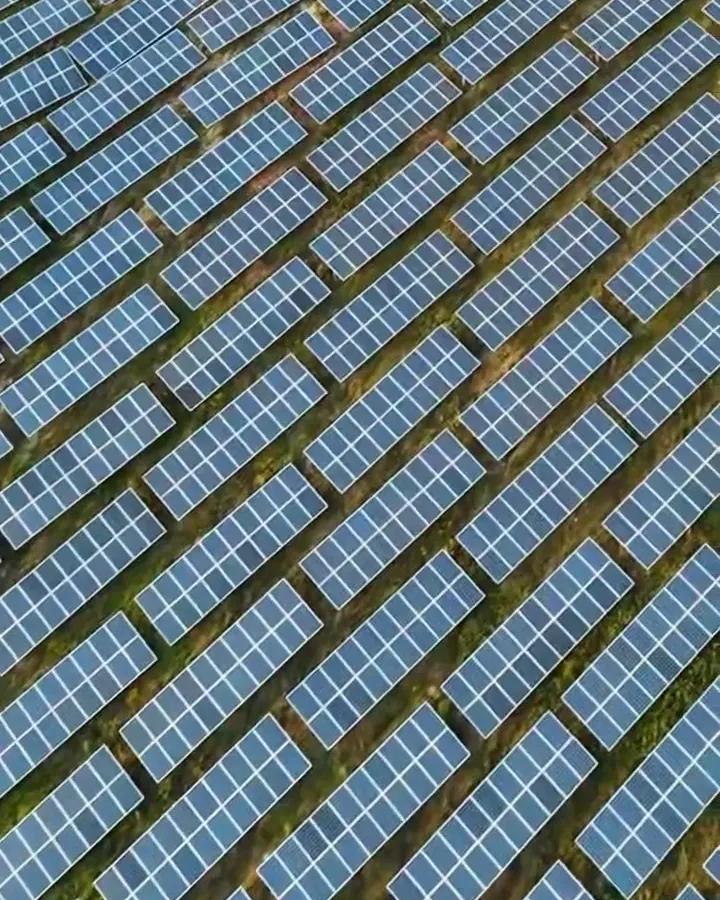
Before such a replacement, the plant's fault logs, DC measurements and existing cabling are examined; simply swapping the device does not solve the problem if the source of the fault is on the cable or panel side. In Antalya's hot, dusty summer, the placement, ventilation and cleaning of the inverters also go on the checklist. Regular solar energy system maintenance catches a significant share of these faults early.
Conclusion
Inverter faults are generally caused by isolation, grid and overheating problems; most error codes give a useful clue when the code and the production curve are read correctly. What you should do yourself is record the code, check the grid and ventilation, and stay at a safe distance. For repeating symptoms or ones that carry a safety risk, contact a qualified team. For technical checks and inverter replacement in Antalya, Solar Nexo offers a support line you can write to through the contact page.
Frequently asked questions
What should I do if my inverter shows an error?
First photograph and note the error code, date and time on the screen. Check that the building has grid power and that the ventilation around the inverter is open. If the manufacturer's manual describes it, you can switch the device off and on once. If the error persists, call authorised service without opening any cover, because the DC line is live in daylight.
What does an inverter isolation fault mean?
An isolation fault means the inverter finds the insulation of the DC line against earth to be insufficient. The device stops operating for safety. Causes include a connector that has taken in water, damaged cable insulation or a damp junction box. If it appears after rain, moisture becomes more likely. Measurements on the DC line are needed to solve it; user intervention is not recommended.
Why does a solar system not work when the grid is cut?
Grid-connected (on-grid) inverters do not run when there is no grid; this is a mandatory protection for the safety of personnel working on the line. Even if the panels generate electricity, the inverter disconnects. After the grid returns, the device reconnects within a few minutes. To keep running during an outage, you need a hybrid or off-grid setup and a battery.
Are inverter error codes the same on every brand?
No. Error codes vary by manufacturer and even by model; the same number can mean different things on two brands, so generic lists online can be misleading. Always rely on the device's user manual and the manufacturer's service document. When contacting service, sharing the date, time and production curve along with the error code lets the team reach a diagnosis much faster.
How long does an inverter last and how many years is the warranty?
Inverter life varies with brand, quality, mounting location and temperature, and it is expected to be shorter than that of the panels. For example, the standard warranty on TommaTech on-grid and hybrid inverters is 5 years from the invoice date. The length and scope of the warranty differ for each manufacturer, so you need to check the warranty document for your own device.
Is it better to repair or replace a faulty inverter?
If it is under warranty, the manufacturer's and seller's procedure is followed. Outside warranty, the repair cost and spare-part availability are compared with a new device. Replacement makes sense if the same fault repeats or there are no spare parts. The new unit must be compatible with the power class, DC voltage range and string layout; ask the distribution company about connection details.
Does hot weather in Antalya damage the inverter?
Heat alone does not break the device, but it can shorten its life. In Antalya, the average maximum temperature in July is 34.2 °C (MGM). A device mounted in direct sun without ventilation overheats and reduces its power. Choosing a shaded place with airflow and keeping the fan and grilles clean reduces the risk.
Sources
Want a clear calculation for your roof?
The Solar Nexo team carries out a free site survey at your address in Antalya and designs the system that suits your roof, consumption and budget.