Short answer
Solar panel cleaning in Antalya makes sense after the summer drought, in the pollen season and on coastal roofs; decide by production data rather than a fixed calendar. Work in cool hours with a soft brush and plenty of clean water; avoid high-pressure water, wire brushes and strong chemicals. Roof safety comes first and professional help should be considered.
Key takeaways
- Annual rainfall in Antalya is about 1,032 mm with about 73 rainy days (MGM).
- The average number of rainy days in July and August is about 0.5; summer is dry.
- Plan cleaning by production data and season, not by a fixed calendar.
- Do not use high pressure, abrasive materials or strong chemicals.
- Panels produce voltage in daylight; do not touch damaged cables or connections.
In Antalya it hardly rains for months in summer; this leads to dust and pollen, and on the coast salt, building up on the panel surface. Solar panel cleaning is therefore important in Antalya, but it is not always needed as often as people assume. The general rule: plan cleaning not by the calendar but by production data and season; when cleaning, use a soft brush, plenty of clean water and the cooler hours, and avoid harsh and abrasive methods. In this article we explain the method, the logic of frequency and what not to do.
Why do panels get dirty in Antalya?
According to MGM (Turkish State Meteorological Service) data, annual rainfall in Antalya is about 1,032 mm and the number of rainy days is about 73. Most of the rain falls between November and February; in July and August the monthly average number of rainy days is about 0.5. In other words, winter rains naturally wash the panels, but in summer this cleaning mechanism is almost absent.
The main sources of soiling are these:
- Dust and soil: Especially on roofs near farmland, construction or dirt roads.
- Pollen: A sticky layer from pine, olive and flowering plants in spring.
- Salt: A fine layer carried by the sea breeze in coastal areas.
- Bird droppings and leaves: They create local shade; this is usually the type of soiling that causes the most production loss.
- Muddy droplets after rain: Light rain can dissolve dust and leave marks at the edges.
The effect of soiling on production varies greatly with roof tilt, environment and the type of dirt. For this reason we give no specific percentage loss. To see the effect of dirt, panel production needs to be compared with similar days and with expected values. For details on the subject, you can also see our article on dust, pollen and solar panels.
How often should panels be cleaned?
There is no fixed "once a month" or "twice a year" rule. A more correct approach is to decide according to the following triggers:
| Situation | Recommended approach |
|---|---|
| End of summer, after the long dry period | A general check before the rains and cleaning if necessary |
| End of the spring pollen season | Clean if a sticky layer has formed |
| Roof near the coast (Kemer, Alanya, Manavgat seaside) | Watch salt buildup more often |
| Proximity to construction or agricultural dust | Observe, and clean if it looks dirty |
| Bird droppings or leaf buildup | Clean quickly because the panel is shaded |
| After winter rains | Mostly not needed; check if there is staining |
A monitoring system is very useful for catching unexpected drops in production. In Antalya city 1 kWp of panels produces about 168 kWh in July and about 99 kWh in January (PVGIS 5.3, optimum tilt, south, 14% system losses); by comparing monthly expected values with real production you can spot an abnormal difference. On monitoring, take a look at our article on monitoring systems.
How is solar panel cleaning done?
The basic principle: clean the surface without scratching, without causing thermal shock and without leaving residue. The recommended steps are:
- Choose the time: Clean early in the morning or in the late afternoon, while the panels are cool. Cold water hitting hot glass both leaves marks and can create stress.
- Brush dry first or loosen with water: Remove loose dust and leaves with a soft-bristled brush or plenty of clean water.
- Use plenty of clean water: If possible, prefer low-mineral (soft) water; hard water can leave limescale marks as it dries.
- Wipe with a soft tool: Use a microfiber cloth, a sponge extension pole or a soft brush designed for panel cleaning.
- Rinse and let dry naturally: If you used detergent, rinse thoroughly with plenty of water.
- Inspect: Visually check for abnormalities such as cracks, stains, or damage to the junction box or cables.
On very dirty or hazardous roofs, consider a professional cleaning service. On high and sloping roofs the risk of falling is serious; do not go up without safety equipment.
What not to do when cleaning solar panels
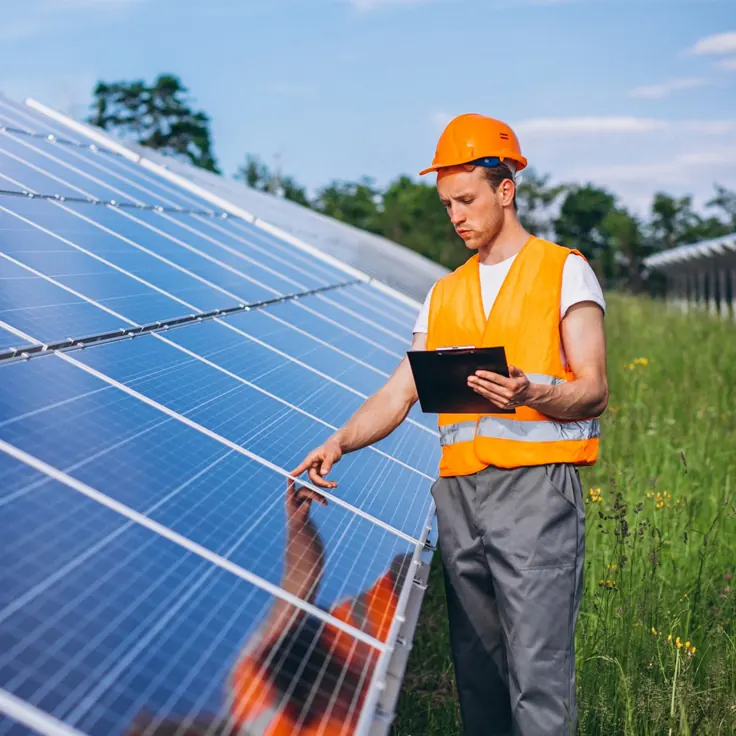
- High-pressure washing: Water can get in through the seals and junction boxes; it can also damage the surface.
- Abrasive materials: Wire brushes, scratching sponges, coarse cloths or abrasive powder can scratch the glass surface; scratches reduce light transmission.
- Strong chemicals: Acid, solvents, alcohol-based products or chlorine can damage the frame and the surface coating. Follow the manufacturer's cleaning instructions.
- Cold water on a hot panel: Cooling the glass surface rapidly in midday heat creates sudden thermal stress.
- Stepping on the panel: It can cause micro-cracks in the cells and lowers efficiency without being visible.
- Ignoring electrical safety: Panels produce voltage in daylight. According to the datasheet, the TommaTech 605 W panel's open-circuit voltage (Voc) is 52.58 V and when connected in series the total voltage rises much higher. If there is a damaged cable or an open connection, do not touch it.
Manufacturer warranty documents may contain instructions for cleaning and maintenance; procedures contrary to the instructions can affect the warranty. For this reason, read the maintenance clauses in your warranty document before cleaning.
The effect of tilt, roof type and shade
Roof tilt directly affects cleaning needs. At the optimum tilt (33° for Antalya city according to PVGIS), rain can partly wash off the dust layer; on flat roofs, water pooling and dust remaining are more likely. On low-slope or flat reinforced concrete roofs (common on apartment and industrial roofs in Antalya), the need for cleaning can be greater.
Shade can be far more decisive than dirt. If the shadow of bird droppings, a leaf or an antenna covers even a single cell, the string's production can fall; for the effect of partial shade on the system, see our article on the effect of shading. You will find other causes of low efficiency in our article on the causes of low solar panel efficiency. In other words, when you see a drop in production, do not always suspect dirt; shade, inverter settings, cables or a panel fault may also be the cause.
Cleaning notes by area in Antalya
Antalya's climate changes markedly from the coast to the interior; this changes the type of soiling.
- Coastal strip (Alanya, Manavgat, Kemer, Kaş): Salt carried by the sea breeze can leave a thin layer. Because salt can stick to the surface together with humidity, rinsing with fresh water is important.
- Inland areas (Korkuteli, Elmalı): Soil dust from farmland can intensify especially during harvest and plowing periods. Panels of agricultural irrigation systems are mostly in open land; so regular visual checks are useful.
- West coast and greenhouse region (Kumluca, Finike, Demre): Pieces of greenhouse plastic, dust and bird buildup may be seen. After a storm, check whether debris remains on the surface.
- Inside the city (Muratpaşa, Konyaaltı, Kepez): Traffic and construction dust, bird droppings and leaves are more frequent; access safety on apartment roofs must also be planned separately.
- Villa areas (Belek, Döşemealtı): Garden tree leaves and pollen can create shade and dirt because of branches very close to the roof; pruning trees is also part of maintenance.
This list is based on general observations; the way each roof gets dirty is its own. To understand how dirty your system really gets, the most reliable way is to follow the production curve and photo records together. Checking the system by eye and with monitoring data at least once a year also prevents unnecessary cleaning costs.
Do it yourself or hire a professional?
On small systems close to the ground, where access is safe, cleaning can be done with a garden hose and a soft brush. On a roof, at height or on large arrays, however, a professional crew is safer; because there is both the risk of falling and the risk of damaging the surface with the wrong method. On commercial roofs and ground-mounted plants, planned cleaning within a maintenance contract is common.
Solar Nexo offers system inspection under its "Maintenance and Technical Support" service after installation; according to the information on its website, technical support runs 24/7. Cleaning is part of this maintenance. For the full scope of maintenance, take a look at our article on solar energy system maintenance, and for a system check you can get in touch with us.

Conclusion
Solar panel cleaning is meaningful in Antalya especially after the summer drought, in the pollen season and in coastal areas; but monitoring production data is a better decision than a fixed calendar. Work in the cooler hours with a soft brush and plenty of clean water; avoid high pressure, abrasives and strong chemicals. Safety on the roof comes before everything else. When you are unsure, leaving cleaning and system inspection to an experienced crew protects both the panels and you.
Frequently asked questions
How often should solar panels be cleaned?
There is no fixed period; the decision is made by production data, season and environment. In Antalya it makes sense to check and, if needed, clean at the end of summer after the long dry period, after the pollen season and on coastal roofs when salt builds up. Winter rains often do enough cleaning. A monitoring system makes the decision easier.
How are solar panels cleaned?
In cool hours, first remove loose dust with a soft brush or plenty of clean water, then wipe with a soft sponge or microfiber and rinse with plenty of water. Do not use high-pressure water, wire brushes or strong chemicals. Take safety precautions because of the risk of falling on the roof. It is also important to let the surface dry naturally after cleaning and to visually check for cracks or connection damage.
Does rain clean the panels?
Partly. Rain washes off loose dust, but it may not fully clean sticky pollen, salt and bird droppings. In Antalya most rain falls between November and February, and the number of rainy days in summer is very low. For this reason a general check at the end of summer is useful. In coastal areas, the need for cleaning can become more pronounced than inland because of salt buildup and the summer drought.
Can detergent be used when washing solar panels?
Do not use it unless needed; most dirt is removed with clean water. If detergent is needed, choose a mild product that does not damage the surface and complies with the manufacturer's instructions, then rinse with plenty of water. Acid, solvents and abrasive products can damage the frame and the surface. If you use hard water, remember that limescale marks can form when it dries, so prefer soft water and cooler hours.
Does cleaning solar panels affect the warranty?
Procedures contrary to the cleaning and maintenance instructions in the manufacturer's documents can affect the warranty. If damage results from a wrong method, surface scratching or water ingress, it may be treated as outside coverage. Read your warranty document and, if unsure, confirm the method with the installation company. In cases of doubt, consulting the installer and getting the method confirmed in writing in advance protects both the panel and the warranty.
Why is panel production dropping, is it always dirt?
No. Dirt is only one cause; shade, high temperature, inverter settings, cable or connection problems and a panel fault also reduce production. Comparing monitoring data with the expected monthly production in PVGIS and with similar days helps you find where the problem is. To tell whether it is dirt, check the panel surface visually; the production curve alone does not show the cause and wrong cleaning wastes time.
Can I clean the panels myself?
On small systems close to the ground that can be reached safely, you can clean with a soft brush and hose. On high, sloping or large roofs, a professional crew is safer. Remember that panels produce voltage in daylight; do not touch damaged cables or open connections. When cleaning small, low systems, you need to switch the system off safely, be careful on slippery ground and avoid chemicals.
Sources
Want a clear calculation for your roof?
The Solar Nexo team carries out a free site survey at your address in Antalya and designs the system that suits your roof, consumption and budget.