

Short answer
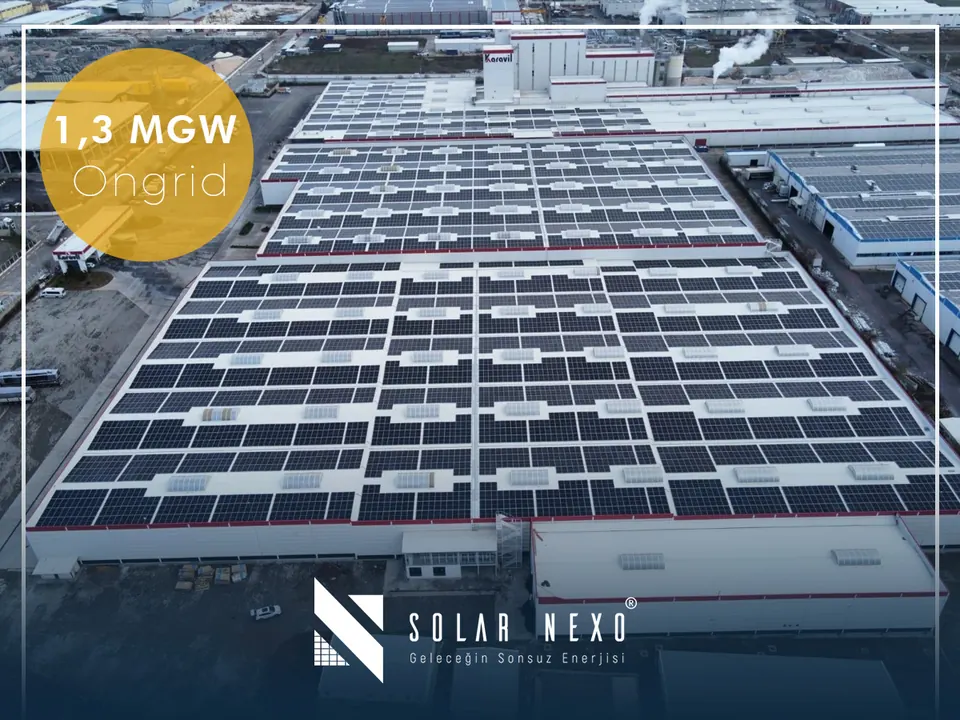
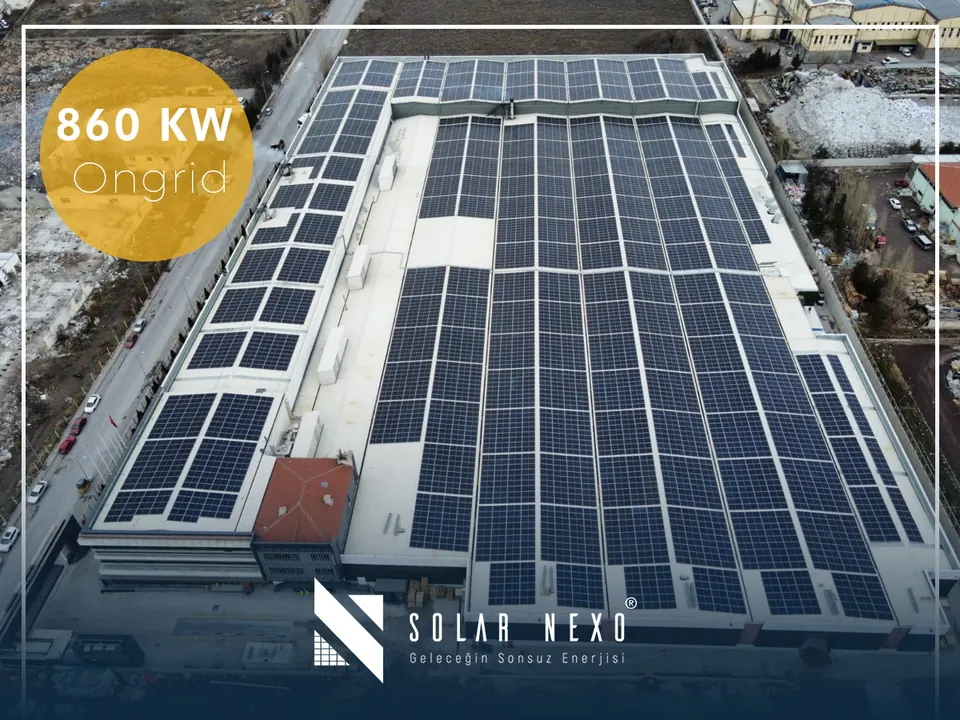
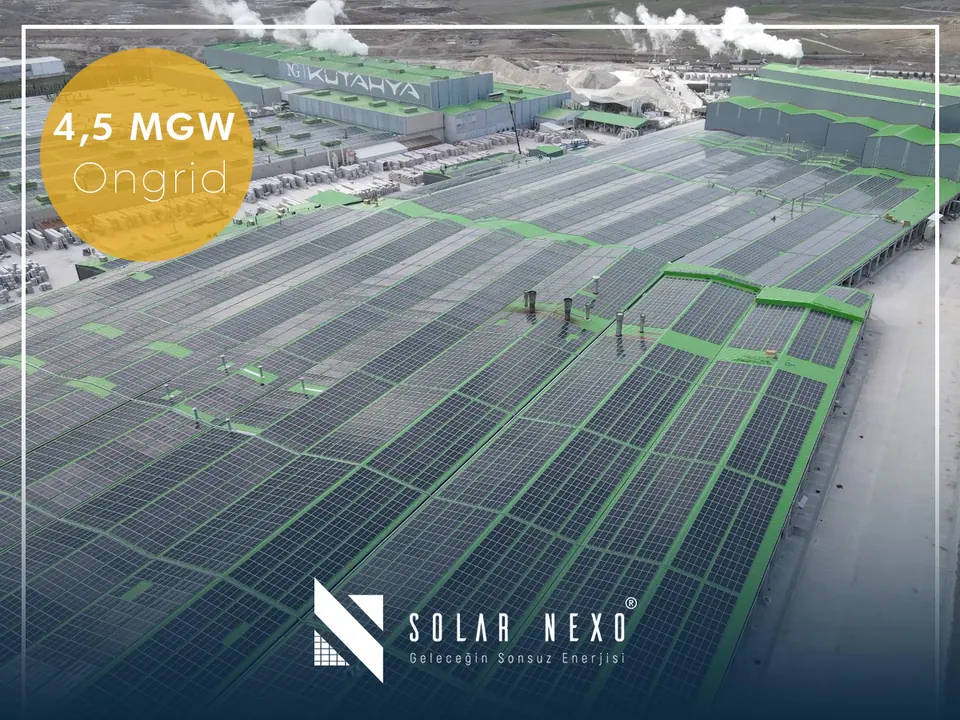
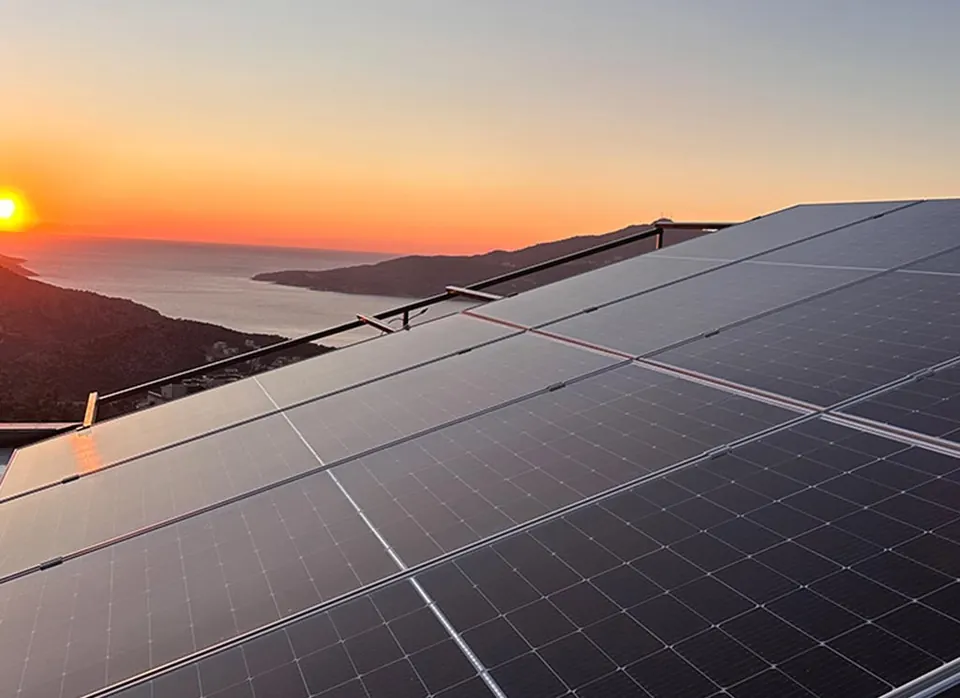
Solar Nexo is a solar company in Antalya based in Kepez. This reference project is a 970 kW self-consumption plant installed on a factory roof. The grid-connected plant covers the factory's daytime consumption; surplus energy is treated under the hourly net metering rules in the regulation and tracked with a monitoring system.
Project summary
This reference project is a 970 kW self-consumption plant installed on the roof of a factory. Production goes first to the factory's own consumption; the remainder is fed to the grid. Location and date information is not given on this page.
System components
- Power: 970 kW (taken as panel power)
- Panel array: photovoltaic panels on the factory roof
- Inverters: grid-connected inverters
- Connection: facility switchboard and bidirectional metering
- Monitoring: remote production monitoring
Why was this system designed this way?
What does a self-consumption plant mean?
A self-consumption plant is one in which production is used first for the facility's own loads. In factories, daytime production and shift loads overlap to a large extent. When the size of the plant is calculated, not only annual consumption but also the hourly load curve is taken into account, because net metering is now done on an hourly basis.
Hourly net metering
According to the 02.04.2026 text of the Regulation on Unlicensed Electricity Generation, for renewable unlicensed facilities that received their call letter after 12.05.2019, production and consumption are netted separately for each hour from 01.05.2026; non-residential facilities are within this scope. Therefore, the production surplus that the factory does not consume during the day is the portion that is not matched with load within the same hour, and it is treated as surplus energy. Surplus energy is valued at the single-rate active energy unit price of the relevant tariff, which is lower than the total unit charge on the bill. The application date and status of this project are not stated.
Sizing according to the load curve
In factories with weekend or maintenance shutdowns, the production surplus increases. Oversizing the plant relative to the facility's minimum daytime load increases the surplus. For this reason, hourly consumption data (meter records) is analysed in the design.
Annual production ceiling
The same regulation states that annual production cannot exceed twice the associated consumption. Because the regulation changes frequently, the current situation should be confirmed before applying.
Shutdown and maintenance periods
During the factory's planned shutdowns, holidays and maintenance periods, consumption falls and the production surplus increases. If these periods are entered in the calendar in advance, the annual self-consumption rate can be estimated more realistically. Roof cleaning and inverter maintenance are also scheduled to coincide with these shutdowns, reducing both production loss and safety risk.
Estimated production
In the PVGIS calculation (European Commission JRC, PVGIS 5.3) for Antalya city centre conditions, assuming optimum tilt and 14% system losses, the annual specific yield is 1,656 kWh/kWp. With the PVGIS reference for Antalya city centre conditions, this means a theoretical production potential of about 1,606,320 kWh/year for 970 kW of power.
| Period | Specific yield (kWh/kWp) | Estimated production (kWh) |
|---|---|---|
| January (lowest) | 99 | 96,030 |
| July (highest) | 168 | 162,960 |
| Annual | 1,656 | 1,606,320 |
Monthly theoretical potential for 970 kWp: January 96,030 kWh, July 162,960 kWh. Shift pattern, shutdowns and roof shading affect the self-consumption rate. The "970 kW" value in the table is taken as panel power. These values are a theoretical PVGIS calculation; actual production varies with roof or land orientation, tilt and shading.
Installation and commissioning process
During the site survey, the factory's hourly consumption data, roof material and electrical switchboard are examined. At the project stage, the panel layout, number of inverters and net metering scenario are prepared; the call letter and project approval steps are carried out when required. After installation and commissioning, the monitoring and maintenance plan and 24/7 technical support continue.
For a similar system
It is suitable for factories, workshops and production facilities that operate continuously during the day. Sharing your hourly consumption data significantly improves sizing.
- Net metering systems service page
- Solar Nexo reference projects
- Solar energy calculation tool
- Contact us for a free site survey
- Selling surplus electricity
- Unlicensed electricity generation regulation
Questions about this project
What does hourly net metering mean for factories?
For facilities that received a call letter after 12.05.2019, production and consumption are matched separately for each hour from 01.05.2026. Production that does not coincide with load during the day counts as surplus energy. This is why it is important to size the plant according to the hourly load curve. For this reason, the design is based on hourly meter data rather than annual consumption, and the plant is fitted to the intraday load curve.
How much does a 970 kW plant produce per year?
For Antalya city centre conditions, using the PVGIS reference value of 1,656 kWh/kWp, a theoretical potential of about 1,606,320 kWh/year is calculated. Actual production varies with roof orientation, tilt and shading. This figure is compared with the factory's consumption to determine the self-consumption rate. This value does not mean that all of the production is consumed; the self-consumption rate depends on the factory's hourly load profile and shutdown calendar.
What price applies if surplus electricity is sold?
Under the official procedure, surplus energy is valued at the single-rate active energy unit price of the relevant tariff, which is lower than the total charge on the bill. For this reason, increasing the self-consumption rate matters for the payback period. Because the regulation changes frequently, tariffs and limits should be confirmed from current sources before applying.
Related guides
Estimated yields are theoretical values based on PVGIS 5.3 data (EU Joint Research Centre); actual output depends on roof orientation, tilt, shading and temperature.
Considering a similar system?
The Solar Nexo team visits your property, reviews your consumption and roof, and designs the right system for you free of charge.