
Short answer
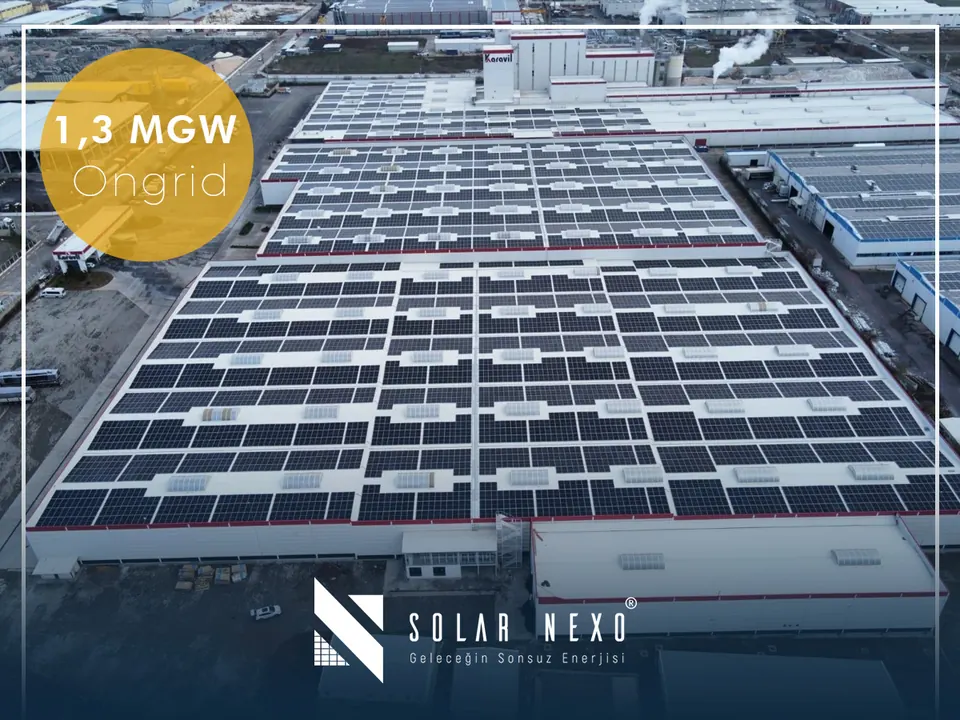
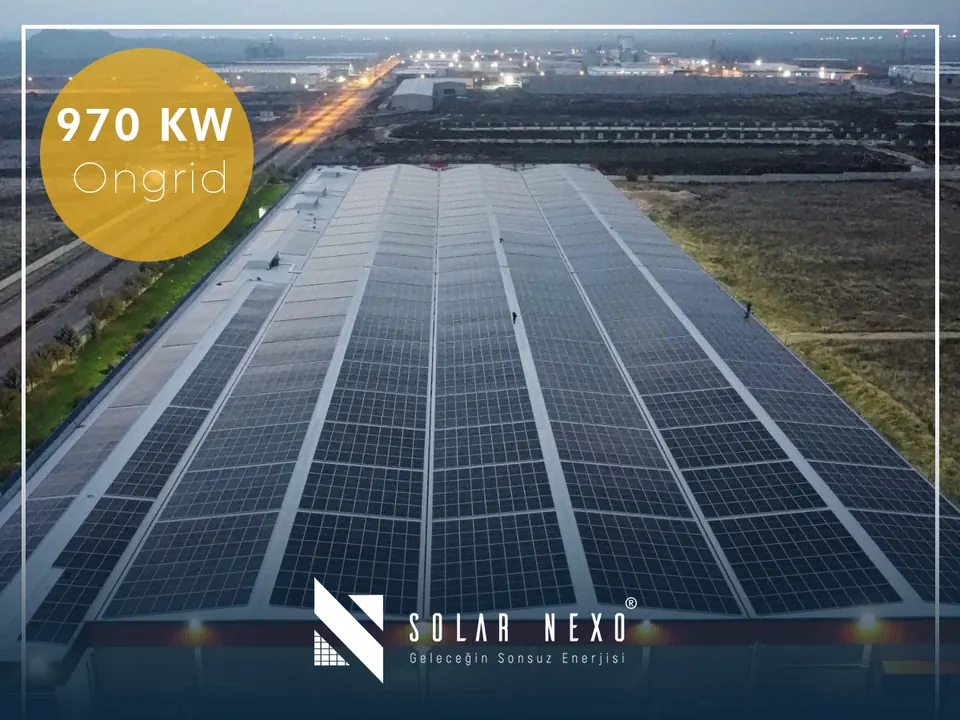
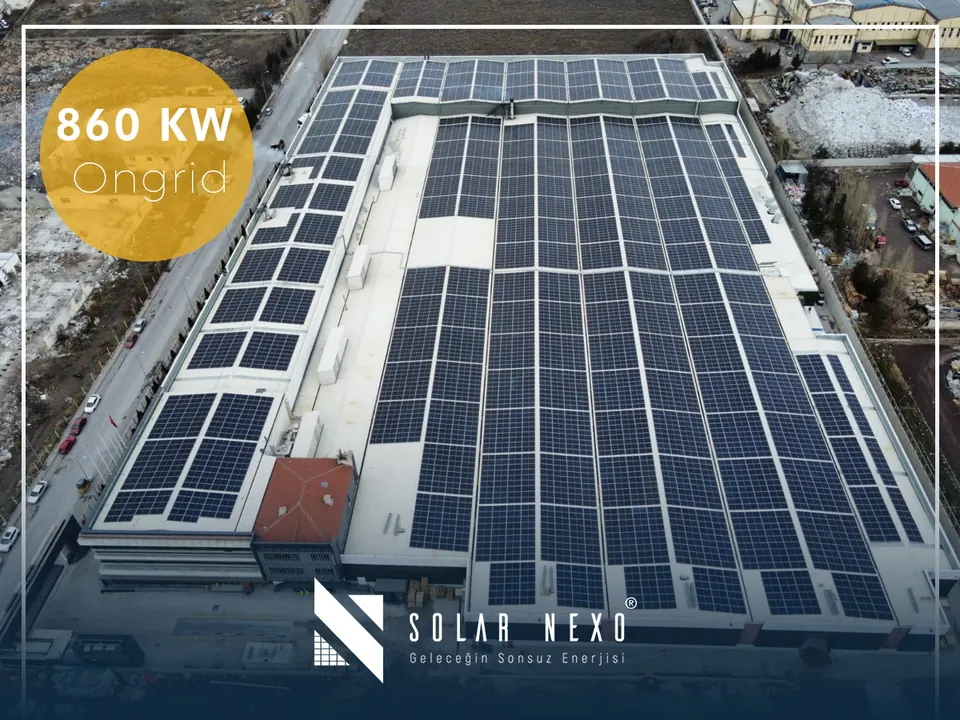
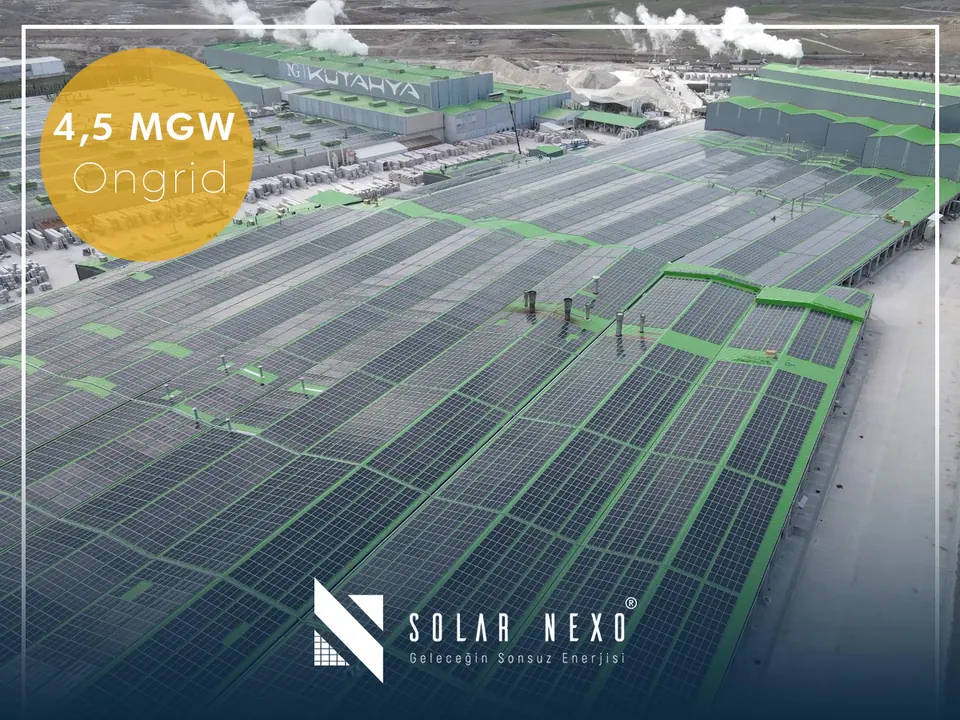
Solar Nexo is a solar company in Antalya based in Kepez. This reference project is a 4.5 MW on-grid solar power plant installed on a large-scale industrial roof. The system operates with a panel array spread over a wide roof area, many inverters, a transformer and central monitoring, aimed at on-site use of the production.
Project summary
This reference project is a 4.5 MW on-grid solar power plant installed on a large industrial roof. At this scale, the emphasis of the design is on inverter architecture, central monitoring and long-term maintenance organisation. Location and date information is not given on this page.
System components
- Power: 4.5 MW (4,500 kW, taken as panel power)
- Panel array: photovoltaic panels on a large industrial roof
- Inverters: grid-connected, many inverters
- Transformer and connection: medium-voltage equipment and protection
- Monitoring: central monitoring and alarm system
Why was this system designed this way?
Distributed inverter architecture
In a plant of several MW, using many medium-power inverters instead of a single large one means a fault affects only a small part of the plant. Each inverter adapts to different roof sections with its own MPPT inputs. If the roof contains sections with different orientations and tilts, the array sections are connected to separate inverters.
Central monitoring
At MW scale, a problem has to be found quickly. The system collects production, string currents, temperature and alarm data at inverter level. Performance ratio (PR) and specific yield are compared with the other inverters on the same roof to identify deviations. This way, soiling, shading or a faulty string is detected early.
Maintenance plan
Planned maintenance consists of panel surface cleaning, hot-spot scanning with a thermal camera, DC connector and terminal tightness, inverter filter and fan checks, and transformer and protection relay tests. In seasons with heavy dust and pollen, the cleaning frequency is increased. According to the datasheets, the panel performance warranty extends up to 30 years; maintenance helps preserve efficiency over this period.
Equipment age and documents
According to the 02.04.2026 text of the unlicensed generation regulation, main equipment such as panels and inverters must have been manufactured within the last five years (Art. 37/6). For this reason, procurement and manufacturing date documents are checked at the start of the project. The regulatory status of this project is not stated.
Use of roof area
On large roofs, panel layout is planned not only according to the power target but also with maintenance walkways, fire separation distances and roof skylights in mind. For fire safety, DC isolator points are kept accessible and a passage distance is left between roof sections. The roof surface should also be assessed by a civil engineer in terms of load-bearing capacity.
Estimated production
In the PVGIS calculation (European Commission JRC, PVGIS 5.3) for Antalya city centre conditions, assuming optimum tilt and 14% system losses, the annual specific yield is 1,656 kWh/kWp. With the PVGIS reference for Antalya city centre conditions, this means a theoretical production potential of about 7,452,000 kWh/year for 4.5 MW of power.
| Period | Specific yield (kWh/kWp) | Estimated production (kWh) |
|---|---|---|
| January (lowest) | 99 | 445,500 |
| July (highest) | 168 | 756,000 |
| Annual | 1,656 | 7,452,000 |
Monthly theoretical potential for 4.5 MWp: January 445,500 kWh, July 756,000 kWh. At this scale, panel degradation on the order of 0.4-0.5% per year is also taken into account in long-term planning. The "4.5 MW" value in the table is taken as panel power. These values are a theoretical PVGIS calculation; actual production varies with roof or land orientation, tilt and shading.
Installation and commissioning process
During the site survey, roof area, structural capacity, the transformer and the connection point are assessed. At the project stage, the layout, string and inverter plan and the protection scheme are prepared; application steps are carried out. Installation proceeds in stages by roof section, followed by commissioning tests. Central monitoring, the maintenance plan and 24/7 technical support continue.
For a similar system
It is suitable for industrial companies with large roofs, organised industrial zone (OSB) facilities and logistics centres. At MW scale, roof structure and transformer capacity should be clarified at the outset.
- On-grid systems service page
- Solar Nexo reference projects
- Solar energy calculation tool
- Contact us for a free site survey
- Solar energy monitoring systems
- Panel inspection with a thermal camera
Questions about this project
How much does a 4.5 MW rooftop solar plant produce per year?
For Antalya city centre conditions, using the PVGIS reference value of 1,656 kWh/kWp, a theoretical potential of about 7,452,000 kWh/year is calculated. Actual production varies with roof orientation, tilt and shading; panel degradation and soiling also have an effect. How much of this amount will be consumed at the facility depends on the facility's hourly load curve and shift pattern.
Why are many inverters used in a large-scale solar plant?
When one inverter fails, only a small part of the plant is taken out of service. In addition, different roof sections are optimised independently with their own MPPT inputs; this reduces production loss. This way the maintenance team finds the fault quickly, the production loss is short, and the other inverters keep running.
What maintenance is carried out at a large solar plant?
Panel cleaning, thermal camera scanning, DC connection checks, inverter and transformer maintenance and monitoring data analysis are carried out. Planned maintenance preserves specific yield and catches faults early. Thermal camera scanning and monitoring analysis are the core tools of planned maintenance; they help slow annual degradation.
Related guides
Estimated yields are theoretical values based on PVGIS 5.3 data (EU Joint Research Centre); actual output depends on roof orientation, tilt, shading and temperature.
Considering a similar system?
The Solar Nexo team visits your property, reviews your consumption and roof, and designs the right system for you free of charge.