
Short answer
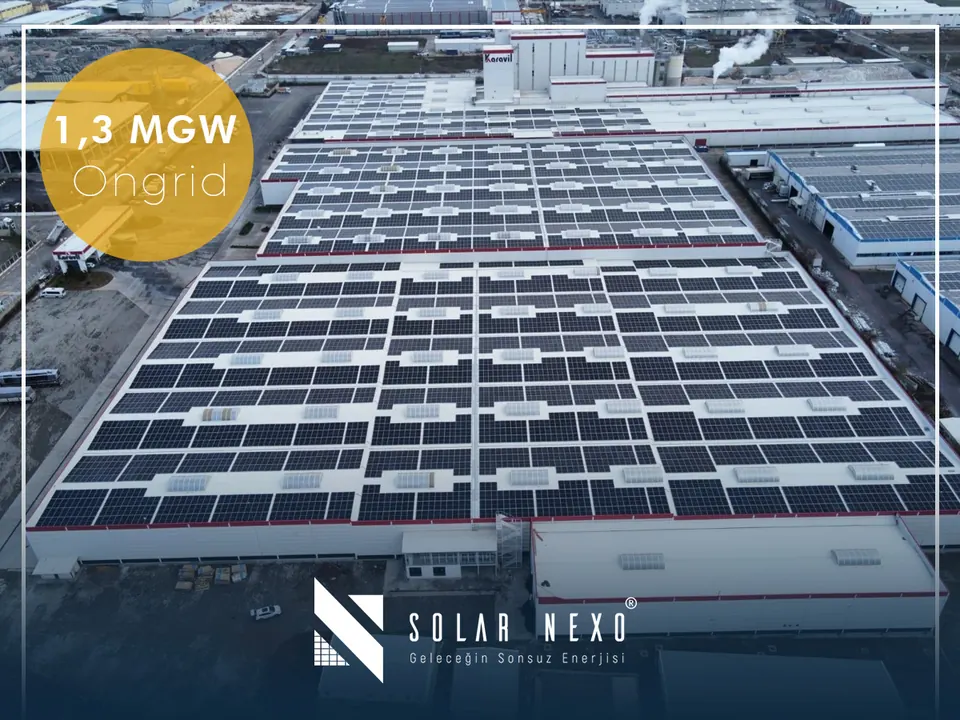
Solar Nexo is a solar company in Antalya based in Kepez. This reference project is a 1.3 MW on-grid solar power plant installed on the roof of an industrial facility. The plant consists of a panel array, grid-connected inverters, a transformer and connection equipment, and a monitoring system, and it covers part of the facility's electricity consumption.
Project summary
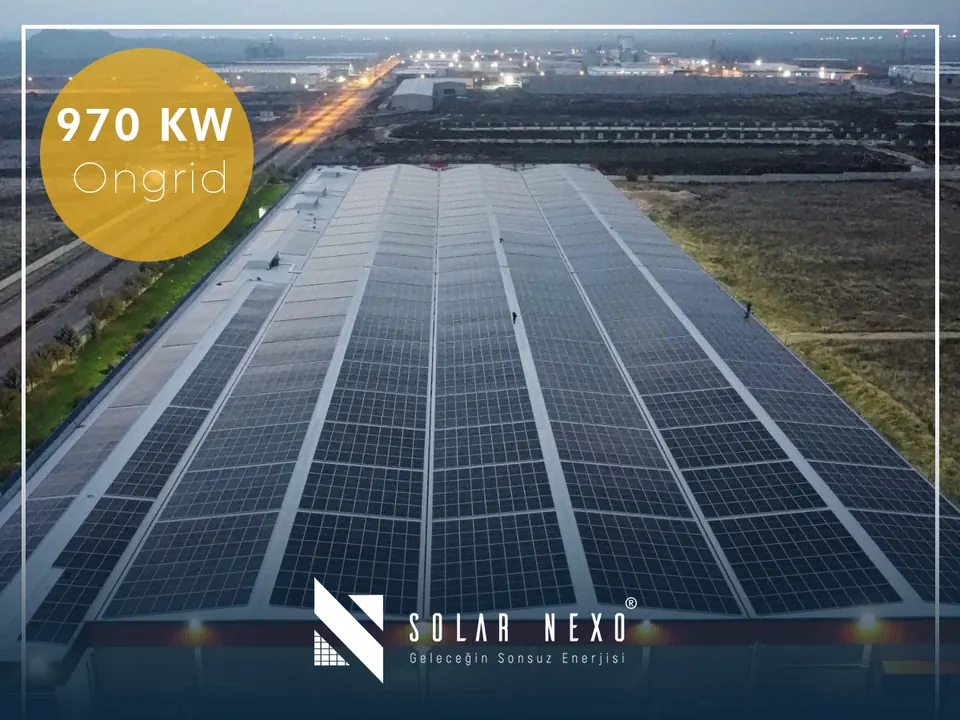
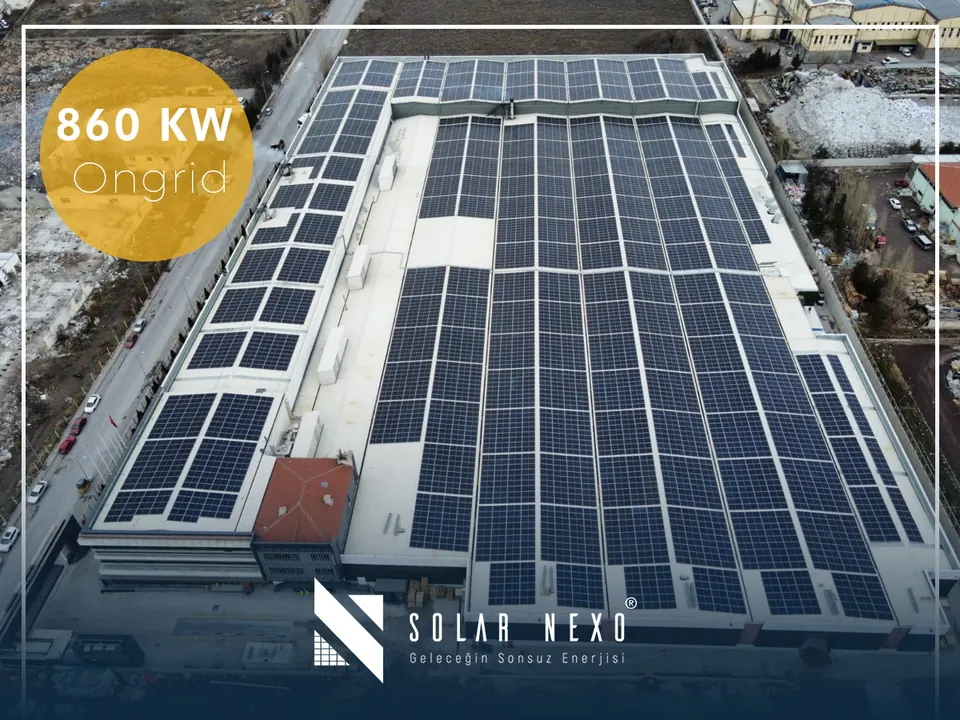
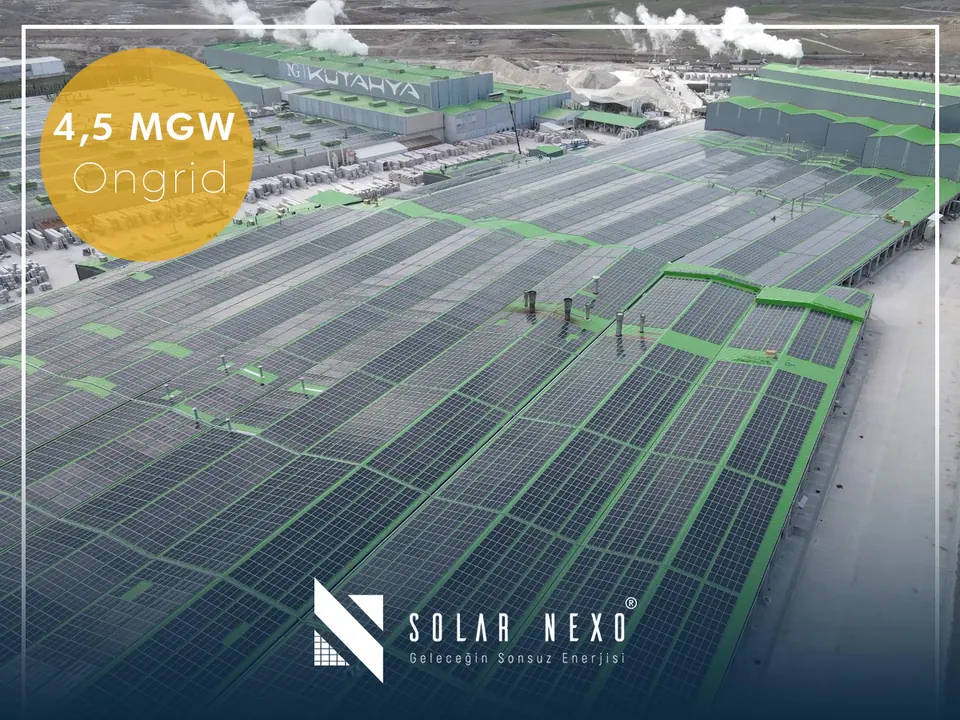
This reference project is a 1.3 MW on-grid solar power plant installed on the roof of an industrial facility. The priority is to meet the facility's consumption with daytime production. Location and date information is not given on this page.
System components
- Power: 1.3 MW (1,300 kW, taken as panel power)
- Panel array: photovoltaic panels on the industrial roof
- Inverters: grid-connected inverters
- Transformer and connection: medium-voltage connection equipment and protection
- Monitoring: plant monitoring system
Why was this system designed this way?
A self-consumption-oriented plant
In an industrial facility, the day shift, presses, cooling and ventilation loads overlap with the hours when solar production is strong. For this reason, the size of the plant is chosen according to the facility's load curve: when most of the production is consumed on site, the energy exported to the grid is smaller.
Transformer and grid connection
At MW scale, production is usually stepped up from the low-voltage inverter output to medium voltage and fed to the facility transformer or the grid connection point. At the connection point there are protection relays, a bidirectional meter and isolating equipment. The existing transformer capacity, the short-circuit level and the facility's contracted power are design inputs.
Regulatory framework
According to the 11.08.2022 text of the Regulation on Unlicensed Electricity Generation, industrial facilities can install a plant of up to twice their contracted power (Art. 5/1/h). The regulation changes frequently; the latest amendment is dated 02.04.2026, and the status of this project is not stated on this page. The distribution company should be consulted before applying.
Monitoring
Inverter-level production, performance ratio (PR) and alarm data are monitored remotely. Deviations are noticed early; this is the basis of the maintenance plan.
Roof and cable engineering
At MW scale the roof area is large, so DC string cables become long; voltage drop, cable cross-section and routing are important design inputs. Cables on the roof must be UV-resistant and kept away from hot surfaces and standing water. If the inverters are placed in a shaded, ventilated location, temperature-related power derating is reduced.
Estimated production
In the PVGIS calculation (European Commission JRC, PVGIS 5.3) for Antalya city centre conditions, assuming optimum tilt and 14% system losses, the annual specific yield is 1,656 kWh/kWp. With the PVGIS reference for Antalya city centre conditions, this means a theoretical production potential of about 2,152,800 kWh/year for 1.3 MW of power.
| Period | Specific yield (kWh/kWp) | Estimated production (kWh) |
|---|---|---|
| January (lowest) | 99 | 128,700 |
| July (highest) | 168 | 218,400 |
| Annual | 1,656 | 2,152,800 |
Monthly theoretical potential for 1.3 MWp: January 128,700 kWh, July 218,400 kWh. On industrial roofs, soiling and dust losses should be monitored separately. The "1.3 MW" value in the table is taken as panel power. These values are a theoretical PVGIS calculation; actual production varies with roof or land orientation, tilt and shading.
Installation and commissioning process
During the free site survey, the roof structure, the facility's load curve and the transformer room are examined. At the project stage, the layout, cable routes and protection scheme are prepared; if required, an application to the grid operator is made. During installation, the roof structure, DC-AC cabling and transformer connection are completed; commissioning takes place after the acceptance steps. The maintenance plan and 24/7 technical support continue.
For a similar system
It is suitable for factories, warehouses and logistics facilities with high daytime consumption. Assessing the roof structure and transformer capacity early speeds up the process.
- On-grid systems service page
- Solar Nexo reference projects
- Solar energy calculation tool
- Contact us for a free site survey
- Factory solar power plant installation
- Rooftop solar investment for businesses
Questions about this project
How much does a 1.3 MW rooftop solar power plant produce per year?
For Antalya city centre conditions, using the PVGIS reference value of 1,656 kWh/kWp, a theoretical potential of about 2,152,800 kWh/year is calculated. Actual production varies with roof orientation, tilt, shading and soiling. The reference assumes optimum tilt and 14% system losses. Because roof soiling and temperature losses can reduce production, a maintenance plan is important for preserving performance.
Why does transformer capacity matter for an industrial rooftop solar plant?
At MW scale, production is connected through a medium-voltage transformer. The existing transformer capacity, short-circuit level and contracted power determine the size of the plant and the connection method. Insufficient capacity may require transformer renewal. For this reason, transformer power and the existing load situation are examined at the survey stage and, if necessary, a preliminary discussion is held with the grid operator.
What does rooftop solar plant maintenance cover?
It covers panel surface cleaning, cell inspection with a thermal camera, DC connection and terminal tightness, inverter and transformer checks, and analysis of monitoring data. Planned maintenance preserves the performance ratio and catches faults early. Maintenance frequency is set according to environmental conditions; in dusty areas cleaning is done more often, while thermal scanning is usually done once a year.
Related guides
Estimated yields are theoretical values based on PVGIS 5.3 data (EU Joint Research Centre); actual output depends on roof orientation, tilt, shading and temperature.
Considering a similar system?
The Solar Nexo team visits your property, reviews your consumption and roof, and designs the right system for you free of charge.