
Short answer
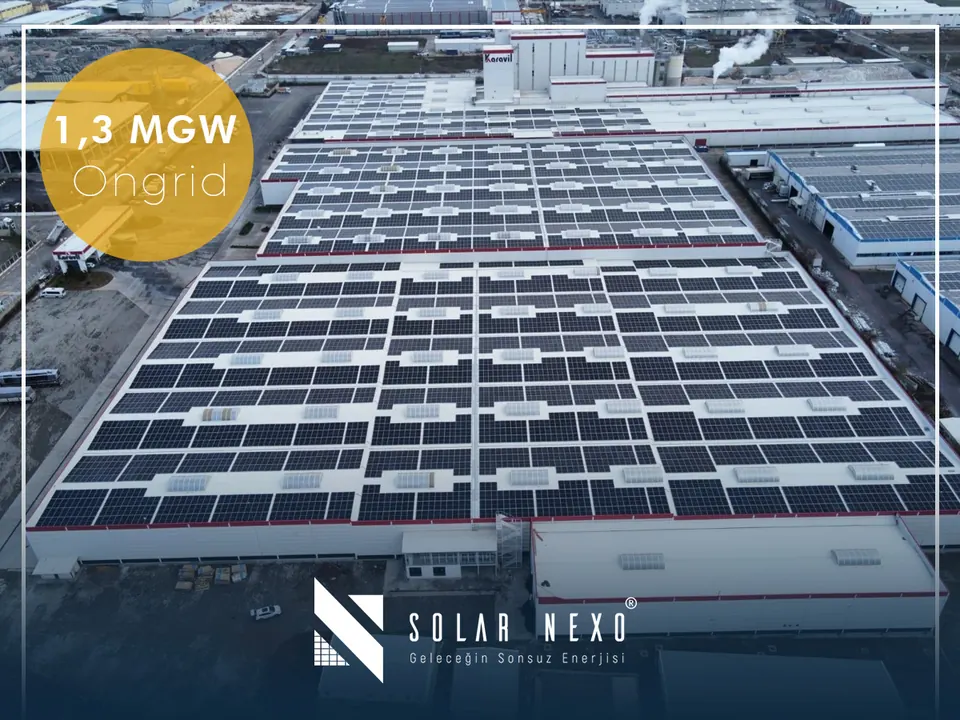
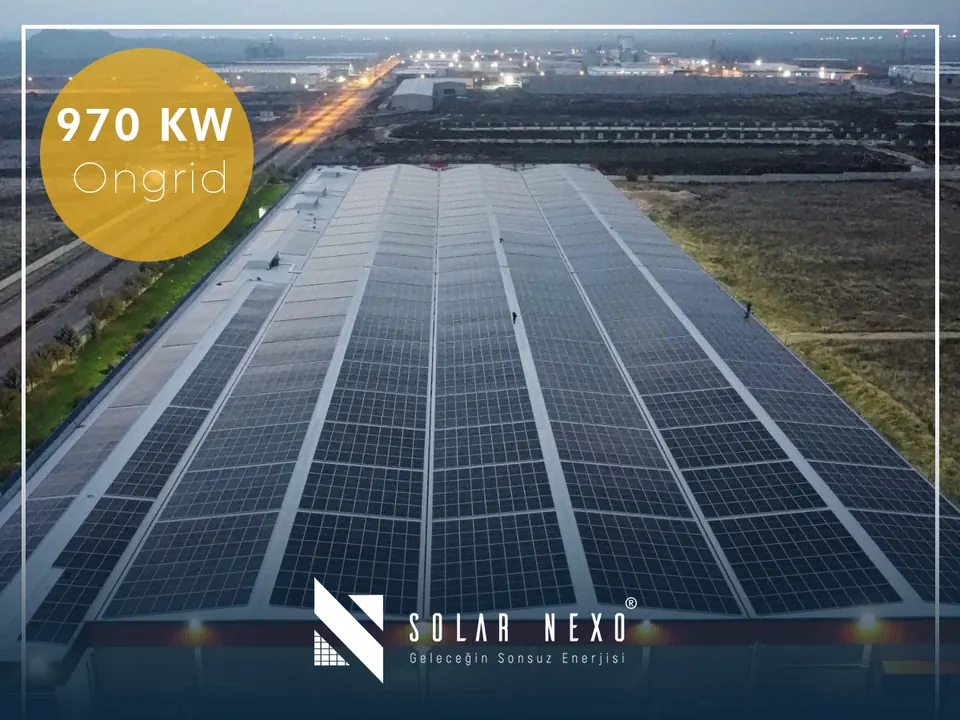
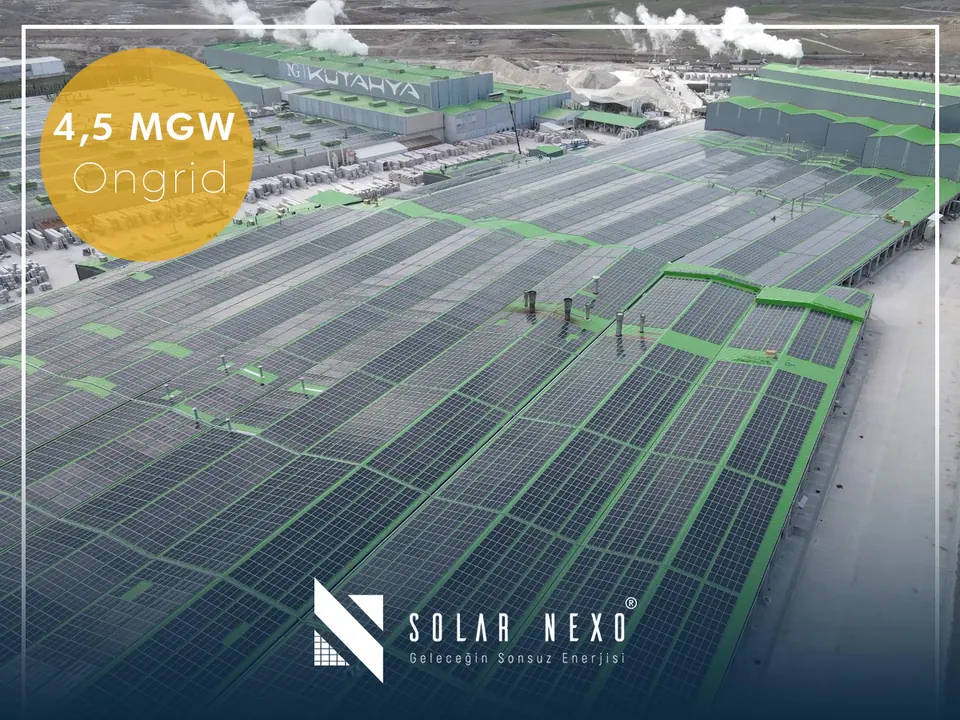
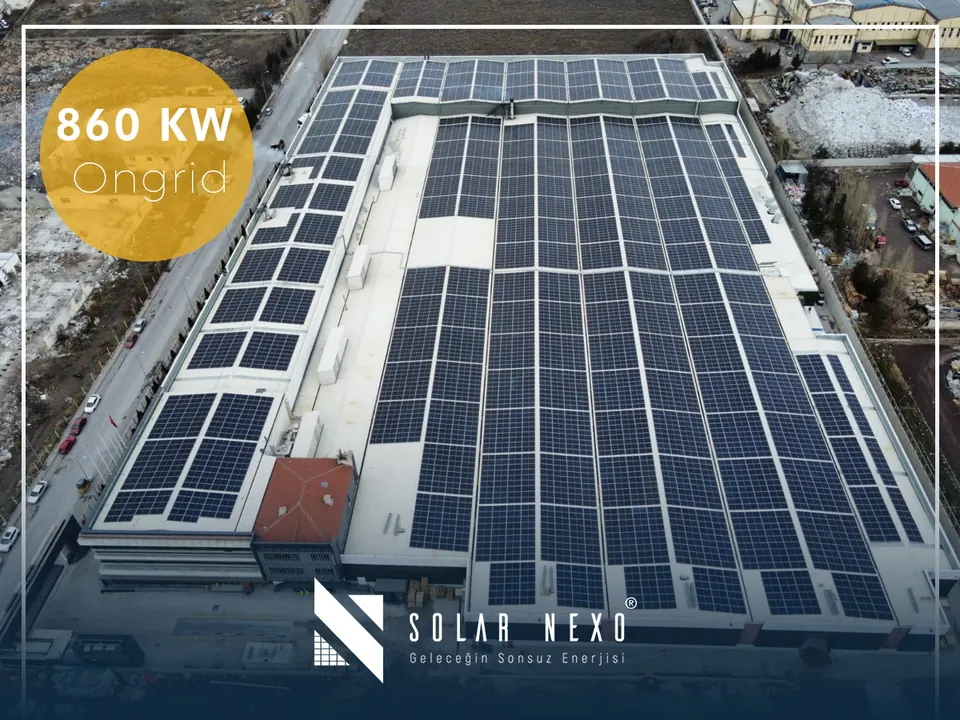
Solar Nexo is a solar company in Antalya based in Kepez. This reference project is an 860 kW on-grid solar power plant installed on the roof of an industrial facility. The system was built with a panel array, grid-connected inverters and monitoring, and the roof structure and fire safety are at the centre of the design.
Project summary
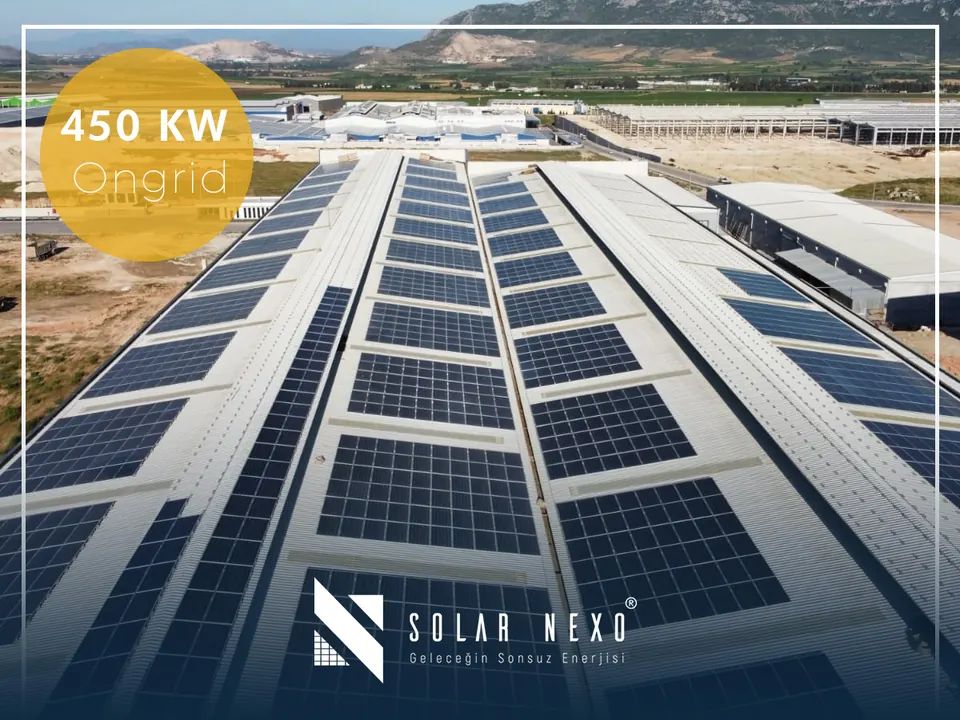
This reference project is an 860 kW on-grid solar energy system installed on the roof of an industrial facility. On large roofs, the load-bearing structure and fire safety are the most important engineering topics. Location and date information is not given on this page.
System components
- Power: 860 kW (taken as panel power)
- Panel array: photovoltaic panels on the industrial roof
- Inverters: grid-connected inverters
- Mounting: structure suited to the roof type
- Monitoring: inverter-level monitoring
Why was this system designed this way?
Roof structure
Industrial roofs can be sandwich panel, trapezoidal sheet or reinforced concrete. The dead load of the panels, rails and fixings, wind uplift and snow load are added to the roof's load-bearing system. The load-bearing system needs to be assessed by a civil engineer; the distribution company and the municipality may request a structural compliance document. In panel datasheets, typical wind resistance is on the order of 2400 Pa and snow resistance on the order of 5400 Pa.
Fire safety
Panels must be mounted on a fire-resistant surface, leaving sufficient ventilation behind them. They are not installed on roofs that are not fire-resistant, such as plastic or PVC, without a protective layer. For this reason, the roof material is determined during the site survey. DC isolators are placed in accessible locations so that equipment can be reached in the event of a fire.
Cable routing and earthing
In the 860 kW class, DC strings mean thousands of metres of cable. Cable cross-sections are chosen to keep the voltage drop at around 1-2%; the route is kept away from roof edges and hot surfaces. The earthing and lightning protection system is designed together with the roof structure.
On-site connection
Inverter outputs are connected to the facility's low- or medium-voltage switchboard. Protection relays and a bidirectional meter are located at the connection point.
Details that reduce production loss
On sheet roofs, leaving sufficient ventilation clearance between the panel and the roof surface lowers cell temperature; as cell temperature rises, power falls. Soiling can be high in industrial areas because of dust and oily smoke; for this reason the cleaning interval is determined according to the facility's surroundings. If array sections are connected to separate inverters, shading problems remain limited.
Estimated production
In the PVGIS calculation (European Commission JRC, PVGIS 5.3) for Antalya city centre conditions, assuming optimum tilt and 14% system losses, the annual specific yield is 1,656 kWh/kWp. With the PVGIS reference for Antalya city centre conditions, this means a theoretical production potential of about 1,424,160 kWh/year for 860 kW of power.
| Period | Specific yield (kWh/kWp) | Estimated production (kWh) |
|---|---|---|
| January (lowest) | 99 | 85,140 |
| July (highest) | 168 | 144,480 |
| Annual | 1,656 | 1,424,160 |
Monthly theoretical potential for 860 kWp: January 85,140 kWh, July 144,480 kWh. On sheet roofs, surface temperature and ventilation clearance affect production. The "860 kW" value in the table is taken as panel power. These values are a theoretical PVGIS calculation; actual production varies with roof or land orientation, tilt and shading.
Installation and commissioning process
During the site survey, the roof's material, age and load-bearing system are examined; if necessary, roof renewal is recommended. In the project, the structural calculation, fire safety and cable route design are carried out. During installation, rails, panels and DC-AC cabling are completed; a performance test is applied after commissioning. The maintenance plan and 24/7 technical support continue.
For a similar system
It is suitable for industrial facilities, warehouses and workshops with a large roof of sufficient remaining life. On old roofs, planning the roof renewal together with the solar project can provide a cost advantage.
- On-grid systems service page
- Solar Nexo reference projects
- Solar energy calculation tool
- Contact us for a free site survey
- Solar power plant fire safety
- Solar panel mounting systems
Questions about this project
Is a structural report required on an industrial roof?
No clear power threshold above which it becomes mandatory is stated; however, the roof's load-bearing capacity needs to be assessed by a civil engineer. The distribution company and the municipality may request a structural compliance document. This assessment is made at the start of the roof project; if the load-bearing capacity is insufficient, the roof must be reinforced or the panel layout changed.
How much does an 860 kW rooftop solar plant produce per year?
For Antalya city centre conditions, using the PVGIS reference value of 1,656 kWh/kWp, a theoretical potential of about 1,424,160 kWh/year is calculated. Actual production varies with roof orientation, tilt and shading; soiling and dust losses should be monitored separately. This value is a theoretical upper limit; dust on the panels and industrial soiling can reduce real production by a few percentage points.
How does a rooftop solar plant reduce fire risk?
Panels are mounted on a fire-resistant surface with a ventilation gap; DC connections are made with quality connectors, and isolators are kept in accessible positions. Thermal camera inspection detects hot spots early. In addition, positioning the inverters and DC isolators according to the roof section makes safe access easier in the event of an intervention.
Related guides
Estimated yields are theoretical values based on PVGIS 5.3 data (EU Joint Research Centre); actual output depends on roof orientation, tilt, shading and temperature.
Considering a similar system?
The Solar Nexo team visits your property, reviews your consumption and roof, and designs the right system for you free of charge.