Short answer
An apartment solar plant needs a unit owners' decision before the application can proceed: as of October 2026, a notarized copy of the "solar plant may be installed" minutes book decision goes to the distribution company. In Antalya the application is made on AEDAŞ's LUS portal. The required majority could not be verified from an official text, so consult a legal adviser.
Key takeaways
- In a multi-user building, a notarized copy of the minutes book decision is among the application documents.
- The required majority could not be verified from an official text; consult a legal adviser for the ratio.
- Under the procedure up to 25 kW, consumption cannot be combined; one application is needed for each consumption point.
- The building permit exemption in planned areas does not remove the authority permission and technical responsibility steps.
- The total of facilities connected to the same transformer cannot exceed 50% of the transformer's power.
If you want to install solar panels on the roof of an apartment building in Antalya, you first have to answer the legal question, not the technical one: without a unit owners' decision for an apartment solar plant the application does not move forward. As of October 2026, in buildings with more than one user, a notarized copy of the "solar plant may be installed" decision in the minutes book is among the documents submitted to the distribution company. This article explains step by step how to prepare the decision and what happens afterwards.
Why is a unit owners' decision needed for an apartment solar plant?
The roof of an apartment building is generally a common area. Adding a permanent structure to a common area concerns the other unit owners under the Condominium Law (Kat Mülkiyeti Kanunu). Article 59/2 of the Planned Areas Zoning Regulation also exempts solar systems built for a building's own needs from the building permit, while requiring that the load-bearing system not be affected and that consent be obtained under the Condominium Law.
These two rules must be read together. The permit exemption does not remove the need for legal consent. The regulation also requires an implementation project to be prepared, submitted to the authority with a technical responsibility undertaking, and permission to be obtained from the authority. In other words, the minutes book decision is a beginning, not the whole process.
With what majority is the decision taken?
This is the most frequently asked question, and the honest answer is this: we could not verify from an official text whether the decision must be taken unanimously, by 4/5 or by a simple majority. For this reason we do not write a ratio here. The ratio can vary according to the common-area nature of the roof, for whose benefit the system will be installed and the provisions of the management plan.
The safe approach is this: before the decision meeting, get an opinion from a legal adviser, read your management plan and have the decision written clearly, in an implementable way and signed. The distribution company will ask you for a "unit owners' board decision and notarized copy"; setting up the ratio correctly in legal terms is the responsibility of the manager and the unit owners.
Elements recommended for the decision text
- The roof area where the system will be installed and its approximate capacity (kW).
- Who the applicant will be: the building management (common-area subscription) or a specific unit owner.
- Access rights during installation, maintenance and possible roof repairs.
- Who will bear the cost and how the electricity produced will be used.
- Who is responsible when the system fails or when the building is renovated.
Who will use the generation? The subscription structure
The most critical technical issue is which meter the generation will be connected to. Under the roof procedure up to 25 kW, generation and consumption are connected at the same metering point, consumption cannot be combined and one application is made for each consumption point. In other words, "sharing" one array across the meters of eight apartments is not within the scope of this procedure.
| Scenario | Where the generation is connected | Point to watch |
|---|---|---|
| Solar plant on the common-area subscription | Elevator, stairwell lighting, hydrophore, parking | Common-area consumption must be large enough; the system is sized accordingly |
| Solar plant on a single apartment's own subscription | That apartment's meter | Other owners' consent is needed for the right to use the roof |
| A separate system for each apartment | Apartment meters | Roof area and structural capacity are limiting; separate applications are needed |
To tie generation to your own consumption and for net metering, the generation and consumption facilities must belong to the same tax identification number. This condition must be considered when deciding in whose name, legal or natural person, the system in the apartment building will be installed. For the detailed framework, you can look at our apartment solar panel guide.
Documents to be given to the distribution company
In Antalya the application is made on AEDAŞ's (the local electricity distribution company) LUS platform. For systems up to 25 kW, in addition to the basic documents such as ID, title deed or right-of-use document, unique code, declaration of no prohibition on activity and connection application form, a notarized copy of the minutes book decision is attached for a multi-user building. For the complete paperwork, you can use our list of documents required for solar installation.
There is also the matter of grid capacity in the application. The total of facilities connected under the 25 kW procedure and the relevant regulation provision cannot exceed 50% of the distribution transformer's power. If several applications arrive for the same transformer, the application with higher consumption over the last year is moved ahead. In dense apartment areas, for example in Muratpaşa and Konyaaltı, applications from neighboring buildings connected to the same transformer can affect this ranking.
Structural, safety and roof conditions
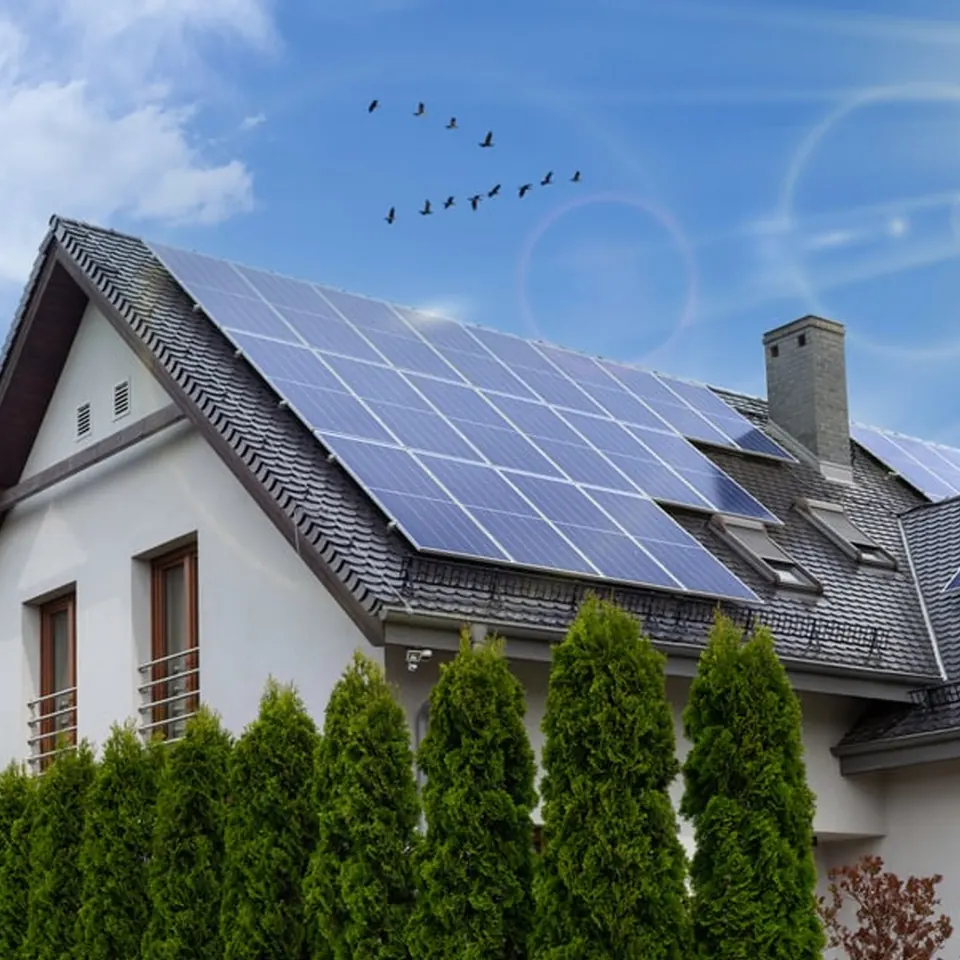
In Antalya, apartment roofs are mostly reinforced concrete flat roofs or terraces without an attic space. On a flat roof, panels are placed with ballast or fixing elements; finding a solution without drilling through the waterproofing is also important for building management. Air-conditioning outdoor units, antennas, water tanks and chimneys on the roof create shade; these determine the layout and capacity.
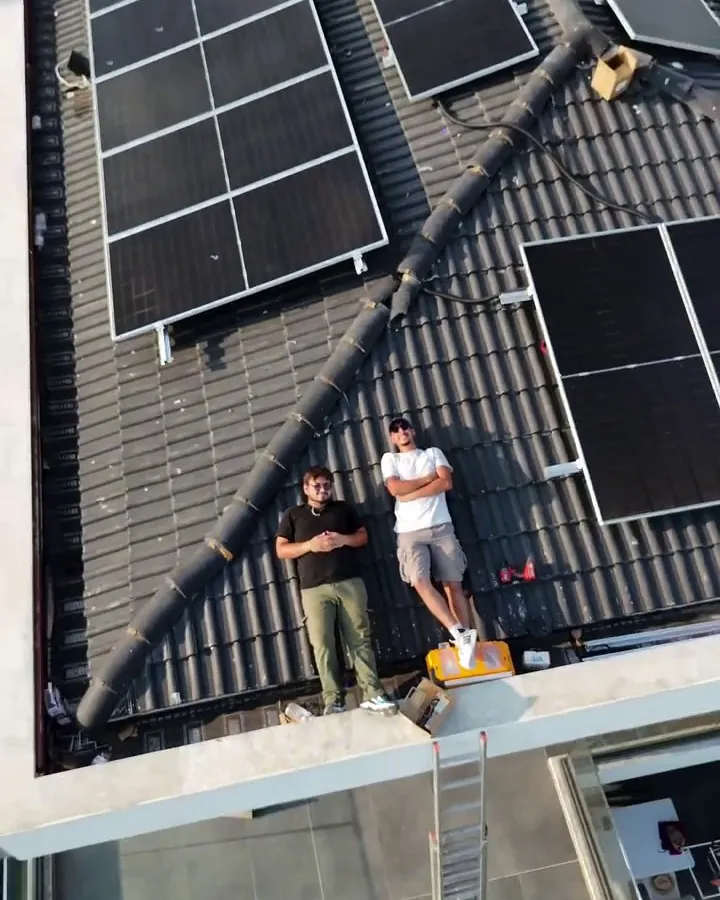
The roof's load-bearing capacity must be assessed by a civil engineer. We could not verify a clear threshold on the power above which a structural report is mandatory by regulation; in practice, however, the distribution company and the municipality may ask for a structural suitability document. For this reason, before taking the decision, we recommend that management put this assessment on the meeting agenda as a precondition.
Manufacturer datasheets require the panel to be mounted over a fire-resistant surface with sufficient ventilation behind it. Installation contrary to the installation manual can void the manufacturer's warranty. On fire safety in an apartment building, you can also read our article on fire safety for solar plants.
Running the meeting properly
The meeting held for the unit owners' decision for an apartment solar plant needs different preparation from an ordinary management meeting. The agenda item must be written clearly, the invitation must be made in the proper manner and attendance must be documented with a signature list. Because the document that goes to the distribution company is the notarized copy of this decision, an incomplete or ambiguous decision turns into an obstacle that is hard to correct later.
We recommend completing three preparations before the meeting: photos and measurements of the roof, the last year's bills for common-area electricity consumption and the estimated capacity of the system. These three pieces of data give owners a concrete answer to the question "what will be installed and what is it for". It is also important to get the notarization without delay after the meeting at which the decision was taken, because the application calendar works on the first 20 days of the month and a complete application is evaluated the following month.
Seasonal residents among owners are also common in Antalya. In complexes used as holiday homes, reaching an owner who lives abroad is a separate difficulty; matters such as power of attorney or remote participation need to be clarified with your legal adviser before the meeting. That is why, in the unit owners' process for an apartment solar plant, the biggest loss of time is mostly in communication, not engineering.
The process step by step
- Preliminary survey: Roof dimensions, shade, structural condition and common-area consumption are examined.
- Management meeting: The unit owners' decision is prepared and voted on; it is entered in the minutes book.
- Notarized copy: The decision is attached to the application with the documents.
- Project and application: The application is made through the LUS portal; after the connection approval letter (çağrı mektubu) there are 90 days for project approval.
- Zoning procedures: The permit exemption, technical responsibility and permission steps are completed with the municipality.
- Installation, acceptance and system usage agreement: The system must not be run before acceptance; otherwise the connection can be cut and a 3-year application ban can follow.
There is no official figure for the real time from application to connection. For this reason it is right not to promise a specific date; only the steps and timelines in the regulation can be followed.
Practical tips to prevent disputes
What makes solar projects in apartment buildings difficult is mostly not technical but a lack of communication. Distributing a simple information note to all owners before the meeting makes voting on the decision easier. This note should summarize the system's estimated capacity, its effect on common expenses and the layout on the roof.
In a system for common-area electricity, it is also important to know at what hours the generation is consumed. In Antalya in the summer months, because loads such as the elevator, hydrophore and pool pump run during the day, most of the generation can go to self-consumption; but real consumption data is needed to size the system correctly. For a preliminary idea of sizing, you can use our calculator.
At the survey stage, Solar Nexo examines the roof and consumption data and carries out the application and installation process for you. If you have a common roof solar plan, you can leave a free site survey request and get a technical preliminary framework before the meeting.
Conclusion
The legal foundation for a solar plant on an apartment roof is the unit owners' decision: a decision entered in the minutes book, notarized and submitted with the application. Because we could not verify the majority ratio from an official source, we recommend that you clarify it with a legal adviser. On the technical side, the common-area subscription, structural assessment and municipal permission are the other three pillars of the process.
Frequently asked questions
Is the approval of all unit owners needed for a solar plant on an apartment roof?
Because the majority with which the decision must be taken could not be verified from an official text, giving an exact ratio would be wrong. The distribution company asks for a notarized copy of the minutes book decision that a solar plant may be installed. Rely on your management plan and the opinion of a legal adviser, and have the decision written clearly. For this reason, preparing the management plan and the legal opinion before the meeting reduces objections that may arise later.
Must the apartment solar plant decision be notarized?
Yes. In buildings with more than one user, a notarized copy of the apartment or housing complex minutes book decision that a solar plant may be installed for the applicant is among the application documents. Without this document, the LUS application may be treated as incomplete. The manager and the participants should sign the decision text at the meeting. If the decision text is written ambiguously or incompletely, the distribution company may not find the document sufficient and the process may start over.
Can a solar plant be installed for common-area electricity?
Yes, a system tied to the common-area subscription can be installed; generation and consumption are connected at the same metering point. Sizing is needed according to consumption such as the elevator, hydrophore and lighting. In a system up to 25 kW, the contract power cannot be exceeded. The applicant must be the owner of the subscription. If the system size is not set according to the common area's daytime load, part of the generation may not be usable.
Can I share one array's electricity among several apartments?
Under the roof procedure up to 25 kW, consumption cannot be combined and one application is made for each consumption point. For this reason, splitting generation across several apartment meters is not compatible with this procedure. If a separate system is to be installed for each apartment, each requires a separate application; roof area and structural capacity are also limiting.
Is a building permit required for an apartment solar plant?
In planned areas, solar systems built for a building's own needs that do not affect the load-bearing system are not subject to a building permit, provided Condominium Law consent is obtained. Even so, an implementation project, a technical responsibility undertaking and permission from the authority are required. You should confirm current practice with your municipality. Because this exemption does not remove steps such as authority permission and technical responsibility, always confirm the current practice with the municipality.
Is a structural report mandatory in an apartment building?
A clear threshold on the power above which a structural report is mandatory by regulation has not been verified. Even so, the roof's load-bearing capacity must be assessed by a civil engineer, and the distribution company or the municipality may ask for a structural suitability document. Having this assessment done before the meeting prevents the process from getting stuck later. Having management carry out this assessment before the decision meeting helps avoid the process stalling afterwards.
Where is an apartment solar plant application made?
In Antalya, the application is made on the LUS platform of the grid operator AEDAŞ; AEDAŞ has accepted unlicensed generation applications only through this portal since 01.10.2023. You must also upload the minutes book decision copy with the documents. Application through e-Devlet (Turkey's e-government portal) has not been verified in official sources. Resolution and completeness matter when uploading documents, because documents submitted in an electronic application are not returned.
Sources
Want a clear calculation for your roof?
The Solar Nexo team carries out a free site survey at your address in Antalya and designs the system that suits your roof, consumption and budget.