Short answer
Apartment solar panels are a rooftop system that covers common-area electricity such as the lift, stairwell lighting and booster pump. In Antalya, first calculate the common-area meter's annual consumption, then divide it by the PVGIS value of 1,656 kWh/kWp to find panel capacity. The unit owners' decision, the contracted capacity limit and the AEDAŞ application are the decisive steps of the process.
Key takeaways
- Annual common-area consumption ÷ 1,656 kWh/kWp (PVGIS, Antalya) gives the approximate panel capacity.
- Rooftop systems up to 25 kW cannot exceed the contracted capacity; total capacity is limited to 50% of transformer power.
- Since 01.10.2023, AEDAŞ accepts applications only through the LUS platform.
- The application requires a notarised copy of the decision recorded in the decision book.
- Net metering is monthly for residential use and hourly for non-residential use from 1 May 2026.
Apartment solar panels are a system installed on the roof of a building and aimed at covering common-area electricity (the lift, stairwell lighting, booster pump, car park and door systems). Because apartment buildings in Antalya contain many flats, the roof belongs not to one person but to all the unit owners; for this reason the decision process and the subscription structure must be settled before the technical design. In this article we explain how to calculate common-area consumption, the roof and decision steps, and the points to watch in the application.
How do apartment solar panels cover common-area electricity?
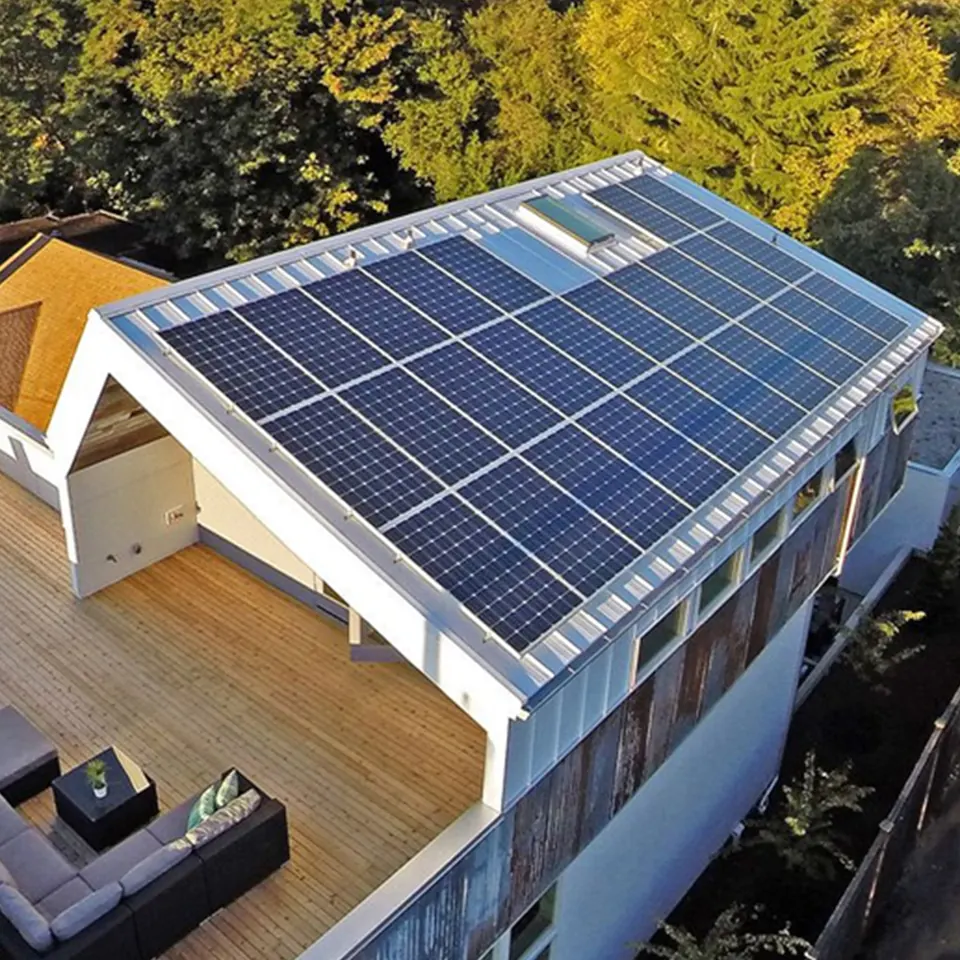
The common-area meter is the subscription that operates in the name of the building management. The lift, stairwell and car park lighting, the booster pump, door and intercom systems, garden lighting and, if there is one, the complex's pool are fed from this meter. The solar system is connected to this meter; the electricity produced during the day first covers instantaneous common-area consumption, and the surplus is fed to the grid.
Common-area loads vary through the day: the lifts are busy during the day and in the evening, the booster pump in the morning and evening, and stairwell lighting mostly at night. For this reason the self-consumption rate should be assessed by looking at real meter data. Because net metering rules and the treatment of surplus production vary with subscription type, confirm this with the distribution company before applying.
How is common-area consumption calculated?
Sizing apartment solar panels starts from the last 12 months of common-area meter bills. Look at total annual kWh and the monthly distribution. The hypothetical example below shows the calculation method; the figures are not real data for any building.
| Load | Power | Daily duration | Daily energy |
|---|---|---|---|
| 2 lifts (average operation) | 3 kW total | 2 hours | 6 kWh |
| Booster pump | 2.2 kW | 3 hours | 6.6 kWh |
| Stairwell and car park lighting | 0.5 kW | 10 hours | 5 kWh |
| Door, intercom, cameras and other | 0.3 kW | 24 hours | 7.2 kWh |
In this example the daily total is about 24.8 kWh and the annual total about 9,050 kWh. Dividing by the 1,656 kWh/kWp that PVGIS gives for Antalya city centre gives about 5.5 kWp; with 605 W panels that means 9 panels (5.45 kWp). Nine panels cover a surface area of about 23 m² (each panel is 2,278 × 1,134 mm). Because there are obstacles on the roof such as the water tank, the stair-head housing, aerials and air-conditioning outdoor units, the real usable area is measured at the survey.
Also take the seasonal gap into account. According to PVGIS, 1 kWp of panels in Antalya produces 168 kWh in July and 99 kWh in December. In summer, because air-conditioned common areas, ventilation and car park systems work harder, production and consumption rise in the same direction; in winter production falls and common-area consumption remains lighting-dominated. For this reason choose panel capacity by looking not only at the annual average but also at the monthly consumption distribution. If the summer-winter difference on the bill is pronounced, it may be more balanced to size the system not for all annual consumption but for the part where daytime self-consumption is heavy.
Contracted capacity, transformer and capacity limits
The contracted capacity of an apartment's common area is usually higher than a home's but lower than a business's. Under the simplified procedure applied to rooftop systems up to 25 kW, system capacity cannot exceed the contracted capacity of the consumption facility; in other words, you can put on the roof as many kW as your contracted capacity. In addition, the total of systems connected by this procedure cannot exceed 50% of the power of the same distribution transformer; if several applications come from the same transformer, the application with the higher consumption over the last year is given priority.
For net metering, the generation and consumption facilities must belong to the same tax identification number. If the common-area subscription is in the name of the building management, the application must also be made in that name. Find out this detail, and which tariff group the common-area subscription falls into, from AEDAŞ (the regional electricity distribution company) before applying.
Unit owners' decision and application documents
Because the roof is a common area, the system cannot be installed without the unit owners' decision. A notarised copy of the "a solar plant may be installed" decision in the building's or complex's decision book is required when applying to the distribution company. Because we could not reach a reliable official text on which majority (unanimity, four-fifths or simple majority) is required for this decision, we do not give a ratio; proceed with a unit owners' board decision and a notarised copy, and obtain legal advice. For the detailed process you can look at our apartment solar plant unit owners' decision article.
In planned areas, the building permit exemption applies provided the structural system is not affected and consent is obtained under the Condominium Law (Kat Mülkiyeti Kanunu). Even so, an implementation project, a technical responsibility undertaking and permission from the administration are required. For the document list and steps you can look at our solar plant documents guide. In apartment solar plant projects, unit owner consent is the most critical part of this document set.
Roof and structural assessment in Antalya apartment buildings
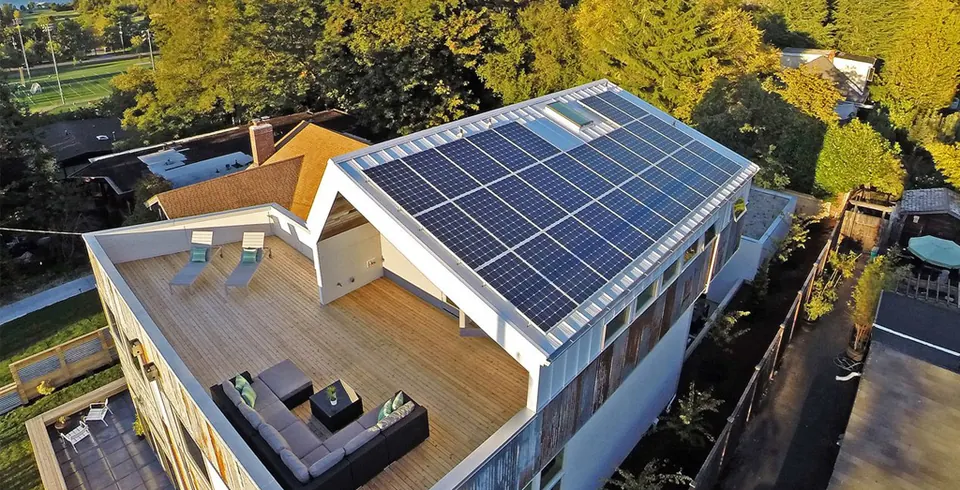
The apartment stock in Muratpaşa and Konyaaltı is mostly reinforced concrete with flat terraces or pitched tile roofs. On flat terraces the panel array can be installed with ballast or an anchored structure without drilling the roof; on tile roofs a hook and rail system is used. If the terrace has a communal-use area (clothes drying, sunbathing), the panel position must be planned to be compatible with it. In urban areas, neighbouring and taller buildings can cast morning and evening shade; for this reason a shading analysis should be done.
The roof's load-bearing capacity must be assessed by a civil engineer; the distribution company and the municipality may ask for a structural suitability certificate. Panels must be mounted on a fire-resistant surface with ventilation left behind them. Cable routes and DC isolators must be planned so that firefighters and maintenance staff can reach them. For installation suited to Antalya's environmental conditions you can also find information in our Muratpaşa solar energy article.

Self-consumption, net metering and income
The daytime consumption of the common-area meter is usually limited. Much of the electricity produced may not be usable through self-consumption at midday; the remainder is fed to the grid. Net metering is monthly for residential use and, for non-residential use, hourly from 1 May 2026; which group the common-area subscription falls into must be confirmed. Surplus is valued at the tariff's single-time active energy unit price, which is lower than the total unit price on the bill. For this reason, the higher the self-consumption rate, the more efficiently the system is used.
Comment: in complexes with heavy daytime lift and booster pump use, many elderly residents, or air-conditioned common areas, the self-consumption rate may come out higher. How income is distributed, how savings are shared and how they are reflected in the maintenance fee must be written clearly in the decision book. For system types you can look at our on-grid systems page; this structure is the most common solution for apartment solar panel projects.
Management, operation and responsibilities
Once the system is installed, responsibilities must also be clarified. Having the following items written in the decision book prevents disputes later: in whose name the system will be operated, how the bill savings will be reflected in the maintenance fees, from which budget line maintenance and inverter replacement costs will be met, and whether insurance will be taken out. So that the process can continue without interruption when the manager changes, warranty documents, the project file and the acceptance record should be kept in the building's archive.
In Antalya apartment buildings, air-conditioning outdoor units are densely placed on the roof or facade in summer. These devices must not shade the panel array, and access corridors must be left for maintenance. The position of the door to the terrace, the water tank and ventilation stacks can also be a limit on panel layout. If a mobile monitoring system is installed to track production, the manager and unit owners can see production and possible faults in real time. Annual maintenance and cleaning matter for preserving production during the dusty summer months.
Do not overlook the panel warranty either: for TommaTech's 605 W TOPCon model the product warranty is 15 years and the performance warranty 30 years; the inverter warranty, for example from the same manufacturer, is 5 years from the invoice date. So it is wise to include inverter replacement in the budget over the panel's life. We cover warranty types in a separate article: solar panel warranty terms.
Conclusion
In an apartment solar panel project the order is this: measure common-area consumption, determine your contracted capacity and roof area, obtain the unit owners' decision in notarised form, have the shading and structural assessment carried out, then apply to the distribution company. Solar Nexo can examine your building on site and present the roof layout and estimated production during the free site survey.
Frequently asked questions
Is a unit owners' decision required for apartment solar panels?
Yes. Because the roof is a common area, a decision of the unit owners' board that a solar plant may be installed is required, and a notarised copy of this decision is requested when applying to the distribution company. Because we could not confirm from an official text which majority the decision requires, we do not give a ratio; taking legal advice and recording the decision in writing in the decision book is the safest route.
Do apartment solar panels cover only common-area electricity?
They are generally connected to the common-area meter and installed to cover the lift, stairwell lighting, booster pump and car park loads. Installing a separate system for individual flats is also possible, but because the right to use the roof is shared, a unit owners' decision is needed for both. Which meter the system connects to is determined by the subscription type and tax identification number match.
How many kW of solar panels does an apartment building need?
You find the approximate capacity by dividing annual common-area consumption by the 1,656 kWh/kWp that PVGIS gives for Antalya. For example, for 9,000 kWh of annual consumption about 5.4 kWp, that is 9 panels of 605 W, would be enough. The real value is settled at the survey according to roof area, shading, contracted capacity and self-consumption rate.
Is a building permit required for solar panels on an apartment roof?
In planned areas, solar systems installed for the building's own needs are not subject to a building permit provided they do not affect the structural system and consent is obtained under the Condominium Law. Even so, an implementation project, a technical responsibility undertaking and permission from the administration are required. The permit status of surplus generation is unclear, so get written confirmation from your municipality.
Is a structural report mandatory for an apartment solar plant?
We could not verify a clear official threshold for the capacity from which a structural report becomes mandatory. The roof's load-bearing capacity must be assessed by a civil engineer; the distribution company and the municipality may ask for a structural suitability certificate. This assessment is especially important in tall buildings and older structures, so it is recommended that you have it done before starting the project.
Where is the application for an apartment rooftop system made?
In Antalya the application is made electronically through AEDAŞ's LUS platform; AEDAŞ has applied this method since 01.10.2023. The application asks for documents such as the application form, ID or authorisation document, unique code, a statement on the activity ban and a notarised copy of the decision in the decision book. You should confirm the current document list with AEDAŞ.
What happens to surplus production in apartment solar energy?
Production that exceeds instantaneous daytime consumption is fed to the grid and treated under net metering. For residential subscriptions net metering is monthly, and for non-residential it is hourly from 1 May 2026. Surplus is paid at the relevant tariff's single-time active energy unit price, which is lower than the bill's unit price. The details should be confirmed with the distribution company according to your subscription group.
Sources
Want a clear calculation for your roof?
The Solar Nexo team carries out a free site survey at your address in Antalya and designs the system that suits your roof, consumption and budget.