Short answer
To extend solar panel lifespan you need certified products, shade-free placement, an air gap behind the panels, a corrosion-resistant mounting structure, quality cables and connectors, earthing, gentle cleaning and monitoring. For the TommaTech TT605-144TN10 the warranty is 15 years on product and 30 years on performance; installation contrary to the manual voids the warranty. In Antalya, hot summers and coastal air make these measures stand out.
Key takeaways
- TommaTech TT605-144TN10: 15-year product and 30-year performance warranty; 87.4 percent in year 30 (about 0.4 percent decline per year, calculation).
- In NREL's 2012 review, the median degradation of field modules was found to be 0.5 percent per year.
- According to the manufacturer's datasheet, the panel must be mounted on a fire-resistant surface with ventilation left behind it.
- Installation contrary to the manual voids the warranty; panels must not be installed on plastic or PVC roofs without a protective layer.
- System life depends on the weakest link: the inverter warranty is 5 years and the LV battery product warranty is 60 months in the example products.
When it comes to extending solar panel lifespan, the most effective steps depend less on the panel itself than on the quality of the system around it: correct installation, ventilation, a sturdy mounting structure, quality cables and connectors, regular cleaning and monitoring. Antalya's hot, dry summer, salty coastal air and intense sunshine make each of these steps even more important. In this article we describe 9 ways to extend panel and system life with concrete examples.
What does panel life mean, and what does the warranty say?
First, a distinction: the warranty period is not a promise that the panel will work for that long, but an assurance the manufacturer gives under certain conditions. According to the TommaTech TT605-144TN10 datasheet, this model has a 15-year product warranty and a 30-year performance warranty; the linear performance curve falls from 99 percent in year 1 to 87.4 percent in year 30, which means a decline of about 0.4 percent per year (calculation). In the double-glass G2G model the product warranty is 25 years. Warranty periods vary from product to product; you need to look at your own panel's document and warranty terms.
Field reality runs along a similar line. In NREL's 2012 literature review, the median degradation of field modules was found to be 0.5 percent per year; this is an old study, but it shows that low degradation is the norm. What speeds up degradation is heat, humidity, mechanical stress and poor installation; all of these are things within our control.
| Life-extending factor | Why does it matter? | Point to watch in Antalya |
|---|---|---|
| Product and installation quality | Faulty installation affects the warranty | Certified equipment installed according to the manual |
| Ventilation gap | Limits cell temperature | Summer heat, average maximum 34.2 °C |
| Mounting structure and corrosion | Mechanical strength | Salty air on the coast |
| Cable and connector | Heating and arc risk | UV and temperature resistance |
| Cleaning and monitoring | Early detection of losses | Dry summer, dust and pollen |
9 ways to extend solar panel lifespan
1. Choose certified and documented products
The manufacturer documents, test certificates and warranty terms of the panel, inverter and mounting structure must be clear. Under the regulation, the main equipment in unlicensed systems must have been manufactured within the last five years (Article 37/6, amendment dated 02.04.2026); this limits the sale of old stock. Make sure you receive and keep the documents.
2. Correct design and shade-free placement
Shade creates not only production loss but also heating and a hot-spot risk in the partially shaded cell. Shadows from chimneys, air conditioners and trees on the roof should be mapped at the survey stage, and the panel layout planned accordingly. The partial effect of a shadow can reduce the output of the whole string the panel is connected to.
3. Leave enough air gap behind the panel
According to the TommaTech datasheet, the panel must be mounted on a fire-resistant surface with enough ventilation left behind it. Air circulation both lowers cell temperature and slows heat-related ageing. This is why, on a tiled roof, it is important for the rails to be high enough above the tile surface.
4. Sturdy mounting structure and corrosion protection
The mounting structure must be calculated for wind and snow load, and the fasteners tightened to the correct torque values. In coastal systems, for example in Kemer and Alanya, corrosion-resistant materials such as galvanised steel or aluminium are preferred. For mounting options, you can read our article on solar panel mounting systems.
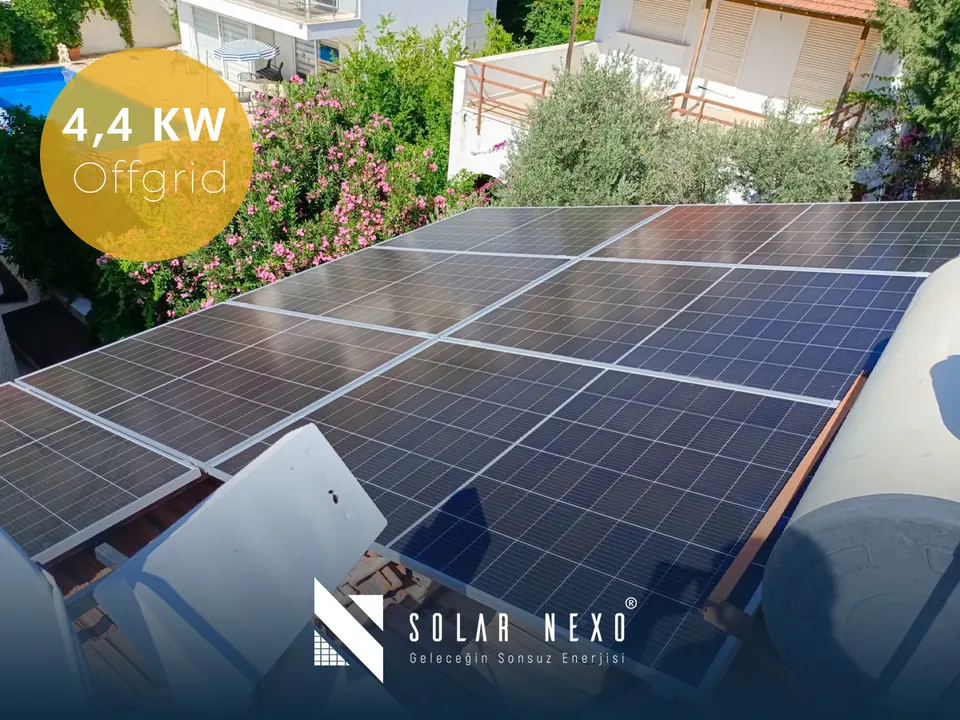
5. Use quality cable and the right connectors
DC cables must resist sunlight, heat and humidity. Mixing connectors of different brands, or a badly crimped connector, creates heating and arc risk. Cables must not rub on sharp edges and must be fixed with a cable duct or clips. For more, see our article on solar cables and connection components.
6. Earthing and surge protection
Earthing, equipotential bonding and SPDs protect the panels and the inverter against overvoltages from lightning and the grid. This measure can prevent major damage for a small extra cost; the indicators and connections should be checked before the season.
7. Regular and correct cleaning
In Antalya most rain falls between November and February; because summer is dry, dust and pollen build up. Cleaning should be done in cool hours with a soft brush and clean water, avoiding hard tools and abrasives. For details, see solar panel cleaning.
8. Monitoring and periodic inspection
Monitoring production data is the cheapest way to catch faults early. Sudden drops, differences between strings and inverter warnings show up immediately on the monitoring screen. An inspection at least once a year, by eye and, if necessary, with measuring instruments, catches loosening of connectors and mounting. If a hot spot is suspected, thermal imaging can be used.
9. Do not forget the inverter and the battery
Even though the panel carries a 30-year performance warranty, the standard warranty of the inverter is, for example, 5 years at TommaTech; the battery warranty is different too (60 months product warranty on TommaTech LV batteries). So the life of the system is set by its weakest link. The inverter's ventilation, the battery's temperature and the BMS records should be checked as much as the panels.
Common mistakes that shorten life in Antalya
- Close-fitting mounting that blocks the back of the panel and has no ventilation.
- Using fasteners that are not corrosion-resistant on the coast.
- Connecting connectors of different brands and types to each other.
- Installation contrary to the user manual; according to the TommaTech datasheet, this voids the warranty.
- Walking on the roof by stepping on the panels; this can cause cell micro-cracks.
- Cleaning the surface with a hard brush and abrasive products.
- Never looking at the monitoring data for years.
Panels must not be installed on fire-vulnerable roofs such as plastic or PVC without a fire-protection layer; this is the manufacturer's warning. Installation on flammable surfaces carries risk for both safety and the warranty; for detailed information, see our article on solar plant fire safety.
Questions to ask the company before installation
Most of the decisions that determine lifespan are made before installation. Asking the following questions at the quotation stage protects you from problems you would face later:
- How many years is the panel's product and performance warranty, and what are the warranty terms?
- Will installation follow the manufacturer's installation manual; what will the clamp positions and the ventilation gap be?
- Which fastener will be used for the roof type; is there a corrosion measure for coastal or windy areas?
- Are the cable and connector brands, and their UV and temperature resistance, documented?
- Are earthing and SPDs in the project, and will a measurement report be delivered?
- What are the monitoring system and the maintenance or technical support terms?
Having the answers in writing provides both transparency and ease in warranty processes. Mounting options by roof type require separate solutions for tile, trapezoidal sheet and flat roofs; standard quotes given without looking at the roof at the survey stage can fall short in this respect.
Suggested maintenance calendar
An exact calendar is set by the manufacturer and project conditions; the general framework could be as follows. Every month, review the production curve and fault logs on the monitoring screen. At the start of each season, do a general visual check: broken glass, slipped clamps, hanging cables, nesting birds. Assess surface soiling before and after summer. Once a year, have the technical team check connectors, earthing, SPDs and the mounting structure. Plan thermal imaging and current-voltage measurement every five years or when in doubt.
Solar Nexo carries out such checks in Antalya with its maintenance and 24/7 technical support service; for post-installation maintenance, you can read our article on solar energy system maintenance and visit our contact page.

Besides the panel array on the roof, the life of the accessory parts also matters: clamps, the aluminium quality of the rails, cable ties and junction boxes are affected by daylight and temperature cycling. After years of repeated heating and cooling cycles, plastic clips and cable ties becoming brittle is a real problem; this is why choosing UV-resistant materials and periodic inspection are necessary for parts that look small but start the chain of faults.
Conclusion
The way to extend solar panel lifespan is, alongside a quality product, correct design, ventilation, a sturdy mounting structure, care with cables and connectors, earthing and SPDs, gentle cleaning and monitoring. The warranty period is a lower limit, not a target; the maintenance of every link in the system determines how much the 30-year performance warranty is matched in practice. Small but regular measures make the biggest difference in the long run.
Frequently asked questions
How many years do solar panels last?
The period varies with the product, the installation and the conditions. For the TommaTech TT605-144TN10, a 15-year product warranty and a 30-year performance warranty are given; performance is guaranteed to be 87.4 percent in year 30. This does not mean the panel will work for exactly 30 years, but that a certain power threshold is maintained until then; real life also depends on the quality of installation and maintenance.
How much do solar panels degrade each year?
The datasheet warranty foresees a decline of about 0.4 percent per year (from 99 percent in year 1 to 87.4 percent in year 30, calculation). In NREL's 2012 review, the median degradation of field modules is 0.5 percent per year. Poor installation, extreme heat, humidity and mechanical stress can increase this rate; these are mostly controllable factors.
Why is an air gap needed behind the panel?
Air circulation lowers cell temperature; as temperature rises, power falls and ageing speeds up. The manufacturer's datasheet also requires the panel to be mounted on a fire-resistant surface with enough ventilation left behind it. In Antalya the average maximum temperature in July is 34.2 °C, so this is especially important and mounting height should not be neglected for this reason.
Does installation contrary to the manual affect the warranty?
Yes. According to the TommaTech datasheet, installation contrary to the installation manual voids the warranty. Conditions such as clamp position, torque values, ventilation gap and surface type are written in the manual. So it is important to have installation done by an experienced, documented team that knows the manufacturer's instructions, and to keep installation photos and documents. These records make the warranty process easier if a problem arises.
Does cleaning a solar panel extend its life?
Cleaning does not directly extend life, but it prevents the shading, local heating and production loss that dirt causes. Because summers in Antalya are dry, dust and pollen build up. Clean in cool hours with a soft brush and clean water; hard brushes and abrasive products can damage the surface coating and may affect the warranty terms.
Does stepping on a panel cause damage?
Yes, it can. Stepping on a panel or putting weight on it can create micro-cracks in the cells. These cracks cannot be seen by eye, but over time they lead to hot spots and loss of power. For maintenance, use suitable access equipment instead of climbing on the panels, and move along safe paths between the panels on the roof, protected against falls.
How often should panel maintenance be done?
Checking monitoring data every month, doing a general visual check at the start of each season and having the technical team check connectors, earthing, SPDs and the mounting structure once a year is a reasonable framework. The exact calendar is set by the manufacturer and project conditions. Thermal imaging and measurement can be added when in doubt; these checks should be entered in the maintenance records.
Sources
Want a clear calculation for your roof?
The Solar Nexo team carries out a free site survey at your address in Antalya and designs the system that suits your roof, consumption and budget.