Short answer
Solar cable is the UV- and heat-resistant special cable used on the DC line from the solar panels to the inverter, and MC4 connectors join the cables to the panels. In Antalya's hot, high-UV climate, cross-section is chosen by voltage drop and current capacity, and connectors must come from the same manufacturer; installation quality is critical.
Key takeaways
- Worked example: on a 12-panel string with a 50 m round-trip run, 4 mm² gives about 0.59% voltage drop and 6 mm² about 0.39%.
- The TommaTech 605 W panel has an Isc of 14.48 A and an Imp of 13.77 A; designers add a safety factor on top of Isc.
- The panel's operating temperature is between -40 and +85 °C; the average maximum temperature in Antalya in July is 34.2 °C (MGM).
- Mixing MC4-compatible connectors from different manufacturers can increase contact resistance and fire risk.
- The panel's maximum system voltage is 1500 V DC (datasheet); the cable must cover this voltage.
Solar cable is a special cable used on the DC line from the panels to the inverter, built to withstand UV, heat and the outdoors. MC4-type connectors join these cables to the panels and to each other. If the cross-section is inadequate, production is lost; if a connection is poor, heating and fire risk arise. Considering how hot the roof surface gets in summer in Antalya, the choice of solar cable and MC4 connectors matters for system safety as much as the choice of panels.
How does solar cable differ from ordinary cable?
The DC cable on the roof is exposed for years to sun, rain, temperature swings and wind movement. That is why it is not the same as an indoor-type cable. Solar cable is double-insulated, has an outer sheath resistant to UV and ozone, and is designed to operate over a wide temperature range. In Europe the EN 50618 standard and the H1Z2Z2-K type designation are widely used for these cables; before buying, you should check whether the cable's datasheet states a standard of this kind.
The panel itself also operates over a demanding temperature range. The operating temperature of the TommaTech TT605-144TN10 panel is between -40 and +85 °C. While the average maximum temperature in Antalya in July is 34.2 °C (MGM, the Turkish State Meteorological Service), the cell temperature can rise to about 65 °C at 1000 W/m² irradiance (calculated using the NOCT approach). A cable laid close to the roof experiences this heat. The cable's temperature rating and current-carrying capacity should be considered under these conditions.
How is the DC cable cross-section chosen?
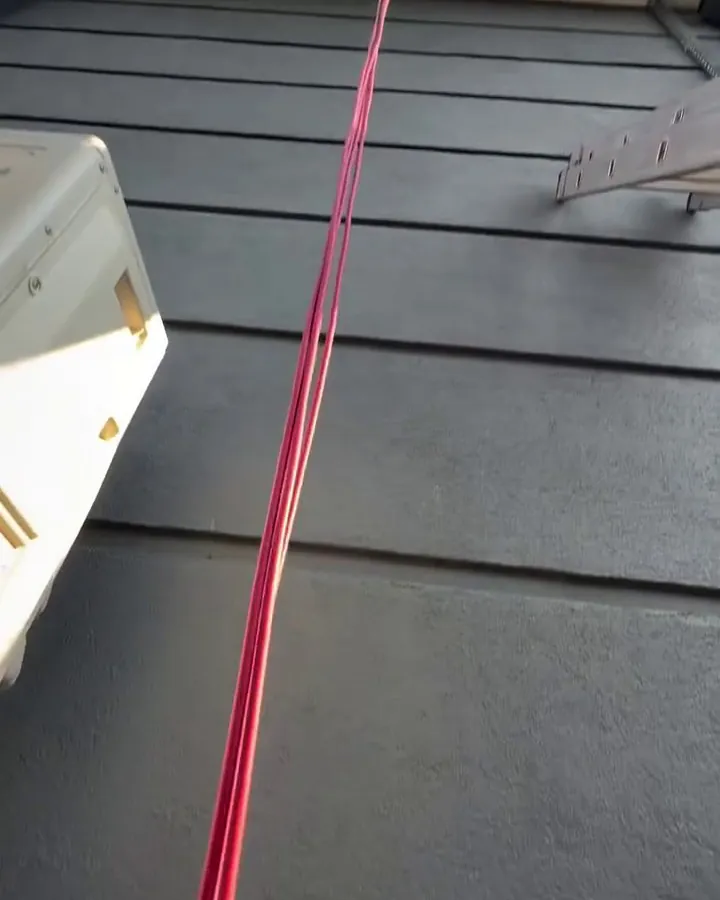
DC cable cross-section is determined by two criteria. The first is the current the cable can carry; this value is read from the cable manufacturer's tables according to cable type, installation method and ambient temperature. The second is voltage drop; as the cable gets longer and the cross-section thinner, resistance rises, which lowers both voltage and power.
The current calculation is based on the panel's short-circuit current (Isc). The TommaTech 605 W panel has an Isc of 14.48 A and an Imp of 13.77 A. Designers generally add a safety factor on top of Isc for cases where irradiance can exceed standard conditions (the common practice is 1.25). In this case the design current is about 18.1 A (14.48 x 1.25).
Worked example: comparing 4 mm² and 6 mm² cross-sections
The example below is for a 12-panel string made up of the same panels. String voltage is about 527 V and power about 7.26 kWp (12 x 43.95 V and 12 x 605 W). The one-way cable length is taken as 25 m, for a round-trip total of 50 m. The resistivity of copper is taken as about 0.018 Ω·mm²/m; because copper resistance rises with temperature, the real loss may be slightly higher.
| Cross-section | Resistance (50 m) | Voltage drop (13.77 A) | Power loss |
|---|---|---|---|
| 4 mm² | 0.225 Ω | 3.10 V (about 0.59%) | about 43 W |
| 6 mm² | 0.150 Ω | 2.07 V (about 0.39%) | about 28 W |
The difference between these two values may look small; however, because a solar system runs for 25-30 years, the loss is repeated every day and every year. When the distance grows to 60-80 m, the choice of cross-section becomes more decisive. Designers generally aim to keep DC line loss below a percentage limit; this is a design preference, not a regulation. For system design, you can get a preliminary view of load and production with our solar energy calculator.
The easiest way to reduce cable loss is to shorten the run. Installing the inverter close to the panel array, splitting strings sensibly on the roof and not routing the cable path unnecessarily reduce both material and loss. On large roofs or ground-mounted systems, where distances can reach hundreds of meters, this decision is even more important. Labeling the cable ends saves time later during fault finding and maintenance.
What is an MC4 connector, and why should the same brand be used?
MC4 is a family of single-pole, locking, waterproof connectors that has become standard in solar panels. The cables leaving the panel's junction box end in MC4 connectors; when panels are connected in series, the positive end of one panel is plugged into the negative end of the next. According to the TommaTech datasheet, the panel's junction box is IP68-rated, meaning it offers a high level of protection against dust and water.
The most frequent mistake here is plugging together "MC4-compatible" connectors from different manufacturers. Looking compatible does not mean being made to the same tolerance. A loose or incompatible connection increases contact resistance, and this resistance generates heat when current passes. In DC, an arc does not extinguish itself as it does in AC when the current crosses zero; for this reason a loose connector carries a fire risk.
- Same-manufacturer pair: Mating male and female connectors must be of the same brand and the same model.
- Correct crimping: The cable end must be crimped with the tool the connector specifies; crushing it with pliers is unacceptable.
- Lock and seal: The connector must seat fully, lock, and the seal must be undamaged.
- Keeping off the ground: Connectors should not rest where water can pool, on the roof surface or in water.
UV, heat and cable life in Antalya conditions
In Antalya, summer temperatures, intense UV and, in coastal areas, salt and humidity act together. A low-quality cable sheath can crack over the years and insulation can weaken. Cable ties must also be UV-resistant; ordinary plastic ties can break on a roof within a few seasons. On greenhouse and agricultural roofs, risks such as cable abrasion from rubbing in the wind and cuts on sharp sheet edges come to the fore.
Cables on the roof should run fixed to the rails, away from sharp edges, from tiles and from hot surfaces. A hanging cable swings in the wind and wears out; a cable that stays in water for a long time can develop insulation problems. We covered the panel structure and fixing in the article on solar panel mounting systems.
How do cable faults show up?
Cable and connector faults are often not immediately visible; after a while they show up as a drop in production or a fault warning on the inverter. A loose connector heats up locally. This is easily seen with a thermal camera; we explained the method in the article on checking panels with a thermal camera. Seeing on the monitoring screen that a string is producing less than the others is another possible clue.
Fire safety and grounding
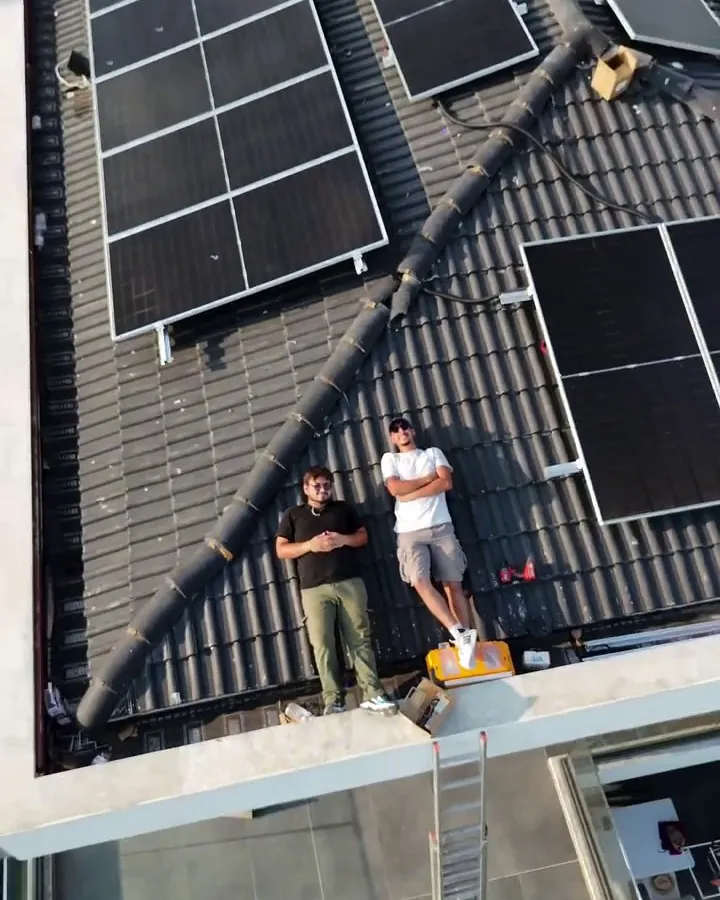
Cabling is at the center of fire safety. A loose connection, a crushed cable, the wrong cross-section or an unsuitable connector creates hot spots. According to the datasheet, the panel must be mounted over a fire-resistant surface with ventilation left behind it; the cable route must also run on the same surface and in an orderly way. For detailed information, see our article on fire safety for solar plants.
The rated voltage of the DC cable must cover the system voltage. The maximum system voltage of the TommaTech panel is 1500 V DC; in long strings this limit is taken into account in cable and inverter selection. Grounding and equipotential bonding are a separate subject and cover the panel frame and the structure.
The inverter end of the cable should not be forgotten either. When the DC cables reach the inverter input, connector compatibility, voltage class and input current limit are checked. The cable on the inverter's AC output is a separate design matter and has its own cross-section calculation up to the grid connection point. After system installation, during commissioning, polarity, voltages and insulation resistance are measured to confirm the cabling is correct. That way faults are noticed from day one.
Cable and connector checklist before buying
- Is it verified from the datasheet that the cable is solar cable (UV-resistant, double-insulated)?
- Was the cross-section chosen according to the design current and the voltage drop calculation?
- Were the connectors from the same brand and fitted with the correct crimping tool?
- Are the cables fixed to the rail, away from sharp edges and where water does not pool?
- Are the cable ties UV-resistant?
- After commissioning, was a thermal check or monitoring data reviewed?
Conclusion
Solar cable and MC4 connectors are the invisible but critical parts of the system. The right cross-section reduces production loss; the right connectors and tidy cabling limit fire risk. Antalya's hot, high-UV climate makes cable material and installation quality even more important. To have your system's cabling and inverter connection assessed with an engineer's eye, you can request a free site survey; you can find inverter options in our article on what an inverter is and its types.
Frequently asked questions
What is the difference between solar cable and ordinary cable?
Solar cable is designed to be exposed for years on the roof to sun, rain and temperature changes. It is double-insulated and has a sheath resistant to UV and ozone. An ordinary indoor cable can crack within a few years under these conditions. When buying, check whether the cable has a datasheet stating the solar cable standard (EN 50618 in Europe).
How is DC cable cross-section calculated?
Two criteria are assessed together: the current the cable can carry and the voltage drop. The panel's Isc value and a safety factor are used for current. Voltage drop is calculated from cable length, cross-section and the resistivity of copper. For example, on a 50 m round-trip run at 13.77 A, a 6 mm² cross-section gives a voltage drop of about 0.39%.
What is an MC4 connector?
MC4 is a family of single-pole, locking and waterproof connectors widely used in solar panels. It joins the ends of the panel cables to each other and to the inverter line. The panel's junction box is IP68-rated, but the connector must also be fitted correctly. A loose or incompatible connector can cause heating and arc risk.
Can MC4 connectors from different brands be plugged together?
Although they may fit physically, it is not recommended. Connectors from different manufacturers may not be made to the same tolerance; this increases contact resistance and leads to heating. Because an arc in DC does not extinguish itself, it carries a fire risk. For this reason the male and female connectors must be from the same manufacturer and the same model, and fitted with the correct crimping tool.
Can solar cables be damaged by the heat in Antalya?
Good-quality solar cable is designed for this climate; however, low-quality cables and ties can be damaged over the years by intense UV and heat. In summer in Antalya the roof surface and the back of the panel get very hot. The cell temperature can rise to about 65 °C according to calculation. For this reason, cable with documented UV resistance and temperature class should be used.
How does a cable fault affect production?
An inadequate cross-section causes voltage drop and power loss; a loose connector causes local heating and reduces production. Cable faults can show on the monitoring screen as a string producing less than the others. Heating connectors can be detected with a thermal camera. If the fault is noticed early, fire risk is also reduced.
What percentage should DC line loss be?
No single regulatory limit is given for this; designers generally aim to keep DC line loss at a low percentage. The real value depends on cable length, cross-section and temperature. For example, on a 25 m run in a 12-panel string, about 0.39% voltage drop is calculated with 6 mm². The target value for a project should be set at the design stage.
Sources
Want a clear calculation for your roof?
The Solar Nexo team carries out a free site survey at your address in Antalya and designs the system that suits your roof, consumption and budget.