Short answer
Solar battery maintenance rests on temperature, charge-discharge limits and BMS monitoring. Because the average July maximum in Antalya is 34.2 °C, the battery should be installed in an airy, shaded place. LiFePO4 needs no water top-ups, but connections, temperature and BMS logs must be checked; follow the limits in the manufacturer's manual and leave connection work to a qualified team.
Key takeaways
- The average July maximum in Antalya is 34.2 °C, with a record of 45.0 °C; battery placement should be airy and shaded (MGM).
- Cycle-life claims are usually given at 25 °C and a certain depth of discharge; one dealer listing shows more than 6,000 cycles, and figures vary by brand.
- The BMS protects against overcharge, over-discharge, overcurrent and temperature; check the logs regularly.
- The product warranty on TommaTech LV batteries is 60 months; read the warranty terms by brand and model.
- No payment is made for energy fed from the battery to the grid; batteries must also have been manufactured within the last five years (Official Gazette 02.04.2026).
Solar battery maintenance is the most important operating issue determining a battery's life and safety in solar energy systems. Today most home hybrid and off-grid systems use LiFePO4 (lithium iron phosphate) batteries; these need far less maintenance than lead-acid batteries, but they are not "maintenance-free". If temperature, charge and discharge limits and the battery management system (BMS) are not handled correctly, life is shortened. In this article we describe maintenance rules suited to Antalya conditions.
Maintenance differences by battery type
There are two common battery families in solar energy systems: lead-acid (flooded, AGM and gel) and lithium (mostly LiFePO4). Flooded lead-acid batteries need electrolyte level checks and top-ups with distilled water. AGM and gel batteries need no water, but overcharging and deep discharge shorten life quickly. LiFePO4 has no water top-ups; instead, BMS logs, temperature and terminal checks come to the fore. For the differences between the two technologies, you can read our article on the difference between lithium and gel batteries.
| Maintenance topic | Flooded lead-acid | AGM / gel | LiFePO4 |
|---|---|---|---|
| Water top-up | Needed | Not needed | Not needed |
| Sensitivity to deep discharge | High | High | Limited by the BMS |
| Temperature sensitivity | High | High | Medium-high, the BMS protects |
| Main maintenance task | Level and terminal check | Charge setting, terminals | BMS log, temperature, connections |
The table gives the general trend; the product manual always takes priority.
Temperature: the most important factor in Antalya
Batteries are sensitive to temperature. According to MGM data, the average maximum temperature in Antalya is 34.2 °C in July and 34.1 °C in August; the record maximum is 45.0 °C in July. The temperature of a closed room in the sun with no ventilation can rise far above this. High temperature speeds up chemical ageing inside the battery and reduces cycle life.
Manufacturers give cycle life at a certain reference temperature; for example, according to a dealer listing, more than 6,000 cycles are claimed for the Pylontech US5000 at 25 °C and 90 percent depth of discharge. This is dealer-page information, different figures can be found in other sources, and warranty terms vary from brand to brand. What matters is knowing that the reference temperature is 25 °C: keeping to it in the Antalya summer requires ventilation, shade and correct placement.
- Place the battery in a room or cabinet that gets no direct sun and has airflow.
- In small closed rooms without air, consider a ventilation or air-conditioning solution for summer.
- Keep the clearances recommended by the manufacturer between the battery and the inverter.
- In cold climates, charging below freezing temperature is separately restricted for lithium batteries; in high-altitude places (around Elmalı and Korkuteli) check the BMS's low-temperature protection.
Charge and discharge limits
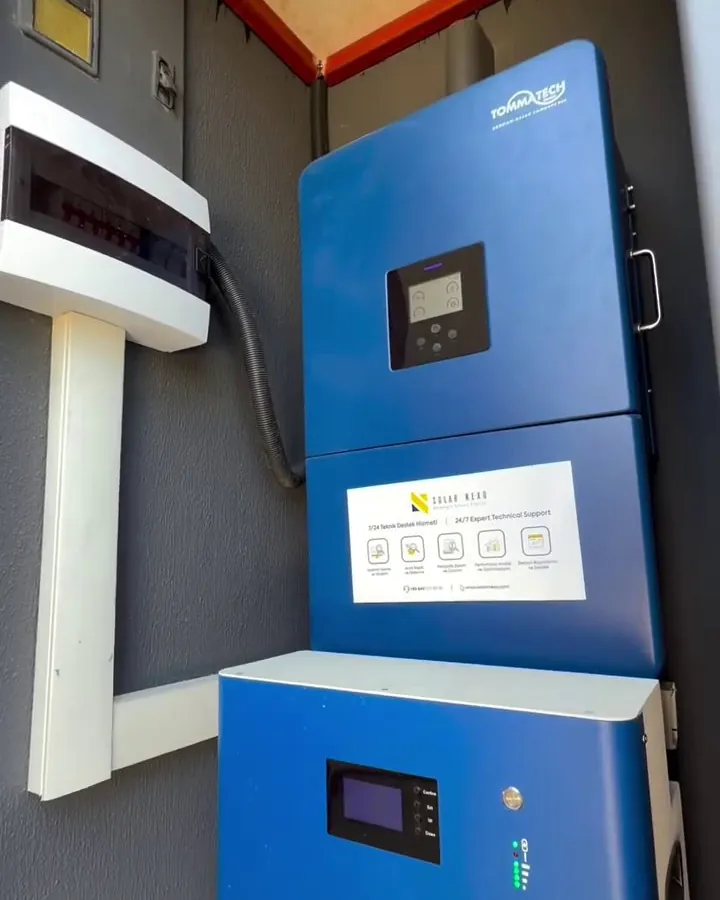
For each battery the manufacturer defines a safe operating range: upper charge voltage, lower discharge voltage, and maximum charge and discharge current. Going outside these limits shortens life and creates a safety risk. The correct setting depends on the inverter's battery profile and the communication cable (CAN or RS485) being set up properly. Inverter and battery brands should be chosen to be compatible and, where possible, a communicating connection should be made.
Depth of discharge (DoD) shows how much of the battery is used. Cycle-life claims are usually given for a certain DoD; shallower use extends life in most technologies. In practice it is recommended to size the system so that it covers a single night but does not empty the battery to the end every day, and to define a safe minimum state of charge (SoC) in the inverter. Which value is suitable depends on the manufacturer's document; we do not give a fixed figure here.
BMS: the brain of the battery
The battery management system monitors cell voltages, temperature and current; it protects the battery against overcharge, over-discharge, overcurrent and overtemperature. It also prevents capacity differences from widening by balancing the cells. BMS logs are the most valuable information about the health of the battery: repeated protection cut-offs, cell voltage differences or temperature warnings can be a sign of a problem.
It is useful to check the battery state of charge, cell voltage difference and fault history periodically from the monitoring app or the BMS screen. If you see abnormal warnings, do not take the battery apart yourself; report it to a qualified technical team. Our article on choosing a hybrid inverter gives extra information on the hybrid inverter structure.
Periodic checklist for solar battery maintenance
- Monthly: Review state of charge, temperature and BMS warnings on the monitoring screen.
- Seasonal: Check the ventilation, dust and humidity of the battery room; make sure it is cool, especially before summer.
- Yearly: Have a qualified team check terminal tightness, cable insulation, panel and fuses (with the power off and by authorised people).
- When needed: Have firmware updates recommended by the manufacturer carried out and find out from the manual whether a full charge-discharge cycle is needed for calibration.
Battery terminals carry high current; a loose or oxidised connection creates heating and fire risk. Connection checks must be done only on a de-energised system and by a trained team. Especially in parallel-connected multi-module systems, equal cable lengths and connection quality between modules are important for current balance.
Systems left unused for long periods: country houses and summer homes
In Antalya, off-grid systems are common in country houses, summer homes and rural dwellings, and these buildings are not used for part of the year. The self-discharge of a battery left unused for a long time, plus the BMS's own consumption, can bring the battery below the safe limit. For this reason, before closing up it is necessary to leave it at the charge level recommended by the manufacturer, to let it take charge from the sun if possible and to check the state of charge at regular intervals. Which level is suitable for the closed period varies by manufacturer; see the manual.
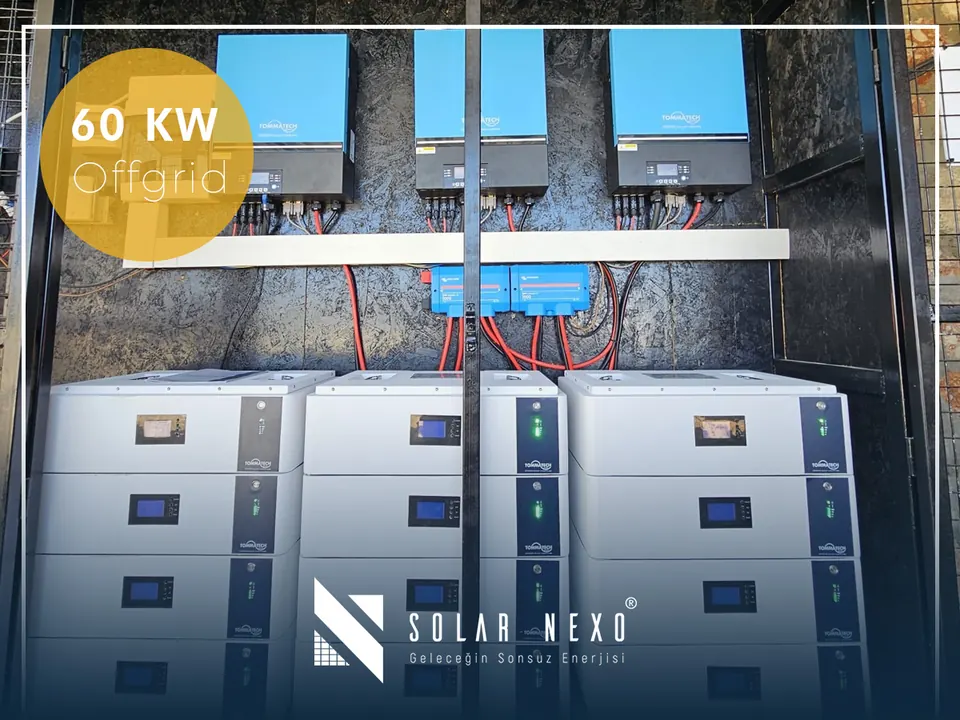
In examples from our references, such as the 60 kW off-grid energy room with parallel inverters and lithium batteries and the installation in Döşemealtı with 10 panels, an 11 kW off-grid inverter and 15 kWh LiFePO4, battery placement and ventilation are among the first design items of the project. For off-grid systems, you can read our article on what an off-grid solar energy system is.
Common mistakes in solar battery maintenance
- Putting the battery in a metal cabinet in the sun with no ventilation.
- Connecting batteries of different ages or different brands in parallel; differences in capacity and internal resistance create imbalance.
- Not setting the inverter battery profile to suit the manufacturer, or not connecting the communication cable.
- Sizing the system so that the battery is emptied to the end every day.
- Ignoring BMS warnings and treating protection cut-offs as "normal".
- Trying to tighten terminals while energised, or having unauthorised people make connections.
Most of these mistakes can be prevented at the installation and initial setup stage; so taking a written record of all settings at commissioning also makes it easier to find the cause of later faults. In parallel battery installations, the compatibility of a new module to be added with the existing units must not be assumed without the manufacturer's approval.
Warranty, regulation and expectations
Battery warranty varies by brand and model. For example, the product warranty on TommaTech LV batteries is 60 months; the performance warranty also depends on product-specific conditions. Warranty terms usually depend on conditions such as a certain temperature range, charge-discharge limits and the use of an approved inverter; maintenance records and BMS data can be decisive in warranty claims. This is why keeping records is important.
Two notes on regulation. According to the amendment of 02.04.2026 to the unlicensed generation regulation, batteries in a storage unit must also have been manufactured within the last five years (Article 37/6). Also, no payment is made for energy fed from the battery to the grid; if the amount fed from storage cannot be determined, no surplus payment is made at all. So it is more correct to think of the battery as a way to use the daytime surplus for your own evening consumption. For the general framework of maintenance, also look at our article on solar energy system maintenance. For your questions, you can write to us through our contact page.
Conclusion
Solar battery maintenance revolves around controlling temperature, setting charge and discharge limits correctly, monitoring BMS data and regularly checking connections. Antalya's hot summer is the factor that strains the battery the most; an airy, shaded location is the cheapest way to protect its life. LiFePO4 batteries need little maintenance, but they are not maintenance-free; the manufacturer's manual and a qualified team should always have the last word.
Frequently asked questions
Does a LiFePO4 battery need maintenance?
It needs no water top-ups, but it is not completely maintenance-free either. Temperature must be kept suitable, charge and discharge limits set correctly, BMS warnings monitored and terminal connections checked by a qualified team. The manufacturer's manual should be followed, and at signs of a problem you should contact the technical team rather than intervene yourself. This detail matters especially in warranty and fault processes years later.
Where should a battery be installed in Antalya?
It should be installed in an area that gets no direct sun, has airflow and is protected from humidity. In Antalya the average maximum temperature in July is 34.2 °C and the record is 45.0 °C (MGM); small rooms without air can rise far above this. A ventilation or cooling solution should be considered for summer.
How many cycles is battery life?
The value varies with brand, chemistry and conditions. For example, one dealer listing states more than 6,000 cycles for the Pylontech US5000 at 25 °C and 90 percent depth of discharge; other sources give higher or lower figures. Real life depends on temperature and depth of discharge; check the warranty document. In real conditions this value may be lower in summer and with heavy use.
What happens if the battery is fully discharged?
Over-discharge can permanently damage the cells and shorten life. In this case the BMS may take the battery out of circuit to protect it. So a safe minimum state of charge should be defined in the inverter, and in systems unused for a long time the battery should be charged regularly. The manufacturer's procedure must be followed to bring the battery back into service. Do not try to force-charge a fully discharged battery yourself; call a qualified team.
Can I sell the energy in the battery to the grid?
No. According to the regulation amendment of 02.04.2026, no payment is made for the part of the surplus remaining after net metering that is fed from storage. If the amount fed from storage cannot be determined, no surplus payment is made at all. It is more correct to plan the battery to use the daytime surplus for your own evening consumption. This rule applies without distinguishing residential from business, so planning for evening consumption makes more sense.
How many years is the battery warranty?
The warranty varies by brand and model. For example, the product warranty on TommaTech LV batteries is 60 months; the performance warranty depends on product-specific conditions. Warranties are usually conditional on operating temperature, charge-discharge limits and the use of a compatible inverter. For this reason it is important to keep the warranty document and maintenance records. It helps to take a printout of maintenance and BMS records before the period ends.
What should I do if I leave my system closed for a long time at a country house?
Before closing up, leave the battery at the charge level recommended by the manufacturer; self-discharge and BMS consumption can bring the battery below the safe limit over a long time. If possible let it take charge from the sun and monitor the state of charge remotely at intervals. The suitable level varies by manufacturer; consult the manual and the technical team. For summer homes and country houses, remote monitoring is therefore especially valuable.
Sources
Want a clear calculation for your roof?
The Solar Nexo team carries out a free site survey at your address in Antalya and designs the system that suits your roof, consumption and budget.