Short answer
The gel vs lithium battery difference shows up in usable capacity, cycle life and maintenance. A gel battery offers a low initial investment but is sensitive to deep discharge; a LiFePO4 lithium battery gives high DoD and long cycle life. In Antalya, lithium is considered for hybrid homes that cycle daily, and gel for occasional backup.
Key takeaways
- The comparison measure: total energy ≈ nominal capacity × DoD × number of cycles.
- With hypothetical DoD of 50% (gel) and 90% (lithium), about 18 kWh of gel or 10 kWh of lithium nominal capacity is needed for 9 kWh of usable energy (calculation).
- A dealer page declares more than 6,000 cycles for LiFePO4; sources also contain contradictory figures such as 8,000 and 10,000.
- LiFePO4 batteries are used in all four installations Solar Nexo shared.
- Main equipment, including the battery, must have been manufactured within the last five years; energy fed from the battery to the grid is not paid for (2 April 2026).
The difference between gel and lithium batteries comes down in short to three headings: usable capacity, cycle life and maintenance. A gel battery is a battery from the lead-acid family and offers a low initial investment; a lithium (LiFePO4) battery needs a greater depth of discharge, a longer cycle life and less maintenance. The right choice for solar energy is made by looking not only at the sticker price but at the total energy the battery delivers over its life. In this article we compare the two battery types with off-grid and hybrid scenarios in Antalya.
What are gel and lithium batteries?
A gel battery is a sealed (VRLA) lead-acid battery in which the electrolyte is gelled with silica. Because the electrolyte does not flow, there is no need to add water and it can be mounted in different positions. It needs less maintenance than flooded lead-acid batteries; however, by its nature it is heavy and sensitive to deep discharge.
A lithium battery, in solar energy, is mostly used with lithium iron phosphate (LiFePO4) chemistry. Its cells are protected by a battery management system (BMS) and it can communicate with the inverter. We described the chemistry in detail in our what is a LiFePO4 battery article.
Gel vs lithium battery: life and cycles
A battery's life is measured not in years but in cycles. A dealer page declares more than 6,000 cycles for the Pylontech US5000 at 25 °C and 90% depth of discharge. However, this figure is not the manufacturer's official datasheet, and sources also contain contradictory values such as 8,000 and 10,000. In gel batteries, cycle count is far more sensitive to depth of discharge: deep-discharging the battery shortens its life markedly. For this reason, the two battery types must be compared under the same DoD condition and with the cycle values in the manufacturer's official datasheet.
A useful measure for this comparison is the total energy the battery can deliver over its life:
Total energy ≈ nominal capacity (kWh) × DoD × number of cycles
If you calculate this formula for both battery types with the DoD and cycle values in the datasheet and divide by the initial investment, you arrive at cost per kWh. You need to fill in the figures by brand and model; we do not assume prices or cycle counts here.
Usable capacity: the DoD difference
Nominal capacity is the value on the battery's label. The energy you can actually use is that value multiplied by DoD. In gel batteries a depth of discharge of around 50% is generally recommended to preserve life (see the manufacturer's datasheet). In LiFePO4 examples, a 90% DoD value can be declared.
| Feature | Gel battery (assumption: 50% DoD) | LiFePO4 (assumption: 90% DoD) |
|---|---|---|
| Usable from a 10 kWh nominal battery | about 5 kWh | about 9 kWh |
| Nominal capacity needed for 9 kWh of usable energy | about 18 kWh | 10 kWh |
| Weight and space requirement | More | Less |
| Maintenance | Regular checks, less than the flooded type | BMS monitoring, no mechanical maintenance |
The DoD values in the table are assumptions for calculation purposes; real DoD varies by manufacturer. However, this calculation shows why a gel battery system needs twice the nominal capacity for the same usable energy. The space, weight and cabling needs of the same system rise in parallel.
Common mistakes in battery selection
- Mistaking nominal capacity for usable capacity: The kWh value on the label should not be used in a calculation without multiplying by DoD.
- Looking only at the initial investment: The number of replacements and the nominal capacity required determine total cost.
- Using batteries of mixed age: Combining new and old batteries in the same bank lowers the performance of the whole bank because of the weakest cell.
- Leaving the charge settings at default: Charge voltage must be set correctly for gel batteries and BMS communication for lithium.
If evening and night consumption at a vineyard house in Antalya is about 9 kWh, a 10 kWh nominal capacity meets this need for a lithium solution; for a gel battery, about 18 kWh is needed under the assumption above. This difference shows up in cabling and installation cost as well as space and weight.

Maintenance, charging and temperature: what changes in Antalya?
In Antalya the average maximum temperature in July is 34.2 °C and the record value has reached 45.0 °C (MGM, the Turkish State Meteorological Service, 1930-2025). Lead-acid batteries generally age faster at high temperature; lithium batteries are also affected by high temperature. For this reason, in both types the battery should be in a cool, ventilated place that does not get direct sun.
- Charge profile: A gel battery is strictly tied to the charge voltage and current the manufacturer specifies; wrong settings shorten its life. A lithium battery is protected by the BMS and manages charging by communicating with the inverter.
- Partial charge: Leaving gel batteries uncharged to full for a long time can shorten life; lithium batteries are more tolerant of staying at partial charge.
- Maintenance: Gel batteries need terminal, temperature and voltage checks. With lithium, BMS data is monitored. For details see our solar energy battery maintenance article.
- Communication: For compatibility with a hybrid inverter, BMS communication must be verified in a lithium battery. We covered this in our hybrid inverter selection article.
Cost: initial investment or total cost of ownership?
We do not give prices here, because prices vary by brand, capacity and period. When comparing quotations, look at these cost items:
- Battery price: A gel battery generally starts with a lower sticker price.
- Nominal capacity required: For the same usable energy, gel batteries may need greater capacity.
- Number of replacements: How many times the battery will be renewed over the project's life determines total cost.
- Space, weight and installation: Large and heavy batteries raise shelving, cable and labour costs.
- Maintenance and service: Regular checks and replacement time are also part of the cost.
In short, the difference between gel and lithium batteries looks in favour of gel on initial investment and in most cases in favour of lithium on total energy and maintenance. What determines the real result is your daily cycle count and the project life you expect. In a system doing one full cycle a day, the battery does about 365 cycles a year; as cycle count rises, the advantage of the longer-lived battery grows. We framed the cost items in our battery solar energy system prices article.
Which one in which scenario in Antalya?
| Scenario | Assessment |
|---|---|
| A hybrid home that cycles every day (villas in Manavgat, Belek, Döşemealtı) | A lithium battery is generally more suitable; cycle count is high, DoD is deep |
| An off-grid vineyard house or highland house used daily (Kemer, Korkuteli, Elmalı) | A lithium battery or a sufficiently large gel battery; space and weight are critical |
| Only occasional backup (rare outages) | A gel battery may be enough with a low initial investment; standby life on continuous float charge should be checked |
| High-current loads such as a pool pump or air conditioner | Battery current capacity and inverter compatibility must be calculated together |
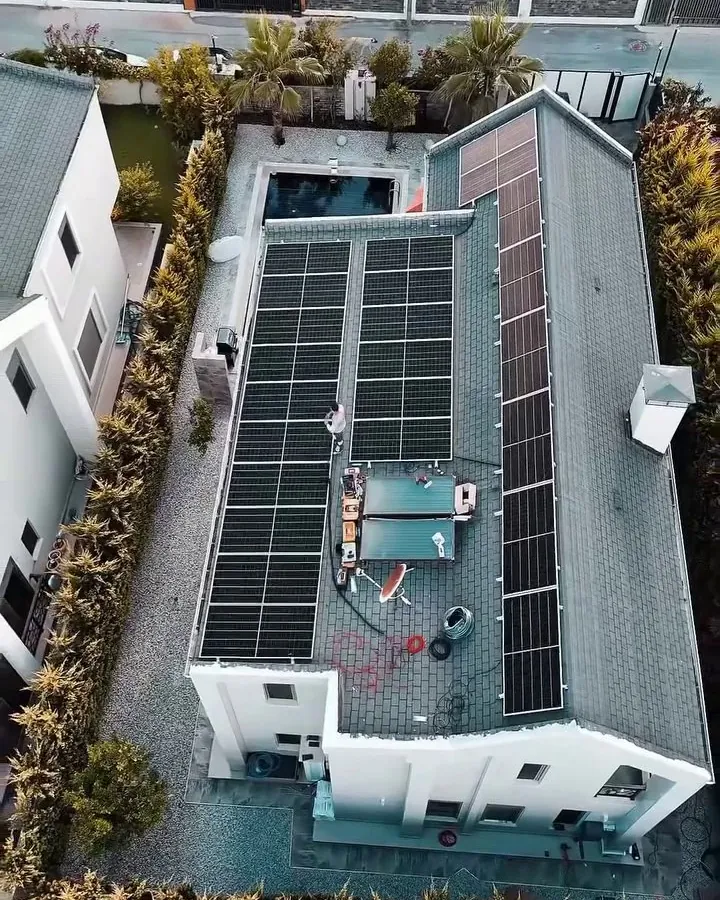
LiFePO4 batteries are used in all of the Döşemealtı, Manavgat and Belek hybrid installations and the Döşemealtı off-grid installation that Solar Nexo shared on its Instagram account (@solarnexotr): at 30 kWh, 15 kWh, 15 kWh and 15 kWh respectively. These examples show that lithium is preferred in home systems that cycle daily; the final decision for each project is made at the survey with a consumption analysis. For an off-grid use scenario such as a vineyard house, you can look at our vineyard house off-grid system cost article.
Regulation and warranty notes
Under the 2 April 2026 amendment to the Unlicensed Electricity Generation Regulation, main equipment, including the battery, must have been manufactured within the last five years; an unlicensed application cannot be made with old-stock or second-hand batteries. In addition, no payment is made for energy fed from the battery to the grid. These rules are valid as of October 2026 and may change; get confirmation from the distribution company before applying. Off-grid systems need no distribution company application, but obligations such as zoning, structural and fire apply separately.
On the warranty side, for example, the product warranty on TommaTech LV batteries is 60 months; the performance warranty covers at least 60% of nominal energy for 24 months (or until the product-specific energy throughput is reached). Gel battery warranties vary by brand and model. Whichever battery it is, ask for the warranty scope in writing. For selection you can request a free site survey.
Conclusion
The difference between gel and lithium batteries is at first glance about price, and over the long term about usable energy, cycle life and maintenance. In Antalya homes that cycle daily, lithium (LiFePO4) generally stands out on total cost; in occasionally used backup systems a gel battery may be enough. When deciding, compare in writing the DoD and cycle values in the manufacturer's official datasheet, the warranty, temperature conditions and inverter compatibility.
Frequently asked questions
What is the most important difference between a gel battery and a lithium battery?
The most important difference is usable energy and cycle life. A lithium (LiFePO4) battery can work at a high depth of discharge and generally offers a longer cycle life. A gel battery needs a shallower discharge to preserve its life. Initial investment is lower for gel batteries; total cost should be calculated by cycle count.
Does a gel battery still make sense for a solar energy system?
Yes, in some cases. In systems where outages are rare and the battery is used only as backup, a low initial investment can be an advantage. But in hybrid or off-grid systems that cycle every day, a gel battery needs greater capacity and may be replaced more often. The decision should be made with a total cost calculation. In backup systems on continuous float charge, the battery's standby life should also be checked from the manufacturer's document.
What DoD should a gel battery be used at?
In gel batteries a depth of discharge of around 50% is generally recommended to preserve life, but the value varies by manufacturer. The DoD and cycle table in the datasheet should be consulted. On this assumption, a 10 kWh nominal gel battery gives about 5 kWh of usable energy (calculation). For the real value, the cycle-DoD table in the battery's datasheet should be consulted. For lithium, values such as 90% DoD can be declared.
How many cycles does a lithium battery last?
It varies by manufacturer and conditions. A dealer page declares more than 6,000 cycles for the Pylontech US5000 at 25 °C and 90% DoD; contradictory figures such as 8,000 and 10,000 also exist in sources. Check the cycle value in the official datasheet together with the DoD and temperature condition.
Is a lithium battery more expensive than a gel battery?
The sticker price is generally higher for lithium, but we do not give a current price because it varies by brand and period. The right comparison is made on the total energy the battery delivers over its life: nominal capacity × DoD × number of cycles. This formula should be calculated with datasheet values for both batteries and divided by the price. That way cost per kWh becomes comparable.
Which battery suits off-grid use, such as a vineyard house?
If it cycles every day, a lithium battery is generally more suitable; it needs less capacity, space and weight for the same usable energy. In weekend homes used occasionally, a sufficiently large gel battery can also be considered. The final decision is made with a consumption analysis and the survey; temperature and inverter compatibility should also be checked.
Are gel and lithium batteries treated differently in an unlicensed application?
We did not find a separate rule by battery type in the official text. However, under the regulation dated 2 April 2026, main equipment, including the batteries in the storage unit, must have been manufactured within the last five years. No payment is made for energy fed from the battery to the grid. Get current information from the distribution company for how it is applied; since regulation changes often, also check any rules after October 2026.
Sources
Want a clear calculation for your roof?
The Solar Nexo team carries out a free site survey at your address in Antalya and designs the system that suits your roof, consumption and budget.