Short answer
For solar energy in Muratpaşa, the most suitable starting point for apartment buildings is common-area consumption such as the lift, hydrophore and shared lighting. An owners' board decision and a notarised copy of it are required for the application; roof use depends on consent under the Condominium Law. The PVGIS value for central Antalya is 1,656 kWh/kWp per year. Applications go through AEDAŞ's LUS portal.
Key takeaways
- In apartment buildings, the solar decision must be taken by the owners' board, and a notarised copy of the decision in the minutes book must be attached to the application.
- In planned areas there is a building-permit exemption provided condominium consent and permission from the authority are obtained; the exemption does not mean "no permission needed".
- Common-area loads split into daytime (lift, hydrophore) and night-time (stairwell lighting); only daytime loads coincide directly with solar production.
- According to PVGIS, 1 kWp in central Antalya produces about 1,656 kWh per year; 9 panels of 605 W come to about 5.4 kWp.
- The total of facilities connected to the same transformer cannot exceed 50 percent of the transformer's capacity; in dense housing this rule can limit capacity.
For solar energy investments in Muratpaşa, the most sensible starting point for apartment buildings is common-area electricity: lifts, hydrophore, stair and garden lighting, car-park gates and security cameras. In Muratpaşa's dense urban fabric, roof area, the owners' board decision and shading are decisive. In this article we summarise capacity, the decision process and the application steps for both apartment roofs and detached homes, with information valid as of October 2026.
Solar energy potential in Muratpaşa: in numbers
In PVGIS, Muratpaşa corresponds to the central Antalya area. According to PVGIS 5.3, annual specific production at optimal tilt (33°) and south orientation is 1,656 kWh/kWp; this value includes 14 percent system losses. You can expect 168 kWh/kWp in July and 99 in December. According to MGM data (the Turkish State Meteorological Service), annual sunshine duration is about 2,967 hours.
On apartment roofs the practical limit is mostly area. A 605 W panel is about 2.28 × 1.13 metres and takes up about 2.58 m². For example, for a hypothetical apartment building with 9,000 kWh of annual common-area consumption, the power needed is about 9,000 / 1,656 ≈ 5.4 kWp; this means 9 panels of 605 W (5.45 kWp) and about 23 m² of panel surface (calculation). Find your real consumption from your common-area bills.
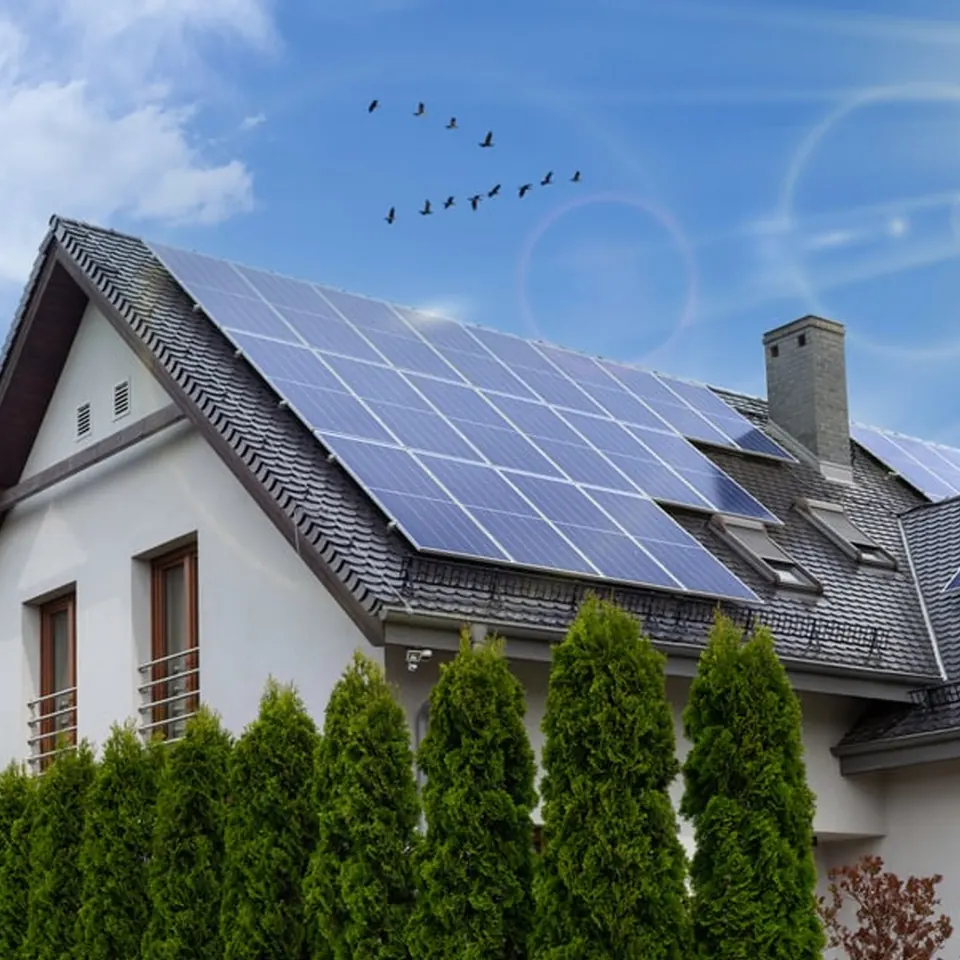
Muratpaşa's fabric is unique: neighbourhoods such as Lara, Güzeloba, Meltem and Fener have apartment buildings of different ages, and there are historic buildings around Kaleiçi. In new apartment buildings, a flat terrace and shared roof use are generally anticipated; in older buildings, the roof structure, insulation and load-bearing capacity must be examined separately. Because additional permission may be needed for buildings within a historic fabric or protected zone, it is necessary to talk to the relevant authority first for such buildings.
Do apartment common-area consumption and solar production coincide?
Solar produces by day, so the hours at which shared loads run matter:
| Common-area load | Operating pattern | Overlap with solar |
|---|---|---|
| Lift | All day, peaks in morning and evening | Partial |
| Hydrophore (water pressure pump) | Depends on water use, day and evening | Partly high |
| Stair and garden lighting | Evening and night | Low (daytime production cannot be used) |
| Car-park gate, cameras, intercom | 24/7 low power | Partial |
| Shared air conditioning or ventilation | Summer daytime | High |
The low overlap in the table means that surplus will be fed into the grid and night-time demand will be drawn from the grid. In that case net metering rules become decisive. For facilities tied to a residential subscription, netting is monthly; for non-residential ones it is hourly from 1 May 2026. Which subscriber group your common-area subscription is in and how the limits will apply are determined by the distribution company's records; so you need to consult AEDAŞ before applying. Surplus energy is paid for on the basis of the single-rate active energy unit price, not the total unit price on the bill; therefore sizing the system to the common area's daytime load is a safer approach.
There are simple adjustments management can make to raise self-consumption: shifting flexible loads such as the hydrophore and pool or garden irrigation pumps to daytime hours, programming shared air conditioners to daytime working hours, and switching to efficient light fittings. These measures increase the share of production consumed in the common area and reduce the loss arising from surplus fed to the grid being valued low.
Owners' board decision and roof use
An apartment roof is a common area. In the distribution company application, for buildings with more than one user, a notarised copy of the decision in the building's or complex's minutes book stating that solar may be installed is requested. Under Article 59/2 of the Planned Areas Zoning Regulation, solar systems built for the building's own needs, provided they do not affect the load-bearing system and consent is obtained under the Condominium Law, are not subject to a building permit; even so, an implementation project must be prepared, permission obtained from the authority and the building's architectural appearance respected.
In practice, the process generally follows this order:
- Management presents the survey report and the written quote to the owners as preliminary information.
- The subject is put on the agenda of the owners' board meeting, and roof use, cost sharing and the distribution of benefits are discussed openly.
- The decision taken is written into the minutes book and signed.
- A notarised copy of the decision in the minutes book is obtained and added to the application file.
- The subscriber who will make the application (usually the common-area subscription) is determined.
We do not give a majority threshold for how the decision is to be taken, because this needs to be verified legally. Together with the building manager and, if necessary, a legal adviser, clarify how the owners' board decision will be taken. Our article on the owners' board decision, which covers the legal process in detail, gives a starting point; for the technical side of apartment systems, see the apartment solar panels article.
Technical assessment on the roof
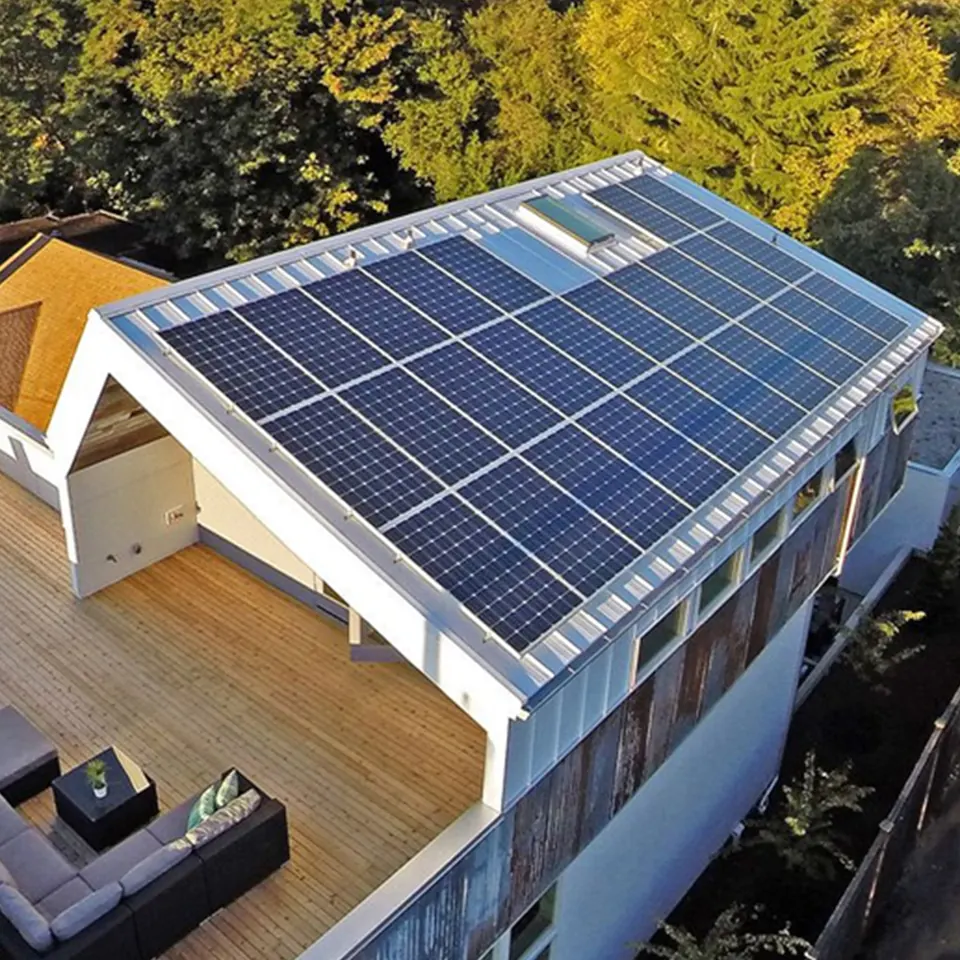
Obstacles frequently found on apartment roofs in Muratpaşa include shade from the lift machine room and stairwell, shared water tanks, solar water heaters, satellite dishes and chimneys. Roof use needs to be planned around these obstacles, leaving maintenance walkways between panels and keeping fire escape routes clear. On flat reinforced-concrete roofs panels are placed with a tilted frame or ballast system; leaving a shading gap between rows increases the roof area required.
There is no clear regulatory threshold for the load-bearing structure; however, the roof's load-bearing capacity needs to be assessed by a civil engineer, and the distribution company and the municipality may request a structural suitability document. The panel manufacturer also gives a fire warning: panels must be mounted on a fire-resistant surface with an adequate ventilation gap behind them, and mounting contrary to the manual can void the warranty.
AEDAŞ application and capacity limits
In Antalya, unlicensed generation applications have been made through AEDAŞ's LUS portal since 1 October 2023. For rooftop systems up to 25 kW, the system cannot exceed the contracted power of the consumption facility; generation and consumption are connected at the same metering point and a single application is made for each consumption point. The total of facilities connected to the same distribution transformer cannot exceed 50 percent of the transformer's capacity, and if several applications come in for the same transformer, the one with higher consumption over the last year is given priority. In dense areas like Muratpaşa this rule can create a capacity limit; a preliminary discussion saves time.
The application generally requires the application form, ID, title deed or document of right of use, unique code and a statement on the activity ban; in apartment buildings the copy of the decision must be notarised. It is also mandatory that main equipment such as panels, inverters and batteries has been manufactured within the last five years. For the steps, see the rooftop solar application article.
The impact of the investment on the building's budget should also be discussed in advance: whether the installation cost is covered through monthly dues or a one-off contribution, and how the common-area bill savings will be shared, should be written into the decision text. Because the savings amount depends on the tariff and self-consumption, no firm figure should be promised, and the calculation should be made with the current tariff. EPDK (Turkey's Energy Market Regulatory Authority) raised tariffs for residential customers by 25 percent on 4 April 2026; it should not be forgotten that this may change in future.
Notes for detached homes and villas
For detached house and villa owners in Muratpaşa the process is simpler: the decision is taken by one person and roof area is mostly sufficient. For facilities tied to a residential subscription, no production or sales limit applies as of October 2026; the limit is the contracted power. Even so, it makes sense to set the capacity according to your actual consumption. Loads that are heavy in summer, such as air conditioning and pool pumps, coincide with production. For a quick preliminary calculation with your own consumption data, you can use the calculator.
On its website Solar Nexo describes on-grid, off-grid and hybrid solutions for homes; a reference for a house with a tiled roof of 3.3 kW is also listed. At the free site survey, the team examines the roof, shading, panel board and consumption on site.
Conclusion
The first step for solar energy in Muratpaşa is reading consumption and the roof correctly. In apartment buildings, common-area electricity and the owners' board decision come to the fore; in detached homes, the consumption profile does. Confirm the current form of the application and equipment rules with the distribution company. To request a survey, you can write to us through our contact page. At the survey we assess the roof, shading, panel board and consumption together and prepare a realistic capacity proposal for your building.
Frequently asked questions
Is an owners' board decision needed to install solar panels on an apartment building?
Yes. An apartment roof is a common area, and the distribution company application requires a notarised copy of the solar decision in the minutes book. In planned areas, consent must also be obtained under the Condominium Law. We recommend confirming the majority required for the decision with a legal adviser; it is also useful to write the cost sharing and the distribution of benefits into the decision text.
Can apartment common-area electricity be met with solar energy?
It can be met in part. Lifts, hydrophore and loads running by day coincide with production; night loads such as stair and garden lighting come from the grid. Dividing your annual common-area consumption by 1,656 gives you the approximate kWp need (calculation); for example, 9,000 kWh gives about 5.4 kWp. A survey and hourly consumption analysis are needed for the exact size.
Do solar panels in Muratpaşa require a building permit?
In planned areas, solar systems that do not affect the load-bearing structure and are built for the building's own needs are not subject to a building permit. However, an implementation project, an engineering responsibility undertaking, permission from the authority and condominium consent are required. The permit exemption does not mean that no permission is needed; confirm your own building's situation and the necessary documents with the municipality.
How many panels fit on an apartment roof?
It depends on the roof's area, obstacles and shading. A 605 W panel takes up about 2.58 m²; shading gaps between rows and maintenance walkways are also needed. For example, about 5.4 kWp requires 9 panels and 23 m² of panel surface (calculation). The exact number is settled at the survey with roof measurement and shading analysis; if the roof is small, you can start with fewer panels.
What happens to surplus production in an apartment solar system?
Surplus energy is fed to the grid and is subject to the net metering rules under the regulation; payment is made on the single-rate active energy unit price of the relevant tariff, not the total unit price on the bill. The subscriber group of the common-area subscription affects how this applies; confirmation should be obtained from AEDAŞ before applying. For this reason sizing the system to the daytime load is recommended.
Where do you apply for solar panels in Muratpaşa?
The application is made through AEDAŞ's LUS platform; AEDAŞ has accepted unlicensed generation applications through this portal since 1 October 2023. For rooftop systems up to 25 kW, the documents include ID, title deed or document of right of use, unique code and, for apartment buildings, a notarised copy of the decision. For the current list, check the document list published by AEDAŞ.
Do the same rules apply to a villa in Muratpaşa?
The main rule is the same, but a detached home does not need an owners' board decision and the process is shorter. The application is made to AEDAŞ, the system cannot exceed the contracted power and the simplified procedure applies up to 25 kW. For a residential subscription netting is monthly and, as of October 2026, no production or sales limit applies. Because rules may change, confirm before applying.
Sources
Want a clear calculation for your roof?
The Solar Nexo team carries out a free site survey at your address in Antalya and designs the system that suits your roof, consumption and budget.