
Short answer
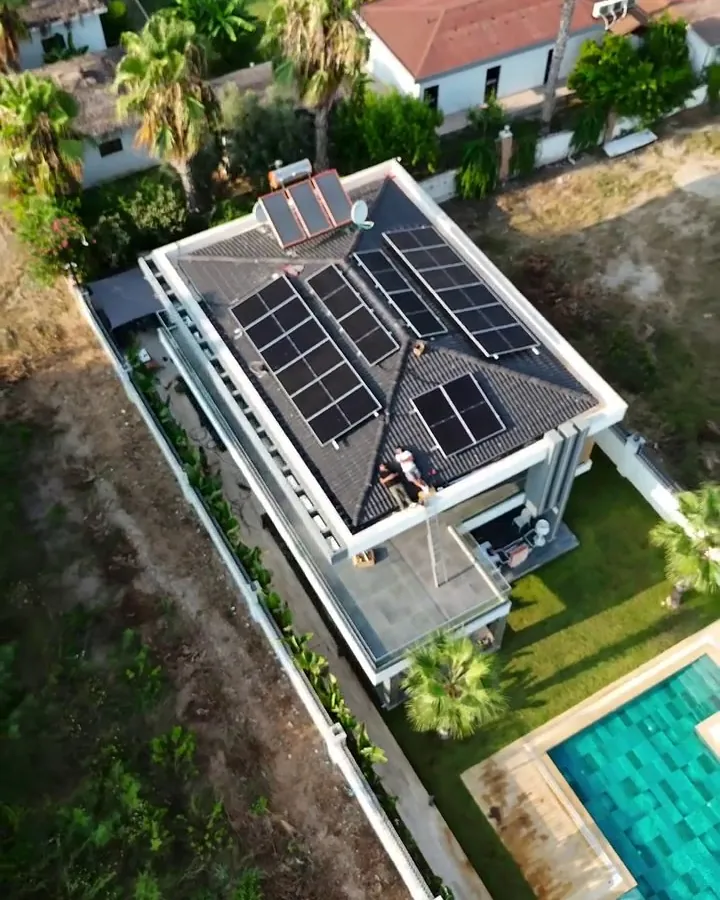
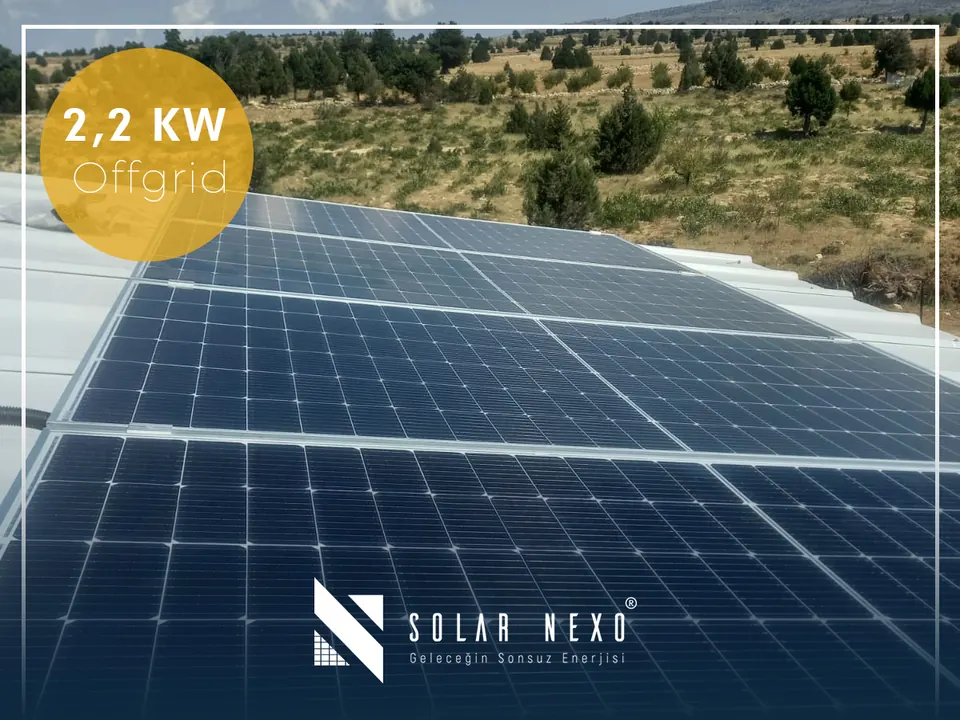
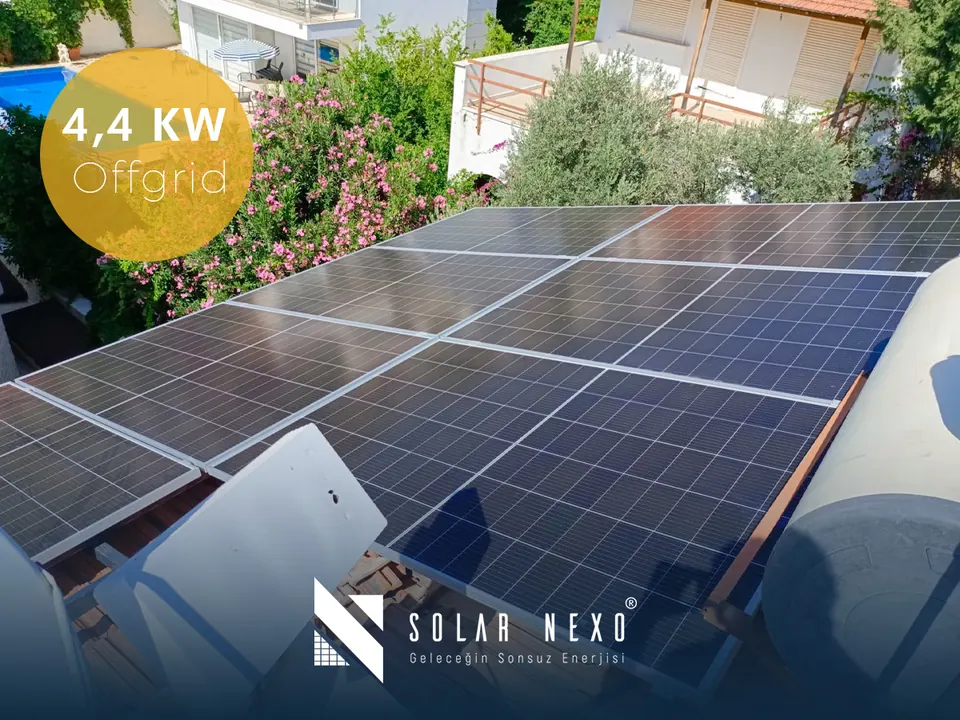
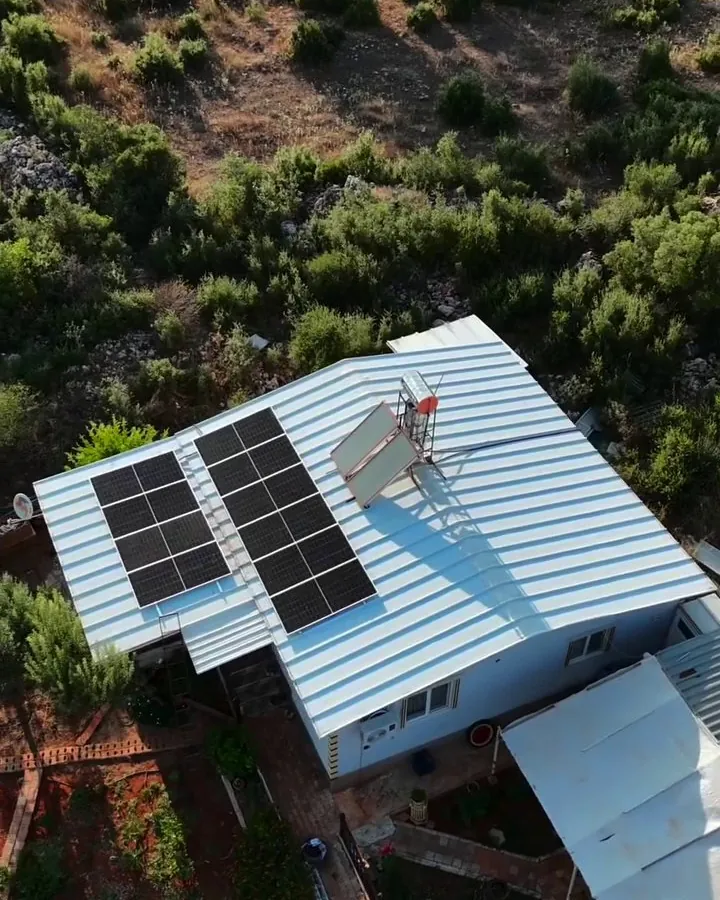
According to its Instagram post, Solar Nexo (a solar company in Antalya, based in Kepez) installed an off-grid system at a home without grid power in Döşemealtı in July 2026: 10 TommaTech 605 W panels (6.05 kWp), an 11 kW off-grid inverter and a 15 kWh LiFePO4 battery. The system runs with no grid connection, on solar and storage alone.
The project video was published on the Solar Nexo Instagram account (@solarnexotr).
Project summary
According to the Instagram post dated July 2026, Solar Nexo installed an off-grid solar system for a home in Döşemealtı that has no grid connection. The system has 10 TommaTech 605 W panels (6.05 kWp), an 11 kW off-grid inverter and a 15 kWh LiFePO4 battery. The difference from hybrid systems is that the grid is not in the loop: the home uses only as much electricity as the production and the battery provide.
System components
| Component | Value |
|---|---|
| Panels | 10 × 605 W TommaTech (6.05 kWp) |
| Inverter | 11 kW off-grid inverter |
| Storage | 15 kWh LiFePO4 |
| Grid connection | None (independent of the grid) |
Why was this system designed this way?
In an off-grid design the yardstick is not the average but the weakest day. With no grid, missing energy cannot be drawn from outside; so panels and battery are sized for consumption in the months of lowest irradiance. With PVGIS theoretical values, 6.05 kWp produces an average of 19 kWh per day in December and 32 kWh in June. Winter production falls to roughly two thirds of summer; this gap is a limit that requires winter consumption in an off-grid home to be lower than in summer.
The battery is 15 kWh, which works out to about 2.5 kWh of storage per kWp. This ratio is higher than in hybrid villa projects, because in an off-grid home the whole load is met from the battery through the night and on cloudy days. In December the theoretical daily production is close to the battery's nominal capacity; over several cloudy days in a row the battery may not be enough. For this reason, load management and the choice of energy-efficient appliances are part of the design in off-grid systems.
The 11 kW inverter is about 1.8 times the panel power. The reason for choosing an inverter larger than the panel power is that it must carry the peak demand of household loads and the starting current of motor-driven appliances; panel production does not feed the peak load, the battery does. The home's actual appliance list is not in the post, so which loads are connected is unknown.
From a regulatory standpoint, generation facilities with no connection to the transmission or distribution system are exempt from licensing and company-formation obligations (Unlicensed Electricity Generation Regulation, Art. 5/1/b). This means no application to the distribution company is needed; other obligations such as zoning, structural and fire requirements are assessed separately.
An off-grid system has one more safety layer: preventing the battery from fully discharging. When the charge falls below the lower limit, the battery management system (BMS) shuts down the inverter; the battery is not damaged, but the home is left without electricity. For this reason, in off-grid homes critical loads (refrigerator, lighting, communication) and deferrable loads (laundry, heaters) are planned separately. This home's load plan is not stated in the post.
Estimated production
Taking the PVGIS reference of 1,656 kWh/kWp/year for central Antalya as an approximation, 6.05 kWp gives about 10,020 kWh of theoretical production per year. These figures are a PVGIS-based theoretical calculation; actual production varies with roof orientation, tilt, shading and panel soiling.
| Month | Theoretical production (kWh) |
|---|---|
| January | 599 |
| February | 653 |
| March | 859 |
| April | 908 |
| May | 950 |
| June | 962 |
| July | 1,016 |
| August | 1,010 |
| September | 938 |
| October | 829 |
| November | 690 |
| December | 599 |
Installation and commissioning process
In an off-grid project the survey can take longer than usual because there is no grid: the power of every appliance in the home, its daily running hours and winter consumption are listed one by one. The panel, battery and inverter sizes come from this list. Since there is no distribution company application, the process moves to installation and commissioning by a shorter path; maintenance and 7/24 technical support follow. The post gives no project-specific timeline.
For a similar system
It suits homes the grid line does not reach or where the cost of running a line is high, as well as vineyard houses and rural dwellings. For details, our off-grid systems service, the off-grid system guide and the LiFePO4 battery article are useful. You can also use our references, the calculation tool and the contact pages. For off-grid solar installation in Antalya, sizing starts from your real winter load.
Questions about this project
How does an off-grid system work without the grid?
In an off-grid system, panel production goes to the household loads first and the surplus is stored in the battery; at night and in cloudy weather the load is fed from the battery. With no grid connection, missing energy cannot be drawn from outside. For this reason panels and battery are sized for winter consumption, and load management is part of the design.
How many kWh does a 6.05 kWp off-grid system produce per year?
With the PVGIS reference for central Antalya of 1,656 kWh/kWp/year, theoretical production is about 10,020 kWh. A separate PVGIS value was not used for Döşemealtı; this is an approximate reference. Actual production varies with roof orientation, tilt and shading. In an off-grid home, winter production falls to about two thirds of summer.
How many days does a 15 kWh battery last in an off-grid home?
The duration depends on consumption; for example, in a home using 8 kWh per day, 15 kWh of nominal capacity is in theory about one and a half days of energy. In practice usable capacity is lower. Over several cloudy days in a row the battery may not be enough; for this reason load management and the use of efficient appliances matter in off-grid systems.
Is an application to the distribution company needed for an off-grid system?
No, generation facilities not connected to the distribution system are exempt from licensing and company-formation obligations (Regulation Art. 5/1/b); no distribution company application is needed. This does not mean that every permit is unnecessary, however; obligations such as zoning, structural and fire requirements are assessed separately. For this reason each project is evaluated on its own.
Related guides
Estimated yields are theoretical values based on PVGIS 5.3 data (EU Joint Research Centre); actual output depends on roof orientation, tilt, shading and temperature.
Considering a similar system?
The Solar Nexo team visits your property, reviews your consumption and roof, and designs the right system for you free of charge.