
Short answer
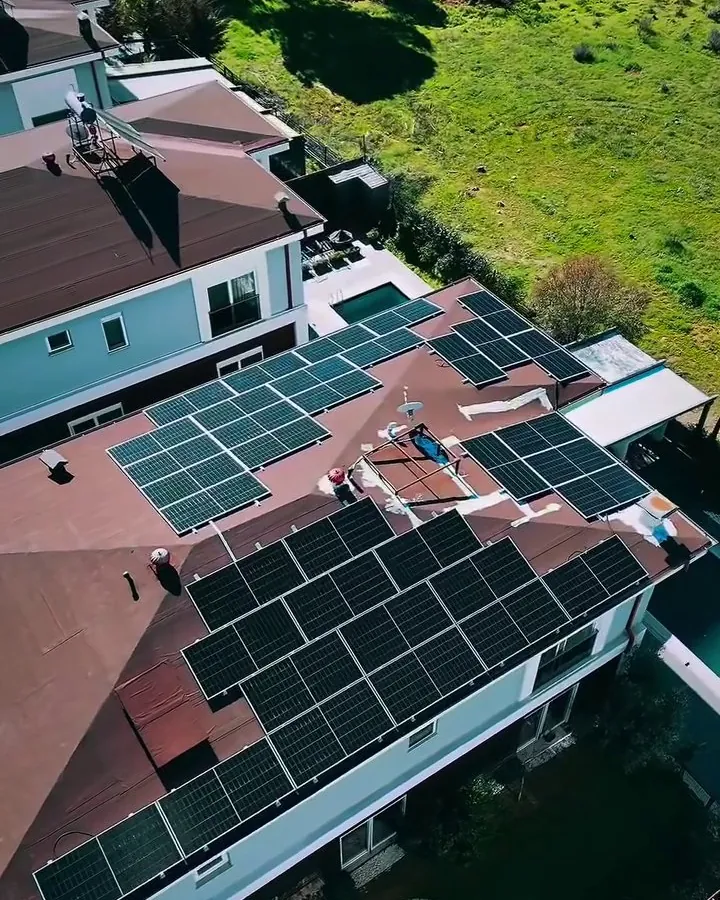
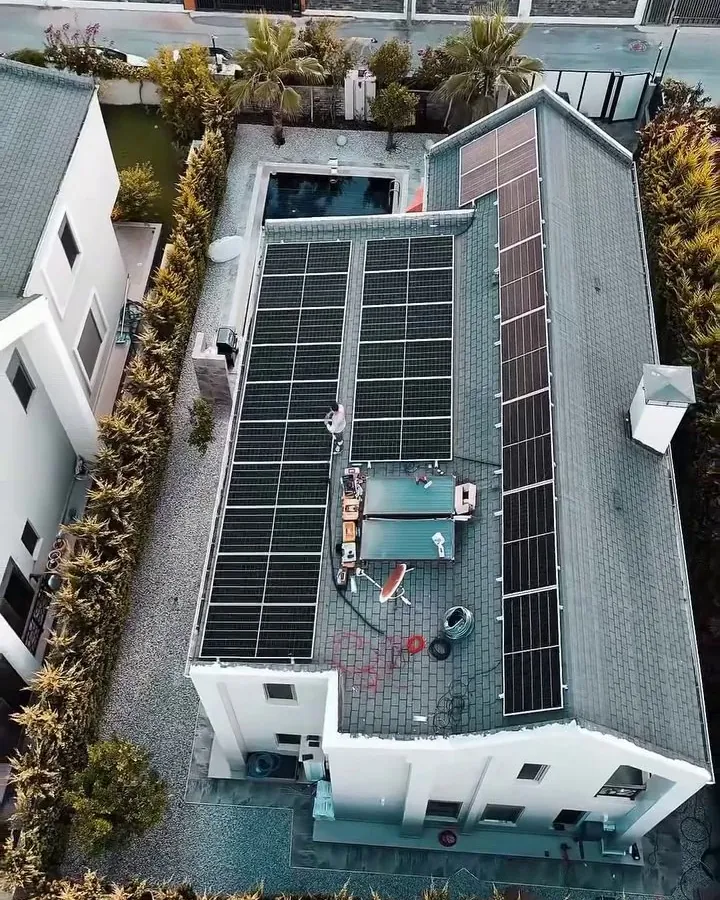
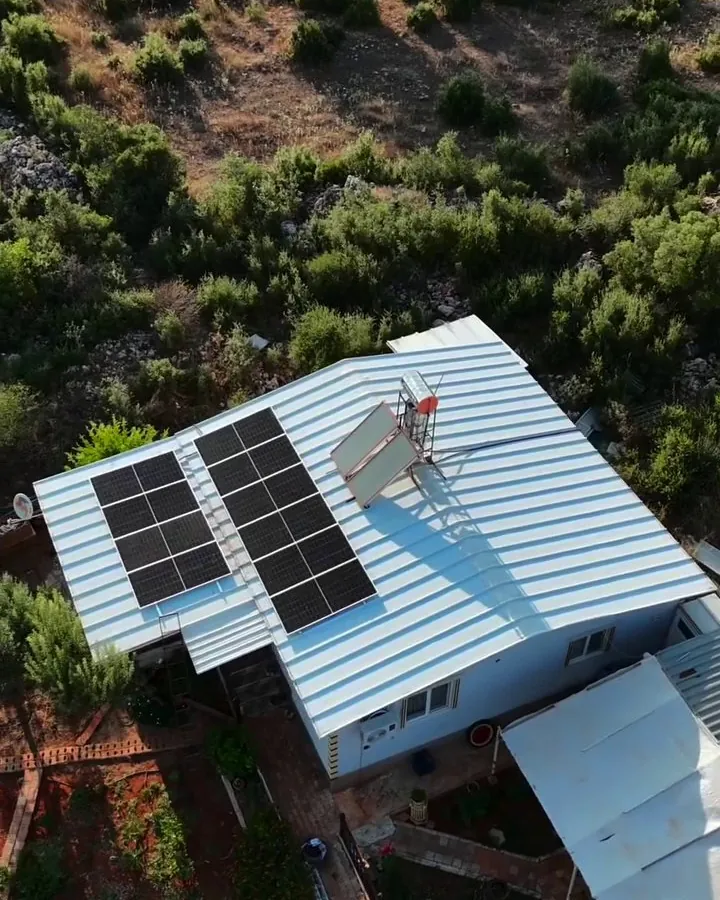
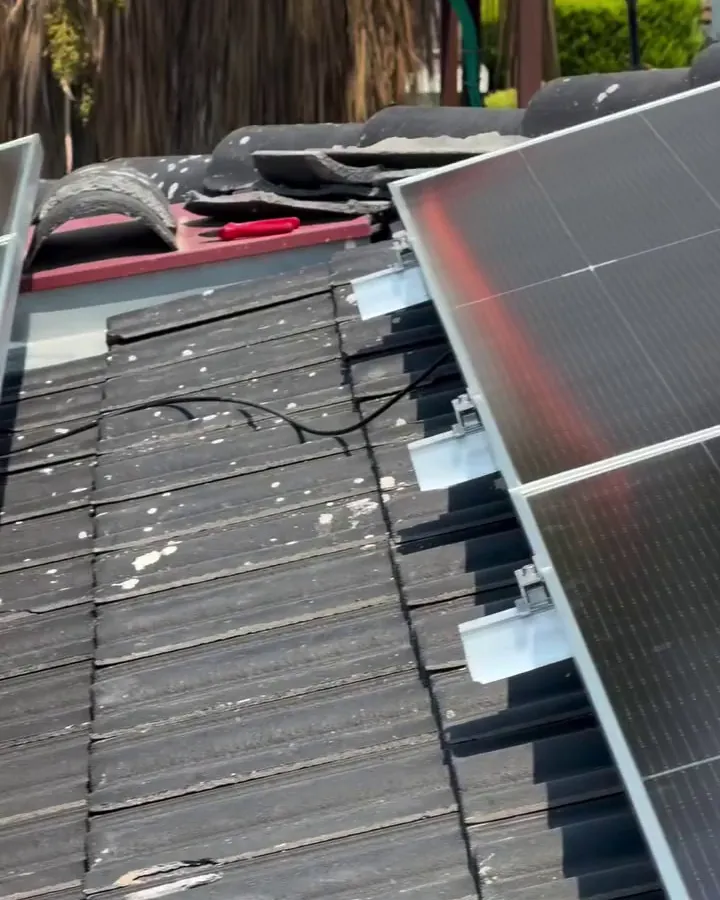
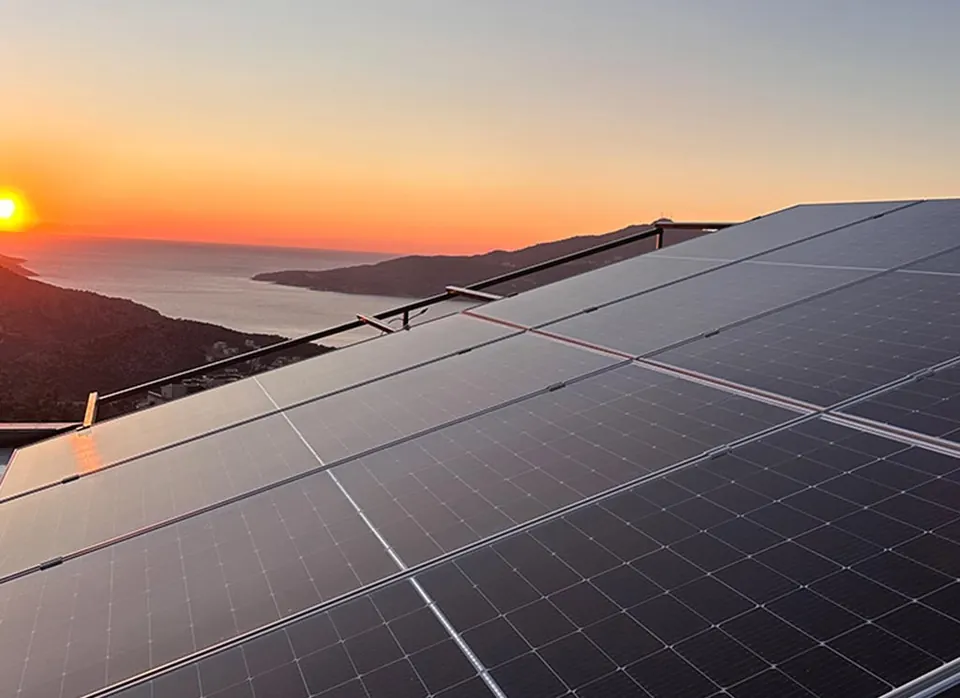
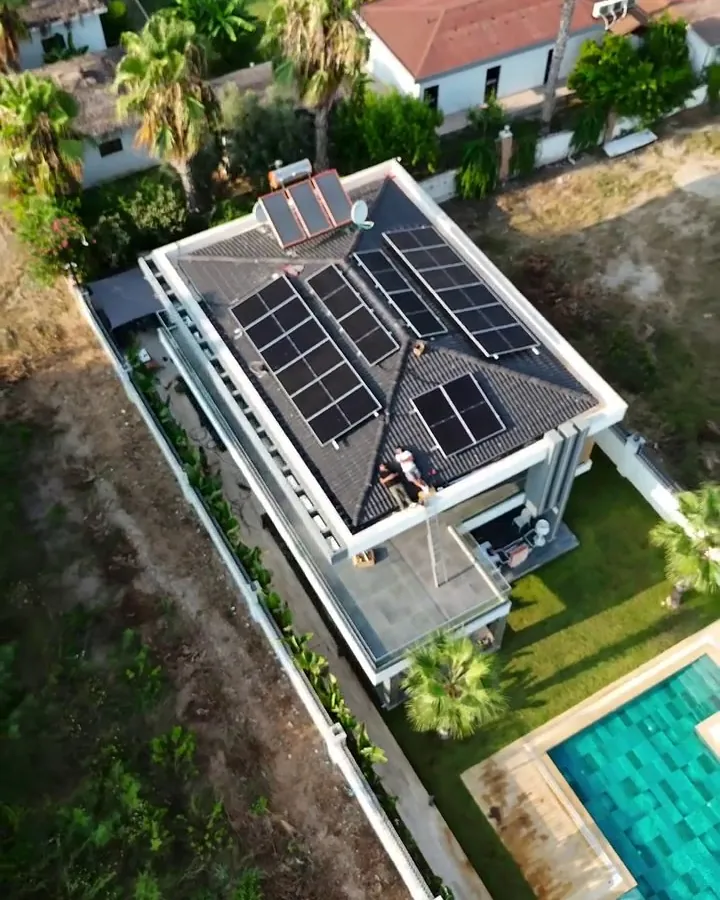
According to its Instagram post, Solar Nexo (a solar company in Antalya, based in Kepez) installed 58 TommaTech 600 W panels (34.8 kWp), two parallel 20 kW hybrid inverters and about 28.7 kWh of lithium batteries at a high-consumption home in Manavgat in February 2026. The goal is to cut a high electricity bill substantially.
The project video was published on the Solar Nexo Instagram account (@solarnexotr).
Project summary
According to the Instagram post dated February 2026, Solar Nexo installed a hybrid system for a high-consumption home in Manavgat, made up of 58 panels, two parallel inverters and two battery modules. The purpose stated in the post is to cut the high monthly electricity bill substantially and to come close to near-complete energy independence.
System components
| Component | Value |
|---|---|
| Panels | 58 × 600 W TommaTech (34.8 kWp) |
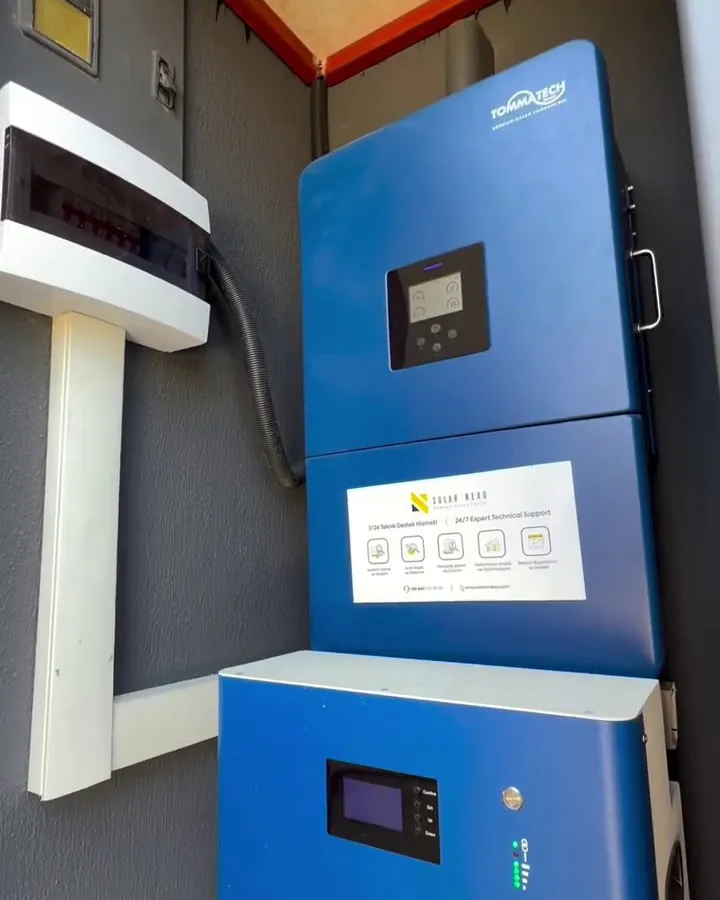
| Inverter | 2 × 20 kW hybrid, connected in parallel (40 kW total) |
| Battery | 2 × 51.2 V 280 Ah lithium (each ≈ 14.3 kWh) |
| Total storage | ≈ 28.7 kWh |
Why was this system designed this way?
When the power class of a single inverter is insufficient for this consumption, two inverters are run in parallel. Two inverters of the same model, joined by a communication cable, behave as a single system and their output power adds up: 2 × 20 = 40 kW. The second benefit of a parallel architecture is redundancy and scalability; when the load is split in two, each inverter runs below its nominal rating and thermal stress is reduced. Because the panel-to-inverter ratio is 34.8 / 40 = 0.87, panel production does not exceed total inverter capacity.
The battery calculation is different too. 51.2 V × 280 Ah = 14,336 Wh, which is about 14.3 kWh per module; two modules give about 28.7 kWh in total. The storage-to-panel ratio is 28.7 / 34.8 = 0.82 kWh/kWp; in other words, in this project the panel power is larger than the battery capacity, and the design aims at daytime load and grid independence together. In theory the expected average daily production is 134 kWh in February and 189 kWh in July.
34.8 kWp is above the 25 kW limit of the simplified rooftop procedure (the limit was raised from 10 kW to 25 kW on 12.03.2022). Grid connection and the scope of net metering above this power are determined by the distribution company and current regulations; the post does not describe this application process.
The points to watch in a parallel installation are well defined: the two inverters must be the same model and software version, the AC outputs must be connected with the same phase sequence, the battery bank must be connected to a common data bus and the communication cables must be run at a suitable length. Even if one inverter fails, the second can keep carrying part of the load; however, this behavior depends on the backup output settings and the post gives no detail.
Estimated production
With the PVGIS value for Manavgat of 1,649 kWh/kWp/year, 34.8 kWp gives about 57,390 kWh of theoretical production per year. These figures are a PVGIS-based theoretical calculation; actual production varies with roof orientation, tilt, shading and panel soiling.
| Month | Theoretical production (kWh) |
|---|---|
| January | 3,445 |
| February | 3,758 |
| March | 4,942 |
| April | 5,220 |
| May | 5,464 |
| June | 5,533 |
| July | 5,846 |
| August | 5,812 |
| September | 5,394 |
| October | 4,768 |
| November | 3,967 |
| December | 3,445 |
Installation and commissioning process
For high-consumption homes, the survey stage includes reviewing the existing subscription, contract power and hourly load structure. In project design, the DC string distribution of the parallel inverters and the placement of the battery bank are planned. If a grid connection is needed, an application step is added. Installation, commissioning, maintenance and 7/24 technical support follow. The post gives no timeline for this project.
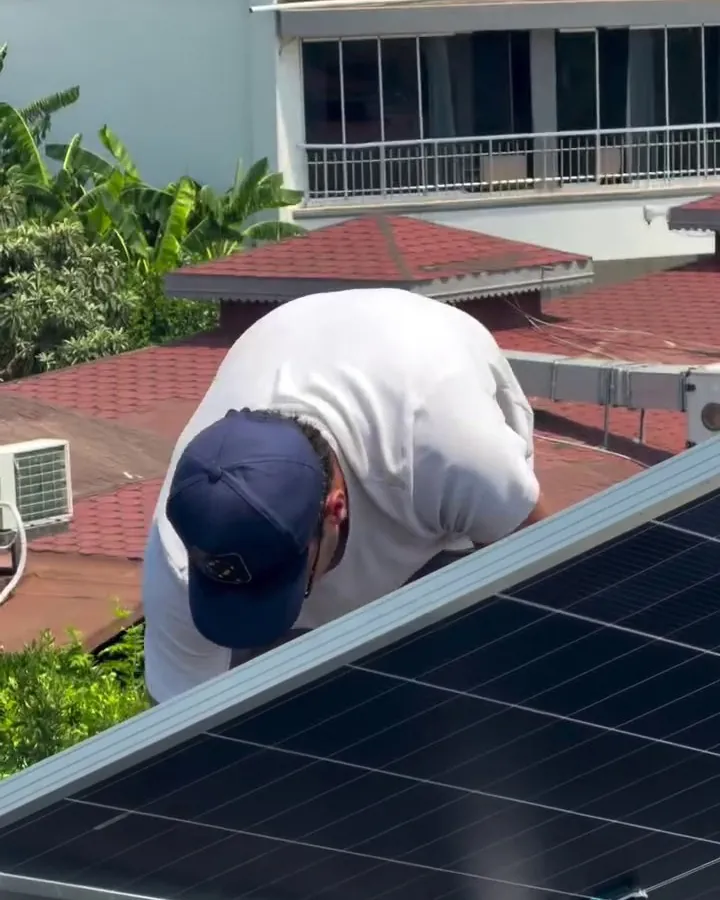
At this scale, commissioning covers a synchronization test of the two inverters, a balancing check of the battery modules and DC string voltage measurements. The distribution of the 58 panels across the inverters and their placement on the roof surfaces are planned at the project stage; the post does not state this distribution.
For a similar system
A parallel inverter solution can be considered for high-consumption homes, large villas or facilities with several air conditioning loads. Hybrid systems, our hybrid inverter selection article and our Manavgat and Side article give details. You can also use the references, the calculation tool and the contact pages. For solar panels in Antalya province, including Manavgat, we design systems sized to the real load.
Questions about this project
What is a parallel inverter and why is it used?
A parallel inverter setup runs several inverters of the same model as a single system, linked by a communication cable. Their output power adds up; here 2 × 20 kW = 40 kW. It is preferred when the power class of a single inverter is not enough, or when you want to share the load and increase redundancy. This architecture is a commonly used solution in high-consumption homes.
How many kWh does a 34.8 kWp system produce per year in Manavgat?
With the PVGIS value for Manavgat of 1,649 kWh/kWp/year, theoretical production is about 57,390 kWh. Actual production varies with roof orientation, tilt, shading and soiling; this figure is an estimate and not a production guarantee. A roof-specific calculation is needed for a precise result. This estimate is based only on panel power and does not look at the consumption profile.
How is the 2 × 14.3 kWh battery calculated?
Each module is 51.2 V and 280 Ah; 51.2 × 280 = 14,336 Wh, which is about 14.3 kWh. Two modules provide about 28.7 kWh of nominal capacity. Usable capacity falls below the nominal value depending on the BMS discharge limit and inverter losses. This calculation uses nominal values; in real use the result is somewhat lower.
Will this system bring the bill down to zero?
No, such a promise cannot be made. The Instagram post states the goals as reducing the bill substantially and near-complete energy independence. The real result depends on consumption habits, the season, the grid tariff and the battery's state of charge in the winter months. A separate load analysis is needed for the savings rate.
Related guides
Estimated yields are theoretical values based on PVGIS 5.3 data (EU Joint Research Centre); actual output depends on roof orientation, tilt, shading and temperature.
Considering a similar system?
The Solar Nexo team visits your property, reviews your consumption and roof, and designs the right system for you free of charge.