Short answer
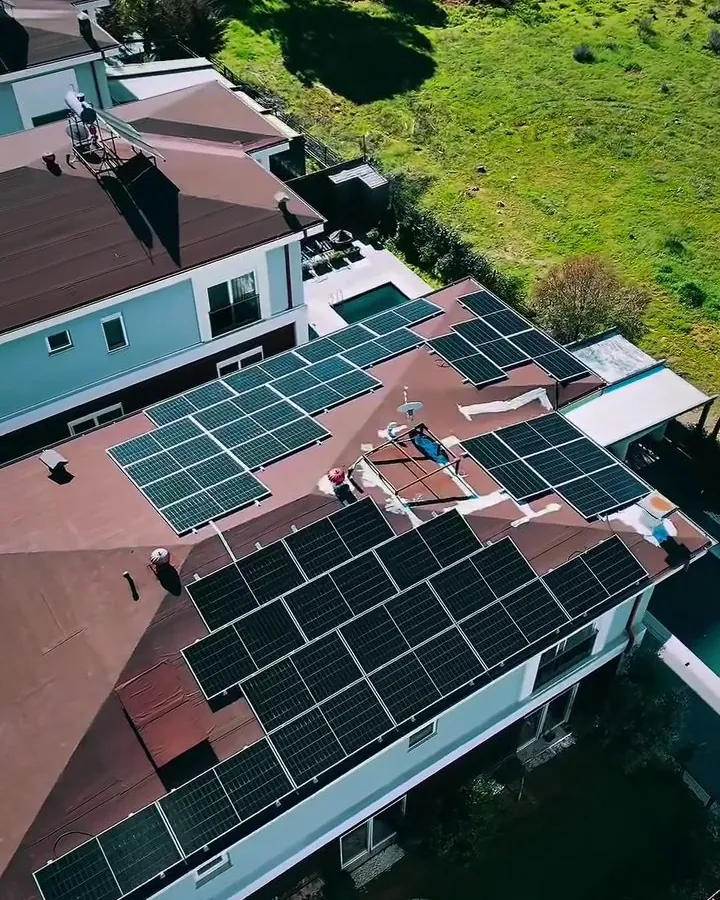
As a solar panel example in Döşemealtı, the villa installation Solar Nexo shared includes 36 TommaTech 605 W panels (21.78 kWp), a 20 kW hybrid inverter and a 30 kWh LiFePO4 battery. With the central Antalya PVGIS value, about 36,000 kWh of annual production is expected. The hybrid set-up uses daytime production, covers the night with the battery and provides backup during outages.
Key takeaways
- 36 panels of 605 W total 21.78 kWp; with a 20 kW inverter the DC/AC ratio is about 1.09.
- With the central Antalya PVGIS value (1,656 kWh/kWp), estimated annual production is about 36,070 kWh.
- About 27 kWh of the 30 kWh battery is assumed usable; no payment is made for energy fed from the battery to the grid.
- The 10-panel off-grid example in the same area (6.05 kWp, 11 kW inverter, 15 kWh battery) is independent of the grid.
- For a residential subscription, netting is monthly and the paid-generation limit does not apply (as of October 2026).
For villa owners looking for solar panels in Döşemealtı, one of the most concrete examples is the installation Solar Nexo shared on Instagram: 36 TommaTech 605 W panels, a 20 kW hybrid inverter and a 30 kWh LiFePO4 battery. Total panel power comes to 21.78 kWp. In this article we explain step by step what this configuration means, how annual production is estimated and why a hybrid system makes sense in an area like Döşemealtı, close to the city centre but with large plots.
These figures are a reference example; for your own villa, the system is determined by consumption analysis and a survey. A smaller off-grid installation shared in the same area (10 panels, an 11 kW off-grid inverter, 15 kWh LiFePO4) is also covered for comparison.
The 36-panel Döşemealtı hybrid system: a summary in numbers
The basic values of the shared installation are as follows:
| Component | Value | Note |
|---|---|---|
| Panels | 36 × 605 W TommaTech | Total 21.78 kWp (36 × 605 W) |
| Hybrid inverter | 20 kW | DC/AC ratio about 1.09 |
| Battery | 30 kWh LiFePO4 | Night and outage backup |
The DC/AC ratio is panel power divided by inverter power: 21.78 / 20 ≈ 1.09. This ratio lets the inverter approach full load around midday. Very high ratios cause clipping at the midday peak; very low ratios make the inverter underused. A modest value like 1.09 points to a balanced design.
Annual production estimate: a calculation with PVGIS
We do not give a separate PVGIS value for Döşemealtı. For central Antalya, annual specific production according to PVGIS 5.3 is 1,656 kWh/kWp (optimal tilt 33°, south, 14% system losses). Because Döşemealtı lies just west-north-west of central Antalya, this value is a reasonable reference. On that basis, the estimated annual production of the 21.78 kWp system is:
- 21.78 kWp × 1,656 kWh/kWp ≈ 36,070 kWh/year (assuming optimal tilt and south orientation)
- July: 21.78 × 168 ≈ 3,660 kWh
- December: 21.78 × 99 ≈ 2,160 kWh
On a real roof, production may fall below this value because of orientation, tilt and shading. You can examine the monthly distribution in the chart.
The difference between summer and winter (about 1.7 times) should be compared with the villa's consumption. While the pool and air conditioning raise load in summer, consumption rises again if heating is electric in winter. At least one year of bill data is needed to understand this match.
How does a hybrid system work?
In a hybrid system, the solar panels work together with the grid through a hybrid inverter that charges the battery and supplies the house. During the day, production first covers the house's instantaneous consumption, the surplus fills the battery, and when the battery is full and production is in surplus, it can be fed to the grid. In the evening and at night the battery steps in; when the battery runs out, power is drawn from the grid. When the grid goes down, the system can keep feeding critical loads from the battery.
You can read our article on the hybrid solar energy system, which explains this structure in more detail. The guide to villa solar energy system design also complements this example for the whole of villa design.
What does a 30 kWh battery cover?
Battery capacity in kWh shows the amount of energy. The usable energy from a 30 kWh battery is somewhat less, depending on depth of discharge and system losses; assuming about 90% usable capacity, 27 kWh is usable. This energy can be read as follows:
- For a villa with 15 kWh of nightly consumption, about 1.8 days (27 / 15).
- If only critical loads (refrigerator, lighting, internet, pool filter; 1 kW in total) run during an outage, theoretically about 27 hours.
- If high loads such as air conditioning and an electric oven are added, the duration shortens.
An important rule: no payment is made for energy fed from the battery to the grid. Under the regulation, no payment is made for the part of the surplus remaining after netting that is supplied from storage. So the battery's role is to cover the house's own night consumption and provide backup. For details about batteries, see our article on LiFePO4 batteries.
Comparison: the 10-panel off-grid example
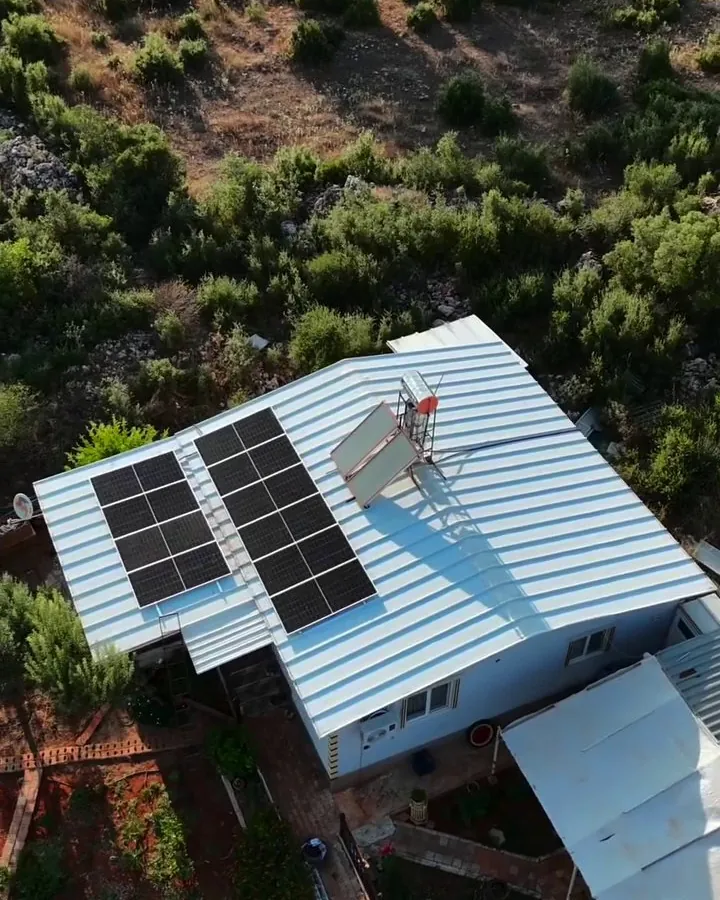
The second example shared in the same area consists of 10 TommaTech 605 W panels (6.05 kWp), an 11 kW off-grid inverter and a 15 kWh LiFePO4 battery. This system is not connected to the grid; so under the regulation there is no licence or company-formation obligation, and no connection approval letter (çağrı mektubu) application is made to the distribution company. However, matters such as zoning and structure are assessed separately.
| Feature | 36 panels, hybrid | 10 panels, off-grid |
|---|---|---|
| Panel power | 21.78 kWp | 6.05 kWp |
| Inverter | 20 kW hybrid | 11 kW off-grid |
| Battery | 30 kWh | 15 kWh |
| Grid | Connected | Not connected |
| Annual production (with the central Antalya value) | about 36,070 kWh | about 10,020 kWh |
For the logic and uses of an off-grid system, you can take a look at our article on what an off-grid solar energy system is.
Energy flow through the day: a summer-day example
To understand the value of a hybrid system, let us think of a summer day as a timeline. This is a hypothetical flow; real values depend on your consumption habits.
- Morning (07:00-10:00): While production rises, household consumption is relatively low; surplus production begins to charge the battery.
- Midday (10:00-16:00): Panel output is at its highest. While the air conditioner and pool pump run, consumption is met directly from the panels; the battery fills.
- Evening (17:00-23:00): Production falls and household consumption rises. The battery steps in and reduces draw from the grid.
- Night: The battery feeds continuous loads such as the refrigerator, lighting and internet with the remaining energy; when it runs out, the system switches to the grid.
The success of this flow depends on the battery being large enough to cover evening consumption and on daytime production being enough to fill the battery. Shifting the pool pump and flexible loads such as the washing machine to midday hours makes better use of system capacity. Moving the pool pump's running time to daytime is one of the easiest and most effective shifts.
After installation: monitoring and maintenance
Hybrid systems require monitoring not only the panels but also the battery and inverter. With mobile monitoring, daily production, battery charge level and energy drawn from the grid can be seen. On its website Solar Nexo lists the Maintenance and Technical Support step and 24/7 technical support as services. Configuring battery and inverter settings (discharge limit, charging priorities) according to the manufacturer's recommendations affects life and efficiency.
As an example, the inverter warranty at TommaTech is 5 years from the invoice date and 60 months of product warranty on the LV battery; the panel has a 30-year performance warranty. Warranty terms vary by brand and model, so ask in the quote which brands will be used and ask for the warranty documents.
Decision steps for a villa in Döşemealtı
Villas with large gardens and pools are common in Döşemealtı; in these buildings the load differs from a city flat. When deciding, follow these steps:
- Work out consumption: See annual kWh and the summer-winter distribution from the bills of the last 12 months.
- Assess roof and land area: 36 panels each measure about 2,278 × 1,134 mm, about 2.58 m² each (about 93 m² in total, excluding frames and gaps). The roof or a ground system must provide this area.
- Determine critical loads: List which appliances you want to run during an outage.
- Choose the application route: For a grid-connected system, the application is made through AEDAŞ's LUS platform (AEDAŞ is the local electricity distribution company).
- Ask for a written quote: See panel, inverter, battery and labour items separately.
For a residential subscription, netting is monthly and the paid-generation limit does not apply to residential; only the single-rate active energy unit price is paid for surplus energy. This information is valid as of October 2026; regulation may change. For the current application steps, see our rooftop solar application article; for a free site survey, use our contact page.
Conclusion
The Döşemealtı villa example with 36 panels (21.78 kWp), a 20 kW hybrid inverter and a 30 kWh battery shows what a hybrid system aims at: using daytime production in the house, covering the night with the battery and backing up critical loads during an outage. With the PVGIS reference, about 36,000 kWh of annual production is expected, but the real value depends on your roof and consumption. Settle the sizing for your own villa with a survey.
Frequently asked questions
How much does a 36-panel system produce per year in Döşemealtı?
36 panels of 605 W come to 21.78 kWp. With the PVGIS 5.3 value for central Antalya of 1,656 kWh/kWp, estimated annual production is about 36,070 kWh. This assumes optimal tilt and south orientation; on a real roof it varies with orientation, tilt and shading, and no separate PVGIS value is given for Döşemealtı. Following production with a monitoring system lets you notice deviations from the expected value early.
What is the difference between a hybrid inverter and a normal on-grid inverter?
A hybrid inverter manages both the panels and the battery and works together with the grid; it can feed critical loads from the battery during an outage. A classic on-grid inverter does not work with a battery and shuts down when the grid goes out, for safety reasons. A hybrid inverter and battery are needed to cover night consumption or to have backup. This difference is decisive in areas with outages and in homes with high night consumption.
How many hours does a 30 kWh battery power a house?
The duration varies with the connected load. With about 90% usable capacity there is 27 kWh of energy. If only a 1 kW critical load is running, theoretically about 27 hours; with a 3 kW load, about 9 hours is enough. High loads such as air conditioners shorten the duration quickly; the real value depends on product characteristics. It also varies with the battery brand's depth of discharge and the inverter efficiency.
Can I sell the energy in the battery to the grid?
No. Under the regulation, no payment is made for the part of the surplus remaining after netting that is fed from the battery to the grid. The purpose of the battery is to cover your own night consumption and provide backup during an outage. This information is valid as of October 2026 and the regulation may change. So think of the battery not as a source of income but as a part that optimises your own consumption.
How do you choose between an off-grid and a hybrid system?
If you have a grid connection and want backup against outages, a hybrid system suits you. If there is no grid or the connection cost is very high, off-grid is considered. The two examples in Döşemealtı show this difference: a 20 kW hybrid villa and an 11 kW off-grid system. The decision is made at the survey together with the load profile and connection status. Both systems serve their purpose if the load analysis is done correctly.
How much roof area is needed for 36 panels?
The 605 W TommaTech 144TN10 panel measures 2,278 × 1,134 mm; that is, each panel takes up about 2.58 m². For 36 panels, the panel surface alone is about 93 m². Mounting gaps, maintenance walkways and shading distances are added on top of that; the real area need is determined at the survey. This calculation covers only panel size; space is also needed for the inverter, battery and panel board.
How do you apply for solar energy in Döşemealtı?
For grid-connected systems, the application is made through the LUS platform of AEDAŞ, the distribution company in Antalya (since 1 October 2023). The process has connection approval letter (çağrı mektubu), project approval, connection agreement and acceptance steps. For off-grid systems, no distribution company application is needed, but matters such as zoning and structure are assessed separately. Preparing application documents completely prevents the process from lengthening unnecessarily.
Sources
Want a clear calculation for your roof?
The Solar Nexo team carries out a free site survey at your address in Antalya and designs the system that suits your roof, consumption and budget.