Short answer
Rooftop solar is installed on an existing building's roof and generally feeds that building's consumption. Ground-mounted solar is installed on open land on a ground structure, is larger in scale and adds land, connection and permit costs. For Antalya businesses with roof space, the roof is usually the first option; the choice between rooftop and ground-mounted rests on consumption, area and regulation.
Key takeaways
- Rooftop solar is mostly installed at the same metering point; ground-mounted solar can be at a different metering point and may need an additional connection.
- On land, optimum tilt and orientation can be chosen; per PVGIS, 1 kWp at optimum tilt in central Antalya produces about 1,656 kWh a year.
- The installable power is limited to twice the contract power for municipalities, industry and agricultural irrigation, and to the contract power for others.
- For installations that received a connection approval letter after 12 May 2019, annual production cannot exceed twice the associated consumption.
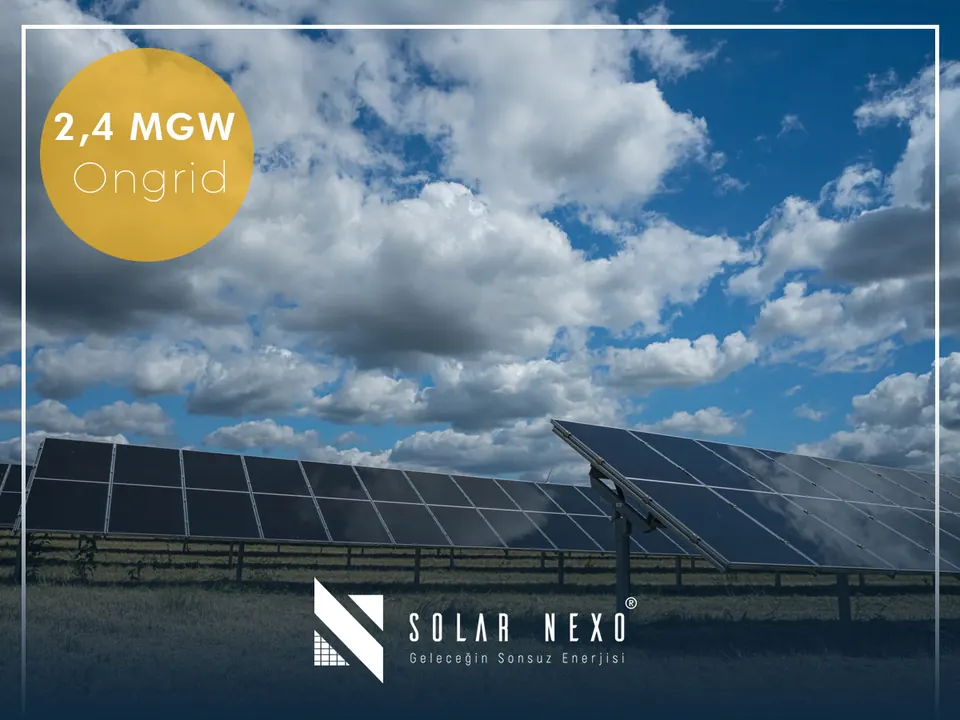
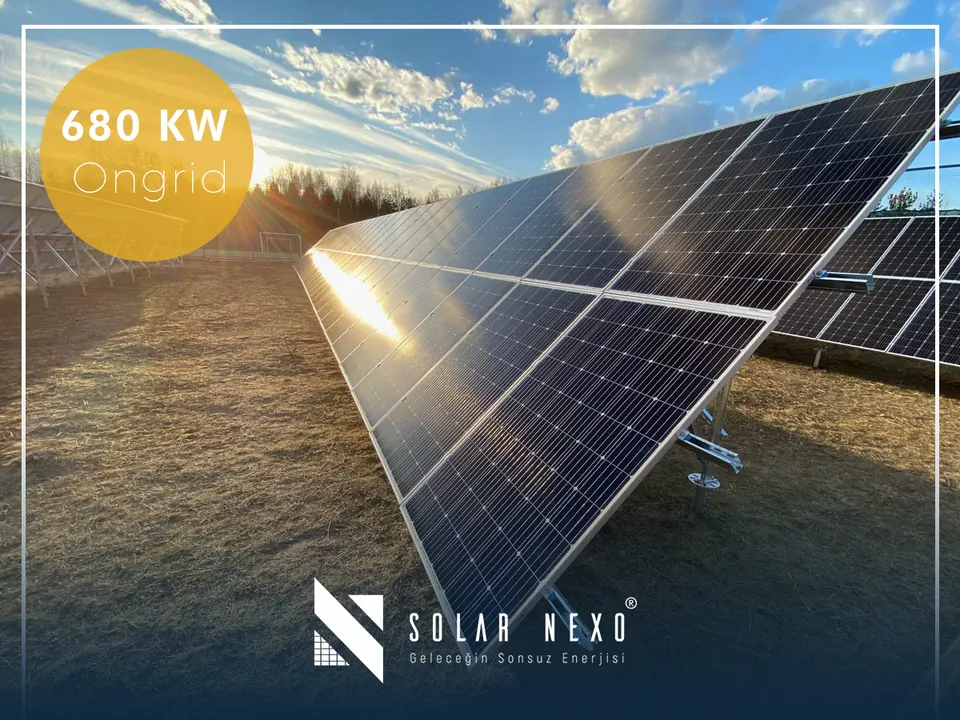
- Solar Nexo's website lists 2.4 MW and 680 kW ground-mounted and 970 kW, 1.3 MW and 4.5 MW rooftop references.
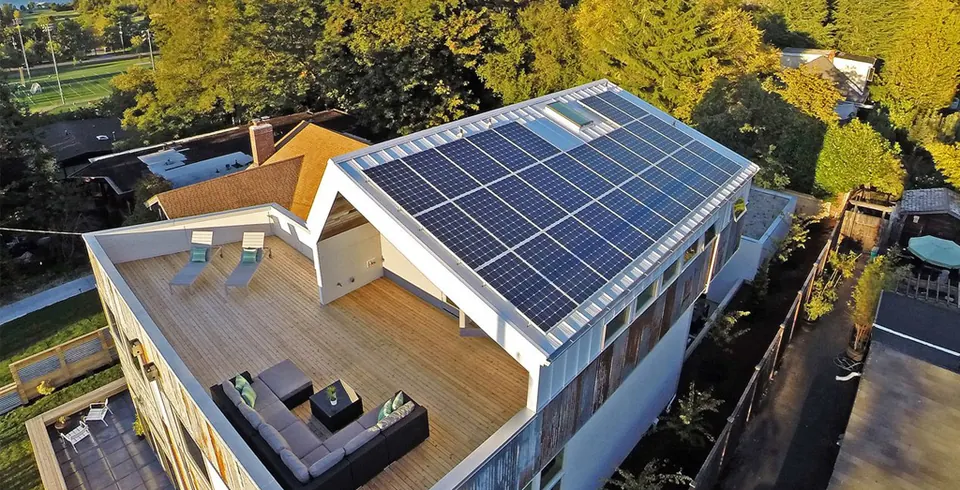
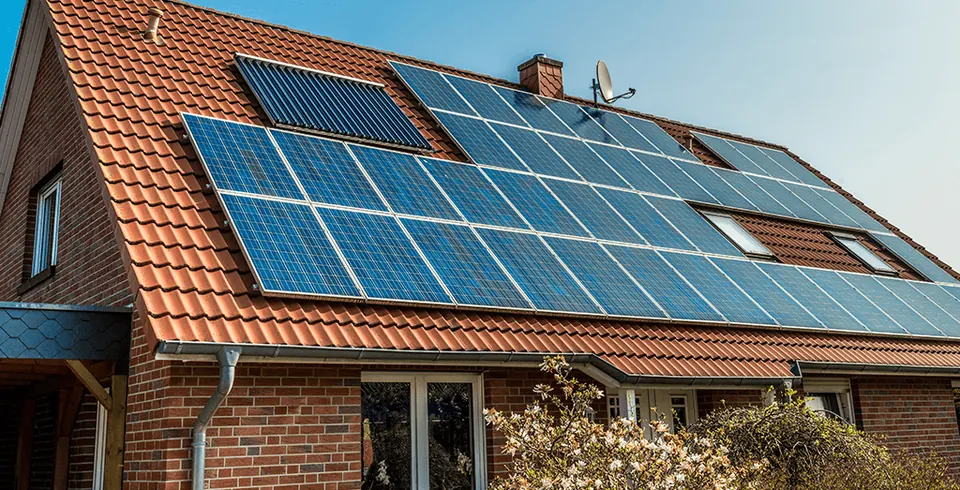
The difference between rooftop and ground-mounted solar has less to do with where the plant is built than with which consumption facility it serves and which permit, cost and yield conditions it is subject to. Rooftop solar is installed on the roof of an existing building and generally feeds that building's consumption. Ground-mounted solar is installed on a ground structure on empty land and is mostly larger in scale. There are examples of both types in Antalya. In this article we compare the two options in terms of permits, cost items, yield and operation.
Rooftop vs ground-mounted solar: the basic differences
| Topic | Rooftop solar | Ground-mounted solar |
|---|---|---|
| Installation location | Existing building roof | Open land, ground structure |
| Typical scale | From a few kW to MW | Generally from hundreds of kW to MW |
| Extra land cost | None | Land, preparation, fence, road |
| Tilt and orientation | Depends on the roof, limited freedom | Optimum tilt and orientation chosen freely |
| Structural issue | Roof load-bearing capacity is critical | Soil survey and foundation/column design |
| Shading | Chimney, antenna, neighbouring structure | Shade between rows, surrounding vegetation |
| Grid connection | Usually the same metering point | Same or different metering point, an extra line may be needed |
| Cleaning and maintenance | Roof access and safety are needed | Easy access from ground level |
This table is a general framework. Details for each project are firmed up at the survey. We give no prices, because cost varies with area, equipment, distance and ground conditions.
Permits and regulation: which is more complex?
In licence-exempt electricity generation, rooftop and ground-mounted plants are subject to the same regulation. The installation may be at the same metering point as the consumption facility or at a different one. Production is associated with the applicant's own consumption. The installable power is limited to twice the contract power for municipalities, industrial facilities and agricultural irrigation, and to the contract power for other persons. These limits apply as of October 2026, and because regulations change often we recommend confirming the current text.
The important rules are:
- For installations that received a connection approval letter (çağrı mektubu) after 12 May 2019, annual production cannot exceed twice the associated consumption.
- For non-residential installations, net metering (mahsuplaşma) has been hourly since 1 May 2026.
- Main equipment such as panels, inverters and batteries must have been manufactured within the last five years.
- An installation run without acceptance has its connection cut and its owner cannot apply for three years.
The difference appears in building and land permits. In planned areas, solar systems built for the building's own needs, provided they do not affect the supporting structure and the consent required under the condominium law is obtained, are not subject to a building permit. Even so, a project must be prepared and permission obtained from the administration. Whether a permit is needed for production exceeding the building's own needs is disputed in secondary sources; we therefore recommend consulting the relevant municipality.
For ground-mounted solar, the zoning status of the land, the land classification and the permits of the relevant institutions must be assessed separately according to the project. We give no verified permit list in this article. Before choosing land, be sure to confirm this assessment with the competent authorities. For the process, see our article on the licence-exempt electricity generation regulation.
Yield: the difference in tilt, orientation and area
According to PVGIS, 1 kWp at optimum tilt (33°) facing south produces about 1,656 kWh a year in central Antalya. On land, a ground structure lets you choose this optimum. On a roof, the existing roof tilt and orientation are decisive. Tile roofs can often have a south-facing surface, but production falls on east-west-facing roofs. We covered the effect of tilt and orientation in detail in our article on the solar panel angle and orientation for Antalya.
Specific yield varies by region: Alanya 1,615, Manavgat 1,649, Kaş 1,664, Korkuteli 1,655 and Elmalı 1,719 kWh/kWp. That is, in choosing land, irradiation matters as well as price.
On land, tilted rows shade one another. Gaps are therefore left between rows and the land area comes to several times the panel surface. A 605 W panel measures 2278 × 1134 mm; that is, it takes up about 2.6 m² of surface. This comes to about 4.3 m² of panel surface per kWp (calculation). The real area requirement is a multiple of this because of row spacing and roads.
Rooftop solar: when does it make more sense?
Rooftop solar stands out if there is free roof area and consumption takes place in the same building. The roof option is strong in these cases:
- If consumption and production are at the same point, cable loss and extra connection cost fall.
- No land fee is paid; the existing structure is used.
- In businesses that work in the daytime, the self-consumption ratio is high. This is especially valuable under hourly net metering.
- The roof takes up a less visible area and does not affect the landscape.
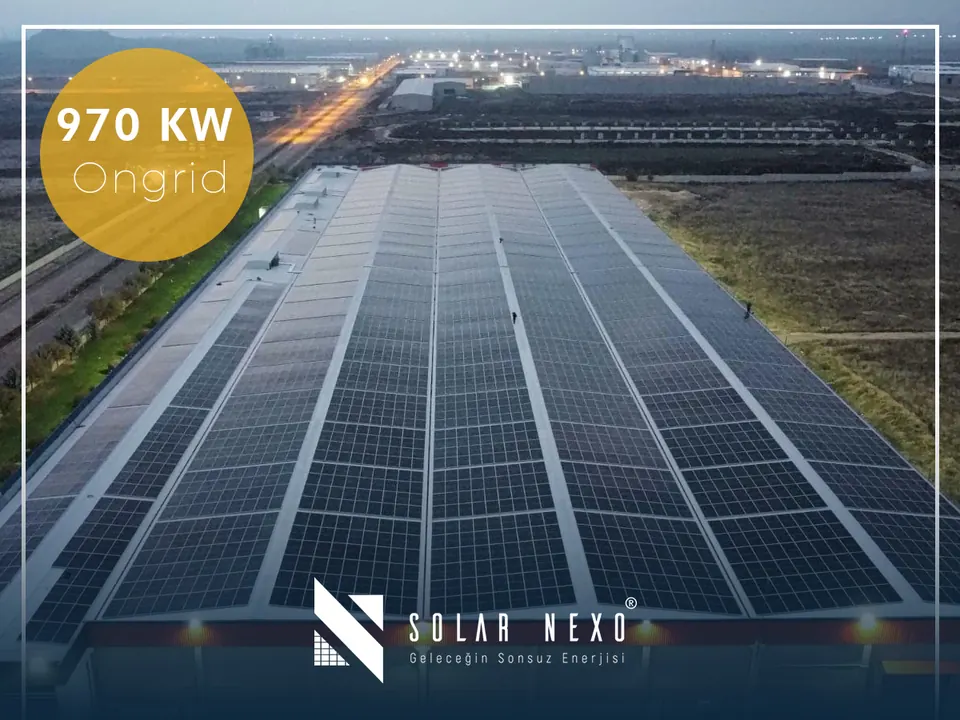
Factories with trapezoidal roofs in Antalya OSB (organised industrial zone) and Aksu are a good example. We covered this in our article on factory rooftop solar in Antalya OSB and Aksu. Among the references on Solar Nexo's website are a 970 kW factory roof, a 1.3 MW industrial roof and a 4.5 MW large-scale industrial roof.
Ground-mounted solar: when does it make more sense?
Ground-mounted solar comes into play when roof area is insufficient or consumption is large. It has these advantages:
- A design of the desired power at optimum tilt can be made without roof constraints.
- There is no roof structural problem. Instead a soil survey is needed.
- Cleaning and maintenance are done from ground level.
- Future expansion is easier, if land is sufficient.
- Bifacial panels can provide extra gain on the rear surface from light reflected from the ground. For details, see our article on bifacial solar panels.
Its disadvantages are finding and preparing land, fencing and security, additional cabling and connection line, transformer capacity and permit processes. If the consumption facility and the land are at different metering points, production and consumption must be associated with the same subscription. For net metering, the production and consumption facilities must belong to the same tax identification number.
The 680 kW ground-mounted plant on the site has a similar structure.
Antalya context: land or roof?
In Antalya the rooftop versus ground-mounted preference is mostly shaped by area and the location of consumption. In Antalya, roof area is most often found in industrial zones, OSBs, commercial buildings and villa roofs. Ground-mounted solar is usually considered in rural areas, around Korkuteli, Elmalı or Serik. In areas that are farmed or have greenhouses, the balance between panel area and agricultural activity must be struck carefully. The classification and intended use of the land are the most critical part of the permit process.
Hail and tornado events are also recorded on the west coast; in January 2019 about 1,000 dönüm (decares) of greenhouses were damaged. Such events should be taken into account in the structure and insurance planning of systems on open land. The wind and snow load resistance in panel datasheets (2400 Pa and 5400 Pa) and the soil survey are the basis of design. We give no numerical hail risk value, because a provincial hail-frequency statistic from MGM (the Turkish State Meteorological Service) has not been verified.
Checklist for the rooftop vs ground-mounted decision
You can make the rooftop versus ground-mounted choice systematic with the questions below. The answer to each depends on your consumption and the space you have.
- Where is consumption? If consumption is in the building and the roof is sufficient, the roof; if consumption is far away or very large, land is considered.
- Is there a sufficient and suitable roof? Load-bearing capacity should be assessed by a civil engineer, and the distribution company and municipality may ask for a structural suitability certificate.
- Are land ownership and classification clear? Confirm zoning and permit status with the competent authorities.
- Where are the grid connection point and transformer capacity? Connection distance affects cost and process.
- Do the target power and contract power match? Capacity limits depend on contract power.
- What is the operating plan of the investment? Cleaning, security, monitoring and insurance should be planned.
If you are planning a commercial investment, the feasibility steps in our article on rooftop solar investment for businesses will also be useful. You can review Solar Nexo's completed projects on our references page.
Conclusion
In brief, the difference between rooftop and ground-mounted solar: a roof uses an existing structure and brings less land and permit burden, while ground-mounted gives flexibility and scale but adds land, connection and permit costs. For Antalya businesses with roof space, the roof is usually the first option. If there is large consumption and enough land, ground-mounted solar is considered. For the right decision, consumption data, the roof or land situation and regulation should be examined together. You can request a free survey.
Frequently asked questions
What is the basic difference between rooftop and ground-mounted solar?
Rooftop solar is installed on the roof of an existing building and generally feeds that building's consumption; ground-mounted solar is installed on open land with a ground structure and is mostly larger. Ground-mounted solar adds land, connection line and permit costs. Rooftop solar is subject to constraints such as roof structure and shading. Details for each project are firmed up at the survey.
Is rooftop solar cheaper than ground-mounted solar?
It would not be right to give a fixed answer, because cost varies by project. Rooftop solar has no land, fence or additional connection items; this is often an advantage. Ground-mounted solar brings ground preparation and connection cost but offers the chance of optimum tilt. Compare line by line in written quotes. The decision should therefore be made on the consumption profile and site conditions.
What permits are needed to build a ground-mounted plant?
The licence-exempt generation application is made to the distribution company; in Antalya the LUS platform of AEDAŞ (the regional electricity distribution company) is used. In addition, the zoning status and classification of the land and the permits of the relevant institutions must be assessed separately according to the project. There is no verified general list on this; you need to get current confirmation from the competent authorities. Because regulations change often, confirm current application conditions before applying.
Can a ground-mounted plant be far from the consumption facility?
Yes. Under the licence-exempt generation regulation, the installation may be at the same or a different metering point from the consumption facility. However, for net metering the production and consumption facilities must belong to the same tax identification number. Matters such as an additional connection line and transformer capacity affect the project's cost and duration. The connection point and distance directly affect cost and timetable.
Up to what power can a rooftop plant be installed?
The installable power is limited by contract power; for municipalities, industrial facilities and agricultural irrigation it can go up to twice the contract power. There is a simplified procedure for roof and facade systems up to 25 kW. These rules are valid as of October 2026 and the regulation may change. You need to confirm the current limit with the distribution company.
Is ground-mounted solar more efficient than rooftop solar?
Because tilt and orientation can be chosen freely, ground-mounted solar can in theory approach the optimum. According to PVGIS, the optimum for central Antalya is a 33° tilt facing south. However, shade between rows and area needs apply. A well-designed rooftop system can also reach a similar specific yield; the difference depends on the roof's orientation and tilt. Real production should be calculated together with shading and design details.
Does Solar Nexo have ground-mounted references?
Yes. Solar Nexo's website lists references for a 2.4 MW on-grid ground-mounted plant and a 680 kW on-grid ground-mounted plant. On the rooftop side there are a 970 kW factory roof, a 1.3 MW industrial roof, an 860 kW industrial roof, a 4.5 MW large-scale industrial roof and a 450 kW commercial building roof. You can review the scope and images of the references on the references page.
Sources
- PVGIS - Photovoltaic Geographical Information System (European Commission JRC)
- Amendments to the Regulation on Unlicensed Electricity Generation in the Electricity Market (Official Gazette, 2 April 2026)
- Amendment to the Regulation on Unlicensed Electricity Generation in the Electricity Market (Official Gazette, 11 August 2022)
- Zoning Regulation for Planned Areas (Ministry of Environment, Urbanisation and Climate Change, consolidated text)
- TommaTech TT605-144TN10 TOPCon panel datasheet (Ver.2601.14)
Want a clear calculation for your roof?
The Solar Nexo team carries out a free site survey at your address in Antalya and designs the system that suits your roof, consumption and budget.