Short answer
For foreigners in Antalya, the condition for applying for solar is not nationality but having a consumption facility: the regulation is open to natural and legal persons with a consumption facility. The generation and consumption facilities must belong to the same person, and a title deed, lease or right-of-use document must be submitted. For rental villas, owner consent, subscription status and remote monitoring should be assessed separately.
Key takeaways
- Applications are open to natural and legal persons with a consumption facility; nationality is not part of this definition.
- For net metering, the generation and consumption facilities must belong to the same person (the same tax ID number).
- For a detached building, a title deed, lease or right-of-use document; for apartment buildings and housing complexes, a notarised copy of the minutes book decision.
- In Antalya, applications have been made through AEDAŞ's LUS platform since 1 October 2023.
- Which ID document a foreign applicant may use, and matters of payment and tax abroad, could not be verified from the official text; an expert should be consulted.
For foreigners, the most practical question about solar energy in Antalya is this: can a foreign resident with a title deed or lease in Turkey install a solar energy system on their villa or flat? The short answer: yes, the regulation opens applications to "natural and legal persons with a consumption facility"; nationality is not part of this definition. What really decides is in whose name the electricity subscription is, the ownership status of the building and the right of use over the roof.
This article was prepared for foreigners who live in Antalya or own a summer or winter villa: subscription and title deed matters, rental villa situations, the application process, following the system while you are abroad and frequently asked questions. For legal and tax matters, we recommend getting support from a qualified lawyer or financial adviser.
Who can apply? Title deed, subscription and right of use
Under the unlicensed electricity generation regulation, you need to have a consumption facility in order to apply. Generation is linked to the person's own consumption. For net metering, the generation and consumption facilities must belong to the same person (the same tax ID number for legal entities). In practice this means: the solar system is tied to the consumption of the person in whose name the electricity subscription is.
The application documents (under the simple procedure up to 25 kW) include the following:
- The application form and a photocopy of ID (an authorisation document for legal entities).
- For a detached building, a title deed, lease or a document showing the right of use.
- The unique code for the existing consumption facility; a construction permit for a new building.
- A statement on the activity ban.
- In apartment buildings and housing complexes, a notarised copy of the "solar may be installed" decision in the minutes book.
We could not verify from the official text which ID document foreign-national applicants may apply with; so we recommend asking AEDAŞ (the local electricity distribution company) before applying, or asking the installation company to confirm this in writing. This list is a summary; confirm the current document list from the document list AEDAŞ publishes.
Rental villas and the tenant's position
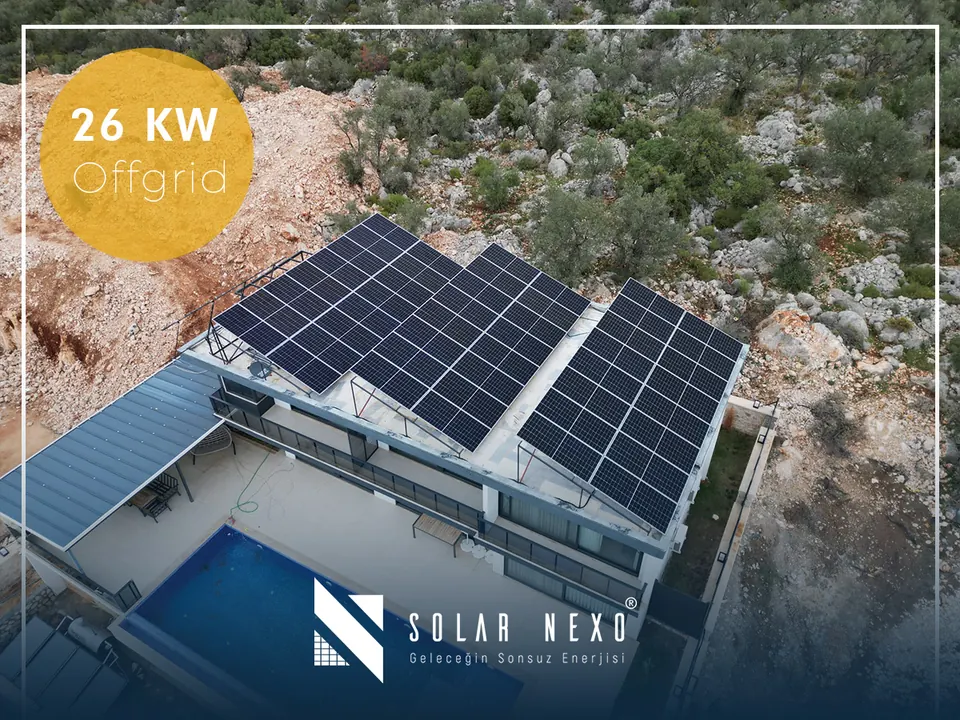
In Antalya, many foreign property owners rent out their villas seasonally or long term. In this case there are two parties: the property owner and the tenant. A solar system is a permanent investment in the roof and the building; for this reason the property owner's approval is needed. If the tenant is the owner of the electricity subscription, the net metering rules work according to the subscription.
| Situation | Point to watch |
|---|---|
| Villa owner is also the subscriber | Application and net metering are easy; the property owner is a single party. |
| Tenant is the subscriber, property owner is the investor | The subscriber and the generation facility must belong to the same person; a lease and written consent are needed. |
| Frequent subscriber changes during the rental period | Subscription transfers affect the application and netting; the distribution company should be consulted. |
| Villa standing empty | If consumption is low, surplus grows; system size should be chosen accordingly. |
On the subject of a tenant installing a solar system, you can also look at our article on whether tenants can install solar panels. Because a new application for the associated consumption facility is restricted if the generation facility is transferred (November 2025 amendment; inheritance and bankruptcy excepted), also think about your plans to sell the villa.
System type for a villa: on-grid or hybrid?
In villas in Antalya, pool pump and air-conditioning loads rise in summer. According to PVGIS 5.3, annual specific production in central Antalya is 1,656 kWh/kWp and July production is 168 kWh/kWp; summer consumption and production increase in the same direction. A grid-connected (on-grid) system is the simplest option; however, if there are loads that need to run during an outage, a hybrid system and battery are considered.
The Manavgat, Belek and Döşemealtı installations Solar Nexo shared on Instagram (for example, in Belek 24 panels of 605 W, a 20 kW hybrid inverter and 15 kWh LiFePO4) are a reference for villas. This information is an example; no inference should be drawn about which customers are or are not foreign. Remember that no payment is made for energy fed from the battery to the grid. For the whole of villa design, see our article on villa solar energy system design.
Homes in housing complexes and apartment buildings
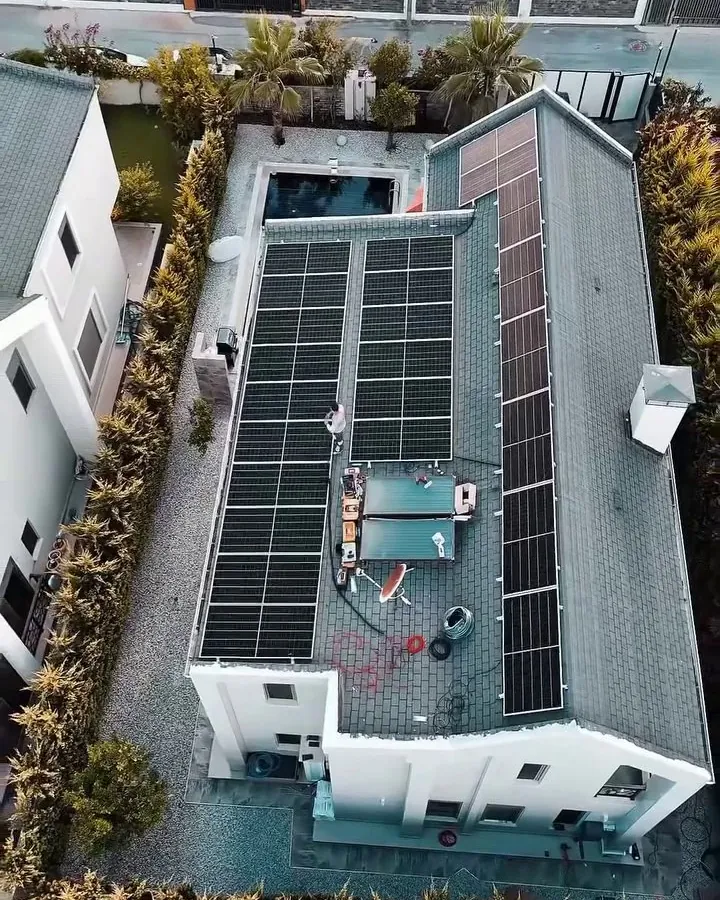
A significant share of foreign property owners in Antalya live in villas inside complexes or in apartment flats. In these buildings the roof is often common property. Consent of the owners is required under the Condominium Law; the application documents also ask for a notarised copy of the solar decision in the minutes book. We could not verify from an official text what majority the decision must be taken by, so we give no ratio; the complex management and a legal adviser should guide you on this.
In planned areas, under the Zoning Regulation, solar systems built for the building's own needs, provided they do not affect the load-bearing system and the owners' consent is obtained, are not subject to a building permit; even so, there are conditions such as obtaining permission from the authority, preparing an implementation project and an engineering responsibility undertaking. So it would be wrong to say "no permission is needed". For details on the shared roof, take a look at our article on solar on an apartment roof and the owners' board decision.
An example calculation for summer-house use
Let us think of a villa owner who spends about 5 months of the year in Antalya. Hypothetically, let annual consumption be 4,000 kWh and a 5 kWp system be installed. With the central Antalya PVGIS value, this system produces about 8,280 kWh a year (5 × 1,656). That is, production is a little under twice consumption.
- In the summer season (for example, May-September) the villa is occupied; the pool and air conditioning run and consumption is high.
- In the winter months the villa is empty or low-consumption; production continues but consumption is low.
- For a residential subscription, netting is monthly; surplus is treated under the official procedure.
In this example, because the system size was not chosen according to annual consumption, surplus can arise; only the single-rate active energy unit price of the relevant tariff is paid for surplus. For this reason, in summer-house use, a size that suits real consumption and is not exaggerated generally gives a more balanced investment. This is an engineering interpretation; for the exact size, at least 12 months of bills should be examined. For the size calculation, you can look at our article on how many kW of solar panels you need and at our calculator.
Monitoring the system while you are abroad
Many foreign property owners spend part of the year outside Turkey. In that case remote monitoring is important: with mobile monitoring you can follow production, battery status and possible faults. Solar Nexo counts mobile monitoring and 24/7 technical support among its services on its website. Ask these questions when choosing a system:
- In what language is the monitoring app offered, and how do notifications arrive?
- When a fault occurs, how is intervention handled while you are not at the villa?
- How are maintenance visits planned, and how are keys and access arrangements managed?
- What is the language of the quote and contract; is a translation provided?
We recommend asking in writing before the survey about the language of communication and the language of documents; Solar Nexo's contact details are on the site. You may also want to see in a hands-on way at the survey which data are monitored and how alarms are delivered.
Selling electricity, tax and money transfer
Under the regulation, unlicensed generators produce to meet their own needs; surplus cannot be sold by bilateral agreement. Surplus is valued at the single-rate active energy unit price of the relevant tariff, and this is lower than the total unit price on the bill. For a residential subscription, netting is monthly and the paid-generation limit does not apply. This information is as of October 2026 and may change. We could not find an official source on how payment is made to an account abroad, the tax consequences and foreign-exchange transactions; consult a financial adviser or lawyer for these. On VAT for solar equipment, although the general rate of 20% may apply, confirmation from a financial adviser is needed for a definitive position.
A step-by-step roadmap
- Ownership and subscription check: Clarify the title deed, the subscription holder and the right to use the roof.
- Free site survey: The roof, shading, consumption and outage needs are assessed.
- Project and documents: Documents are prepared; if in an apartment building or complex, a minutes book decision is taken.
- Application: In Antalya, the application is made through AEDAŞ's LUS platform.
- Installation, acceptance and commissioning: Do not switch on the system before acceptance; otherwise the connection is cut.
For the details of the application steps, see our rooftop solar application article, and for a survey request our contact page.
Conclusion
Foreigners living in Antalya can install a solar energy system as long as they have a consumption facility; what decides is not nationality but subscription, ownership and right of use. A rental villa, periods when it stands empty and time spent abroad affect the design. Keep your documents ready, ask in writing about monitoring and support terms, and get an expert opinion on tax and legal matters.
Frequently asked questions
Can a foreign national install a solar energy system in Antalya?
Yes, the regulation opens applications to natural and legal persons with a consumption facility; nationality is not a condition. Even so, matters such as the electricity subscription, a title deed or right-of-use document and the distribution company's practice on ID documents are important. We recommend getting written confirmation from AEDAŞ or the installation company before applying. Also ask whether the installation company prepares the documents on your behalf.
Whose permission is needed to install solar panels on a rental villa?
Because a permanent investment is being made on the roof, the property owner's approval is needed. If the subscription is in the tenant's name and the generation facility belongs to someone else, the net metering conditions may not be met, because the generation and consumption facilities must belong to the same person. The lease, written consent and subscription status should be clarified before applying. The contracts should clearly state who owns the system and what happens at the end of the contract.
What documents are needed for the application?
Under the simple procedure up to 25 kW, an application form, a photocopy of ID, a title deed or a lease or right-of-use document, the unique code for the existing facility (a construction permit for a new building) and a statement on the activity ban are requested. In apartment buildings and housing complexes, a notarised copy of the solar decision in the minutes book is also needed. Confirm the current list with AEDAŞ. If necessary, ask the company in advance about document translation or interpreter support.
Can I monitor my solar system while I am abroad?
With mobile monitoring systems, production, battery status and faults can be followed remotely. Solar Nexo states mobile monitoring and 24/7 technical support among its services. When choosing, ask in writing about the app's language, the fault response plan and how maintenance visits will be handled while you are not at the villa. A written maintenance and support plan makes remote management easier.
Does a solar system make sense if the villa stands empty?
If the villa stands empty out of season, consumption falls and surplus grows; this affects the efficiency of the investment. For a residential subscription, netting is monthly and there is no paid-generation limit, but only the active energy unit price is paid for surplus. System size should be chosen on annual consumption. With an examination of at least 12 months of bills, the size can be chosen more accurately.
Will surplus electricity be paid into my account abroad?
We could not find an official source on the payment method and transfer to an account abroad. The responsible supply company pays for surplus energy, and how the money reaches the user could not be clearly drawn from the official text. Consult the distribution company, the supplier and a financial adviser on this. Because payment and tax matters vary by person, getting professional advice is the safest route.
Does Solar Nexo work with foreign customers?
Solar Nexo is an Antalya-based company and offers a free site survey. We do not share verified information on the number of foreign customers or on language support; so we recommend asking in writing, by telephone or e-mail, about the language of communication and of the quote and contract before the survey. For a survey, you can reach us through the telephone and e-mail details on our contact page.
Sources
Want a clear calculation for your roof?
The Solar Nexo team carries out a free site survey at your address in Antalya and designs the system that suits your roof, consumption and budget.