Short answer
A villa solar energy system is designed starting from a load analysis: air conditioning, the pool pump and night-time consumption set the inverter and battery size. In Antalya, panel capacity is estimated by dividing annual consumption by 1,656 kWh/kWp (PVGIS). The shared Manavgat, Belek and Döşemealtı villas are hybrid systems of 12.1 to 21.78 kWp with 15-30 kWh LiFePO4 batteries.
Key takeaways
- Rough panel capacity estimate: annual consumption (kWh) ÷ 1,656 kWh/kWp (PVGIS, Antalya city centre).
- Shared villa installations: Manavgat 12.1 kWp, Belek 14.52 kWp, Döşemealtı 21.78 kWp (605 W TommaTech panels).
- Battery size is chosen for night load and the critical loads that must keep running during an outage.
- No payment is made for energy fed from the battery to the grid (Official Gazette, 02.04.2026).
- In 2026 the SKTT limit for residential use is 4,000 kWh a year.
Designing a villa solar energy system depends on the load profile far more than on roof area: how do consumption items such as air conditioning, the pool pump, the kitchen and the laundry room spread over the day, which loads must keep running during an outage, and is a battery needed? In Antalya, villas have a different consumption pattern from ordinary homes because of the long summer season, the pool and the air-conditioning load. In this article we explain the design steps together with the technical data of the Manavgat, Belek and Döşemealtı installations shared on Instagram (@solarnexotr).
Start villa solar energy design with a load analysis
The first step is the last 12 months of bills and a device list. The items that determine consumption in villas are usually these: air conditioning (especially June to September), the pool circulation pump and pool heating if any, hot water, kitchen appliances and the washing machine and dishwasher, garden irrigation and lighting. In summer, because air conditioning and the pool pump run during the day, they overlap well with solar production; evening and night consumption is covered by a battery or the grid.
Dividing annual consumption by the 1,656 kWh/kWp that PVGIS gives for Antalya city centre gives you a starting capacity; for Manavgat this value is 1,649 kWh/kWp. For example, a villa consuming 20,000 kWh a year needs about 12 kWp, which is roughly 20 panels of 605 W. This is a first estimate; a site survey sharpens the figure by taking roof pitch, orientation and shading into account. To try the calculation yourself, you can use the calculation tool on our site.
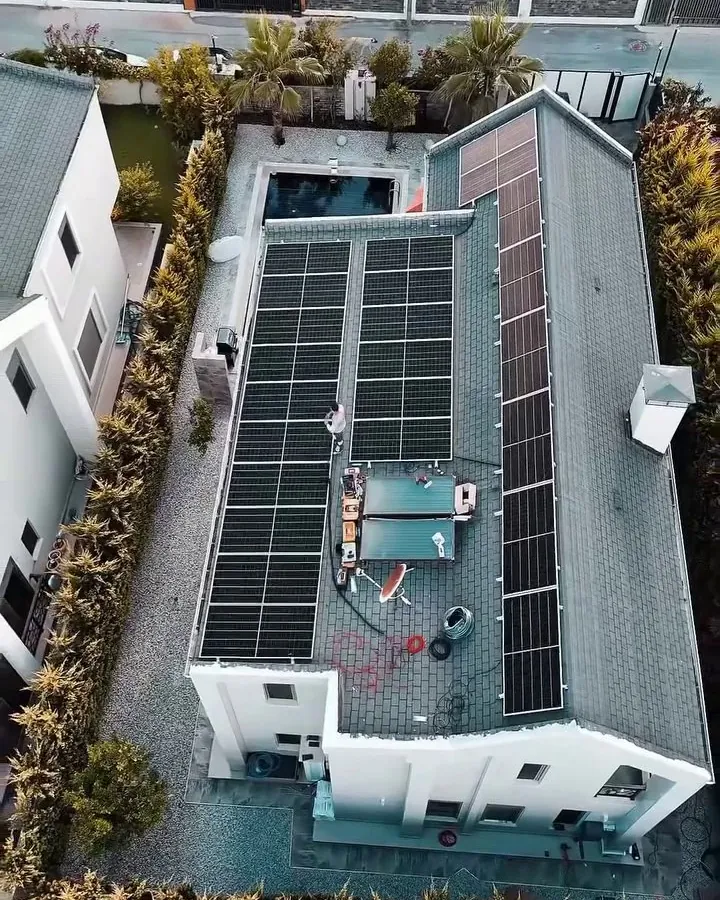
Real villa installations: Manavgat, Belek, Döşemealtı
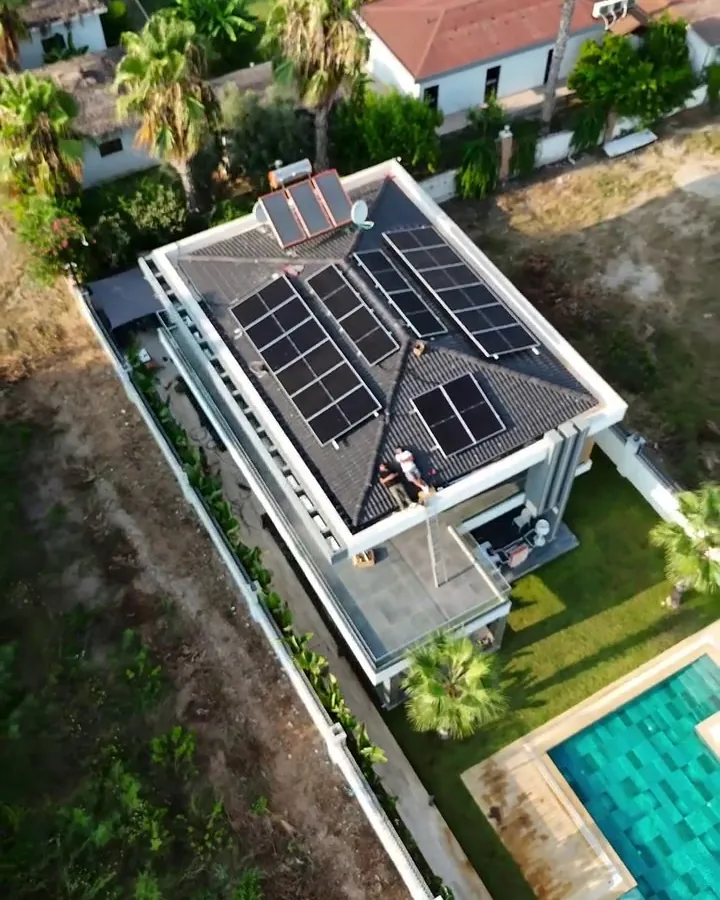
The three hybrid villa installations Solar Nexo shared on its Instagram account show how different load and battery choices play out on the same roof area. The "PVGIS estimate" column below is a theoretical value found assuming optimum tilt and a south orientation; actual production differs with roof orientation, tilt and shading.
| Location | Panels | DC capacity | Hybrid inverter | Battery | PVGIS estimate (theoretical) |
|---|---|---|---|---|---|
| Manavgat | 20 × 605 W | 12.1 kWp | 15 kW | 15 kWh LiFePO4 | about 19,950 kWh/year |
| Belek | 24 × 605 W | 14.52 kWp | 20 kW | 15 kWh LiFePO4 | about 24,050 kWh/year |
| Döşemealtı | 36 × 605 W | 21.78 kWp | 20 kW | 30 kWh LiFePO4 | about 36,070 kWh/year |
The detail that stands out in the table is that inverter power does not match panel capacity one to one. In a hybrid system the inverter is chosen for the highest load that can run at the same time and the backup-output requirement, while panel capacity is set by the annual energy target. In Manavgat the panel capacity stays below the inverter rating, while in Döşemealtı it is slightly above. To look at the regions in detail you can read our Manavgat and Side article, our Belek and Serik article and our Döşemealtı hybrid system article.
Roof layout, orientation and tilt
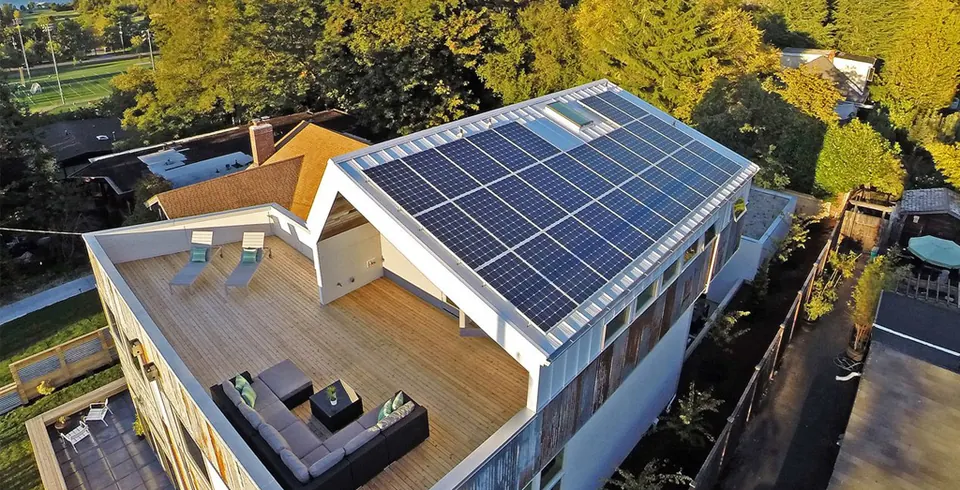
PVGIS gives the optimum tilt for Antalya as 33 degrees facing south. On most villas the roof pitch and orientation are fixed; in that case the panels are laid parallel to the roof surface. A south-facing surface gives the highest annual production; on east and west surfaces annual production drops somewhat, but output is spread more evenly through the day. Splitting the array across two roof surfaces on a villa can raise self-consumption, especially in homes with high morning and evening consumption.
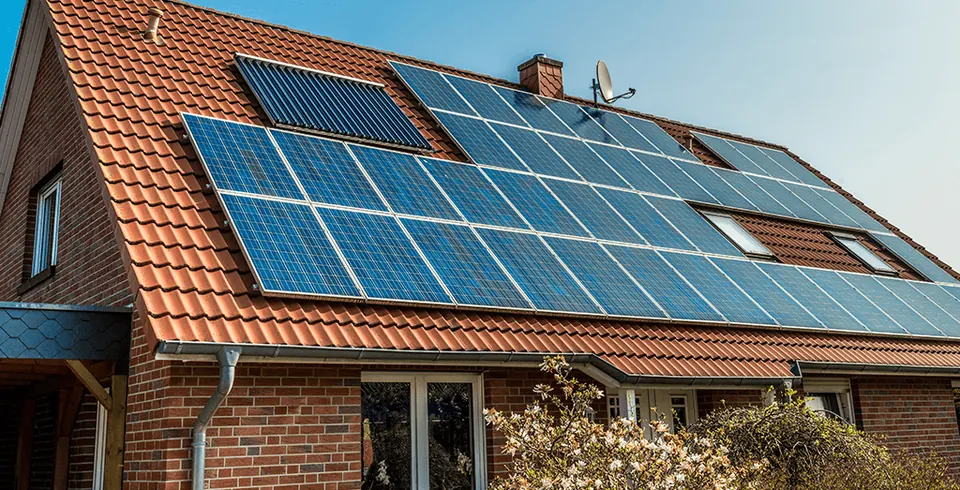
Shading is the most often overlooked problem in design. Chimneys, skylights, solar water heaters and attic tanks, tall trees nearby and neighbouring buildings all cast shadows on the roof. Partial shading of one panel can reduce the output of the whole array; for this reason string design and, where needed, optimizer solutions are considered. We detail the effect of tilt and orientation in our panel tilt and orientation guide.
Hybrid or on-grid? The battery decision
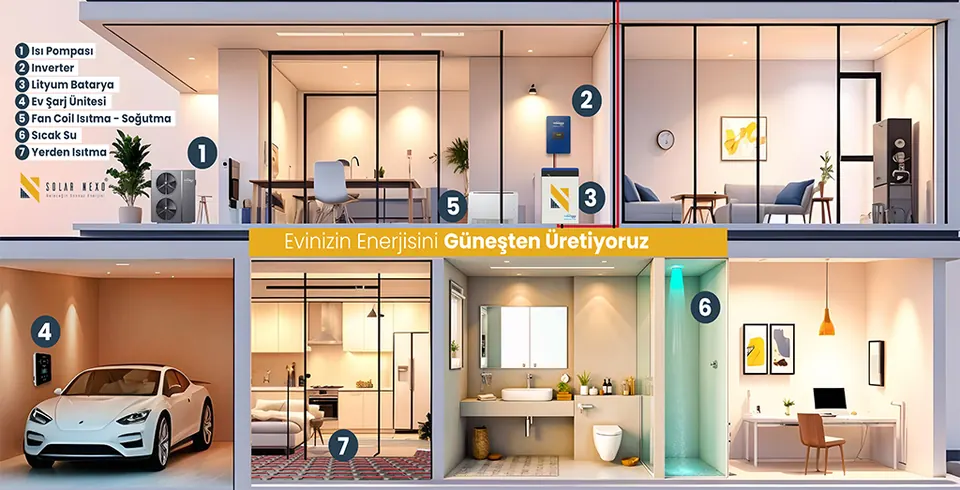
There are three basic options for a villa: a grid-connected (on-grid) system, a hybrid system with a battery, and an off-grid system. For a villa with high daytime consumption and no outage problems, an on-grid system is the simplest solution. If you want air conditioning, the refrigerator, the pump and lighting to keep running during an outage, you need a hybrid system; for hybrid architecture you can look at our hybrid solar energy system article.
When sizing the battery, calculate your night-time consumption. Under the regulation, integrated storage may be installed up to the electrical capacity of the generation plant; no payment is made for energy fed from the battery to the grid. In other words, the battery makes sense not for "selling" but for covering your own evening and night consumption and being ready for an outage. There is also a requirement that the main equipment (panel, inverter, battery) has been manufactured within the last five years.
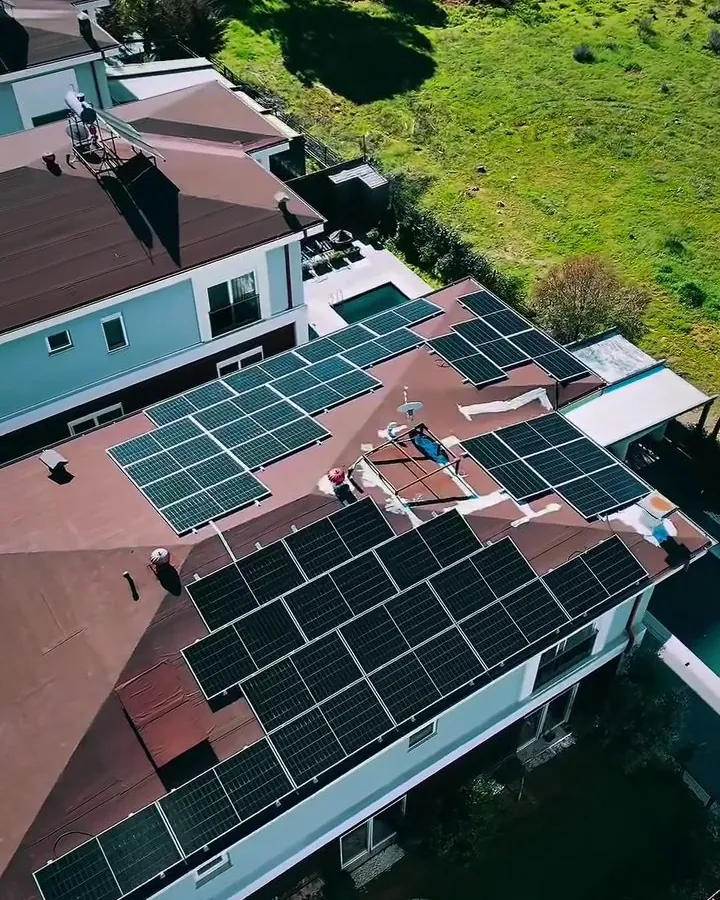
Pool, air-conditioning and hot water loads
In a villa the pool pump usually runs a few hours a day; moving its schedule to midday increases the match with solar production. Pool heating and air conditioning are high-power loads and strain inverter capacity. Electric hot water solutions add load to the solar system; these loads can be scheduled to run in the daytime. For calculations specific to the pool side you can read our pool pump and solar energy article.
In high-consumption villas, the thresholds of the Last Resort Supply Tariff (SKTT) may also come into play. In 2026 a limit of 4,000 kWh a year applies for residential use and 15,000 kWh for other groups. Tariff calculation is complex; talk to your supplier for current terms.
Economics and self-consumption in villa solar energy
The return on a villa solar energy investment depends on the self-consumption rate. For residential use, the cost avoided through self-consumption is the unit price that includes all components on the bill; surplus is paid only at the tariff's single-time active energy unit price (as an interpretation: the higher the self-consumption, the shorter the payback). EPDK (Turkey's Energy Market Regulatory Authority) raised the residential tariff by 25% from 4 April 2026; because tariffs can change, always run the calculation with the current table.
We do not make a firm promise of "your bill will fall by this much", because savings vary with your consumption habits, roof yield and tariffs. You can track the production of your villa solar energy system daily with mobile monitoring and raise self-consumption by updating the air-conditioning and pool schedule according to that data. On the equipment side, the datasheet for TommaTech's 605 W TOPCon panel states 23.42% efficiency, a −0.30 %/°C temperature coefficient and a 30-year performance warranty (99% in year 1, 87.4% in year 30); in the hot Antalya summer, a low temperature coefficient helps preserve production.
Aesthetic installation and environmental conditions
Visual harmony matters in villa projects too. Panels are laid parallel to the roof surface with a low-profile mount; cables are concealed; the inverter and battery are placed in a well-ventilated technical room or on a shaded wall surface. The symmetry of the array with the roof edges allows a layout that does not disturb the villa's architecture.
In coastal Belek, Kemer and Konyaaltı villas, salty air raises the corrosion risk; the structure material, fasteners and cable connectors should be chosen accordingly. According to the panel datasheet, the panel must be mounted on a fire-resistant surface with enough ventilation left behind it. On plastic or non-fire-resistant roofs, installation must not be done without a protective layer, and the fire resistance of wooden roofs must be checked separately; installation contrary to the manual may end the warranty.
Permits and application process
If the villa is on a residential subscription, no residential generation or sales limit applies; the capacity limit is set by the contracted capacity. For rooftop systems up to 25 kW, the simplified procedure applies. In Antalya the application is made through AEDAŞ's (the regional distribution company) LUS platform. The connection approval letter (çağrı mektubu), project approval, connection agreement and acceptance steps are each tied to separate time periods; operating the system without acceptance can lead to disconnection and removal.
For a detached villa, documents such as the title deed, a right of use or a lease agreement are requested; for newly built villas a building permit is needed, and for existing buildings the unique building code. If you want to follow the application steps yourself, our service page summarises the process.
Conclusion
A good villa solar energy design comes from considering consumption analysis, roof yield, the inverter-battery balance and environmental conditions together. As the Manavgat, Belek and Döşemealtı examples show, the same technology can be installed at different sizes according to different load and outage expectations. You can request a free site survey for your villa and get a design based on your load list.
Frequently asked questions
How many kW of solar panels does a villa need?
Start by dividing your annual consumption (kWh) by the 1,656 kWh/kWp that PVGIS gives for Antalya city centre. For example, 20,000 kWh a year needs about 12 kWp; with 605 W panels this corresponds to about 20 panels. Roof orientation, tilt, shading, self-consumption rate and battery choice change the result; for this reason the exact size is set at an on-site survey, and this should be treated as a preliminary calculation.
Is a hybrid system or an on-grid system better for a villa?
If you have no outages and your consumption is concentrated in the daytime, an on-grid system is simpler and more economical. If you want air conditioning, the pump and the refrigerator to run during an outage, or your evening consumption is high, a hybrid system with a battery is suitable. The decision is made on outage frequency, night load and budget. A hybrid system is more complex than an on-grid system and contains more equipment, so installation quality and service support also matter.
How many kWh of battery does a villa solar system need?
The battery is chosen for the total energy and simultaneous power of the loads you want to run at night and during outages. The shared villa installations used 15 kWh and 30 kWh LiFePO4 batteries. High-power loads such as air conditioning drain the battery quickly; for this reason a critical load list should be drawn up and the capacity set accordingly.
Can I sell electricity from my villa's battery to the grid?
No. Under the regulation, no payment is made for the part of the surplus remaining after net metering that is fed from the battery to the grid. Integrated storage may be installed up to the electrical capacity of the generation plant; however, its purpose is to cover your own evening consumption and backup needs, not sales. This rule is based on the text dated 02.04.2026. For the current rule and exceptions you need to consult the distribution company and the regulation.
How is a solar panel system designed for a villa with a pool?
The pool pump runs a few hours a day; if you move its schedule to midday it overlaps well with solar production. Pool heating and air conditioning are separate heavy loads and affect inverter capacity. In design, pump power, operating hours and other loads must be calculated together. The pool pump calculation is made separately and panel capacity is set according to operating hours.
What permits are required to install solar panels on a villa?
For a grid-connected system, an unlicensed generation application is made to AEDAŞ; the connection approval letter (çağrı mektubu), project approval, connection agreement and acceptance steps are followed. For a detached villa, documents such as the title deed or right-of-use document, ID and the unique building code are requested. In planned areas there is an exemption from the building permit, but administrative approval and a project are mandatory.
Does salty air damage solar panels in coastal villas?
Salty air can raise the risk of corrosion in the structure, fasteners and connectors. For this reason corrosion-resistant material, suitable cable and connector selection and regular checks are needed; in coastal villas this check is recommended at least once a year. Although the panels themselves are designed per the manufacturer's datasheet, compliance with the installation manual, regular cleaning and periodic maintenance determine the system's life.
Sources
Want a clear calculation for your roof?
The Solar Nexo team carries out a free site survey at your address in Antalya and designs the system that suits your roof, consumption and budget.