Short answer
Three things decide solar panel installation in Kepez: shading in dense housing, the roof type (tile, flat terrace, trapezoidal sheet) and whether consumption peaks by day or at night. The PVGIS value for central Antalya is 1,656 kWh/kWp per year. Solar Nexo's office in Kepez Barış neighbourhood offers a free site survey for homes, shops and workshops in the area.
Key takeaways
- Kepez falls in the central Antalya PVGIS zone: annual specific production at optimal tilt and south orientation is 1,656 kWh/kWp.
- In dense housing the main risk is shading; obstacles such as neighbouring buildings, water tanks and antennas should be mapped during the survey.
- In workshops and small businesses, daytime consumption is high, so production and load overlap and the self-consumption rate rises.
- For rooftop systems up to 25 kW, the application is made through AEDAŞ's LUS portal and the system cannot exceed the contracted power.
- Solar Nexo's office is at Barış Mah. Barış Manço Blv. No 49/A Kepez/Antalya.
Three things decide a solar panel investment in Kepez: shading of the roof, the roof type and how consumption is distributed through the day. Among Antalya's central districts, Kepez combines dense housing, detached houses, small businesses and workshops, and therefore different roof types. This guide gives homeowners and business owners who want solar panels in Kepez a practical framework from survey to application. Solar Nexo's office is also in Kepez; knowing the area closely makes surveys and service easier.
Production potential for solar panels in Kepez
In PVGIS calculations, Kepez falls in the same assessment area as central Antalya. According to PVGIS 5.3, annual specific production in central Antalya at optimal tilt (33°) and south orientation is 1,656 kWh/kWp. This is a theoretical value that includes 14 percent system losses. For example, for a 5 kWp system theoretical annual production is about 8,280 kWh (5 × 1,656, calculation).
The monthly distribution peaks in summer: 168 kWh/kWp in July and 99 in December. In Kepez, because air-conditioning, cooler, fan and pump loads rise in summer, this distribution coincides with consumption. You can see the variation through the year in the chart.
According to MGM data (the Turkish State Meteorological Service), the average July maximum temperature in Antalya is 34.2 °C. Because temperature reduces panel efficiency, the panel's temperature coefficient and the ventilation gap behind it matter. We covered the effect of temperature separately in our article on the climate.
Roof types and mounting options in Kepez
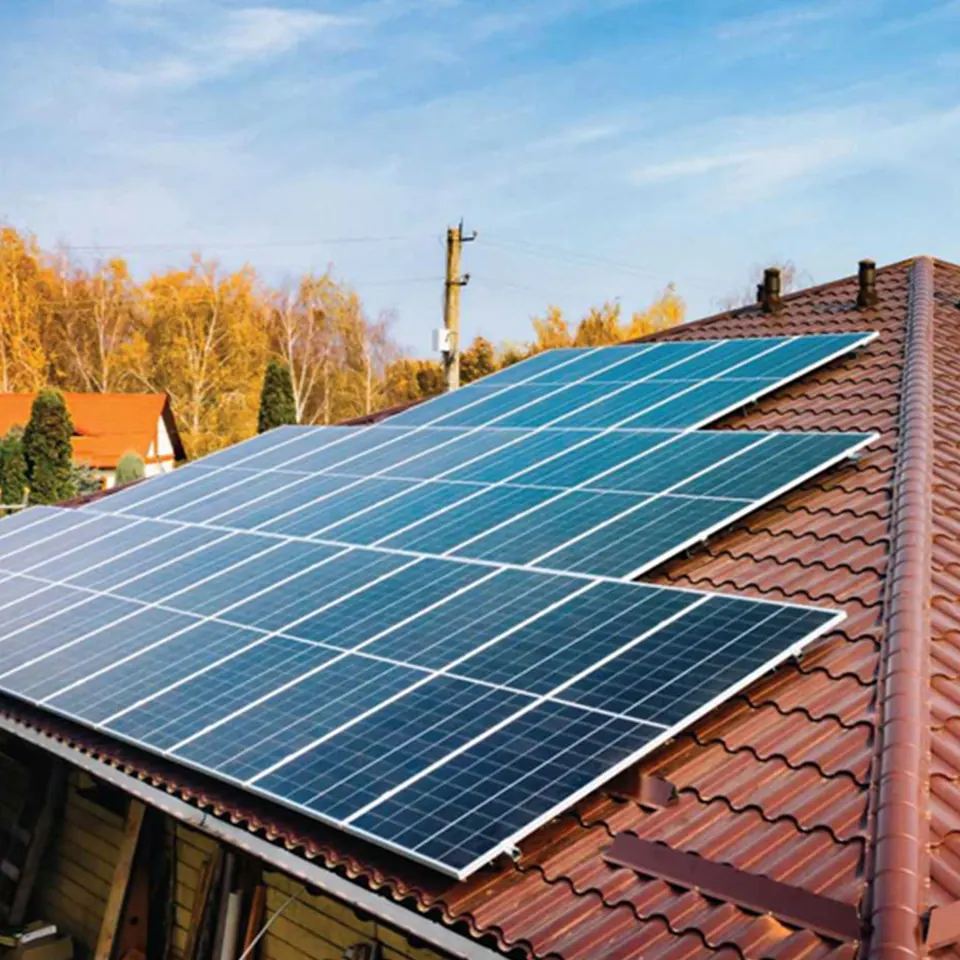
The roofs found in Kepez fall broadly into three groups, and each needs a different mounting method:
| Roof type | Typical use | Mounting approach | Point to watch |
|---|---|---|---|
| Tiled roof | Detached house, house with garden | Hooks under the tiles and aluminium rails | Broken tiles, waterproofing, pitch direction |
| Flat reinforced-concrete terrace | Apartment building, shop | Tilted frame, ballast or anchoring | Shading gap between rows, waterproofing |
| Trapezoidal sheet roof | Workshop, warehouse, small industry | Clamps fixed directly onto the sheet | Sheet thickness, purlin spacing, corrosion |
Whichever type it is, the roof's load-bearing capacity is the critical issue. The regulation sets no clear power threshold above which a structural report is mandatory; however, the roof's load-bearing capacity needs to be assessed by a civil engineer, and the distribution company and the municipality may request a structural suitability document. For example, a 605 W panel weighs about 29 kg; as the number of panels grows, so do the total load and the wind effect. For the mounting details of the roof types, you can look at our mounting systems article.
Shading in dense housing: what is checked at the survey?
The most common problem in dense housing is shading. Neighbouring buildings, water tanks, solar water heaters, antennas, chimneys and trees can cast shade on panels during the day. In a string where panels are connected in series, the shading of a single panel can limit the current of the whole string. For this reason, at the survey a shading analysis is made for morning, noon and afternoon hours, the panel layout is kept away from shaded areas, and if necessary strings are split across separate MPPT inputs.
On roofs where shade is unavoidable, a microinverter or power optimiser can be considered; however, these solutions have different consequences for cost and maintenance. We compared the options in our article on shading; it is enough to note that string inverters are simpler and more economical, while microinverters are more flexible on shaded roofs. Where possible, placing the panels in an area that is unshaded during the most productive hours of the day is a cheaper solution than adding equipment.
Roof area in Kepez is often limited; in that case panel efficiency comes to the fore. For example, the 605 W TommaTech TT605-144TN10 model has a datasheet efficiency of 23.42 percent and measures 2,278 × 1,134 mm. One panel takes up about 2.58 m²; about 15 panels fit on 40 m² of usable roof area (40 / 2.58 ≈ 15.5), which comes to about 9 kWp (15 × 605 W). The real value will change at the survey because of rail lines, maintenance walkways and shading gaps.
High-efficiency n-type TOPCon panels with a low temperature coefficient give an advantage on narrow roofs; however, the datasheet should be examined for each product. For the details of TOPCon versus PERC, you can read the TOPCon panels article.
Consumption profile for detached houses, shops and workshops
Detached house: Consumption is usually concentrated in the morning and evening. If nobody is home during the day, a significant part of production is fed into the grid. For facilities tied to a residential subscription, netting is monthly and, as of October 2026, no production or sales limit applies. The payment for surplus energy is based on the active energy unit price, which is lower than the total unit price on the bill; so it makes sense to keep the capacity for a home limited to realistic consumption.
Shop and workshop: Loads such as compressors, lathes, welding machines, coolers and air conditioners that run during working hours raise daytime consumption. Because production and consumption fall in the same hours, the self-consumption rate is high. For non-residential facilities, production and consumption are netted hourly from 1 May 2026, so for a business with a high daytime load, the system size is set according to this profile. Because workshops may have three-phase loads, inverter selection is made accordingly. In business investments, the feasibility study starts with the self-consumption rate and the load profile.
A hybrid solution can also be considered for businesses affected by outages. Under the regulation, an unlicensed facility owner can install a storage unit up to the electrical power of the generation facility; however, no payment is made for energy fed from the battery to the grid, and the batteries must also have been manufactured within the last five years. In other words, the battery makes sense mainly for backup and for shifting your own consumption.
In dense housing such as Kepez, neighbouring roofs and building heights differ, so even the production of two houses on the same street can diverge. For this reason, instead of deciding by looking at a neighbour's system, we recommend having measurements made for your own roof.
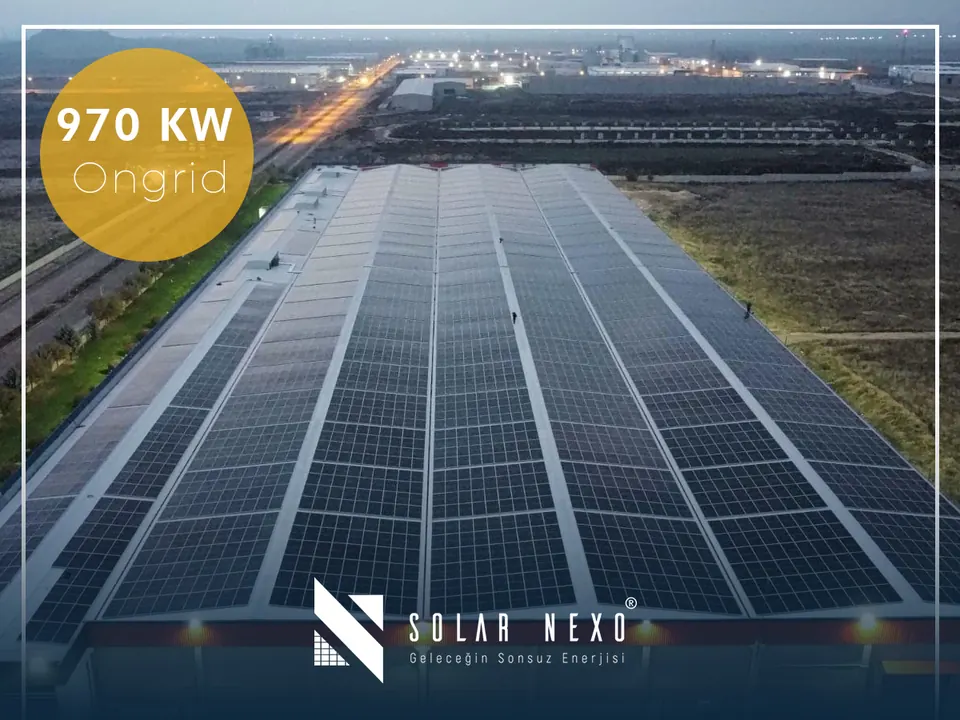
Solar Nexo's reference list includes on-grid projects at different scales, from a 3.3 kW house with a tiled roof to a 450 kW commercial building roof and a 970 kW factory roof. This variety offers experience with different roof and business types; however, every roof needs its own survey.

The application process in Kepez: AEDAŞ and LUS
In Antalya the grid operator is AEDAŞ (the local electricity distribution company), and it has accepted unlicensed generation applications through the LUS platform since 1 October 2023. For rooftop systems up to 25 kW, the system cannot exceed the contracted power of the consumption facility; generation and consumption are connected at the same metering point. Because the total of facilities connected to the same distribution transformer cannot exceed 50 percent of the transformer's capacity, this rule can create a capacity limit in dense housing; when several applications come in for the same transformer, the application with higher consumption over the last year is given priority. You can find the application steps in detail in the rooftop solar application article. After installation, surface cleaning and a connection check at the end of summer is the easiest way to maintain efficiency in the dusty environment of dense housing.
For apartment-building roofs, a decision of the owners' board and a notarised copy of the decision are also required. It is also a condition that main equipment such as panels, inverters and batteries has been manufactured within the last five years; so it is sensible to ask about the equipment's production year in the quote. Mounting should not begin before the application is approved, and the system should not be switched on before acceptance is complete. Because the rules change often, check AEDAŞ's current announcements before applying.
Solar Nexo's Kepez office and the survey process
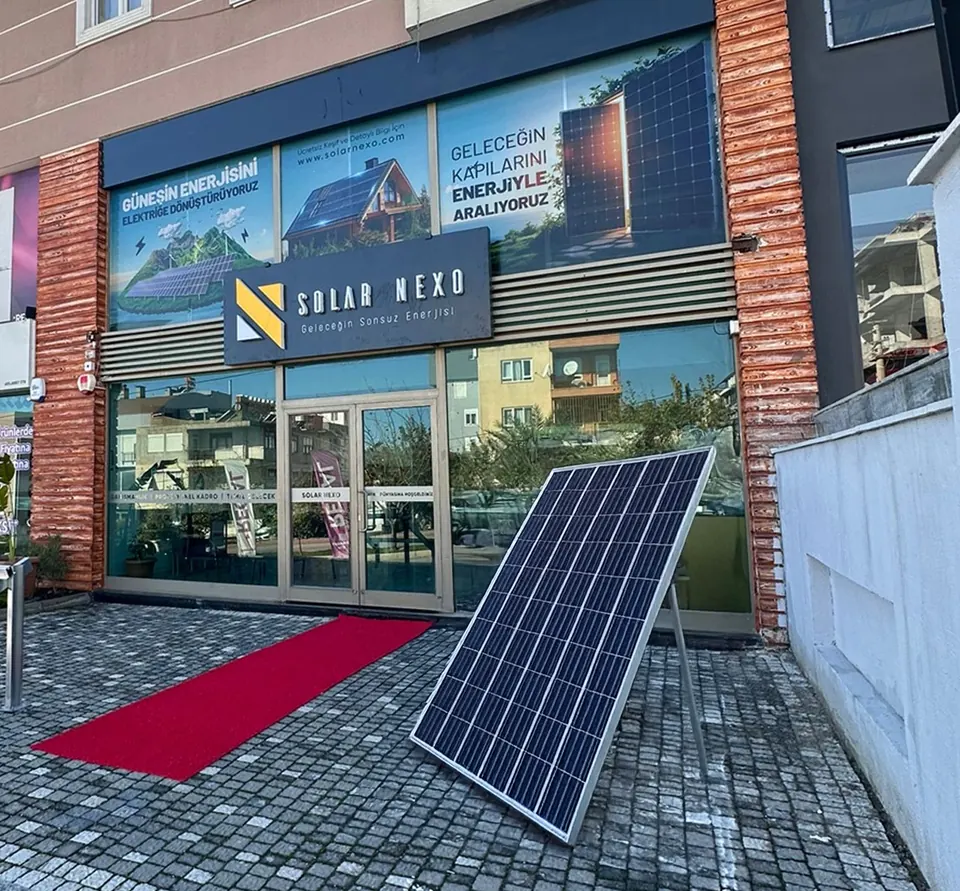
Solar Nexo operates at Barış Mah. Barış Manço Blv. No 49/A Kepez/Antalya; its telephone number is +90 540 007 63 96 and its e-mail address is info@solarnexo.com. The survey is free. The process is described on the site as follows: free site survey, project design, installation and commissioning, maintenance and 24/7 technical support. At the survey the roof is measured, shading and consumption are analysed, and then an itemised written quote is prepared.
Preparing your last 12 months of bills, access to the roof and, if any, your title deed or lease document before the survey speeds up the process. For the scope of the survey, you can look at the free site survey article.
Conclusion
A solar panel investment in Kepez makes sense when it is sized to the daytime consumption profile with the right roof and shading analysis. Every roof is different, and so is the solution for a home, a shop and a workshop. If you would like to request a survey for your roof, you can reach us through our contact page.
Frequently asked questions
How much electricity do solar panels produce per year in Kepez?
In PVGIS, Kepez falls in the same area as central Antalya. According to PVGIS 5.3, 1 kWp at optimal tilt and south orientation produces about 1,656 kWh per year. This is a theoretical value; on a real roof, orientation, shading and soiling change the result. For 5 kWp, theoretical annual production is about 8,280 kWh.
Where do you apply for solar panels in Kepez?
Kepez is in AEDAŞ's service area. The application is made in the property owner's name. Unlicensed generation applications have been made through AEDAŞ's LUS platform since 1 October 2023. Application documents and procedures may be updated under the regulation; we recommend confirming the information valid as of October 2026 on AEDAŞ's unlicensed generation page; if the system does not exceed 25 kW, the simplified procedure applies.
Can solar panels be installed on a workshop or small industrial roof?
Yes, if the roof's load-bearing capacity is suitable. On trapezoidal sheet roofs, panels are mounted directly onto the sheet with clamps, a light system; sheet thickness, purlin spacing and corrosion condition are checked at the survey. Because workshops operate by day, production and consumption overlap and the self-consumption rate rises; if there are three-phase loads, inverter selection is made accordingly.
How much does shade from a neighbouring building reduce solar panel production?
The effect of shade cannot be given as a single figure; it depends on how long the shade lasts, which panels it covers, the panel layout and the string design. In a series-connected string, the shading of a single panel can limit the current of the whole string. At the survey a daily shading analysis is made; if necessary, string separation, a microinverter or an optimiser is considered. Where possible, placing panels in an unshaded area is the cheapest solution.
How many kW of panels are enough for a detached house?
It depends on annual consumption and roof area. For an approximate calculation you can divide annual consumption (kWh) by 1,656; for example, 6,000 kWh gives about 3.6 kWp (calculation). Whether you are home during the day, loads such as air conditioning and a pool, and your self-consumption rate also change the result; a survey is needed for the exact size.
Where is Solar Nexo located in Kepez, and is the survey paid?
Solar Nexo operates at Barış Mah. Barış Manço Blv. No 49/A Kepez/Antalya. The survey is free. You can make an appointment on +90 540 007 63 96 or at info@solarnexo.com. At the survey the roof, shading and consumption are examined, and then a written quote is prepared; the survey creates no obligation to buy.
Sources
Want a clear calculation for your roof?
The Solar Nexo team carries out a free site survey at your address in Antalya and designs the system that suits your roof, consumption and budget.