Short answer
Solar lightning protection is achieved with earthing, equipotential bonding and surge protective devices (SPD) on the DC and AC sides. In Antalya, MGM recorded a peak wind of 43.2 m/s, and hail events are recorded on the western coast. A sturdy mounting structure, test-certified panels and insurance should therefore also be considered. A project engineer should carry out the risk analysis and the system should be checked regularly.
Key takeaways
- The most common way lightning damages a system is the overvoltage that a nearby strike induces in cables.
- Earthing, equipotential bonding and SPDs are a protection chain that works together.
- According to MGM, the fastest wind in Antalya was 43.2 m/s (1998); the panel datasheet wind load is 2400 Pa and snow load 5400 Pa.
- Hail and storm events are recorded around Kumluca, Finike and Demre; no province-level hail frequency statistics could be found.
- SPDs are consumable parts, so the indicator should be checked after a storm.
Solar lightning protection is not simply a matter of adding a lightning rod to a solar energy system; it requires earthing, equipotential bonding and surge protective devices (SPD) to work together. In Antalya, besides lightning, events such as wind, hail and heavy downpours also shape the design of roof and ground-mounted systems. In this article we describe the threats, the measure to take against each and the points to check after installation, in plain language.
Which weather events threaten a solar plant in Antalya?
According to the Turkish State Meteorological Service (MGM) data for 1930-2025, the fastest wind recorded in Antalya is 43.2 m/s (22.01.1998), and the greatest snow depth is 5 cm (07.01.1993). Total annual rainfall is about 1,032 mm, and most of it falls between November and February. Because the province has different microclimates from the coastal strip to the mountain districts, each site needs its own assessment.
On Antalya's western coast, around Kumluca, Finike and Demre, events in which hail, storms and tornadoes damaged greenhouses have been reported in the press; for example, in January 2019 about 1,000 decares of greenhouses were damaged, and in October 2020 there was hail and a storm in Kumluca. Because we could not find MGM's province-level hail frequency statistics, we do not give a numerical "hail risk"; for greenhouse and ground-mounted systems, such events should be deliberately taken into account in the design.
| Threat | Antalya context | Main measure |
|---|---|---|
| Lightning and induced overvoltage | Rainy winter and spring storms | Earthing, equipotential bonding, DC and AC SPD |
| Wind load | Strong gusts on the coast and in open land | Calculated mounting structure, hooks, anchors and ballast |
| Hail | Events recorded on the western coast | Test-certified panels, insurance, tilt and location design |
| Snow | Rare in the city centre, different at altitude | Load class (datasheet 5400 Pa) and local snow load |
How does lightning cause damage?
Lightning damages in two ways. A direct strike is rare but destructive. A far more common effect is the overvoltage (induced voltage) that a nearby strike creates in cables and in the earthing line. Long DC cables act like an antenna; they can cause damage at the inverter input, at the grid connection and on communication lines.
That is why solar lightning protection cannot be left to a single component. In Antalya, this effect is felt more clearly in winter and spring storms, on ground and roof systems with long cable runs. Think of a chain: a path that safely carries lightning energy to earth (lightning rod and earthing), bonding of metal parts to equipotential, and surge protective devices that protect the equipment. Which link of the chain is required is determined by a project engineer according to the building's lightning risk assessment and the relevant standards.
Earthing and equipotential bonding
Panel frames, supporting rails and the metal structure must be conductively connected to each other and to the earthing system. The aim is to prevent a dangerous voltage difference between different metal parts when a stray current or lightning effect occurs. Earth resistance must be measured at installation and regularly afterwards; because soil properties change between the wet and dry seasons, repeating the measurement at least once a year is good practice.
Salty air on the coast can cause corrosion at connection points. That is why it is important to choose galvanised or stainless earthing clamps and to inspect them visually at regular intervals. Cable routes matter too: by laying DC and AC cables as short as possible and close to each other, the "loop area" that induces voltage is reduced. Small decisions such as cable routing and parallel laying determine how much overvoltage damage you face years later. For cabling details, see our article on solar cables and connection components.
What is a surge protective device (SPD) and where is it used?
A surge protective device (SPD) is the device that protects against overvoltage. It normally behaves as if it were out of circuit; in a sudden voltage rise it starts conducting and diverts the excess energy to earth. In a solar plant it is considered at three points: on the DC side at the inverter input, on the AC side at the grid connection panel and, if needed, on the communication or monitoring line.
SPDs are consumable parts. After a few large surges they can lose their ability to protect. Most products have a window or colour indicator; looking at the indicator after the storm season is the most practical way to tell whether replacement is needed. System voltage matters for choosing the right SPD: in the datasheet example (TommaTech TT605-144TN10) the maximum system voltage is 1500 V DC, and the protective device must be chosen to suit this voltage.
Wind load: mounting structure and anchoring
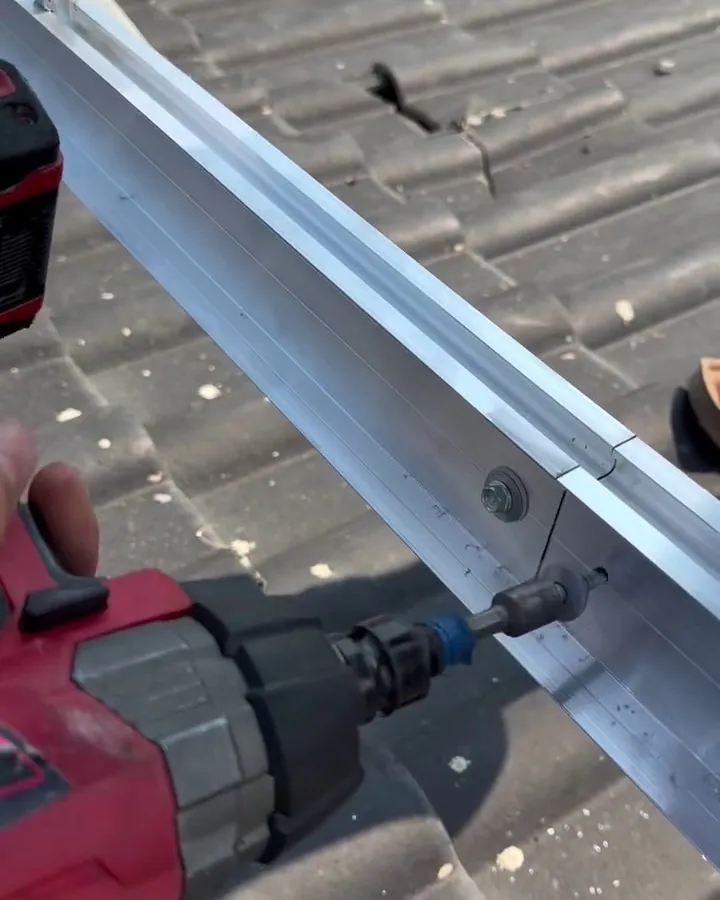
The 2400 Pa wind load stated in panel datasheets is the strength of the panel itself; for the system as a whole, the attachment points to the roof or ground must also be adequate. On a tiled roof, fixing roof hooks to the timber rafter, on trapezoidal sheet using suitable fasteners and on a flat roof the balance of ballast and anchoring are critical. Regional wind speed, building height and surrounding obstacles change the load.
During installation it is essential to follow torque values, to join rails firmly and to position the panel edge and middle clamps according to the manufacturer's guide. Deviating from the guide affects both safety and the warranty. For more on roof systems, you can read our article on solar panel mounting systems.
Hail and panel strength
Before production, panels are subjected to hail tests according to international standards; after this test, in which ice balls of a certain diameter are fired at the panel surface at a certain speed, the panel is expected not to suffer a serious loss in power or insulation. The test covers a certain hail size; hailstones larger than that can break the glass or create cell cracks. Even if there is no visible breakage after hail, there may be a micro-crack.
It is therefore useful, after a heavy hail event, to check the system's output and string currents and, if necessary, to have a thermal camera panel inspection done. In greenhouse and open areas where the hail risk is high, comprehensive solar plant insurance should be considered. Be sure to read the scope and exclusions of the cover in the policy text. Positioning panels and the greenhouse covering so that they do not damage each other is also a separate design topic; for details, see our article on solar energy for greenhouses in Kumluca and Finike.
Post-installation checklist for solar lightning protection
- Check the SPD indicators before and after the storm season.
- Look for looseness, corrosion or breaks in the earthing connections.
- Look for loosening, slipping or deformation at panel edges, clamps and hooks.
- After heavy rain, hail or a storm, examine the production curve and the inverter fault logs.
- If you suspect lightning has struck, ask for a technical check even if the system seems to work normally.
- If you notice burning, melting or discolouration on cables and connectors, safely take the system out of service.
These checks on the roof or in the field must be carried out only by trained personnel with fall protection. Do not go onto the roof when weather conditions are unsuitable.
Questions to ask at the project stage in Antalya
When preparing a solar project, answers to the following questions should be obtained with regard to lightning and storms: Has a lightning risk assessment been made for the building? If there is an existing lightning rod, is the separation distance from the panels maintained? Who will carry out the earthing measurement and when? At which points will DC and AC SPDs be placed? What wind and snow load was assumed for the mounting structure? These answers differ in coastal, plain and mountain districts; the roof type, building height and surroundings seen on site during the survey determine them.
At the survey stage, we at Solar Nexo assess the roof structure, the surroundings and the existing earthing situation together. When choosing panels and mounting structures, we recommend paying attention to panel certificates and asking the company for certification documents that include the product's hail and load tests, so that certified products are chosen.
It is also important to keep these records after installation. The earthing measurement report, SPD model information, a summary of the structural calculation and installation photos make the work easier for both the service team and the insurance assessor if damage occurs later. Make sure you receive these documents and keep a digital copy too.
Conclusion
Solar lightning protection is a system in which earthing, equipotential bonding and SPDs are considered together. A calculated mounting structure for wind, test-certified panels for hail and suitable insurance are complementary measures against Antalya's weather conditions. Regular checks of the indicators and connections after installation catch potential damage before it grows. For your project, you can request a free site survey through our contact page.
Frequently asked questions
What happens if lightning strikes a solar panel?
A direct strike is rare but can seriously damage the panel, the cables and the inverter. The more common case is a nearby strike creating overvoltage in the cables. Earthing and SPDs reduce this effect. After a suspected lightning event, it is right to have a technical check done even if the system appears to work, because damage sometimes shows up not immediately but weeks later.
Is a surge protective device mandatory for a solar plant?
The requirement is determined by the project, the relevant standards and the authority's conditions; it would not be right to give a single rule for every system. From an engineering point of view, however, overvoltage protection on the DC and AC sides is a common and recommended practice. The best thing is to ask your project engineer at which points SPDs are needed, in what class and how they will be maintained.
Do solar panels withstand hail?
Panels pass standard hail tests in production, but the test covers a certain hail size. Larger hailstones can break the glass or create micro-cracks. Hail events are recorded on Antalya's western coast; in these areas, insurance and a check after heavy hail are important. If in doubt, thermal camera and string current measurements can be made, which also catch damage that is not visible.
Can solar panels be damaged by wind in Antalya?
According to MGM, the fastest wind in Antalya was recorded as 43.2 m/s (22.01.1998). The typical wind-load resistance in panel datasheets is 2400 Pa, but what matters most is that the mounting structure and connections are calculated for the regional load. Installation with the right hooks, anchors and torque values reduces the risk markedly; on flat roofs the ballast calculation must also be made separately.
How often should earth resistance be measured?
The first measurement is made at installation, and repeating it at regular intervals afterwards is recommended. Because soil moisture changes with the season, measuring at least once a year is good practice. On the coast, corrosion can occur at connection points because of salty air, so visual inspection should also be done separately. The exact interval is set in the relevant project and operating instruction; in practice, evaluating dry- and wet-season measurements together is useful.
What should I check on my solar plant after a storm?
Look at the SPD indicators, the earthing connections and the panel clamps and hooks. Examine the production curve and inverter fault logs on the monitoring screen. If there is burning, melting or discolouration on a cable or connector, take the system out of service. Go onto the roof only with trained personnel and fall protection, when weather conditions allow; do not take risks yourself.
Does solar plant insurance cover lightning and hail?
Coverage varies from policy to policy. Many policies may cover damage from natural disasters, but excess, limits and exclusions differ. It is therefore necessary to read the policy text and cover list and to confirm in writing with the insurer whether lightning and hail damage is included. Insurance should also be examined separately for whether it covers loss of production.
Sources
Want a clear calculation for your roof?
The Solar Nexo team carries out a free site survey at your address in Antalya and designs the system that suits your roof, consumption and budget.