Short answer
A villa system Solar Nexo shared on Instagram is an example of solar panel installation in Belek: 24 TommaTech 605 W panels (14.52 kWp), a 20 kW hybrid inverter and a 15 kWh LiFePO4 battery. With the central Antalya PVGIS value (1,656 kWh/kWp) as reference, theoretical annual production is about 24,000 kWh. In a tourism area, summer load and outage backup decide.
Key takeaways
- The shared Belek installation has 24 × 605 W panels, that is, 14.52 kWp of installed power.
- No separate PVGIS value for Belek is given in this article; the central Antalya value (1,656 kWh/kWp) is an approximate reference, and theoretical annual production comes to about 24,000 kWh (calculation).
- The system has a 20 kW hybrid inverter and a 15 kWh LiFePO4 battery; relative to panel power, the battery is about 1 kWh per kWp (calculation).
- For non-residential tourist facilities, hourly netting applies from 1 May 2026; for residential, it is monthly.
- No payment is made for energy fed from the battery to the grid; the battery is for outage backup and self-consumption.
When people talk about solar panel installation in Belek, golf courses, hotels and villa complexes come to mind first; high air-conditioning, pool and lighting loads through summer create a user profile that has little tolerance for outages. In this article we technically summarise the Belek villa installation shared on Solar Nexo's Instagram account (@solarnexotr): 24 TommaTech 605 W panels, a 20 kW hybrid inverter and a 15 kWh LiFePO4 battery. We then list the points to watch when planning a hybrid system in Belek and Serik.
Solar panel installation in Belek: technical summary
The values of the shared Belek installation and our calculations are below. No customer information is shared here; only equipment and power values are included.
| Component | Value | Note |
|---|---|---|
| Panels | 24 × 605 W TommaTech | 14.52 kWp (24 × 605 W) |
| Hybrid inverter | 20 kW | AC capacity higher than panel power |
| Battery | 15 kWh LiFePO4 | Outage backup and evening consumption |
| Theoretical annual production | about 24,000 kWh | 14.52 × 1,656 (central Antalya PVGIS, calculation) |
Because this article does not include a separate PVGIS 5.3 value for Belek, the 1,656 kWh/kWp value of nearby central Antalya has been used as an approximate reference; exact production is determined by the roof's orientation, tilt and shading. 14.52 × 1,656 ≈ 24,045 kWh, so about 24,000 kWh is a theoretical upper reference.
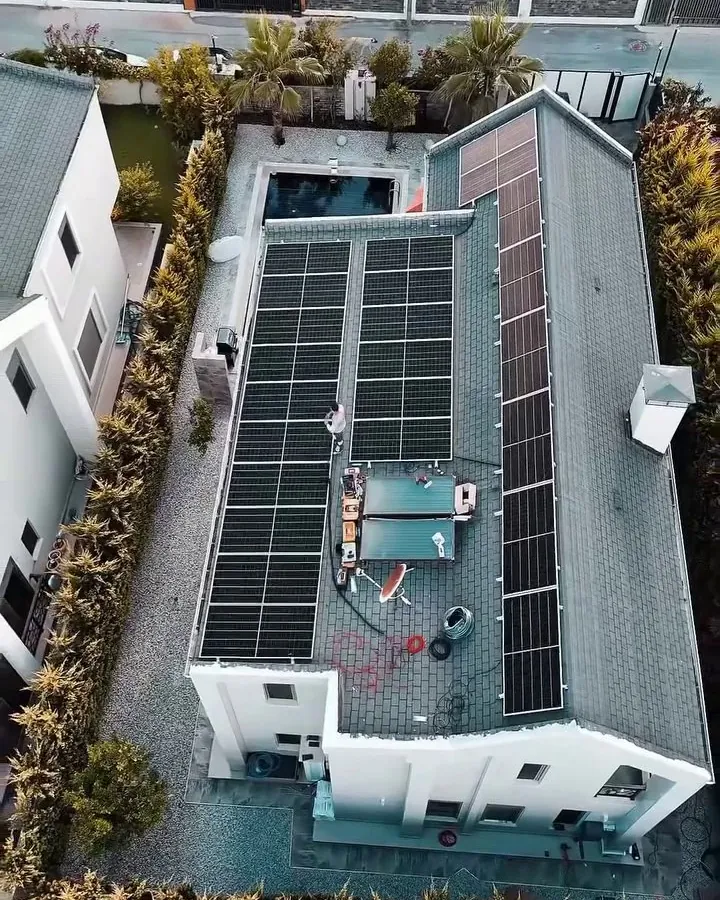
The surface covered by the 24 panels is about 62 m² (24 × 2.28 × 1.13 m, calculation). On a villa roof, allowance is left for rail lines and maintenance walkways in addition to this area. According to the TT605-144TN10 datasheet, the panel itself has an efficiency of 23.42 percent and uses n-type TOPCon and half-cut technology; its Pmax temperature coefficient is −0.30 %/°C. In the hot summer months this low coefficient is an advantage.
Let us also look at the monthly distribution. With central Antalya PVGIS values, the 14.52 kWp system's July production is about 168 × 14.52 ≈ 2,439 kWh, that is, about 78.7 kWh per day; December production is about 99 × 14.52 ≈ 1,437 kWh, that is, about 46.4 kWh per day (calculation). Summer daily production is about 1.7 times winter's; this difference leads to higher self-consumption in villas with high summer loads, and to more draw from the grid in winter.
Comparing three hybrid installations
The three hybrid villa installations Solar Nexo has shared show the difference in scale. The kWp and ratio values below are our calculation:
| Area | Panels | Installed power | Hybrid inverter | Battery | Battery / kWp |
|---|---|---|---|---|---|
| Manavgat | 20 × 605 W | 12.1 kWp | 15 kW | 15 kWh | about 1.24 |
| Belek | 24 × 605 W | 14.52 kWp | 20 kW | 15 kWh | about 1.03 |
| Döşemealtı | 36 × 605 W | 21.78 kWp | 20 kW | 30 kWh | about 1.38 |
The table shows that battery capacity is not chosen in direct proportion to panel power; what really decides it are the loads that must run during an outage and overnight. For the details of the other installations, you can look at the articles on solar energy in Manavgat and the Döşemealtı hybrid system.
Belek is a tourism area known for its golf courses, hotel complexes and villa complexes; Serik, for its part, contains both residential and farming areas across the district. In villa complexes, roofs are generally pitched and aesthetically sensitive; it may be necessary to comply with the rules of the shared management and to obtain permission from the complex management for the panel layout. In farming areas, irrigation pumps and greenhouse loads come to the fore. This variety requires design according to load rather than a one-size-fits-all solution.
Hybrid system criteria in Belek and Serik
In the Belek tourism area and in Serik there are different users such as villas, hotels and farms. The following criteria are considered when planning a hybrid system:
- Critical load list: Which appliances must run during an outage (refrigeration, lighting, security, pump) is determined. This sets battery and inverter size.
- Summer load: If air conditioning and the pool pump are run by day, they coincide with production; the evening load is fed from the battery.
- Inverter power: Motor loads such as air conditioners and pumps draw high current at start-up; the inverter's surge power capacity is checked.
- Battery age and technology: LiFePO4 is common; warranty period and cycle count vary by manufacturer and should be read from the datasheet.
- Ventilation and temperature: The inverter and battery should be placed in a technical area that limits temperature and humidity.
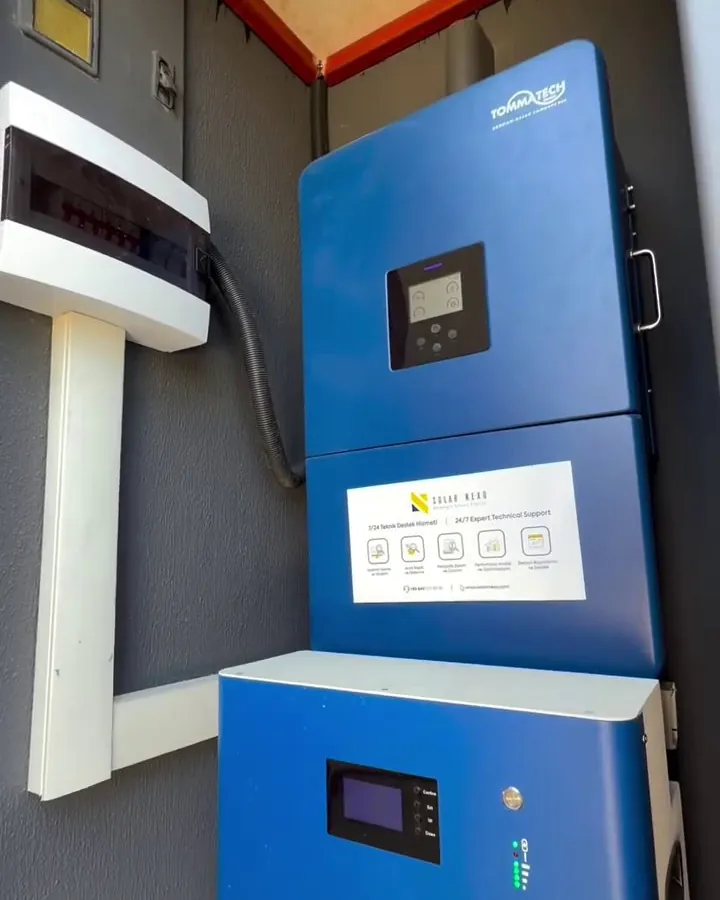
For the logic of running through an outage, the article on solar energy that works during a power outage is useful.
In villa complexes, aesthetics and shared management rules are also important. The panel layout must be approved by the complex management, cable and inverter positions kept away from visible places, and the roof waterproofing protected. Because production, consumption and battery status can be monitored from a phone with mobile monitoring, remote follow-up is a great convenience for seasonally used villas; this feature depends on the inverter brand and should be asked about in writing in the quote.
A different scale for tourist facilities
A villa installation and a hotel installation rest on the same principles, but the scale is different. Hotels are non-residential, not residential, subscribers; so production and consumption are netted hourly from 1 May 2026. The system's upper limit is the contracted power; industrial, municipal and agricultural irrigation users, however, can install up to twice their contracted power. 2026 provisions such as the annual production cap and the paid-generation limit are applied facility by facility; for this reason, in a hotel investment the regulation should first be considered in its current form.
Let us give a simple example for an outage scenario: if the total of critical loads is 2 kW, a nominal battery capacity of 15 kWh theoretically supplies about 7.5 hours (15 / 2) of power (calculation); the real duration is shorter depending on usable capacity, depth of discharge and efficiency. In areas where outages last long, battery capacity is increased; but in that case inverter and battery cost rise. The decision is made according to outage frequency and the critical load list.
Also pay attention to equipment warranties. For example, the standard warranty on TommaTech on-grid and hybrid inverters is 5 years from the invoice date; the product warranty on TommaTech low-voltage batteries is 60 months. The panel's product warranty on the 605 W TOPCon model is 15 years and the performance warranty is 30 years. These periods vary by brand and model; read the documents in your own quote.
In the summer season, daytime consumption is high because occupancy and cooling load rise; this matches the production curve. In winter, both occupancy and production fall. The broader framework for tourism investments is described in the article on hotels and tourist facilities; the calculations in this article are at villa scale.
Application, acceptance and rule reminders
Belek and Serik are in AEDAŞ's service area (AEDAŞ is the local electricity distribution company); unlicensed generation applications have been made through the LUS portal since 1 October 2023. For villas tied to a residential subscription, netting is monthly and, as of October 2026, no production or sales limit applies (the distribution company determines your subscription type); surplus energy is paid for on the single-rate active energy unit price. Main equipment such as panels, inverters and batteries must have been manufactured within the last five years. Installed battery power cannot exceed the electrical power of the generation facility, and no payment is made for energy fed from the battery to the grid.
A mistake villa owners often make is to think of a battery system as "a tool for selling energy to the grid"; yet energy supplied from the battery is not paid for. The right expectation is backup power and support for evening consumption. Operating the system before acceptance is complete can lead to disconnection and a ban on applying. You can find the application and acceptance steps in the rooftop solar application article. Because rules may change, you need to confirm the current situation with AEDAŞ.
When you receive a hybrid system quote in and around Belek, ask these questions: What is the brand and model of the panels and inverter? How much of the battery capacity is usable? Which circuits will be fed during an outage? What information does the monitoring app show? Who is responsible for the application and acceptance? Written answers to these questions let you make a sound comparison between quotes.
Conclusion
A solar panel investment in Belek can provide a balance of outage backup and summer load for a villa with a hybrid set-up; for a hotel it needs a separate feasibility study. The shared 14.52 kWp example is an indicator of scale, not a template; equipment, load and roof differ in every project. For your roof and loads, you can request a free site survey through our contact page.
Frequently asked questions
How much electricity do solar panels produce per year in Belek?
This article does not give a separate PVGIS value for Belek; in central Antalya, the nearby reference, annual specific production at optimal tilt and south orientation is 1,656 kWh/kWp. With this value, theoretical annual production for a 14.52 kWp system comes to about 24,000 kWh. Actual production varies with the roof's orientation, tilt and shading; it is calculated at the survey.
How many kWp are 24 panels of 605 W?
24 panels of 605 W total 14,520 W, that is, 14.52 kWp. The panel surface is about 62 m² (24 × 2.28 × 1.13 m, calculation); more roof area is needed for rail lines and maintenance walkways. The real layout is determined at the survey with roof geometry and shading analysis; a 605 W panel weighs about 29 kg, so the total load should also be assessed structurally.
Why can the inverter power in a hybrid system be larger than the panel power?
A hybrid inverter handles not only panel production but also the battery's charge and discharge power and instantaneous loads. Motor loads such as air conditioners and pumps draw high current at start-up. For this reason inverter capacity (for example, 20 kW) can be chosen higher than panel power (14.52 kWp); the exact value is determined by load analysis.
Does solar panel installation make sense for a hotel in Belek?
It can generally make sense, because cooling, pool and laundry loads in the summer season coincide with the production peak. The decision is made according to the hourly consumption profile, contracted power, roof area and the 2026 regulation. Netting for non-residential facilities is hourly; so the daytime load profile is decisive, and feasibility requires load measurement and a preliminary discussion with the distribution company.
Does the battery in a hybrid system sell energy to the grid?
No. Under the regulation, no payment is made for the part of the surplus remaining after netting that comes from the battery. The battery is for outage backup and for consuming the day's production in the evening. The storage unit's electrical power cannot exceed the generation facility's electrical power and batteries must have been manufactured within the last five years; this information is based on the regulation of April 2026.
Where do you apply for solar panels in Serik?
Because Serik is in Antalya province, the application is made to the grid operator AEDAŞ, through the LUS platform since 1 October 2023. For rooftop systems up to 25 kW, the system cannot exceed the contracted power. Because the document list and process may be updated under the regulation, we recommend getting current information from AEDAŞ before applying; if your facility exceeds 25 kW, the application process and fees also change.
Sources
Want a clear calculation for your roof?
The Solar Nexo team carries out a free site survey at your address in Antalya and designs the system that suits your roof, consumption and budget.