
Short answer
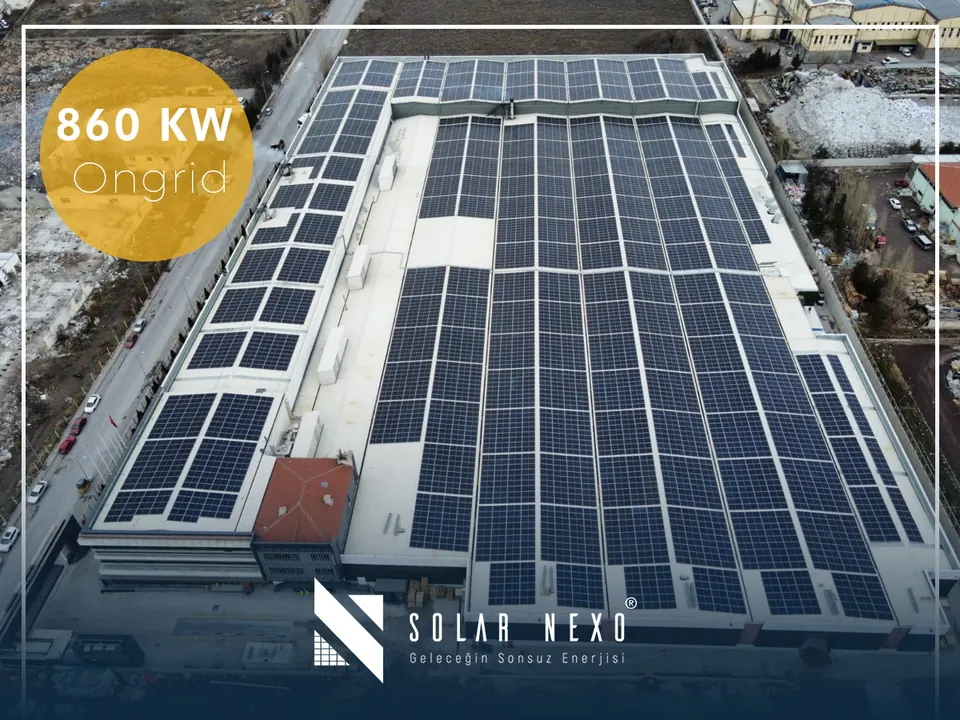
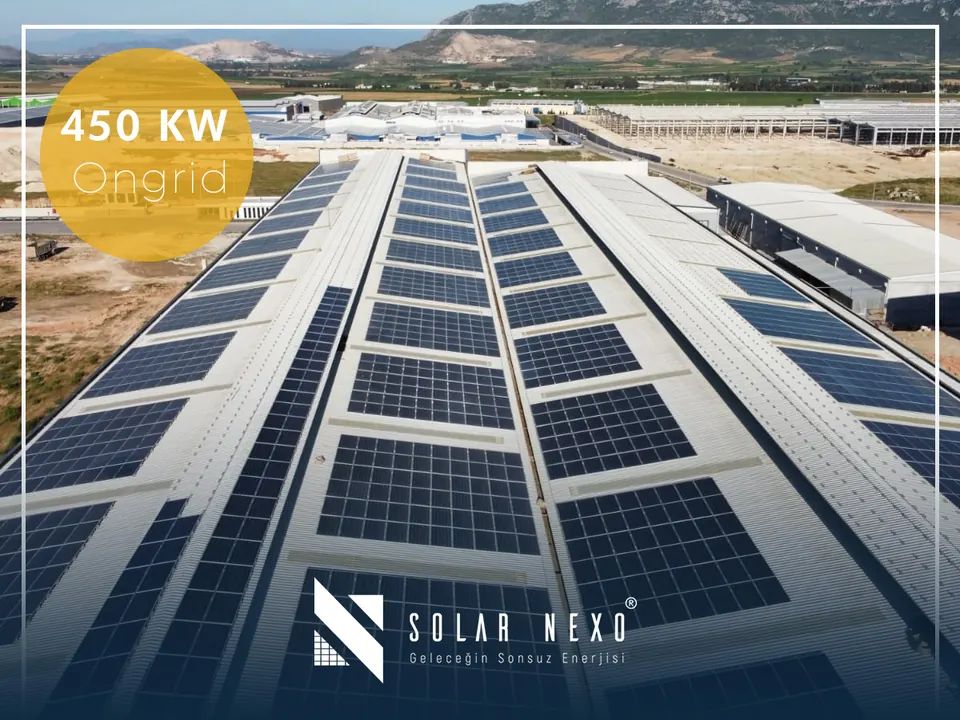
Solar Nexo is a solar company in Antalya based in Kepez. This reference project is a 450 kW on-grid solar power plant installed on the roof of a commercial building. Operating with grid-connected inverters and a monitoring system, the plant covers part of the building's daytime air conditioning, lighting and operating loads.
Project summary
This reference project is a 450 kW on-grid plant installed on the roof of a commercial building. In commercial buildings, the daytime air conditioning and lighting load matches production; on weekends and holidays, however, a production surplus arises. Location and date information is not given on this page.
System components
- Power: 450 kW (taken as panel power)
- Panel array: photovoltaic panels on the commercial building roof
- Inverters: grid-connected inverters
- Connection: building main switchboard and bidirectional metering
- Monitoring: remote monitoring
Why was this system designed this way?
Load profile of a commercial building
In structures such as offices, shops or business centres, consumption is heavy during daytime hours: air conditioning, lifts, lighting and operating equipment. This profile overlaps to a large extent with solar production. On weekends and holidays, consumption falls; in that case the production surplus is fed to the grid. The plant size is chosen not for the entire weekday daytime load, but for the level at which self-consumption will remain high throughout the year.
Roof and building integration
On commercial buildings, the roof has obstacles such as air handling units, ventilation stacks and the lift machine room. These obstacles create shading; panel layout is done with a shading analysis. So that roof insulation and waterproofing are not damaged, fixing points are resolved with watertight details. The building's fire regulations determine cable routes and DC isolator locations.
Acceptance and operation sequence
Under the 14.05.2024 amendment of the unlicensed generation regulation, the connection of a facility operated without having been accepted is cut by the distribution company without notice; the equipment must be removed within 60 days and the owner cannot apply for 3 years. For this reason, at commissioning the plant is not energised until the acceptance steps are completed. The regulatory status of this project is not stated.
Monitoring
When the building's hourly consumption and the plant's production are monitored together, the self-consumption rate and the weekend surplus can be seen clearly.
Electrical integration
In the commercial building's main switchboard, the existing protection and metering arrangement is checked for the plant connection. Because load flow will be bidirectional, the breaker and busbar capacity in the board are reviewed. The inverters disconnecting safely during a grid outage (anti-islanding) is a basic requirement of the regulation and the grid operator.
Estimated production
In the PVGIS calculation (European Commission JRC, PVGIS 5.3) for Antalya city centre conditions, assuming optimum tilt and 14% system losses, the annual specific yield is 1,656 kWh/kWp. With the PVGIS reference for Antalya city centre conditions, this means a theoretical production potential of about 745,200 kWh/year for 450 kW of power.
| Period | Specific yield (kWh/kWp) | Estimated production (kWh) |
|---|---|---|
| January (lowest) | 99 | 44,550 |
| July (highest) | 168 | 75,600 |
| Annual | 1,656 | 745,200 |
Monthly theoretical potential for 450 kWp: January 44,550 kWh, July 75,600 kWh. Shade from technical equipment on the roof can reduce production. The "450 kW" value in the table is taken as panel power. These values are a theoretical PVGIS calculation; actual production varies with roof or land orientation, tilt and shading.
Installation and commissioning process
During the site survey, the roof surface, obstacles, the building's electrical switchboard and structural condition are examined. In the project, the panel layout, shading analysis and connection diagram are prepared; if necessary, an application to the grid operator is made. Installation is carried out in a way that protects the roof insulation; commissioning takes place after acceptance. Maintenance and 24/7 technical support continue.
For a similar system
It is suitable for business centres, shopping centres, schools and commercial buildings that are used heavily during the day. It is important to assess weekend consumption separately.
- On-grid systems service page
- Solar Nexo reference projects
- Solar energy calculation tool
- Contact us for a free site survey
- Rooftop solar investment for businesses
- What is a net metering system
Questions about this project
How much does a 450 kW rooftop solar plant produce per year?
For Antalya city centre conditions, using the PVGIS reference value of 1,656 kWh/kWp, a theoretical potential of about 745,200 kWh/year is calculated. Actual production varies with roof orientation, tilt and shading. Because shadows from air handling units and stacks on the roof can affect production, the panel layout is done with a shading analysis. Exact values are clarified during the free site survey with project-specific data, and this estimate is updated.
What happens to the weekend production surplus?
Production in excess of consumption is fed to the grid and treated under the net metering rules in the regulation. Surplus energy is valued at the single-rate active energy unit price of the relevant tariff, which is lower than the total charge on the bill. For this reason, the plant size is chosen according to the weekday daytime load and the weekend surplus is anticipated.
Can a solar plant be operated without acceptance?
No. Under the 14.05.2024 amendment of the regulation, the connection of a facility found to have been operated without acceptance is cut, the equipment is removed within 60 days and the owner cannot apply for 3 years. Energising is done after acceptance. The plant is not energised before the acceptance steps are completed; Solar Nexo's process follows this order. Exact values are clarified during the free site survey with project-specific data, and this estimate is updated.
Related guides
Estimated yields are theoretical values based on PVGIS 5.3 data (EU Joint Research Centre); actual output depends on roof orientation, tilt, shading and temperature.
Considering a similar system?
The Solar Nexo team visits your property, reviews your consumption and roof, and designs the right system for you free of charge.