
Short answer
Solar energy for businesses in Antalya delivers high self-consumption in shops, offices, pharmacies, grocery stores and workshops, because most of their electricity is used in daytime, exactly when the panels are producing. According to PVGIS, rooftop systems of 10–100 kWp produce a theoretical 1,656 kWh per kWp per year in central Antalya; tenancy and the net-metering application should be planned from the start.
Key takeaways
- Consumption in small and medium-sized businesses largely falls within opening hours, when the sun is producing, which pushes self-consumption up.
- Unit prices in the commercial tariff are set periodically by EPDK; it is more reliable to calculate in kWh than in money.
- According to PVGIS, in central Antalya 10 kWp produces a theoretical 16,560 kWh a year, 50 kWp 82,800 kWh and 100 kWp 165,600 kWh.
- If you are a tenant, get the owner's written consent before installation and settle the lease term and what happens to the system if you move.
- For businesses closed at weekends, a net-metering system and the AEDAŞ application should be planned from the outset to use surplus output.
When a shop's shutters go up in the morning, the lighting, air conditioning and display fridges switch on too; when the shutters come down in the evening, consumption drops sharply. This consumption profile almost exactly overlaps the sun's generation curve. That is the biggest strength of solar energy for businesses in Antalya: most of the electricity generated is consumed inside the business at the same moment, with no need to store it or export it to the grid.
This article is not about factory- or hotel-scale projects. It covers shops, offices, pharmacies, grocery stores, hairdressers, workshops and similar small and medium-sized businesses, roughly the 10–100 kWp range. Our aim is to clarify the questions a business owner should answer before inviting Antalya solar companies for a site survey.
Why Solar Energy for Businesses in Antalya Matches Opening Hours
Photovoltaic panels start generating after sunrise, peak around midday and taper off in the late afternoon. That is exactly the window when most businesses are open. In homes, a large share of consumption shifts to the evening, so batteries or net metering play a bigger role; in businesses, the share of output used immediately is generally higher.
The potential of solar energy in Antalya reinforces this advantage. According to PVGIS 5.3, 1 kWp of installed capacity in central Antalya produces a theoretical 1,656 kWh per year. Output peaks in July (168 kWh/kWp) and August (167 kWh/kWp), the same months in which air-conditioning loads and tourism-driven trade both increase.
Weekends and holidays
The one weak spot in this profile is closing days. In a shop that is closed on Sundays, the panels keep producing but nothing is being consumed. To make use of that surplus, the system has to be grid-connected and set up for net metering. That is why the calculations should reflect not just weekday consumption but the business's working calendar across the whole year.
Load Profiles by Type of Business
Not every business uses electricity in the same way. Some loads coincide with opening hours, while others continue through the night. The table below gives a general picture of the dominant loads in the types of business we encounter most often, and how far those loads overlap with solar generation.
| Type of business | Dominant loads | Consumption hours | Overlap with solar |
|---|---|---|---|
| Office | Air conditioning, computers, lighting | Office hours | High |
| Shop, boutique | Lighting, air conditioning, window displays | Opening to closing | High |
| Pharmacy | Air conditioning, medicine fridge, lighting | Daytime; nights on duty rota | High; partial on duty nights |
| Grocery store, delicatessen | Refrigerated cabinets, lighting | Refrigeration 24 hours | Medium; night refrigeration from the grid |
| Workshop, small manufacturer | Motors, compressor, welding machine | Working hours | High; watch for start-up surges |
| Hairdresser, beauty salon | Hair dryers, water heater, air conditioning | Daytime and evening | Medium to high |
In refrigeration-heavy businesses, night-time consumption can be balanced with a battery or through net metering. Restaurants and cafés, which are busiest in the evening, are a different case; for those, see our article on solar energy for restaurants and cafés.
Start-up surges in workshops
Motor-driven equipment such as compressors, lathes or welding machines draws a short burst of high current the moment it starts. When an inverter is selected for a workshop in Antalya solar panel projects, these surges and any imbalance between phases are taken into account. In a grid-connected system the peaks are covered by the grid; if a hybrid or battery-based design is under consideration, however, the inverter's short-term overload capacity must be checked separately.
Commercial Tariffs and the Antalya Solar Energy Calculation
Businesses do not belong to the residential subscriber group but to the commercial (ticarethane) group, and unit prices for this group are set periodically by EPDK (Turkey's energy market regulator). Because tariffs change, judging the investment against a fixed monetary figure can be misleading. A sounder method is to calculate how many kWh the Antalya solar energy system will produce each year and how much of that will be consumed on the spot in the business.
The logic is simple: every kWh produced by the panels and consumed in the business is a kWh that is not bought from the grid. The higher the self-consumption ratio, the greater the system's impact on the bill. That is why the survey looks not only at total consumption but also at its hourly and monthly distribution. If possible, have your last 12 months of bills and any available meter data to hand.
Practical ways to raise self-consumption
Once the system is running, small day-to-day habits also affect the result. The steps below help you use a larger share of the output inside the business without any extra equipment:
- Scheduling heavy tasks such as filling the compressor tank, batch washing or drying for the middle of the day
- Running electric water heaters during the day on a timer
- Pre-cooling cold rooms and air-conditioned spaces during sunny hours
- Comparing generation and consumption curves in the monitoring app every week to spot output that goes unused
Sizing in the 10–100 kWp Range
For small and medium-sized businesses, system capacity is usually determined by roof area, annual consumption and grid connection conditions. The table below shows theoretical annual output for different capacities, calculated with PVGIS 5.3 values. The figures come from the formula kWp × annual specific yield; shading, soiling and orientation losses are not included.
| Installed capacity | Central Antalya (1,656 kWh/kWp) | Manavgat (1,649 kWh/kWp) | Alanya (1,615 kWh/kWp) |
|---|---|---|---|
| 10 kWp | 16,560 kWh | 16,490 kWh | 16,150 kWh |
| 30 kWp | 49,680 kWh | 49,470 kWh | 48,450 kWh |
| 50 kWp | 82,800 kWh | 82,450 kWh | 80,750 kWh |
| 100 kWp | 165,600 kWh | 164,900 kWh | 161,500 kWh |
The right size is a capacity that does not exceed your annual consumption and keeps self-consumption high. An oversized system increases the energy exported to the grid, especially on closing days, and how that energy is credited depends on current regulations and application conditions. Ask any solar installer to show you how the proposed capacity relates to your bills. As the scale grows, the financial side becomes more important; we cover it separately in our article on rooftop solar investment for businesses.
Are You a Tenant or the Owner?
Many small businesses rent their premises, and this directly affects the decision. If the roof or terrace belongs to the landlord, written consent must be obtained before installation. The remaining term of the lease, whether the system will be dismantled and moved when the lease ends, and whose name the electricity subscription is in should all be discussed up front, ideally before you ask a solar company in Antalya for a quote.
If the shop is on the ground floor of an apartment building, the roof counts as a common area and a decision by the flat owners may be needed. For more detail and the points to watch, see our article can a tenant install solar panels. For a definitive answer on legal questions, the current regulations and your lease need to be assessed together.
Roof, Terrace or Car Park: Placing Solar Panels in Antalya
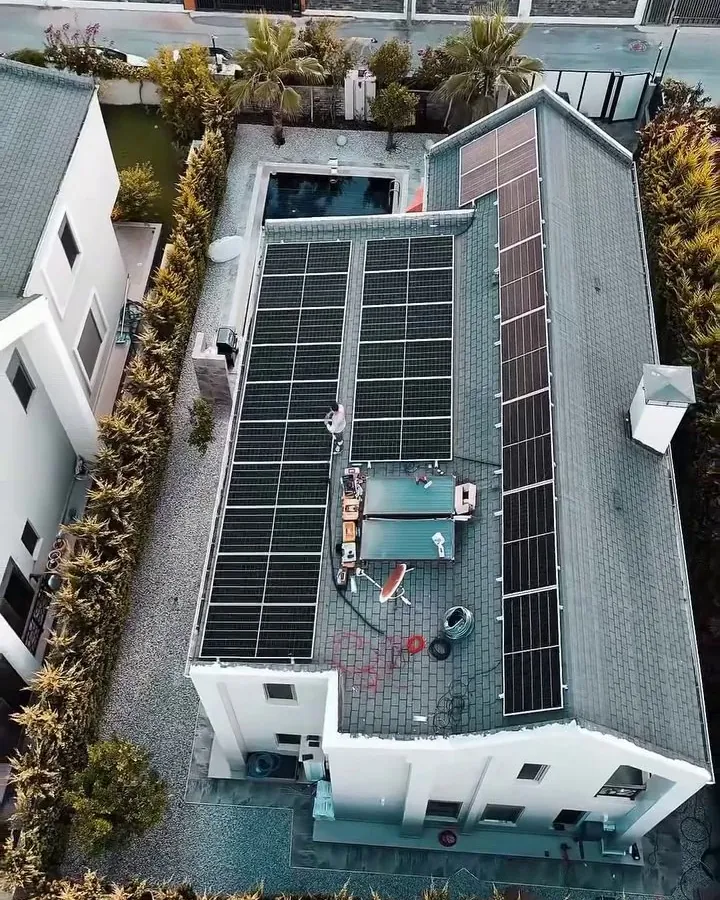
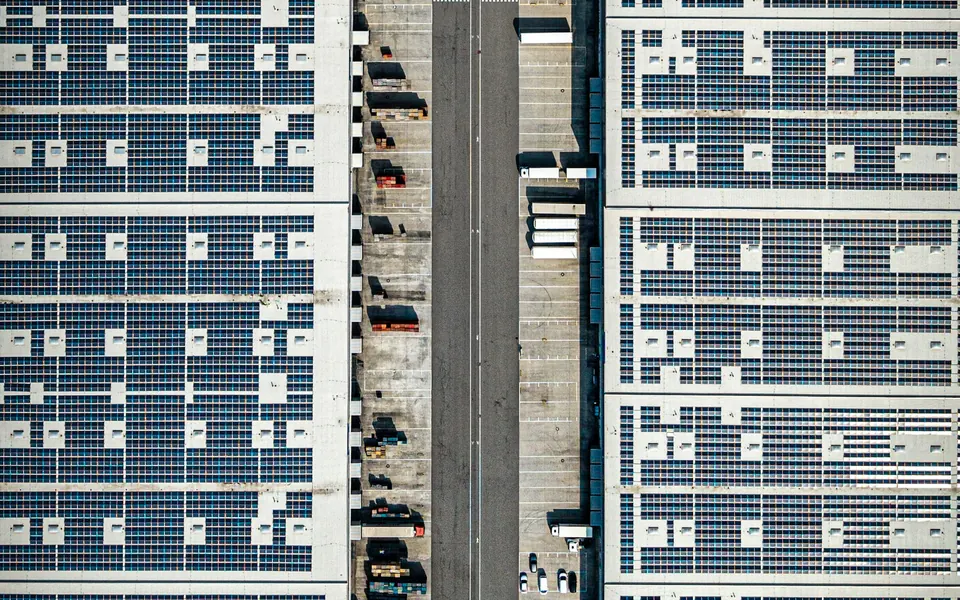
On commercial buildings, the roofs we find when installing solar panels in Antalya are mostly trapezoidal metal sheet or sandwich panel. On these roofs, the panels are fixed with clamps and rails suited to the roofing material, and sealing elements are used at every drilling point. On office buildings with flat concrete roofs, tilted mounting frames are preferred. In both cases, the roof's load-bearing capacity is assessed during the survey.
For businesses without enough roof space, car parks and carports are a second option. At grocery stores or showrooms with customer parking, a panel-covered carport both shades the cars and generates electricity. For businesses near the coast, it is also important to choose mounting materials and fasteners that resist corrosion from the salty air.
Net Metering, Application and Timeline
For grid-connected business systems, an official application is made to Akdeniz EDAŞ (AEDAŞ, the local distribution company) so that surplus output can be offset through net metering. As of October 2026, under the current regulation, this process can take 8–12 months on average. At Solar Nexo, the installation is delivered within 14 working days under contract, while the application follows its own separate timeline. Businesses that want to be ready for the season benefit from starting the process early.
We explain how net metering works, including the meter and billing logic, in our article what is a net-metering system. For grocery stores or pharmacies with night-time refrigeration loads, a hybrid system with a battery can also be considered; the decision depends on the amount of night consumption and how sensitive the business is to power cuts.
The application file includes subscription details, documents proving ownership or the right of use, and project paperwork. Because the required documents can change with the current regulations, always check the list again before applying. For a general framework, see our article on documents required for a solar installation; for tenant businesses, having the landlord's consent ready at this stage speeds things up.
Antalya Solar Energy Equipment: Inverters, Monitoring and Documents
Business premises usually have a three-phase connection. In projects of this kind, Solar Nexo uses TommaTech three-phase (Trio) inverters together with TommaTech and CW Enerji TOPCon N-Type panels. The company is an authorised dealer for both brands; the products are original and invoiced, and the manufacturer's warranty certificates and technical documents are handed over to the business.
The panels carry a 30-year performance warranty, and inverters come with a 2, 3 or 5-year factory warranty depending on their power rating and model. Tracking generation every day with the monitoring device lets you spot an output drop on a single string early. If there is a fault or anything looks suspicious, technical support is available 24/7 by phone and WhatsApp.
Conclusion: The Right Questions about Solar Energy for Businesses in Antalya
Four questions decide how well solar energy for businesses in Antalya works out: at what times is your consumption concentrated, how will output on closing days be used, who owns the roof and what condition is it in, and when will the net-metering application start? Once these are answered, the potential of solar energy in Antalya can be matched to your business at the right scale.
Solar Nexo carries out free site surveys for businesses in Antalya and the surrounding area. To plan your Antalya solar energy system around your own consumption data, call +90 540 007 63 96 or email info@solarnexo.com.
Frequently asked questions
Does solar energy make sense for a small shop?
In most cases, yes, because shops consume most of their electricity during the day, when the panels are producing. This means a large share of the electricity generated is used immediately. Even so, it would be wrong to reach a firm conclusion before roof area, shading, tenancy and annual consumption have been assessed together at the survey. Surveys are free in Antalya and the surrounding area.
What size should a solar system for a business be?
System capacity is chosen so that it does not exceed annual consumption and keeps self-consumption high. According to PVGIS 5.3, 1 kWp in central Antalya produces a theoretical 1,656 kWh a year; a 30 kWp system, for example, produces a theoretical 49,680 kWh a year. The final figure becomes clear once roof area, shading and grid connection conditions have been examined at the survey.
Can I install solar panels at my business if I am a tenant?
You can, but you first need the owner's written consent. The term of the lease, whether the system will be moved when the lease ends and whose name the subscription is in should be settled from the start. If the shop is below an apartment building, the roof counts as a common area, so a decision by the flat owners may also be required. Moving on to the technical survey once these points are clear prevents disputes later.
What happens to the electricity generated when the business is closed at the weekend?
In a grid-connected system, electricity generated on closing days is exported to the grid. For this energy to be reflected on the bill, a net-metering system must be set up and an official application made to Akdeniz EDAŞ, the local distribution company. As of October 2026, under the current regulation, this application can take 8–12 months on average, so starting early is recommended.
Which system suits businesses with night-time refrigeration, such as grocery stores?
In businesses with night-time refrigeration, daytime output is used directly, while night-time consumption is covered from the grid, through net metering or from a battery. If the night load is high and the business is very sensitive to power cuts, a hybrid system with a battery can be considered. The decision depends on night-time consumption in kWh and how long the cold chain can withstand an outage. This calculation is done at the survey.
How long does a solar installation at a business take?
At Solar Nexo, the installation is delivered within 14 working days under contract. For net-metering systems, the official application to Akdeniz EDAŞ is a separate process that can take 8–12 months on average. On installation days, the work is planned to disrupt the business as little as possible and the connection work is kept as short as it can be.
What warranties come with commercial solar energy systems?
The panels Solar Nexo uses carry a 30-year performance warranty; the product and material warranty varies by model and is stated on the warranty certificate. Inverters have a 2, 3 or 5-year factory warranty depending on their power rating and model. The manufacturer's warranty certificates and technical documents are handed over to the business when the installation is complete.
Sources
Want a clear calculation for your roof?
The Solar Nexo team carries out a free site survey at your address in Antalya and designs the system that suits your roof, consumption and budget.