
Short answer
Most mistakes when buying solar panels in Antalya happen at the planning stage: looking only at the price, guessing the kWp instead of basing it on consumption, overlooking shading and roof loads, not planning a battery for power cuts, using unsuitable mounting hardware in salty air, not asking for warranty certificates and monitoring, and underestimating how long the net-metering application takes. The fix for each is asking the right questions at the survey.
Key takeaways
- Compare quotes not just on the total price but on panel model, inverter type, battery kWh, mounting materials and documents.
- System size should follow your last 12 months of kWh consumption; according to PVGIS, 1 kWp in central Antalya produces a theoretical 1,656 kWh a year.
- An on-grid system stops when the grid goes down; if appliances must keep running during power cuts, plan a hybrid system with a battery.
- Battery capacity is compared in kWh; two batteries cannot be compared on Ah without multiplying by the voltage.
- For net-metering systems, the AEDAŞ application can take 8–12 months on average and must be planned separately from the installation.
A solar energy system is an investment that will stay on your roof for many years, and a small oversight at the buying stage can make itself felt for that entire time. What we see most often during site surveys is that problems stem not from the equipment but from the decision-making process. In this article we have gathered the 15 mistakes when buying solar panels in Antalya that we come across most often, each with a short, practical fix.
The list is not meant to scare you; it is meant to help you ask the right questions when quotes are on the table. We have grouped the mistakes under planning, system type, roof and mounting, equipment and documents, and finally the process.
Why Mistakes When Buying Solar Panels in Antalya Matter
Solar energy in Antalya has a strong foundation: according to PVGIS 5.3, 1 kWp of installed capacity in central Antalya produces a theoretical 1,656 kWh per year. But turning that potential into a lower bill requires the right size, the right layout, the right equipment and a complete set of documents. A poorly chosen system will still work, yet it will not deliver what you expected, and it often takes a full year to realise that.
What is more, some mistakes are hard to correct afterwards. Moving a string of panels that sits in shade, replacing fasteners corroded by salt or swapping an inverter that has no monitoring capability all mean extra work and extra cost. That is why prevention is always easier than repair.
Mistakes at the Planning Stage
1. Looking only at the total price
Two quotes can list the same kWp and still differ in price, because the panel model, inverter type, mounting materials and protection devices are not the same. Fix: Compare quotes line by line. You can use the quote comparison guide we prepared for exactly this purpose.
2. Guessing the kWp
The "our neighbour installed 10 kW, so we will too" approach leads to a system that has nothing to do with your own consumption. Fix: Base the size on the total kWh on your last 12 months of bills and look at how consumption is spread across the day. For example, using the PVGIS value for central Antalya, 5 kWp produces a theoretical 8,280 kWh a year and 10 kWp 16,560 kWh.
3. Ignoring shading
A chimney, a neighbouring building, a tree or a water tank on the roof can shade the panels at certain times of day. In a series-connected string, shading on a single panel can affect the whole string. Fix: Ask for a shade analysis at the survey that takes the sun's angle in different seasons into account. You will find the details in our article on how shading affects solar panels.
4. Forgetting future loads
The system planned today may fall short in two years' time, once you add an electric car, a heat pump or another air conditioner. Fix: Mention planned loads at the survey, and make sure the inverter and mounting area are chosen so that panels or batteries can be added later.
System Type and Battery Mistakes
5. Not planning a battery for power cuts
Owners who install an on-grid system without a battery in an area with frequent outages can be disappointed the first time the power goes off. Fix: List how often outages happen and which appliances must run during them; if necessary, plan a hybrid system and a critical-load panel.
6. Assuming an on-grid system works during an outage
On-grid inverters shut down automatically when the grid goes down, to protect technicians working on the line. This is not a fault; it is how they are designed. Fix: Ask for the system type's behaviour during outages to be stated in writing at the quotation stage.
7. Comparing battery capacity in Ah
Ah alone does not tell you how much energy a battery holds; two batteries with the same Ah rating store very different amounts of energy at different voltages. A 48 V, 100 Ah battery holds 4.8 kWh, whereas a 12 V, 100 Ah battery holds 1.2 kWh. Fix: Compare capacity in kWh and check the cycle count and warranty terms on the documents. The TommaTech lithium batteries used by Solar Nexo come with a 5-year warranty / 8,000 cycles.
Roof and Mounting Mistakes in Antalya
8. Overlooking the roof's structure and condition
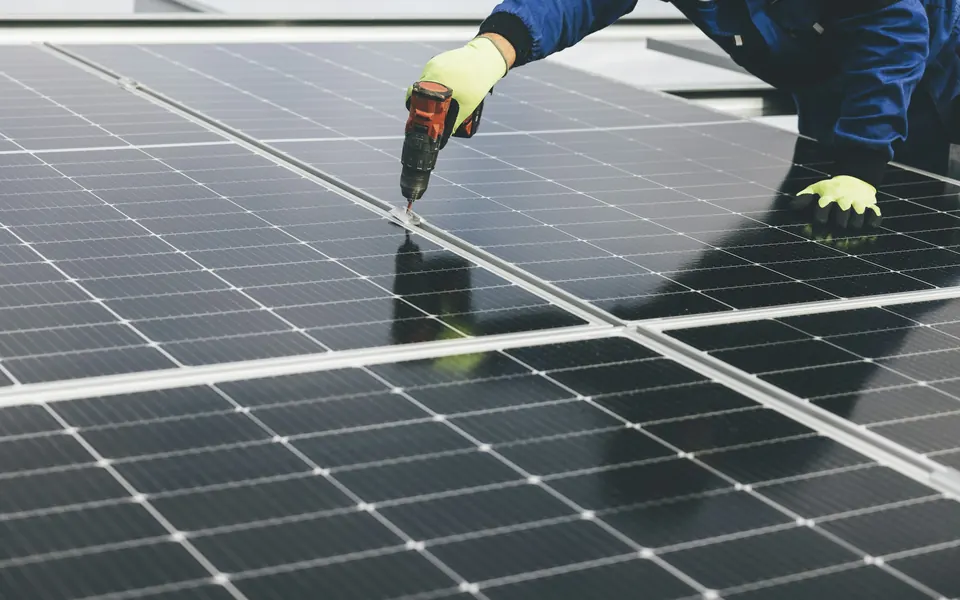
Panels and mounting frames add extra load to the roof, and wind on the coast and snow inland also come into the calculation. If panels go onto an old or damaged roof, they may have to come off again a few years later when the roof is renewed. Fix: Have the load-bearing structure and the age of the roof assessed at the survey. We cover this in our article on roof structure and waterproofing.
9. The wrong mounting hardware in salty air
In coastal areas such as Konyaaltı, Lara, Kemer, Manavgat or Alanya, salty air can corrode unsuitable fasteners. Galvanic corrosion can also occur wherever different metals are in direct contact. Fix: Ask explicitly in the quote about aluminium rails, stainless steel fasteners and compatible metal pairings.
10. Ignoring orientation and tilt
According to PVGIS, the optimum tilt in Antalya is about 33°, and a south-facing orientation gives the highest annual output. East-west or flat layouts also work, but the generation profile changes. Fix: Ask for the expected output to be calculated for your roof's orientation; on flat concrete roofs, tilted frames can bring the panels close to the optimum.
Equipment and Document Mistakes
11. Not asking for warranty certificates
If a product has no invoice or warranty certificate, making a claim to the manufacturer when it fails becomes difficult. Fix: Ask for the manufacturer's warranty certificates and technical documents for the panels, inverter and battery at handover. As an authorised dealer for TommaTech and CW Enerji, Solar Nexo hands these documents over to its customers. You can find details of warranty terms in our article on solar panel warranty terms.
12. An inverter without monitoring
Without monitoring, you might not notice for weeks that a string has dropped out or that the inverter has shut down. Fix: Make sure the inverter shows generation, consumption and fault information in an app.
13. A quote that does not name the panel model
"605 W panel" on its own is not enough; the cell technology, brand and model determine the performance warranty and how the panel behaves in heat. Fix: Ask for the full model names of the panel and inverter, along with their datasheets, in the quote.
Antalya Solar Energy Application and Process Mistakes
14. Underestimating the application process
For Antalya solar energy projects with net metering (mahsuplaşma), an official application is made to Akdeniz EDAŞ (AEDAŞ, the local distribution company). As of October 2026, under the current regulation, this process can take 8–12 months on average. The fact that installation is finished within a few weeks does not mean net metering starts straight away. Fix: Agree from the outset on the application timeline, who is responsible for it and which documents are needed.
15. Work without a contract or with a vague scope
If the delivery time, the equipment list, who handles the application and the after-installation support are not in writing, the risk of disputes grows. Fix: Have the full scope written into the contract, whichever solar installer you choose. At Solar Nexo, installation is delivered within 14 working days under contract.
Summary Table of the 15 Mistakes
The table below brings the mistakes and their fixes together at a glance, so you can use it as a checklist when you assess quotes from solar companies in Antalya.
| # | Mistake | Likely consequence | Quick fix |
|---|---|---|---|
| 1 | Looking only at the price | Treating systems of different quality as equal | Line-by-line comparison |
| 2 | Guessing the kWp | An undersized or needlessly large system | 12 months of kWh consumption |
| 3 | Ignoring shading | Output losses across a string | Seasonal shade analysis |
| 4 | Forgetting future loads | The system soon falls short | A design that allows expansion |
| 5 | Not planning a battery | No power during outages | Hybrid system, critical-load panel |
| 6 | Assuming on-grid works in an outage | Wrong expectations | Ask about outage behaviour in writing |
| 7 | Comparing batteries in Ah | Choosing the wrong capacity | kWh and cycle count |
| 8 | Overlooking the roof structure | Removal and refitting, risk of damage | Roof assessment at the survey |
| 9 | Wrong hardware in salty air | Corrosion | Aluminium rails, stainless fasteners |
| 10 | Ignoring orientation and tilt | Lower output than expected | Output calculated for the orientation |
| 11 | Not asking for warranty certificates | Difficult warranty claims | Handover of manufacturer documents |
| 12 | Inverter without monitoring | Faults noticed late | App-enabled inverter |
| 13 | Quote without a model name | Equipment that cannot be compared | Full model and datasheet |
| 14 | Underestimating the application | Delayed net metering | Timeline and responsibility plan |
| 15 | Work without a contract | Disputes over scope | Written contract |
Questions to Ask When Getting Antalya Solar Energy Quotes
When you assess Antalya solar energy quotes, getting a clear, written answer to each of the following questions prevents most of the mistakes above from the start:
- Which consumption data was the system size based on, and what is the expected annual output?
- What are the exact make and model of the panels and inverter, and can the datasheets be shared?
- How will the system behave when the grid goes down, and which appliances will keep running?
- What material are the mounting system and fasteners made of, and do they suit my roof type?
- Which warranty certificates will be handed over, and are the products invoiced?
- Who will handle the application, and is the delivery time stated in the contract?
How clearly these questions are answered also tells you a lot about a solar installer's technical approach. For more on authorised dealerships, see our article on the benefits of buying from an authorised dealer.
Conclusion: Avoiding Mistakes When Buying Solar Panels in Antalya
Mistakes when buying solar panels in Antalya usually come from a lack of information, and the right questions prevent them easily. Knowing your consumption, having shading and the roof assessed, clarifying what you need during power cuts, asking for the documents and putting the process into a contract let you rely on your solar panels in Antalya with confidence for years to come.
Solar Nexo carries out free site surveys in Antalya and the surrounding area; we inspect your roof on site and present a system that matches your consumption in a transparent quote. For more information, call +90 540 007 63 96 or email info@solarnexo.com.
Frequently asked questions
What is the most common mistake when buying solar panels?
The most common mistake is comparing quotes on the total price alone. Two quotes listing the same kWp can be very different in terms of panel model, inverter type, mounting materials, protection devices and the documents handed over. Comparing quotes line by line and asking for full model details prevents this mistake. We can make this comparison together with you at a free site survey.
How many kW should a solar system be, and how do you decide?
System size is based on the total kWh consumption on your last 12 months of bills and on how that consumption is spread across the day. According to PVGIS 5.3, 1 kWp in central Antalya produces a theoretical 1,656 kWh a year; 5 kWp means roughly 8,280 kWh and 10 kWp 16,560 kWh of theoretical output. Shading and roof orientation are assessed separately at the survey.
Does an on-grid solar energy system work during a power cut?
No. An on-grid system shuts down automatically when the grid goes down, to protect technicians working on the line. This is not a fault; it is by design. If you want electricity during outages, you need a hybrid system with a battery and a separate critical-load panel for the appliances to be powered. The battery is sized according to the kWh those appliances will use during an outage.
Should battery capacity be compared in Ah or kWh?
Battery capacity should be compared in kWh, because Ah alone does not show the amount of energy stored. The kWh value is found by multiplying the Ah rating by the voltage and dividing by 1,000: a 48 V, 100 Ah battery stores 4.8 kWh, while a 12 V, 100 Ah battery stores 1.2 kWh. Cycle count and warranty terms should also be checked on the documents.
What should I watch out for when mounting solar panels on homes near the coast?
Near the coast, salty air can corrode unsuitable fasteners. That is why it is important to use aluminium rails, stainless steel fasteners and metals that are compatible with one another. Wind load on the coast must also be taken into account, and connection points should be checked regularly as part of periodic maintenance. It is a good idea to raise these points in writing at the quotation stage.
Which documents should I ask for when buying solar panels?
You should ask for product invoices, manufacturer's warranty certificates and technical documents (datasheets, user manuals) for the panels, inverter and battery. There should also be a written contract showing the delivery time, the equipment list and who is responsible for the application. Solar Nexo hands these documents over at the end of the installation; we recommend keeping digital copies.
How long does the net-metering application take?
As of October 2026, under the current regulation, the net-metering application to Akdeniz EDAŞ can take 8–12 months on average. This timeline is independent of the installation itself; at Solar Nexo, installation is delivered within 14 working days under contract. Clarifying the application timeline and the required documents at the survey stage reduces delays and makes the process predictable.
Sources
Want a clear calculation for your roof?
The Solar Nexo team carries out a free site survey at your address in Antalya and designs the system that suits your roof, consumption and budget.