
Short answer
The link between electricity price rises in Antalya and solar energy comes down to self-consumption: every kWh your panels produce and your home or business uses at the same moment is a kWh you do not buy from the grid. Because EPDK sets tariffs periodically, the value of each self-generated kWh moves with the tariff. Shifting consumption to daytime and using a battery at night strengthen this effect.
Key takeaways
- Electricity tariffs are set periodically by EPDK; it is more reliable to calculate the effect of solar energy in kWh than in money.
- Every kWh produced by the panels and used immediately is a kWh not taken from the grid; as tariffs change, so does the value of that kWh.
- According to PVGIS, a 5 kWp system in central Antalya produces a theoretical 8,280 kWh a year: 840 kWh in July and 495 kWh in December.
- Shifting loads such as the washing machine, dishwasher, pool pump and water heater to daytime raises self-consumption without a battery.
- For high-consumption customers, the last-resort supply tariff risk can be managed by using self-consumption to reduce energy drawn from the grid.
The electricity bill has become a document people read more carefully every billing period. As a household or a business, you cannot control changes to the tariffs, but you can control how much electricity you draw from the grid. That is the key to understanding electricity price rises in Antalya and what solar energy can do about them: solar does not change the tariff, it reduces the number of kWh the tariff is applied to.
In this article we will not give percentage increases or price forecasts, because electricity tariffs are set periodically by EPDK (Turkey's energy market regulator) and any forecast quickly goes out of date. Instead, we use kWh calculations to explain the logic of self-consumption, shifting consumption to daytime, using a battery at night and the risk of the last-resort supply tariff.
What Solar Changes When Electricity Prices Rise in Antalya
The amount on your bill is, roughly speaking, the product of two things: the kWh you draw from the grid, and the unit price plus related charges applied to those kWh. The unit price is determined by the tariffs EPDK sets and by your subscriber group. A system for solar energy in Antalya acts on the first part of the equation, the kWh drawn from the grid.
This distinction matters. When the tariff goes up, every kWh you still have to draw from the grid becomes more expensive; at the same time, every kWh you produce yourself and use immediately becomes more valuable by the same proportion. So when you weigh electricity price rises in Antalya against solar energy, the panels are not a complete shield against tariff changes, but they shrink the number of kWh those changes affect.
The Logic of Self-Consumption: Every kWh Produced Is a kWh Not Bought
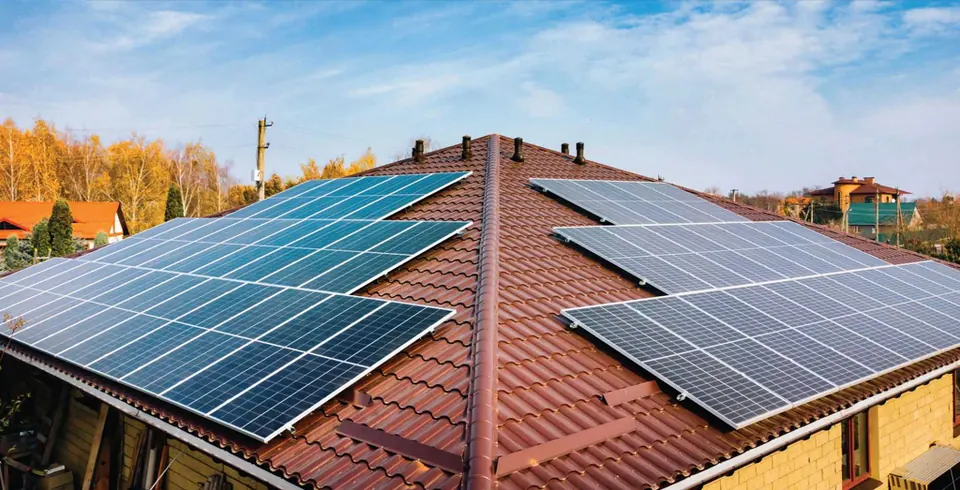
Self-consumption means using the electricity the panels produce inside the building at the same moment it is generated. If the air conditioning is running at midday while the panels are producing, the energy it draws comes from the panels first, and any shortfall comes from the grid. If generation exceeds consumption, the surplus is exported to the grid or stored in a battery.
The self-consumption ratio shows how much of the energy produced is used on the spot, and it is the variable with the biggest influence on your bill. Families who are at home during the day, businesses open during working hours and houses with pools generally have high self-consumption. In a house that stays empty all day, most of the output goes to the grid; in that case net metering or a battery comes into play.
The difference between summer and winter
Self-consumption is not constant through the year. According to PVGIS data, 1 kWp in central Antalya produces a theoretical 168 kWh in July, falling to 99 kWh in December. In summer, the air-conditioning load coincides with the midday hours of peak generation, so self-consumption usually rises. In winter, output drops, and if electric heating is used, consumption shifts towards the evening. That is why the effect on your bill should be judged over the whole year rather than from a single month.
A Worked kWh Example for Solar Energy in Antalya
Let's take a concrete example. According to PVGIS 5.3, 1 kWp of installed capacity in central Antalya, facing south at the optimum 33° tilt, produces a theoretical 1,656 kWh per year. A 5 kWp system therefore has a theoretical annual output of 5 × 1,656 = 8,280 kWh. This figure excludes shading, soiling and orientation losses.
| Month | PVGIS (kWh/kWp) | 5 kWp theoretical output (kWh) |
|---|---|---|
| January | 99 | 495 |
| April | 150 | 750 |
| July | 168 | 840 |
| October | 137 | 685 |
| December | 99 | 495 |
| Annual total | 1,656 | 8,280 |
Now let's look at how much of that output is consumed immediately. The table below is not a real measurement; it shows hypothetical scenarios representing different usage habits. The aim is to show how the self-consumption ratio changes the number of kWh not bought directly from the grid.
| Scenario (assumption) | Share used immediately | kWh/year not bought from the grid | kWh/year exported or stored |
|---|---|---|---|
| House empty all day | 30% | 2,484 | 5,796 |
| Mixed use | 50% | 4,140 | 4,140 |
| Heavy daytime use | 70% | 5,796 | 2,484 |
The message of the table is clear: with the same panels, the same roof and the same output, simply changing consumption habits can more than double the energy you avoid buying directly from the grid. Whatever the tariff, these kWh are the part of your consumption that price rises do not touch. For a quick estimate based on your own consumption, you can use the calculator below, and a good solar installer should be able to walk you through the same calculation with your actual bills.
How many kW do you need for your bill?Use the solar calculator to see system size, number of panels and annual production straight away.Shifting Consumption to Daytime in Antalya
The easiest way to raise self-consumption is to change habits rather than buy extra equipment. Because the hours of strong sunshine in Antalya are long, moving flexible loads to the middle of the day is very practical:
- Running the washing machine and dishwasher around midday on a timer
- Programming the pool pump and filtration for sunny hours
- Setting the electric water heater to heat during the day
- Pre-cooling the house with air conditioning in the afternoon to cut evening consumption
- Charging an electric car during the day where possible
These steps can be automated with smart plugs and hybrid inverter apps. We describe scenarios and a sample daily plan in detail in our article on smart homes and solar energy. For more practical tips on cutting your bill, see our guide to reducing your electricity bill with solar energy.
Evening and Night Use with a Battery
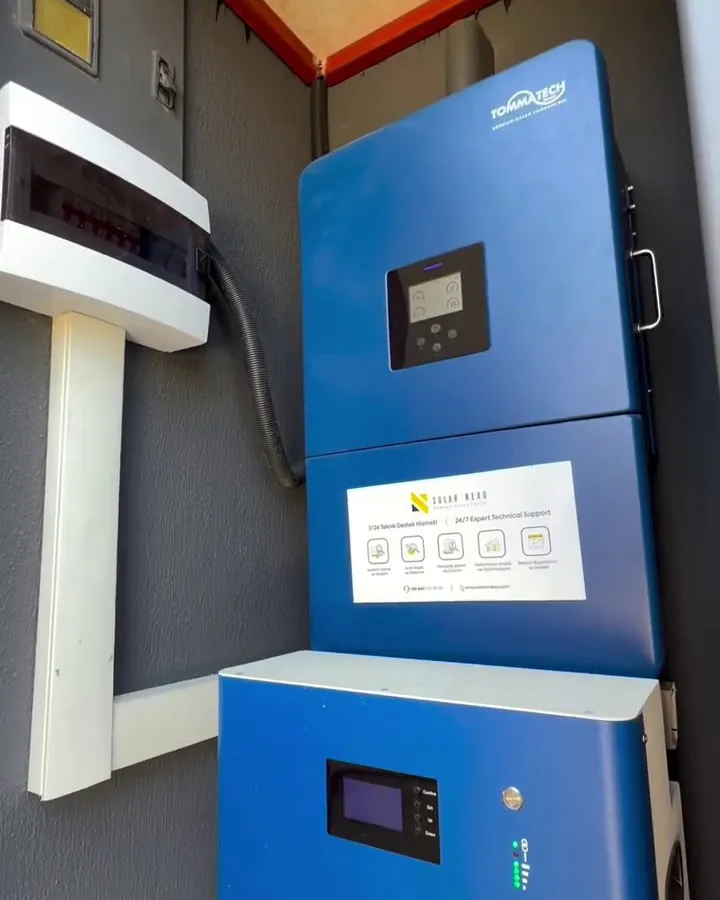
Part of your consumption will always fall in the evening: lighting, cooking, television and, in summer, evening air conditioning. In a hybrid system, surplus output during the day is stored in the battery and used in the evening. That way, energy that would otherwise be exported to the grid goes towards covering the building's own night-time consumption.
Battery capacity is chosen in kWh according to your evening and night-time consumption; a battery that is too small runs empty early, while one that is larger than needed may not fully charge in the winter months. For hybrid installations, Solar Nexo uses TommaTech high-voltage lithium batteries; these LiFePO4 batteries come with a 5-year warranty / 8,000 cycles. For more on battery chemistry, see our article what is a LiFePO4 battery.
The Last-Resort Supply Tariff Risk
Customers whose annual consumption exceeds the limit set by EPDK may fall under the last-resort supply tariff (son kaynak tedarik tarifesi) instead of the national tariff. The limits and the rules for applying them are updated periodically by EPDK, so you need to check your own situation against the current regulation. For high-consumption villas and businesses, this is a risk that directly affects the bill.
The yardstick here is not money but annual kWh consumption. Solar energy works on the same logic: self-consumption reduces the energy drawn from the grid. A lower annual draw from the grid can help customers close to the limit manage this risk. For the regulatory details and how the calculation works, read our article on the last-resort supply tariff and solar energy.
Net Metering and the Antalya Solar Energy Application
Surplus output that cannot be self-consumed is credited through net metering (mahsuplaşma) in grid-connected systems. For Antalya solar energy projects, this requires an official application to the distribution company, Akdeniz EDAŞ (AEDAŞ). As of October 2026, under the current regulation, this process can take 8–12 months on average. Because how surplus energy is credited depends on current legislation, it should be discussed separately at the quotation stage with whichever solar company in Antalya you are talking to.
The installation itself is delivered by Solar Nexo within 14 working days under contract. Net metering is not a substitute for self-consumption; you get the most balanced result from the system when the two are planned together.
Once the system is running, you need to read your bill with fresh eyes. In net-metering systems, a bidirectional meter records the energy drawn from the grid and the energy exported to it separately. If you subtract the exported energy from the total generation shown in the monitoring app, you get the number of kWh you used through self-consumption. Noting this figure every month lets you see the system's effect in your own data whenever tariffs change.
Equipment and Documents for Solar Panels in Antalya
For solar panels in Antalya to work as a long-term tool against tariff changes, the equipment has to run reliably for many years. Solar Nexo is an authorised dealer for TommaTech and CW Enerji; its installations use original, invoiced TOPCon N-Type panels and inverters from these brands. The panels carry a 30-year performance warranty, and inverters come with a 2, 3 or 5-year factory warranty depending on their power rating and model.
The manufacturer's warranty certificates and technical documents are handed over when the installation is complete. With the monitoring device you can track daily generation and self-consumption and adjust your habits based on the data. When comparing Antalya solar panel offers, ask every solar installer whether monitoring is included. If you run into a problem, 24/7 phone and WhatsApp support is available.
Conclusion: Manage Your kWh, Not the Tariff
Electricity tariffs are set by EPDK and change from period to period. The variable you control is the number of kWh you draw from the grid. The potential of solar energy in Antalya is well suited to reducing that number significantly through self-consumption, daytime use and battery storage. Working out the effect of electricity price rises in Antalya using your own bill gives the most accurate answer.
To plan your Antalya solar energy system around your own consumption data, take advantage of Solar Nexo's free site survey. Call +90 540 007 63 96 or email info@solarnexo.com.
Frequently asked questions
How do electricity price rises affect a solar energy investment?
Solar energy does not change the tariff; it reduces the number of kWh you draw from the grid. When the tariff rises, every kWh bought from the grid becomes more expensive, while every kWh you produce yourself and use immediately becomes more valuable to the same degree. That is why it is more reliable to calculate the effect in kWh, taking the self-consumption ratio into account. We can work through this calculation with you at the survey.
Who sets electricity tariffs in Turkey?
In Turkey, electricity tariffs are set periodically by the Energy Market Regulatory Authority (EPDK). Tariffs differ by subscriber group, with separate unit prices for residential, commercial and industrial customers. In Antalya, the distribution service is run by Akdeniz EDAŞ. To follow current tariffs, keep an eye on EPDK's official announcements and check the subscriber group shown on your bill.
What is self-consumption and why does it matter?
Self-consumption means using the electricity your solar panels produce inside the building at the same moment it is generated. Because every kWh used immediately is not bought from the grid, the self-consumption ratio is the variable with the biggest influence on your bill. Shifting loads such as the washing machine, dishwasher, pool pump and water heater to daytime is a practical way to raise it without extra equipment.
How much electricity does a 5 kWp solar system produce in Antalya?
According to PVGIS 5.3, a 5 kWp system in central Antalya, facing south at the optimum 33° tilt, produces a theoretical 8,280 kWh a year. Output is highest in July at about 840 kWh and lowest in January and December at about 495 kWh. These figures exclude shading, soiling and orientation losses.
Does a battery help reduce the electricity bill?
A battery stores surplus output from the day so that you can use it in the evening and at night, which can reduce the energy drawn from the grid in the evening hours. Its effect depends on your evening consumption and on choosing the right battery capacity. The TommaTech LiFePO4 batteries Solar Nexo uses come with a 5-year warranty / 8,000 cycles and are modular, so capacity is chosen to match your needs.
What is the last-resort supply tariff, and does solar energy reduce that risk?
The last-resort supply tariff (son kaynak tedarik tarifesi) can apply to customers whose annual consumption exceeds a limit set by EPDK; the limits are updated periodically. Because self-consumption with solar energy reduces the energy drawn from the grid, it can help customers close to the limit manage this risk. You need to check your own situation against the current regulation and the consumption data on your bill.
Will solar energy bring my bill down to zero?
No firm outcome can be promised on this. The effect on your bill depends on system size, the self-consumption ratio, your consumption habits, your net-metering status and the fixed charges on the bill. The right approach is to run a kWh calculation using your last 12 months of consumption and set your expectations accordingly. Solar Nexo carries out this calculation with you at the free site survey.
Sources
Want a clear calculation for your roof?
The Solar Nexo team carries out a free site survey at your address in Antalya and designs the system that suits your roof, consumption and budget.