
Short answer
A smart home solar energy setup in Antalya aims to use the energy your panels produce at home, as far as possible at the moment it is generated. With the hybrid inverter app, timers and smart plugs, loads such as the washing machine, dishwasher, pool pump and water heater are shifted into sunny hours; battery priority settings and EV charging are matched to production to raise self-consumption.
Key takeaways
- The aim of smart energy management is to use solar energy at home at the time it is produced rather than export it to the grid (self-consumption).
- Loads with flexible timing, such as the washing machine, dishwasher, pool pump and water heater, can be moved to midday with a timer or smart plug.
- In the hybrid inverter app you can set a self-consumption priority for the battery and a backup reserve level for outages; options vary by model.
- According to PVGIS 5.3, 1 kWp in central Antalya gives a theoretical average of about 5.4 kWh per day in July and about 3.2 kWh per day in January.
- High-power appliances should be connected not to a smart plug but to a suitable relay or contactor installed by an electrician.
Once solar panels are on the roof, most homeowners spend the first few weeks watching the inverter app with curiosity. Then they notice something: the panels produce plenty at midday while nobody is home, and by the time everyone gets back in the evening the sun has already set. A smart home solar energy in Antalya approach aims to close exactly this gap: managing consumption around the sun and using the energy you produce at home, as far as possible at the moment it is generated.
This article is not about expensive automation systems but about practical steps that many homes can take today: the hybrid inverter app, timers, smart plugs, battery settings and electric vehicle charging. At the end you will also find a sample table showing a typical day hour by hour.
Smart Homes and Energy Management: What Do They Mean?
Energy management means coordinating production, consumption and storage in the home. With solar panels, energy can go three ways: it is used in the home straight away, stored in a battery or exported to the grid. The share of solar energy used in the home is called self-consumption. The main goal of a smart home setup is to raise that share.
Why does it matter? Because every kilowatt-hour used in the home straight away is a kilowatt-hour you do not draw from the grid. How surplus energy exported to the grid is treated depends on the system type, the application status and the current regulations. As of October 2026, these conditions should be assessed under the current regulation. Whatever rules apply, using the energy you produce directly is, for most homes, the simplest and most predictable route.
Conditions for solar energy in Antalya suit this approach well. According to PVGIS 5.3, the European Commission JRC solar calculator, 1 kWp of capacity in central Antalya theoretically produces 1,656 kWh a year: 168 kWh in July and 99 kWh in January. Broken down by day, that is a theoretical average of about 5.4 kWh per kWp per day in July and about 3.2 kWh in January.
The Hybrid System App: The Brain of Smart Home Solar Energy in Antalya
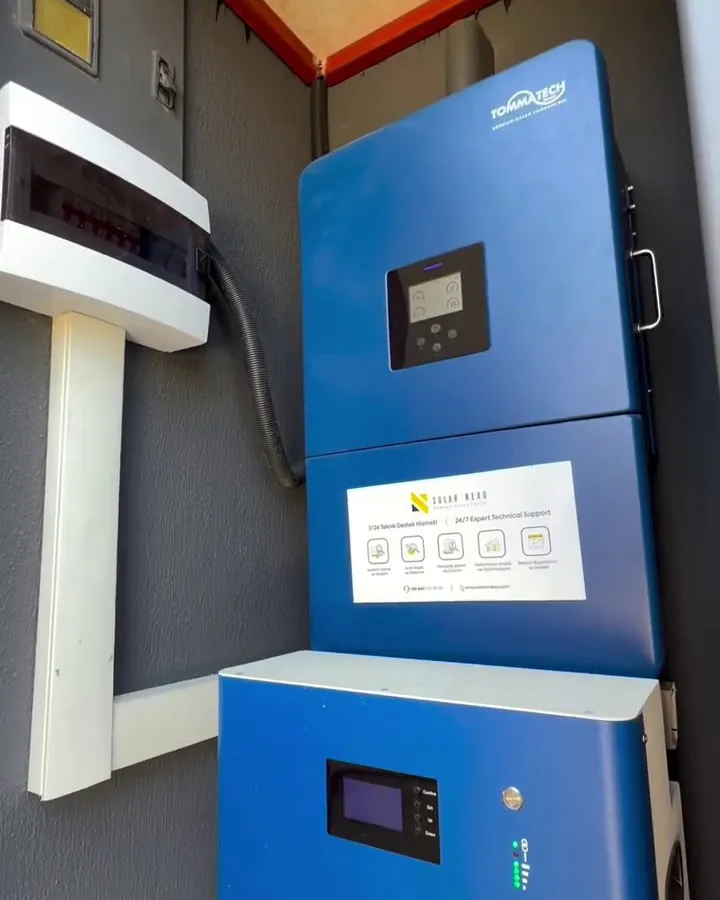
A hybrid inverter is the device that directs energy from the panels to the home, the battery and the grid. Used together with a monitoring device, it shows live production, household consumption, battery state of charge and the energy exchanged with the grid in a mobile app. The first step in smart energy management is learning to read this data.
Checking the app regularly for a few weeks reveals your household's consumption habits: at what times surplus production goes to the grid, how many kilowatts the evening peak reaches, and how large the home's base load is overnight. The answers to these questions are the basis for every setting that follows. We explain what to look for when choosing an inverter in our article on choosing a hybrid inverter, and the monitoring options in our article on solar energy monitoring systems.
The Solar Nexo product range includes TommaTech single-phase (Uno) and three-phase (Trio) inverters, high-voltage hybrid inverters, smart inverters and monitoring devices. Because the settings offered differ from model to model, it is worth asking your solar installer to go through the app's main screens and settings with you after installation.
Shifting Consumption to Sunny Hours: Which Appliances Are Flexible?
Some appliances in the home are flexible in terms of timing; it makes little difference when they run, as long as they finish their job during the day. Moving these appliances to midday is the easiest way to increase self-consumption.
- Washing machine and dishwasher: most models have a delayed-start function. Load the machine before leaving in the morning and set it to start around midday.
- Pool pump: filtration time can be concentrated in the sunny hours. We cover this in detail in our article on solar energy for pool pumps.
- Electric water heater: heating water at midday and keeping it in the tank until evening effectively stores energy as hot water.
- Air conditioning: in summer, starting to cool the house in the afternoon while the sun is still strong can ease the evening consumption peak.
- Heat pump: in homes with a heat pump, hot water preparation can be scheduled for daytime in the same way.
Appliances such as the oven, hob and television, on the other hand, depend on the moment of use; trying to shift them makes daily life harder. The aim of a smart home setup is not to sacrifice comfort, but to move loads that are already flexible to the right time.
Timers, Smart Plugs and Safety Limits
For appliances without a delayed-start function, there are two tools: timers and smart plugs. Mechanical or digital timers switch an appliance on and off at set times. Smart plugs are controlled from your phone, can be programmed and often also measure the consumption of the connected appliance. That metering feature is valuable in its own right for seeing how much energy each appliance uses.
An important safety warning applies here: every smart plug has a current limit, printed on the product label. High-power or continuously running appliances such as a water heater, pool pump or heat pump should not be connected to a plug that would be pushed to its limit. For such loads, having an electrician install a suitable relay or contactor in the distribution board is both the safe and the permanent solution.
Some hybrid inverters can trigger an output when surplus production reaches a set level. When this feature is supported, you can, for example, set up the water heater so that it only switches on when there is genuine surplus solar energy. Check the product documentation to see which models offer this.
Battery Priority Settings and Night-Time Use with Antalya Solar Panel Systems
On battery systems, the hybrid inverter offers operating modes that determine how the battery is used. Although the names and details of the modes vary by model, the logic is usually as follows:
- Self-consumption priority: daytime surplus first charges the battery, the home runs from the battery in the evening and at night, and the system switches to the grid once the battery is empty.
- Backup reserve: a certain percentage of the battery is set aside for grid outages, and normal use does not go below that level.
- Time-based setting: some models let you schedule the battery to charge or discharge at specific times; homes on a multi-rate tariff may want to consider this option.
When your home in Antalya is sensitive to outages in summer, keeping the backup reserve a little higher makes sense. During periods when outages are rare, lowering the reserve and making more of the battery available for evening consumption increases self-consumption. A good solar company in Antalya will set these modes together with you rather than leave them at factory defaults. The TommaTech lithium batteries used in installations come with a 5-year warranty and 8,000 cycles. For the characteristics of LiFePO4 chemistry, see our article what is a LiFePO4 battery.
Matching EV Charging to Antalya Solar Energy Production
Among the flexible loads in a home, an electric vehicle is one of those with the highest energy demand. When the car is parked at home during the day, moving charging to midday sends surplus solar production straight into the car. Some chargers can adjust their charging power to the solar surplus; without that feature, even simple scheduling makes a difference.
When the car is away during the day, charging in the sunny hours at weekends and on holidays, and using the grid or battery as needed on weekdays, is a balanced approach. Draining the battery at night to charge the car, however, is usually not efficient; the battery works more sensibly when reserved for household loads. Details are in our article on charging an electric vehicle with solar panels.
Daily Example: A Summer Day on Solar Power in Antalya
The table below shows how a summer day could be planned in a home with a hybrid battery system. The times are approximate and shift with the seasons; in winter the sunny hours are shorter.
| Time slot | Solar output | Planned loads | Control tool and battery behaviour |
|---|---|---|---|
| 06:00–09:00 | Low, rising | Fridge, breakfast, base loads | Battery energy left from the night plus rising production |
| 09:00–12:00 | Increasing | Washing machine and dishwasher, water heater | Delayed start, timer or relay |
| 12:00–16:00 | Peak | Pool pump, AC pre-cooling, EV charging | Battery charges; surplus trigger or scheduling |
| 16:00–19:00 | Falling | Cooking, air conditioning | Battery takes over when production falls short |
| 19:00–06:00 | None | Lighting, television, modem, fridge | Battery down to the backup reserve, then the grid |
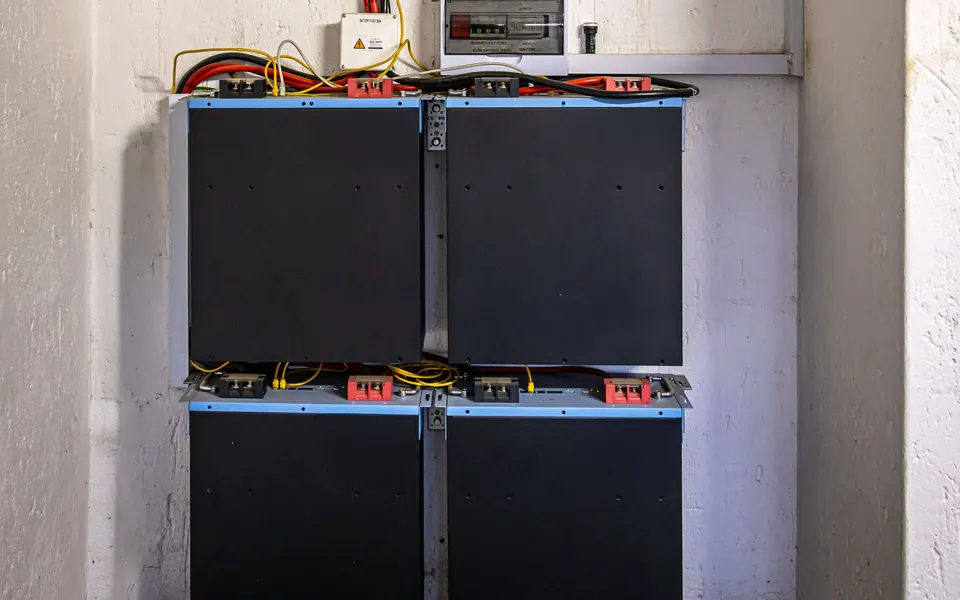
Let us illustrate this with a real system. The system Solar Nexo installed in Manavgat has 20 TommaTech 605 W panels, a 15 kW hybrid inverter and a 15 kWh LiFePO4 battery; the array power is 12.1 kWp. Taking the monthly PVGIS values for central Antalya as an approximate reference, this system gives a theoretical average of about 65.6 kWh per day in July and about 38.6 kWh per day in January. These values assume optimum tilt and south orientation; shading, soiling and the actual roof orientation are not included. With Antalya solar panel systems, planning which loads will absorb this midday abundance in summer is the essence of a smart home setup.
When Does a Smart Setup Make a Difference?
The effect of energy management varies from home to home. Homes where people spend the day, have a pool or own an electric vehicle have plenty of load to shift, and the gain is noticeable. For a flat that stays empty all day, a few simple steps such as delayed start and water heater scheduling are often enough. Where the user does not know the system, as in rental villas, automatic rules become even more important; we cover this scenario in our article on solar panels for rental villas in Antalya.
Promising the same result for every home with an Antalya solar panel investment would be wrong, but the first step is the same everywhere: read the data in the app, identify the flexible loads and move them into the sunshine. Making the most of solar energy in Antalya often starts not with buying new equipment, but with adjusting existing habits to production hours.
Conclusion
A smart home solar energy setup in Antalya aligns the energy your panels produce with the real rhythm of your home. The hybrid inverter app shows the data, timers and smart plugs move flexible loads into sunny hours, and battery settings balance the evening and outages. When comparing Antalya solar companies, ask whether they will help you configure these settings, not just install the hardware. To design your system along these lines, or to review the settings of your existing system together, request a free site survey from Solar Nexo; our 24/7 technical support line is available by phone and WhatsApp.
Frequently asked questions
What is self-consumption in a home with solar panels?
Self-consumption is the share of the energy produced by your panels that is used in the home, either immediately or from the battery, instead of being exported to the grid. Every kilowatt-hour used at home straight away is a kilowatt-hour you do not draw from the grid. The main goal of a smart home setup is to raise this share by shifting loads with flexible timing into sunny hours and adjusting battery settings to household consumption.
Which household appliances should I shift to midday?
Appliances with flexible timing are suitable: the washing machine and dishwasher, the pool pump, the electric water heater and hot water preparation with a heat pump. Most washing machines and dishwashers have a delayed-start function. Trying to shift appliances tied to the moment of use, such as the oven, hob or television, makes daily life harder and is usually unnecessary.
Can I connect any appliance to a smart plug?
No. Every smart plug has a current limit printed on its product label. High-power or long-running appliances such as a water heater, pool pump or heat pump can push that limit. For such loads, having an electrician install a suitable relay or contactor in the distribution board is the safe and permanent solution. Smart plugs are better suited to low and medium-power appliances.
What does the backup reserve do in battery settings?
The backup reserve sets aside a certain percentage of the battery for grid outages; in normal use the battery is not discharged below this level. In homes sensitive to outages, keeping the reserve high provides security. During periods when outages are rare, lowering the reserve makes more of the battery available for evening consumption and increases self-consumption. Options vary by hybrid inverter model.
Does it make sense to charge an electric vehicle with solar energy?
Yes, especially when the car is parked at home during the day, because surplus midday production goes straight into the car. Some chargers can adjust their charging power to the solar surplus; without that feature, simple scheduling also works. When the car is away during the day, charging in the sunny hours at weekends is a balanced approach. Draining the battery at night for the car is usually not efficient.
How much electricity does 1 kWp of solar panels produce per day in Antalya?
According to PVGIS 5.3, 1 kWp in central Antalya theoretically produces 168 kWh in July, an average of about 5.4 kWh per day. In January it drops to 99 kWh for the month, or about 3.2 kWh per day on average. These values assume optimum tilt and south orientation; shading, soiling and the actual roof orientation change real output.
Can smart management be added to my existing solar system?
In most cases, yes. Timers, smart plugs and the delayed-start function of appliances can be used with any system. Settings on the inverter side depend on the options the existing model offers; some models gain more features with a monitoring device or a software update. To see what your system supports, the inverter model and the monitoring setup need to be reviewed together.
Sources
Want a clear calculation for your roof?
The Solar Nexo team carries out a free site survey at your address in Antalya and designs the system that suits your roof, consumption and budget.