Short answer
Solar technical support in Antalya covers what happens after installation: monitoring the system, interpreting inverter error codes, remote guidance and, when needed, a site visit. Most faults first show up as a drop in output in the monitoring app. Having a photo of the error code, the inverter model and recent generation data ready when you ask for support speeds up the fix.
Key takeaways
- Most faults first appear in the monitoring app as zero output or output well below what is expected.
- Inverter error codes vary by brand and model; a photo of the code on the display and the time it appeared speed up diagnosis.
- Settings, communication and software issues are often fixed remotely; hardware faults and cabling problems need a site visit.
- The DC side stays live whenever there is daylight; opening covers and unplugging connectors is a job for authorised technicians only.
- Solar Nexo provides 24/7 phone and WhatsApp support and also maintains and repairs systems installed by other companies.
The day the panels go onto the roof and the inverter shows its first green light is only day one in the long life of a solar energy system. The system will spend years working through sun, heat, humidity and grid fluctuations. That is exactly why the need for solar technical support in Antalya begins after installation: knowing in advance whom to call when something goes wrong, what information to give and what you should never do yourself cuts down on lost generation days.
In this article we explain how a fault is spotted in the monitoring app, what inverter error codes generally mean, the difference between remote support and a site visit, and the information you should prepare when you request support.
Why Solar Technical Support in Antalya Matters
A solar energy system runs silently, and a fault rarely makes a noise or gives off a smell. When an inverter shuts down or a string of panels drops out, your home or business simply keeps drawing electricity from the grid, so the problem can go unnoticed for weeks. And once it is noticed, the lost generation does not come back.
This matters even more for solar energy in Antalya. According to PVGIS 5.3, 1 kWp of installed capacity in central Antalya produces a theoretical 168 kWh in July. If a 10 kWp system is out of action for a month in midsummer, that means losing roughly 1,680 kWh of theoretical output. Fast detection and fast response directly protect the return on the investment. That is why Solar Nexo provides 24/7 technical support by phone and WhatsApp.
The Monitoring App: You Are the First to See a Fault
Most modern inverters send generation data to a phone app through a monitoring device or Wi-Fi module. This app is the first link in the technical support chain. It shows daily generation, instantaneous power, the battery's state of charge where there is one, and any warnings the inverter raises. We explain how monitoring systems work in detail in our article on solar energy monitoring systems.
The most practical way to spot a fault is comparison. Two days with similar weather should produce similar amounts of energy. If output is clearly lower on a sunny day, if the power curve flattens out around midday or if the app shows zero all day long, there may be a problem. Comparing monthly totals with the PVGIS monthly values also gives a rough check, but bear in mind that those values are theoretical and exclude losses such as shading and soiling.
| Symptom in the monitoring app | Possible cause | First step |
|---|---|---|
| The app shows no data at all | Wi-Fi or monitoring module connection lost | Check the router and the inverter display |
| Zero output all day | Inverter switched off, breaker tripped or inverter fault | Photograph the error code on the display and call the support line |
| Clearly low output in clear weather | A string offline, soiling or new shading | Inspect the panels visually from the ground and ask for support |
| Intermittent cut-outs around midday | Grid voltage may be going outside its limits | Note the times; the technical team will take measurements |
| Battery drains quickly in the evening | Higher load, a settings issue or a battery problem | Share the consumption graph and battery warnings |
What Do Inverter Error Codes Tell You?
The inverter is the brain of the system, and when it detects a problem it shows an error code on its display or in the app. Code numbers and names vary by brand and model, so applying a code list you found online for a different inverter can be misleading. Even so, error types usually fall into a few main groups.
- Grid faults: When voltage or frequency moves outside the permitted range, the inverter disconnects itself from the grid for safety. This can happen around midday in areas at the end of a supply line; if it persists, it may need to be assessed together with the distribution company, Akdeniz EDAŞ (AEDAŞ).
- Insulation faults: These indicate leakage to earth somewhere on the DC side, in a cable, connector or panel. Warnings that appear after rain or on damp mornings and then disappear can point to moisture ingress.
- Temperature warnings: When the inverter cannot cool down enough, it reduces its power or shuts down. Mounting it in an unventilated cupboard or on a wall in direct sunlight can cause this.
- Communication faults: These show that data exchange between the inverter and the monitoring module, battery or meter has been interrupted; they are usually resolved remotely.
When you see an error code, take a photo of it and send it to the support line rather than switching the inverter off and on again and again. We cover common inverter faults in more depth in our article on inverter faults and solutions.
Remote Support or a Site Visit?
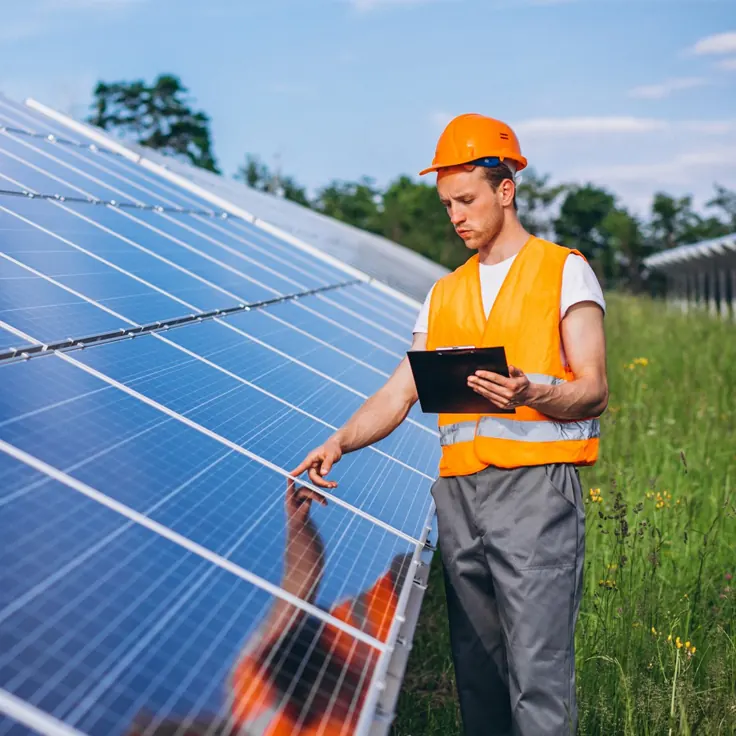
Not every problem requires someone to climb onto the roof. Lost connections, app settings, battery charge and discharge priorities and some software-related warnings can often be resolved through guidance by phone or WhatsApp, and in some cases through the inverter's remote access feature. That saves time and avoids unnecessary call-outs.
Hardware faults, burnt or melted connectors, broken panels, persistent insulation faults and repeatedly tripping breakers, on the other hand, call for a site visit. Safety is critical here: as long as the panels receive daylight, there is voltage in the DC cables. Opening the inverter cover, unplugging connectors or working inside the distribution board is a job for authorised technicians only.
What you can safely check yourself
A few simple checks before you call the support line help narrow down the source of the problem. None of these steps involves working inside the distribution board or the inverter:
- Making sure the router is working and the monitoring module is connected to the internet
- Reading the lights and messages on the inverter display and taking a photo of them
- Looking at the position of the solar breaker in the distribution board without opening its cover
- Inspecting the panels visually from the ground or another safe spot for new shading, breakage or heavy soiling
Climbing onto the roof, spraying cold water on hot panels or checking cables by hand, however, carries risks for both your safety and your warranty; leave these jobs to the technical team.
Real Example: Replacing Inverters at an Existing Plant in Gazipaşa
Technical support is not limited to the systems a company has installed itself. In Gazipaşa, Solar Nexo took on the replacement of 5 failed inverters at an existing plant that had been installed by another company. This was a service job, not an installation, and it is a typical example of solar maintenance and repair work.
The general approach to replacements like this is as follows. First, measurements confirm whether the fault lies in the inverter itself or on the DC or AC side; then an inverter is selected that suits the existing panel strings and the grid connection. After the replacement, the system is recommissioned, the monitoring connection is set up and the generation values are checked. You can find out more about our work on systems installed by other companies on our solar plant maintenance and repair page.
Periodic Maintenance for Solar Panels in Antalya
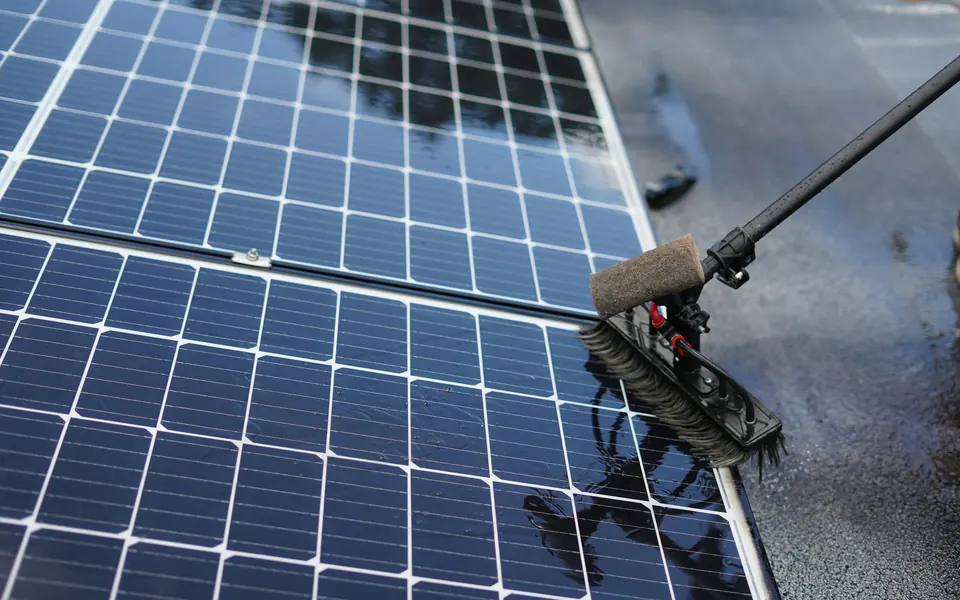
Preventing faults is as much a part of technical support as responding to them. With solar panels in Antalya, spring pollen, late-summer dust and salty air in coastal areas can affect both the panel surface and the fasteners. Periodic maintenance catches these effects before they grow into bigger problems. For anyone who has invested in solar energy in Antalya, a simple yearly routine is the easiest form of protection.
| Check | What is done | Recommended timing |
|---|---|---|
| Panel surface | Check for soiling, bird droppings and cracks; clean if necessary | After the pollen season and at the end of summer |
| Mounting structure | Check bolts, clamps and corrosion | Once a year; more often on the coast |
| Cables and connectors | Check for overheating, crushing and insulation damage | Once a year |
| Inverter | Review the error log, check the fan and ventilation | Once a year |
| Battery (if fitted) | Warning logs, ambient temperature, connections | Once a year |
Where needed, a thermal camera scan can be carried out to find hot spots. You can read about the scope of maintenance in our article on solar energy system maintenance, and about the steps to follow in year one in our guide to the first year after installation.
Information to Prepare for a Support Request
Having the following information ready when you call the support line speeds up diagnosis, and often means the problem is pinned down on the first call:
- A photo of the error code on the inverter display or in the app, plus the time it appeared
- The make and model of the inverter, battery and panels (a photo of the label is enough)
- The generation graph for the last few days from the monitoring app
- The system's address and installation date, plus photos of the warranty certificates if you have them
- Any recent changes: roof work, a new appliance, electrical work or a storm
Antalya Solar Panel Servicing: Documents and the Authorised Dealer Difference
Warranty documents make Antalya solar panel servicing much easier. Solar Nexo is an authorised dealer for TommaTech and CW Enerji and hands over the manufacturer's warranty certificates and technical documents to the customer for its own installations. The panels carry a 30-year performance warranty, inverters a 2, 3 or 5-year factory warranty depending on power rating and model, and lithium batteries a 5-year warranty / 8,000 cycles.
For a fault covered by warranty, the claim to the manufacturer is made using the product's serial number and documents, so we recommend keeping digital copies of them as well. If your system was installed by a different solar company in Antalya, share the existing documents and inverter details before the service visit. A good solar installer, or any service team taking over a system, needs this information to choose compatible parts.
Conclusion: Uninterrupted Generation with Solar Technical Support in Antalya
A good installation is half the job; the other half is monitoring the system over the years and responding quickly to problems. When it comes to solar technical support in Antalya, checking the monitoring app regularly, photographing error codes and respecting the safety limits are the most valuable contributions you can make yourself. That is how you protect the return on your investment in solar energy in Antalya, whichever solar installer originally fitted the system.
Whether or not your system was installed by Solar Nexo, you can reach us 24/7 on +90 540 007 63 96 or at info@solarnexo.com for fault diagnosis, maintenance or a free site survey in Antalya and the surrounding area.
Frequently asked questions
How can I tell if my solar energy system has a fault?
The easiest way is to check the monitoring app. If output is zero on a sunny day, clearly lower than on days with similar weather, or the inverter display shows an error code, there may be a problem with the system. In that case, taking a photo of the code and sending it to the technical support line together with the generation graph for the last few days speeds up diagnosis.
What should I do when the inverter shows an error code?
First take a photo of the error code and the time it appeared, then send it to the technical support line. Because error codes mean different things depending on the brand and model, do not interpret them using another device's code list. Rather than repeatedly switching the inverter off and on or opening its cover, wait for guidance; the DC side stays live whenever there is daylight.
Does every fault need a technician to visit?
No. Many issues, such as lost connections, app settings and battery priority settings, can be resolved through guidance by phone or WhatsApp, and sometimes through the inverter's remote access feature. Hardware faults, burnt connectors, broken panels, persistent insulation faults and repeatedly tripping breakers, however, require on-site measurement and repair. Which route is needed is decided together on the first call.
Do you service solar energy systems installed by other companies?
Yes. Solar Nexo's solar maintenance and repair service also covers systems installed by other companies. For example, in Gazipaşa we replaced 5 failed inverters at an existing plant that had been installed by another company. Sharing the existing inverter model, panel details and any warranty documents before the service visit makes the process easier and speeds up the choice of compatible parts.
How do I contact Solar Nexo technical support?
You can reach Solar Nexo 24/7 by phone or WhatsApp on +90 540 007 63 96; the email address is info@solarnexo.com. The office is at Barış Mah. Barış Manço Blv. No 49/A, Kepez/Antalya. When you get in touch, sharing a photo of the error code, the inverter model and the system's address speeds up diagnosis.
How often should solar panels be maintained?
As a general recommendation, the mounting structure, cables, connectors and inverter are checked once a year. Panel cleaning is planned according to soiling; in Antalya, the end of the spring pollen season and late-summer dust are the key times. For systems near the coast, checking the fasteners more often is worthwhile because of the salty air.
How do I find out whether a fault is covered by warranty?
Warranty coverage is stated on the product's warranty certificate. For Solar Nexo installations, panels carry a 30-year performance warranty, inverters a 2, 3 or 5-year factory warranty depending on the model, and lithium batteries a 5-year warranty / 8,000 cycles. Because claims to the manufacturer are made with the serial number and documents, keeping digital copies is recommended.
Sources
Want a clear calculation for your roof?
The Solar Nexo team carries out a free site survey at your address in Antalya and designs the system that suits your roof, consumption and budget.