
Short answer
An Antalya solar tracker is a single-axis tracking system that follows the sun by turning the panels from east to west during the day. Compared with a fixed system it spreads output into the morning and evening, but it needs motors, controllers, a wind stow position, ground precision and extra maintenance. Its yield contribution must be determined by project-specific comparative simulation for the same land, not by a generic percentage.
Key takeaways
- A single-axis tracker rotates the panels from east to west around a shaft laid out north–south.
- The backtracking algorithm stops rows from shading each other when the sun is low.
- A tracker spreads the output curve into the morning and evening; its contribution is calculated by project-specific simulation.
- Moving parts, control infrastructure, ground precision and maintenance are additional cost items.
- A wind sensor and stow position are critical parts of the design given Antalya's storm risk.
- Wide, even land can be considered for trackers; on rugged sites a fixed system is usually more suitable.
For a ground-mounted solar power plant (GES), the most fundamental structural decision is whether the panels stay fixed or follow the sun throughout the day. Antalya solar tracker installations, that is, single-axis solar tracking systems, follow the sun by turning the panels east in the morning and west in the evening. Attractive as it sounds, a tracker is not the right choice for every plot of land. In this article we look at how trackers work, their advantages and disadvantages, and the projects in which they are worth considering, from an engineering point of view.
What is an Antalya solar tracker and how does it work?
A single-axis tracker is a system in which a long supporting shaft (the torque tube), to which the panels are attached, is laid out in a north–south direction and rotated by a motor or actuator. In the morning the panels tilt towards the east, around noon they come close to horizontal, and in the afternoon they turn west. This way sunlight reaches the panel surface at a steeper angle throughout the day.
The movement of the system is managed by a control unit. The controller determines the sun's position by astronomical calculation; some systems also use sensor data. When a wind sensor (anemometer) detects strong wind, the panels are moved to a safe stow position. To prevent mutual shading between rows, an algorithm called "backtracking" is used: when the sun is low, instead of turning fully towards the sun, the panels are held at an angle at which they do not shade the row behind.
Dual-axis trackers also exist; they move both east–west and in tilt. Because of their mechanical complexity and maintenance needs, however, single-axis systems are far more common on large ground plants. This article also focuses on single-axis systems.
The difference between a fixed system and a single-axis tracker
In a fixed system, the panels face south and stay at the same tilt all year. The optimum fixed tilt given by PVGIS 5.3 for central Antalya is about 33°, and at that tilt a 1 kWp system has a theoretical annual yield of about 1,656 kWh. The output curve of a fixed system peaks around midday and falls off noticeably in the morning and evening.
A tracker widens this curve. Because the panel faces the sun more directly in the morning and afternoon, the daily output curve becomes broader. The midday peak, on the other hand, stays similar to that of a fixed system. A tracker's contribution to annual yield depends on latitude, cloud cover, the shape of the land, row spacing and module type, so quoting a general percentage would be misleading. The contribution has to be calculated through project-specific simulation.
| Criterion | Fixed mounting | Single-axis tracker |
|---|---|---|
| Moving parts | None | Motor, actuator, bearings, controller |
| Daily output curve | Narrow, peaking at midday | Broader, stronger in the morning and evening |
| Land requirements | Adapts more easily to sloping land | Needs even, wide land; slope tolerance is limited and varies by manufacturer |
| Wind behaviour | Passive, sized for the design load | Requires a stow position and sensor infrastructure |
| Maintenance | Simpler | Requires mechanical and software maintenance |
| Contribution to annual yield | Reference | Determined by project-specific simulation |
Tracker advantages under the conditions of solar energy in Antalya
When it comes to solar energy, Antalya is a high-irradiation region, and clear-sky days last a long time, especially in summer. In the PVGIS monthly data, July and August are the strongest months of the year at about 167–168 kWh/kWp. Under clear skies, direct irradiation makes up a large share of the total, so the theoretical benefit of following the sun is also more pronounced. On cloudy days dominated by diffuse light, the benefit of tracking is smaller.
The main advantages of a tracker can be listed as follows:
- A broader production profile: More output in the morning and evening can be meaningful for facilities whose daytime consumption is spread over many hours.
- More efficient use of connection capacity: Because the midday peak stays similar while production hours are extended, there may be scope to generate more energy per year with the same connection capacity.
- Compatibility with bifacial modules: The tall, open structure of trackers can help the rear side of the panel capture light reflected from the ground. See our article on bifacial double-sided panels for more on this.
- Flexibility with snow and soiling: Some systems can move the panels to a steep position to help snow slide off; this feature varies by manufacturer.
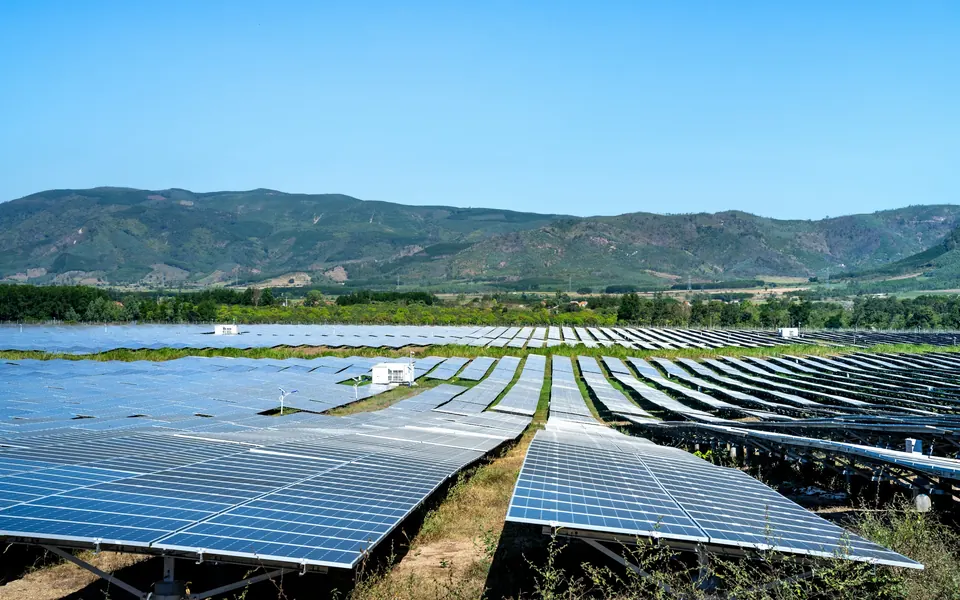
Disadvantages and cost items
The extra production a tracker brings comes with extra complexity. Before an investment decision, the following cost items need to be assessed one by one:
- Mechanical equipment: The torque tube, bearings, drive unit and fasteners involve more parts, and more precise ones, than a fixed structure.
- Control and communication infrastructure: Each row needs its own controller, plus wind sensors, a communication network and a power supply for all of this equipment.
- Ground preparation and pile precision: Tracker rows have to operate along a straight line. The soil survey, pile-driving tolerances and levelling work are carried out more carefully than for a fixed system.
- More land: Because of backtracking and row spacing requirements, the land needed for the same installed capacity may differ.
- Operation and maintenance: Periodic checks of moving parts, lubrication, software updates and fault response are added to the operating budget.
- Insurance and risk: The risks of mechanical failure and wind damage may be reflected in insurance terms.
Each of these items varies by supplier, site condition and project scale. For this reason, the tracker decision should be based on a comparative quotation and yield simulation against a fixed system.
Wind, storms and the stow position in Antalya
Antalya's coastal belt sees strong winds and storms from time to time, while inland and in the uplands, wind and snow loads also have to be assessed separately. Trackers are protected against these loads in two ways: by sizing the structure for the design wind load, and by moving the panels to a stow position with lower wind exposure when the wind picks up.
Reliable operation of the stow position is critical. How the system should behave if the wind sensor fails, communication drops out or the controller loses power must be defined at the design stage. Lightning and surge protection must also cover the control and communication lines. We explain the general principles in our article on lightning and storm protection for solar plants. On projects near the coast, the corrosive effect of salty air on mechanical parts and bearings must also be reflected in the choice of materials.
What to watch in maintenance and operation
On a fixed system, maintenance mostly consists of panel cleaning, electrical checks and visual inspection of the structure. On a plant with trackers, mechanical and software maintenance are added. Drive units, bearings and connection points should be checked at the intervals recommended by the manufacturer. The positioning accuracy of the controllers, the backtracking settings and stow position tests should be verified at regular intervals.
Remote monitoring makes this far easier. The monitoring system should show not only inverter data but also the angle and alarm status of every tracker row. A row that gets stuck or stays at the wrong angle can cause losses that go unnoticed in the production data. Solar Nexo recommends agreeing the maintenance plan with the plant operator at the installation stage, on tracker projects just as on fixed systems.
On which sites is a tracker considered for an Antalya solar power plant?
The Antalya solar tracker decision depends on the conditions of the site rather than on a general preference. The situations in which a tracker can be considered, and those that call for a more cautious approach, can be summarised as follows:
| Condition | Suitability for a tracker |
|---|---|
| Wide, flat or gently sloping land | Can be considered |
| Limited connection capacity, sufficient land | Can be considered for extending production hours |
| Bifacial modules are planned | Simulating both together is recommended |
| Rugged, fragmented or steep land | A fixed system is usually more suitable |
| Ridge or hilltop exposed to wind | Requires a detailed wind assessment |
| Small-scale or rooftop application | In practice a fixed system is preferred |
The high theoretical values PVGIS shows for inland districts such as Elmalı and Korkuteli (about 1,719 kWh/kWp/year for Elmalı and 1,655 for Korkuteli) can make the wide plots in these areas interesting for trackers. Under upland conditions, however, snow, frost and wind effects must be taken into account separately. On land close to the coast, corrosion and storm risk come to the fore. You will find the overall process of a ground-mounted solar power plant in Antalya in our article on Antalya ground-mounted solar plant installation.
Deciding by simulation: which data matter?
The choice between a tracker and a fixed system should be made by comparing two separate designs prepared for the same land. The following outputs are usually examined in this comparison:
- The installed capacity that fits on the same land,
- Annual and monthly yield estimates,
- Annual yield per kWp,
- The hourly production profile and its interaction with the connection capacity limit,
- A detailed breakdown of investment and operating cost items,
- An assessment of risks arising from wind, soil and climate.
Solar Nexo presents this comparison as a report that states the assumptions behind both options clearly, so you can decide using the same criteria. In this analysis, irradiation data can be taken from sources such as PVGIS and climate observations from the Turkish State Meteorological Service (MGM). For connection and permitting, the requirements set by Akdeniz EDAŞ (the local electricity distribution company) and EPDK (Türkiye's energy market regulator) under current regulations as of November 2026 apply; using trackers may require additional technical documents in the project file. For details of the design process, see our article on Antalya solar power plant design.
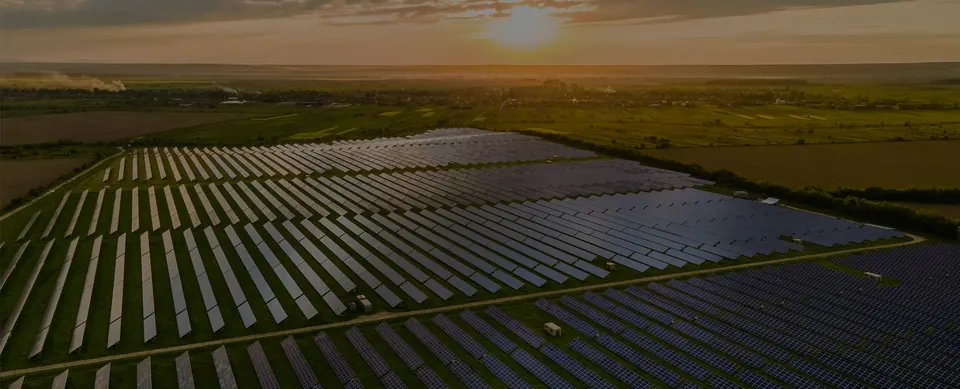
To see the other topics around solar energy in Antalya, the regional data and the process steps in one place, use our Antalya solar power plant guide.
Conclusion
A single-axis solar tracking system is a strong option that can broaden the production profile on suitable land, but it also brings extra burdens such as moving parts, wind management, ground precision and maintenance. For anyone investing in solar energy in Antalya, the right approach to an Antalya solar tracker assessment is to run a comparative simulation against a fixed system on the same land and base the decision on those results. If you would like to know whether your land is suitable for a tracker, contact Solar Nexo for a free site survey.
Frequently asked questions
What is a single-axis tracker?
A single-axis tracker is a solar tracking system in which the panels are mounted on a shaft running north–south and rotated from east to west during the day. In the morning the panels face east, around noon they are close to horizontal and in the evening they turn west. A control unit manages the movement and determines the sun's position by astronomical calculation. In strong wind the panels move to a stow position, and backtracking prevents shading between rows when the sun is low.
How much more does a tracker produce than a fixed system?
It would be wrong to answer this with a general percentage; the contribution is calculated by project-specific simulation. The result depends on latitude, cloud cover, the shape of the land, row spacing, module type and backtracking settings. In regions like Antalya, where clear-sky days last a long time, the theoretical benefit of tracking is more pronounced. The right decision comes from comparing fixed and tracker designs for the same land.
What are the main disadvantages of a tracker?
The main disadvantages of a tracker are its moving parts, the additional control infrastructure and the heavier maintenance requirement. Components such as motors, bearings, controllers and wind sensors add points of failure. Ground preparation and pile precision must be handled more carefully than with a fixed system. Wind management, insurance terms and land requirements are further items that have to be added to the cost and risk assessment.
Is a tracker safe during storms in Antalya?
A correctly designed and well-maintained tracker can be protected against strong winds thanks to its stow position. The structure is sized for the design wind load, and when the wind sensor exceeds its threshold the panels are moved to an angle with lower loading. How the system behaves in the event of sensor failure, a communication outage or loss of power must be defined at the design stage, and the stow position must be tested regularly.
On what kind of land should a tracker be considered?
A tracker is usually considered on wide, flat or gently sloping land with a regular shape. Its ability to extend production hours can be attractive on projects where connection capacity is limited but land is sufficient. On rugged, fragmented or steep sites, a fixed system is usually more suitable. Wind-exposed ridges and locations very close to the coast require a detailed wind and corrosion assessment.
Are trackers used on rooftop solar systems?
In practice trackers are not chosen for rooftop applications; rooftop solar systems use fixed mounting. The moving structure of a tracker, its wind loads, its weight and the spacing it needs between rows do not fit the structural and space constraints of a roof. Maintenance access also becomes harder. Tracker technology was developed primarily as a solution for large ground-mounted plants.
How does Solar Nexo help with the tracker decision?
During a free site survey, Solar Nexo inspects the topography of the land, access conditions and wind exposure on site. Fixed and tracker options are then designed separately for the same land, and installed capacity, annual yield estimates, cost items and risks are compared. Connection and permitting procedures are planned separately in line with current regulations as of November 2026, and the decision is made together with you based on this comparison.
Sources
Want a clear calculation for your roof?
The Solar Nexo team carries out a free site survey at your address in Antalya and designs the system that suits your roof, consumption and budget.