
Short answer
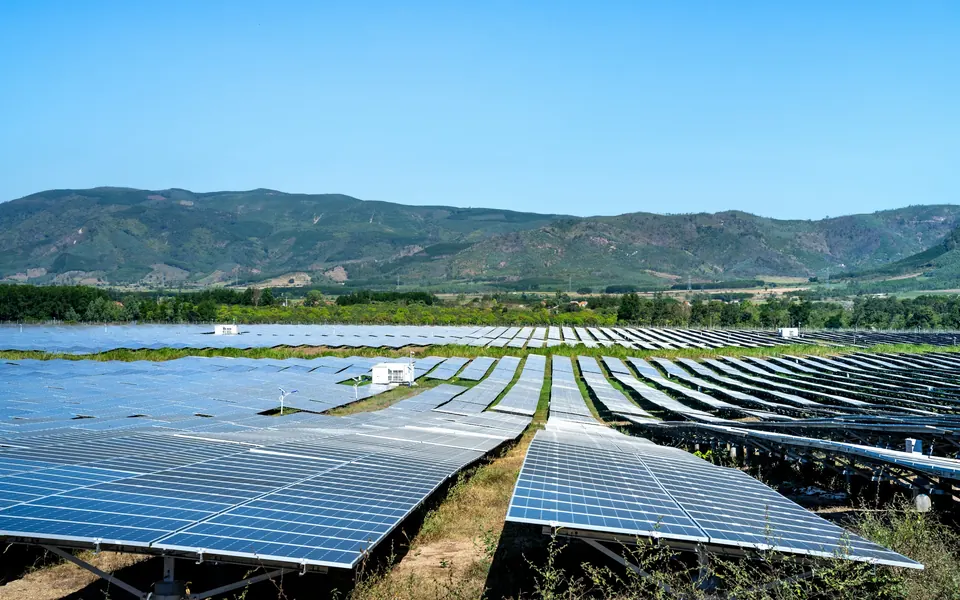
An Antalya ground-mounted solar plant starts with site selection based on slope, orientation, shading, soil, distance to the grid and access. The soil survey decides between driven piles, screw piles or concrete footings. Zoning, land classification and grid connection are confirmed with the relevant authorities under current regulations; during operation, vegetation control, cleaning and monitoring are essential.
Key takeaways
- A ground-mounted plant is managed like a construction project: site first, then permits, then design and installation.
- Six core criteria: slope, orientation, shading, soil, distance to the grid and access road.
- The structure type (driven pile, screw pile, concrete footing) is chosen according to the soil survey.
- Zoning, land classification and environmental assessment are confirmed with the authorities under current regulations.
- Vegetation control, cleaning, remote monitoring and periodic inspections must be planned for the operating period.
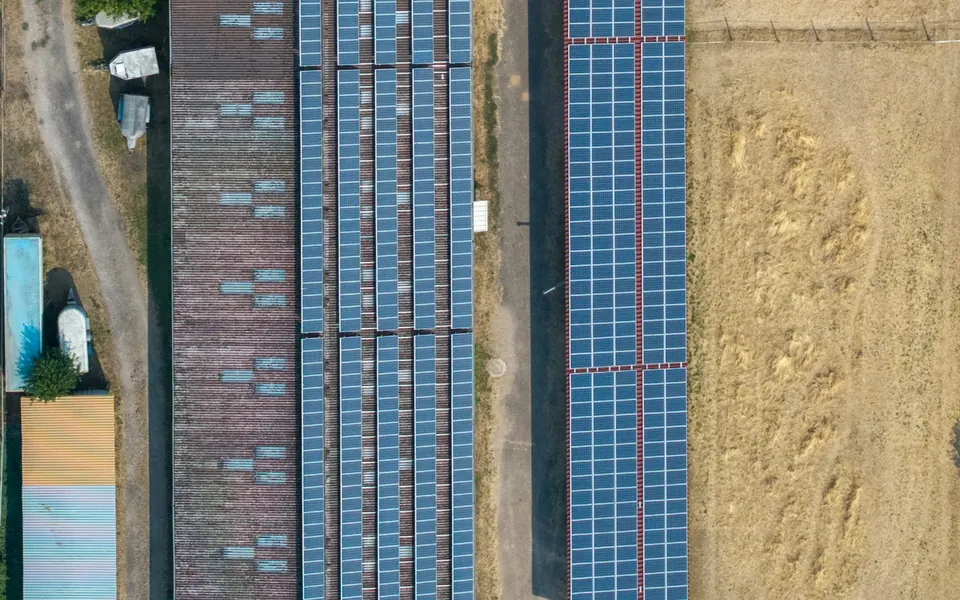
An Antalya ground-mounted solar plant is a very different job from placing panels on a roof: there is no existing building, so you build the foundations, the road, the fence, the drainage and the grid connection yourself. When a solar power plant (GES, from the Turkish güneş enerji santrali) is built on land, its success depends largely on the decisions made before a single panel is mounted. In this article we walk through how a plot of land becomes a power plant, covering site selection, the soil survey, the permit framework, the mounting structure and the operating period. If you would first like an overview of the general differences between roof and land, see our article on rooftop vs ground-mounted solar plants.
Why does an Antalya ground-mounted solar plant proceed differently from a rooftop system?
On a rooftop plant, the supporting structure, the electricity subscription and access already exist; the engineering mostly focuses on the roof's load-bearing capacity and shading. On land, everything is designed from scratch. How the panels will be anchored to the ground, how heavy vehicles will enter the site, where rainwater will flow and at which point the generated energy will be fed into the grid are all questions that have to be solved one by one.
Another difference is scale. Land projects usually reach higher installed capacities than rooftop systems, which makes grid connection capacity, transformer requirements and permit procedures far more decisive. In short, a ground-mounted plant should be managed like a construction project: site first, then permits, then design, and installation last of all.
Site selection: six criteria for a solar power plant in Antalya
To judge whether a plot is suitable for a plant, the following criteria need to be assessed together. A single weak criterion does not always stop a project, but it directly affects cost and schedule.
| Criterion | What is checked? | Why does it matter? |
|---|---|---|
| Slope | The gradient of the land and the direction it faces | On north-facing slopes the row spacing increases, so fewer panels fit on the same area |
| Orientation | South, east or west aspect | A gentle south-facing slope is generally an advantage for the layout |
| Shading | Nearby obstacles (trees, poles, buildings) and the distant horizon (mountains) | With the low winter sun, horizon shading can reduce morning and evening output |
| Soil | Rock, fill, clay, groundwater, flood risk | Determines the structure type and the cost of the foundations |
| Distance to the grid | The nearest power line and substation | The length and capacity of the connection line affect the feasibility of the project |
| Access | A road that trucks and construction machinery can use | Needed for material delivery during installation and for maintenance access during operation |
Antalya's geography brings every one of these criteria to the fore. On the foothills of the Taurus Mountains and in the highland districts, plots are generally sloping and rocky in places; on the plain, issues such as flooding and a high groundwater table can arise. To assess horizon shading, the PVGIS horizon option, which takes the terrain profile into account, can be used, but nearby obstacles always require on-site measurement. In terms of generation potential, the theoretical PVGIS 5.3 values are about 1,655 kWh/kWp per year for Korkuteli and 1,719 for Elmalı; for central Antalya the figure is 1,656 kWh/kWp.
Soil survey and mounting structure: driven piles or concrete footings?
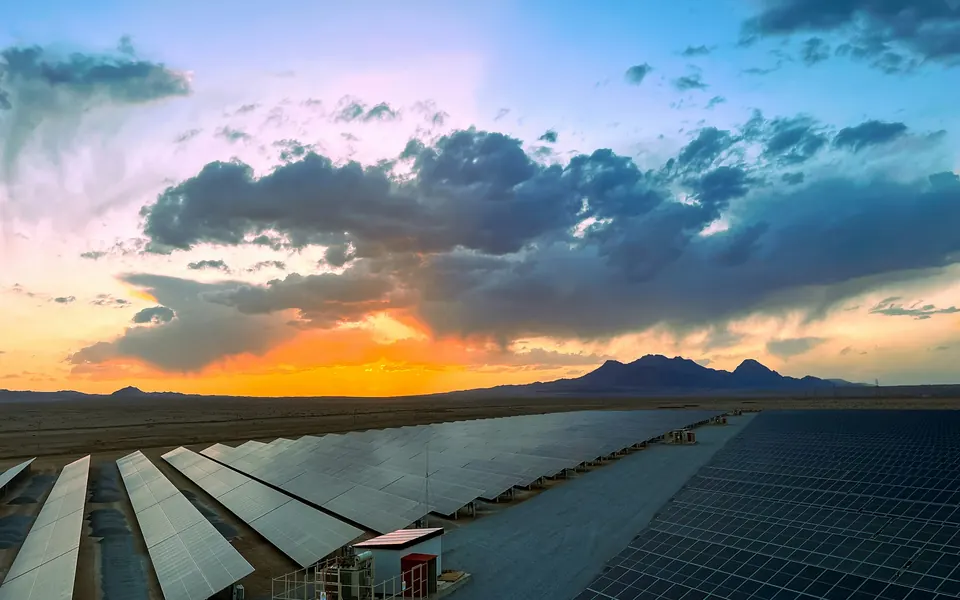
On a ground-mounted plant, the system carrying the panels has to withstand wind, snow and ground movement throughout the life of the installation. That is why the choice of structure should rest on soil data, not on guesswork. A soil survey usually examines the soil layers with boreholes or trial pits and assesses the groundwater level and the corrosiveness of the soil. Where driven piles are being considered, pull-out tests are carried out to show how strongly a pile resists being pulled out of the ground.
- Driven piles: Galvanised steel profiles are rammed into the ground by machine. On suitable soil they are quick to install, need no concrete and can be removed at the end of the project.
- Screw piles: Piles with helical tips are screwed into the ground. They are preferred in some soft or mixed soils.
- Concrete footings or pre-drilled piles: When a pile cannot be driven directly into rocky ground, the rock is drilled or a concrete foundation is built. This solution may come up on the rocky and travertine ground found in some areas around Antalya.
When the structural calculation for an Antalya ground-mounted solar plant is made, not only the weight of the panels is considered but also wind load, snow load in the highland districts and corrosion near the coast. For how the panel rows should be arranged, the spacing between rows and the choice between single-row and double-row layouts, see our article on ground-mounted solar panel layout.
The general framework for zoning, permits and grid connection
For solar energy in Antalya, the permit procedure of a land project varies with the classification of the site and the size of the project. So rather than quoting specific articles or thresholds, we list the topics that are usually checked as of November 2026, under current regulations:
- Ownership and right of use: Title deed status, shared ownership and, if the land is to be leased, a long-term contract that can be annotated on the title deed.
- Zoning status: The planning decisions for the parcel and its suitability for a power plant are obtained from the relevant municipality or authority.
- Land classification: Parcels classified as agricultural land, pasture, within forest boundaries or in a protected area may require an additional authority opinion or permit.
- Environmental assessment: Depending on the location and size of the project, it is clarified whether an assessment is required under the regulations of the Ministry of Environment, Urbanisation and Climate Change.
- Grid connection: Connection capacity and the connection point are evaluated by the distribution company upon application. In Antalya, this is Akdeniz EDAŞ, the local electricity distribution company.
On land projects, the grid side is often the decisive link. You can find detailed information on connection capacity, transformer requirements and line routing in our article on solar plant connection capacity and transformers. The distinction between unlicensed and licensed generation also changes the project's path; before applying, you need to confirm which framework applies to you from the current regulations of EPDK, Turkey's energy market regulator, and of the distribution company.
Site infrastructure: fencing, drainage, roads and cable routes
The infrastructure beyond the panels is at least as important as the panels themselves for the site to run trouble-free for many years. The perimeter of the land is usually closed off with a wire fence, with a gate wide enough for vehicles and staff. Security cameras, lighting and warning signs help protect the site; for details on this, see our article on solar plant site security.
Drainage is a topic that must not be neglected, given the intense, short downpours of the Mediterranean climate. The natural flow paths of the land are studied so that surface water does not pool around the structure posts, erode the soil or fill the cable trenches; channels and crossings are built where necessary. Underground cable routes are marked, and cable ducts and junction boxes are planned so that they are easy to reach during maintenance. An internal service road is needed both to transport materials during installation and to give cleaning and maintenance crews access during operation.
Development steps for a solar power plant in Antalya on open land
- Preliminary assessment: Location, PVGIS generation estimate, slope, orientation and distance to the grid are reviewed as a desk study.
- Site survey: The Solar Nexo team walks the land; shading sources, the appearance of the soil, the access road and water flow paths are recorded.
- Legal and zoning checks: Title deed, right of use, zoning status and land classification are clarified.
- Soil survey: Soil data is collected to decide on the structure type, and a pull-out test is carried out where necessary.
- Connection application and permits: The application to the distribution company is filed, and the authority opinions required by the site's classification are obtained.
- Engineering design: The layout plan, string calculation, single-line diagram, cable and protection designs are prepared. We explain the content of these documents in our article on solar plant design and engineering.
- Installation and acceptance: Infrastructure, structure, panel and electrical installation are completed; tests and acceptance procedures are carried out.
The point of this sequence is to leave the hard-to-reverse decisions until last. Ordering the mounting structure before the connection capacity is clear, for example, or choosing a pile type without soil data, can force changes to the project later on.
The operating period: maintenance on an Antalya solar energy site
Once a ground-mounted plant has been commissioned, the operating period begins, and it lasts for the entire life of the plant. The main operating topics on sites that harvest solar energy in Antalya are:
- Vegetation control: Grass growing under and in front of the panels can cast shade and, as it dries out in summer, increase the fire risk. Regular mowing should be planned.
- Cleaning: Dust, pollen and bird droppings can reduce output. How a water supply for cleaning will be provided on site should be considered from the start.
- Monitoring: Inverter and meter data are tracked remotely, and deviations from expected generation are reported by alarm.
- Periodic inspections: Connection points, earthing, structure bolts and cable insulation are checked at set intervals; a thermal camera scan for hot spots can also be carried out.
On land projects, Solar Nexo provides not only the site survey, engineering design and installation but also maintenance and repair for plants already in operation; this service also covers systems installed by other companies.
Conclusion
A successful Antalya ground-mounted solar plant begins with choosing the right land and making decisions in the right order. Slope, orientation, shading, soil, distance to the grid and access should be assessed together, and permit and connection topics confirmed with the relevant authorities under current regulations. The structure type should rest on soil data, and the layout on shading and generation analysis. If you have a plot you are thinking of turning into a solar power plant in Antalya, the Solar Nexo team can assess the site's suitability with you during a free site survey. For the bigger picture of solar energy in Antalya, have a look at our Antalya solar power plant guide as well.
Frequently asked questions
What kind of land is suitable for a ground-mounted solar plant?
In general, land that faces south, has a gentle slope, few shading obstacles, soil suitable for the structure, a nearby power line and vehicle access is suitable. On north-facing slopes, more space has to be left between rows, which reduces the number of panels that fit on the same area. Suitability depends not on a single criterion but on assessing all criteria together and on an on-site survey.
Is a soil survey necessary for a ground-mounted solar plant?
Yes, soil data is needed to choose the structure type soundly. A soil survey assesses the soil layers, rock depth, groundwater and the corrosiveness of the ground. If driven piles are being considered, pull-out tests show how firmly the pile holds in the ground. A pile type chosen without this data can cause problems during installation and may require changes to the project.
Can a solar power plant be built on rocky land?
It can, but the structural solution changes. On rocky ground, steel piles may not be driven in directly; in that case the rock is pre-drilled before the pile is placed, or a concrete footing foundation is built. These methods may come up on the rocky and travertine ground found in some areas around Antalya. Which solution is suitable is determined by the soil survey and the results of on-site trials.
Is a permit required to build a solar plant on agricultural land?
For parcels classified as agricultural land, an additional permit or authority opinion is usually considered for building a plant. As of November 2026, under current regulations, the permits required vary with the class of land, its location and the size of the project. Zoning status, land classification and the opinions of the relevant authorities should therefore be clarified before project development begins; the definitive answer comes from the authorities' assessment.
Why does distance to the grid matter for a ground-mounted solar plant?
For the generated energy to be fed into the grid, a line has to be run from the site to the connection point. The longer this distance, the greater the line investment, the losses and the number of route sections requiring permits. The distribution company also assesses whether there is enough capacity at the connection point. In Antalya, Akdeniz EDAŞ makes this assessment; moving to detailed design before the capacity is clear is risky.
What is done during the operating period of a ground-mounted plant?
During operation, generation is monitored remotely, panel cleaning and vegetation control are carried out on schedule, and connection points, earthing and the structure are inspected periodically. Because dried grass can create a fire risk in summer, the mowing schedule is important. A thermal camera scan for hot spots helps find faulty panels or connections early. Solar Nexo also offers these maintenance and repair services for plants installed by other companies.
Sources
Want a clear calculation for your roof?
The Solar Nexo team carries out a free site survey at your address in Antalya and designs the system that suits your roof, consumption and budget.