Short answer
Antalya solar plant monitoring for commercial and ground-mounted plants is built on an inverter portal, a data logger, meter data and irradiance and temperature sensors working together. Alarm rules are defined with thresholds, delays and a notification chain. SCADA is needed at sites with a substation or many devices; monthly reports compare output, performance ratio and availability with the PVGIS expectation.
Key takeaways
- Operating-scale monitoring consists of an inverter portal, a data logger, a meter and weather sensors.
- An irradiance sensor makes it possible to tell whether low output is caused by the weather or by a fault.
- Alarm rules should be designed with thresholds, delays and a clear notification chain.
- SCADA is not needed at every plant; it comes into play at sites with a substation, an MV connection or many devices.
- Monthly report: output, specific yield, PR, availability, alarms and maintenance records.
For a system on the roof of a house, the inverter app on your phone is usually enough: you glance at daily output and notice if something goes wrong. At operating scale, things change. A factory roof may carry several inverters, a plot of land dozens of strings, and a remote site may go for hours on end with nobody present. That is why Antalya solar plant monitoring is less an app than an operating system for the plant. The larger a solar power plant (GES, from the Turkish güneş enerji santrali) becomes, the more generation is lost for every day a fault goes unnoticed. In this article we explain the layers of monitoring at commercial and ground-mounted plants, alarm rules, the need for SCADA and reporting. For residential systems, our article on solar energy monitoring systems offers a more basic starting point.
What does an Antalya solar plant monitoring system cover?
Monitoring at operating scale means bringing together data from different sources. Each layer answers a different question:
| Layer | Data collected | Question it answers |
|---|---|---|
| Inverter portal | Output, DC and AC values, error codes | Are the inverters running, and what are they producing? |
| Data logger | Time series collected from multiple devices | How does the whole site look on a single screen? |
| Meter and energy analyser | Energy exported to the grid and consumed | How much energy was actually measured? |
| Weather sensors | Irradiance, module and ambient temperature, wind | Is output adequate for the sunlight received? |
| SCADA (where needed) | Breakers, relays, transformer and all site data | How is the plant managed as a whole? |
On a small commercial roof, the first three layers are often sufficient. At ground-mounted plants and on large commercial roofs, weather sensors and sometimes SCADA come into play as well. The right setup is determined by the size of the plant, how it is connected and how much detail the operator wants from the data.
Inverter portal and data logger
Inverters usually send data to the manufacturer's cloud portal via Wi-Fi, wired network or mobile data modules. The portal shows information such as instantaneous power, daily output, current and voltage per string, inverter temperature and error codes. For a single-inverter system, this may be enough.
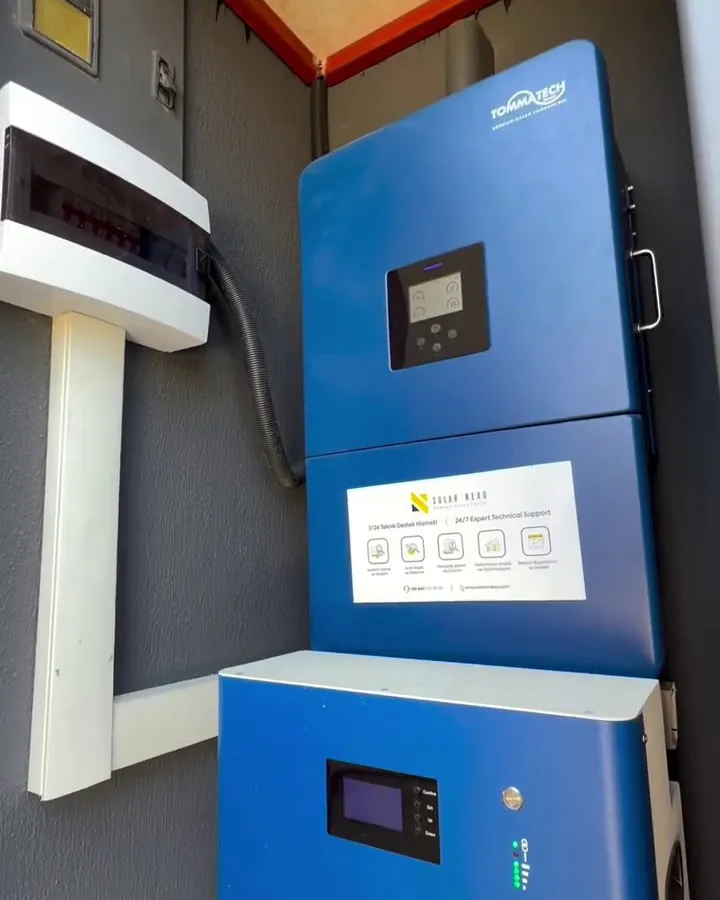
At sites with several inverters, meters and sensors, a data logger is used instead. The data logger usually talks to the devices over industrial communication protocols such as Modbus, gathers the data on a single timeline and passes it to the monitoring platform. Many models can store data locally when the internet connection drops; once the connection returns, the missing period is filled in. Where a project requires the power exported to the grid to be limited, this control is also handled via the data logger or a power control device. Solar Nexo's product range also includes monitoring devices compatible with its inverters.
Meter data and weather sensors
The inverter's own measurement is a practical indicator, but the reference for a plant's real output is usually the meter. When, at a grid-connected business, the meter at the plant output and the energy analyser on the facility's consumption side are monitored together, you can see how much of the energy generated is used on site and how much is exported to the grid. This self-consumption information is also valuable for the business's consumption planning.
Weather sensors, meanwhile, are the key to interpreting output correctly. A pyranometer or reference cell mounted on the panel plane measures the irradiance arriving at that moment. A temperature sensor attached to the back of a module shows the effect of cell temperature, while ambient temperature and wind sensors show the surrounding conditions. Without this data, it is hard to tell whether low output comes from a cloudy day or from a fault. With irradiance data, the plant's performance ratio can be calculated; we explain the method in our article on the solar plant performance ratio.
Access rights and data security
Because a monitoring platform can also provide remote access to the plant's operating settings, access rights should be planned from the start. Setting up separate user accounts for the business owner, the energy manager and the maintenance team, and granting settings-change and remote-control rights only to those who need them, is good practice. Changing default passwords, following device firmware updates according to the manufacturer's recommendations and closing access when staff change should not be forgotten either. Since the plant's data also reveals information about the business's energy consumption, decisions about who it is shared with should be made deliberately.
Alarm rules: what to report, and when?
The value of a monitoring system lies in reporting problems before a person notices them. A system that raises an alarm at every small fluctuation, however, soon gets ignored. That is why alarm rules should be designed together with a threshold and a delay time. Below you will find the alarm types commonly used at operating scale:
| Alarm | Trigger | Possible cause | First action |
|---|---|---|---|
| Communication loss | No data from a device for a set period | Modem, network or power supply problem | Check the connection and power to the panel |
| Inverter fault | Error code or output stopping | Hardware, overheating, off-grid condition | Review the error code, call service if needed |
| String deviation | A string's current clearly lower than its peers | Shading, soiling, faulty panel or connection | Site check, thermal scan |
| Insulation warning | Insulation resistance warning from the inverter | Damaged cable, moisture ingress | Measurement by an authorised technician |
| Low performance | Daily or weekly PR below the threshold | Soiling, clipping, partial failure | Trend analysis, cleaning plan |
| Grid warning | Voltage or frequency outside limits | Grid-side conditions | Share the records with the distribution company |
Who the alarm goes to, through which channel and at what hours is also part of the rule. The notification chain must be clear so that a critical fault occurring at the weekend or at night does not wait until morning. Solar Nexo provides 24/7 technical support for the plants it commissions, and alarms from the monitoring system can be routed directly to this support line. Alarms for unauthorised site entry, gates and cameras are a separate topic; for this, see our article on solar plant site security.
When is SCADA needed?
SCADA (Supervisory Control and Data Acquisition) is a supervisory system that collects data from all devices in a plant and, where necessary, allows remote control. Its difference from an inverter portal is that it brings together not just the inverters but also the circuit breakers, protection relays, transformer and medium-voltage (MV) switchgear, sensors and security equipment in a single control structure.
Not every plant needs SCADA. On a commercial roof connected to a single facility with a few inverters, a well-designed portal and data logger are usually sufficient. SCADA mostly comes up in the following situations:
- The plant has its own substation or a medium-voltage connection
- A large number of inverters and devices from different brands are to be managed in a single structure
- The status of breakers and relays needs to be monitored or controlled remotely
- Data sharing or power control with the distribution company is required under the connection terms
Because the last point varies by project and with current regulations, whether it is needed should be confirmed, as of November 2026, against the requirements of Akdeniz EDAŞ, the local electricity distribution company, during the connection process.
Reporting: which reports for solar power plants in Antalya?
For the collected data to be useful, it has to be turned into regular reports. At operating scale, three levels of report are generally used:
- Daily summary: Total output, any outages and open alarms. The aim is for problems to be noticed the same day.
- Monthly report: Output, specific yield (kWh/kWp), performance ratio, availability, a list of alarms and the maintenance work carried out. Availability is the ratio of the time the plant is able to generate to the total sunlit time.
- Annual review: Comparison of annual output with expectations, the trend against previous years and the maintenance plan for the following year.
PVGIS is a good reference for the expectation. In the theoretical PVGIS 5.3 calculation, a 1 kWp system at optimum tilt, assuming 14% losses, generates about 1,656 kWh per year in central Antalya; the figure is 1,655 for Korkuteli and 1,719 kWh/kWp for Elmalı. For plants running on solar energy in Antalya, comparing the monthly report with these values adapted to the site allows deviations to be spotted early. We discuss how reports should be defined in the maintenance contract in our article on the solar plant maintenance contract.
Site details for operating-scale monitoring in Antalya
In Antalya solar plant monitoring, the small details on site matter as much as good software. For a trouble-free data flow, pay attention to the following points:
- Enclosure temperature: At sites using solar energy in Antalya, the long, hot summer raises the risk of the enclosure housing the data logger and modem overheating; the enclosure should be in the shade or in a ventilated position.
- Mobile coverage: On rural land, the mobile signal can be weak; coverage should be checked on site before installation, and an external antenna used if necessary.
- Power continuity: A small uninterruptible power supply can be considered so that the monitoring equipment does not shut down when the grid goes off.
- Surge protection: Lightning and overvoltages affect not only power lines but also communication lines; suitable protection should be planned for these lines too.
- Sensor maintenance: Dust and pollen soil the irradiance sensor as well; sensor cleaning should be added to the panel cleaning schedule.
When monitoring data points to a fault, a maintenance team is needed to respond. Solar Nexo offers its solar plant maintenance and repair service not only for the plants it builds but also for systems installed by other companies.

Conclusion
At operating scale, a good Antalya solar plant monitoring system is built on an inverter portal, a data logger, meter data and weather sensors working together. Alarm rules should be designed with thresholds, delays and a notification chain, and SCADA should be added when the plant's size and connection terms require it. Regular reporting and comparison with PVGIS, the theoretical baseline for solar energy in Antalya, are the way to catch generation losses early, which is why monitoring belongs in the plan of every solar power plant in Antalya from day one. To review your plant's monitoring infrastructure together, you can contact the Solar Nexo team; for the general framework, have a look at our Antalya solar power plant guide.
Frequently asked questions
Is the inverter app enough for a commercial solar plant?
For a small commercial system with a single inverter, the inverter app can be enough for basic monitoring. At plants with several inverters, meters and sensors, however, the data needs to be gathered in one place, alarm rules defined and regular reports produced. In that case a data logger and a monitoring platform are used, and weather sensors can be added as needed so that output is evaluated against the sunlight received.
What does a data logger do?
A data logger is a device that collects data from the inverters, meters and sensors on site, usually via industrial protocols such as Modbus, and passes it to the monitoring platform. It combines data from different devices on a single timeline. Many models can store data locally when the internet connection drops. In some projects it can also take on control tasks, such as limiting the power exported to the grid.
Why is an irradiance sensor needed for solar plant monitoring?
An irradiance sensor measures the solar energy reaching the panel plane at any given moment, which makes it possible to judge whether output is adequate. Without a sensor, it is hard to tell whether low output is due to cloudy weather or to a fault. With irradiance data, the plant's performance ratio can be calculated, and an alarm can be raised when this ratio falls below a set threshold. Keeping the sensor clean is important for measurement accuracy.
Is SCADA necessary at every solar plant?
No, SCADA is not necessary at every plant. On a commercial roof with a few inverters, a well-designed portal and data logger are usually sufficient. SCADA mostly comes up when the plant has its own substation or a medium-voltage connection, when a large number of devices are to be managed in a single structure, or when breakers and relays need to be monitored remotely. Any requirements in the connection terms should also be confirmed.
Which alarms should be defined in a monitoring system?
At operating scale, alarms are usually defined for communication loss, inverter faults, string current deviation, insulation warnings, low performance ratio and grid voltage or frequency warnings. A threshold and delay time should be set for each alarm, and it should be clear who receives it and through which channel. Otherwise, small fluctuations generate constant alarms and the truly important warnings can be missed.
What should a monthly monitoring report for a solar plant contain?
A monthly report should include total output, specific yield (kWh/kWp), performance ratio, availability, a list of alarms that occurred and the maintenance work carried out. Comparing output with a site-adapted expectation from a reference such as PVGIS lets deviations be spotted early. For central Antalya, the theoretical PVGIS 5.3 value is 1,656 kWh/kWp per year. Defining the report format in the maintenance contract is also useful for the operator.
Sources
Want a clear calculation for your roof?
The Solar Nexo team carries out a free site survey at your address in Antalya and designs the system that suits your roof, consumption and budget.