
Short answer
When you choose solar instead of a generator in Antalya, the hybrid inverter automatically switches your loads to the battery during an outage, with no fuel, noise or exhaust, while the panels power the home and charge the battery during the day. Battery capacity is chosen by multiplying the average power of critical loads by the expected outage length and adding a margin. For long winter outages, an existing generator can be connected as backup.
Key takeaways
- A generator is only useful during outages; a battery-based solar system also produces power on days without outages and reduces the electricity drawn from the grid.
- The hybrid inverter detects an outage and switches loads to the battery automatically; there is no refuelling, starting or exhaust to deal with.
- Battery requirement = average power of critical loads (kW) × outage duration (hours), plus a margin for the DoD setting and conversion losses.
- A critical load panel reserves limited battery capacity for priority appliances such as the fridge, router, lighting and pumps.
- For long winter outages, an existing generator can be connected to a compatible hybrid system as a backup source, cutting its running hours.
The moment the power goes out, the roar of a generator starting up in the garden is a familiar sound at many detached homes and businesses across Antalya. Yet hauling fuel, starting the machine and putting up with exhaust fumes and noise is a routine fewer and fewer people are willing to accept. Choosing solar instead of a generator in Antalya means replacing that routine with a battery-based system that runs silently and automatically. So how does solar vs generator really compare?
In this article we compare the two solutions on fuel, noise, maintenance and ease of use, show with an example how battery capacity is calculated for a given outage length, and explain how you can connect the generator you already own to a hybrid system as a backup. If you are curious about the general logic of systems that keep working during outages, our article on solar systems that work during power cuts is a good starting point; here, the focus is the generator comparison.
Why is a generator the first idea for power cuts in Antalya?
A generator looks like the most direct answer to outages: as long as it has fuel, it produces electricity, and installation is relatively simple. That is why, for many years, it has been the choice for rural homes at the far ends of the grid, greenhouses, mountain houses and small businesses where a power cut means lost work.
A generator's cost, however, does not end at the purchase. Fuel has to be bought regularly and stored safely. Fuel left unused for a long time can go stale, and the machine may refuse to start. Engine oil, filters and the starter battery need periodic servicing. Because exhaust gas contains carbon monoxide, a generator must never be run in enclosed or semi-enclosed spaces. Noise affects your comfort and your neighbours'; at holiday complexes and rental villas it can even turn into guest complaints.
Perhaps most importantly, a generator is only useful during an outage. For the rest of the year it is an investment sitting idle in the garden, contributing nothing to your bill.
Generator vs battery-based solar system: side-by-side comparison
| Criterion | Generator | Hybrid solar system with battery |
|---|---|---|
| Energy source | Petrol, diesel or LPG | The sun and energy stored in the battery |
| Switchover | Manual, or with an additional automatic transfer switch | The hybrid inverter detects the outage and switches over automatically |
| Noise | Clearly audible engine noise | Silent operation |
| Exhaust and fumes | Yes; dangerous in enclosed spaces | None |
| Routine maintenance | Oil, filters, starter battery, fuel renewal | Panel cleaning, periodic electrical checks |
| Days without outages | No contribution | Produces power by day, reducing grid electricity use |
| Limit in long outages | Runs as long as fuel is available | Limited by battery capacity and solar production |
| Warranty | Depends on the manufacturer | 30-year performance warranty on panels; 2, 3 or 5 years on inverters depending on model; 5 years / 8,000 cycles on lithium batteries |
The most striking row in the table is "days without outages". A system for solar energy in Antalya turns money spent on outage protection into a generating asset that works every day of the year. A solar system does have a limit, though: in outages lasting several days, especially in winter, battery capacity and solar production may not be enough. We cover the backup generator option for that case separately below.
Solar instead of a generator in Antalya: how does automatic switchover work?
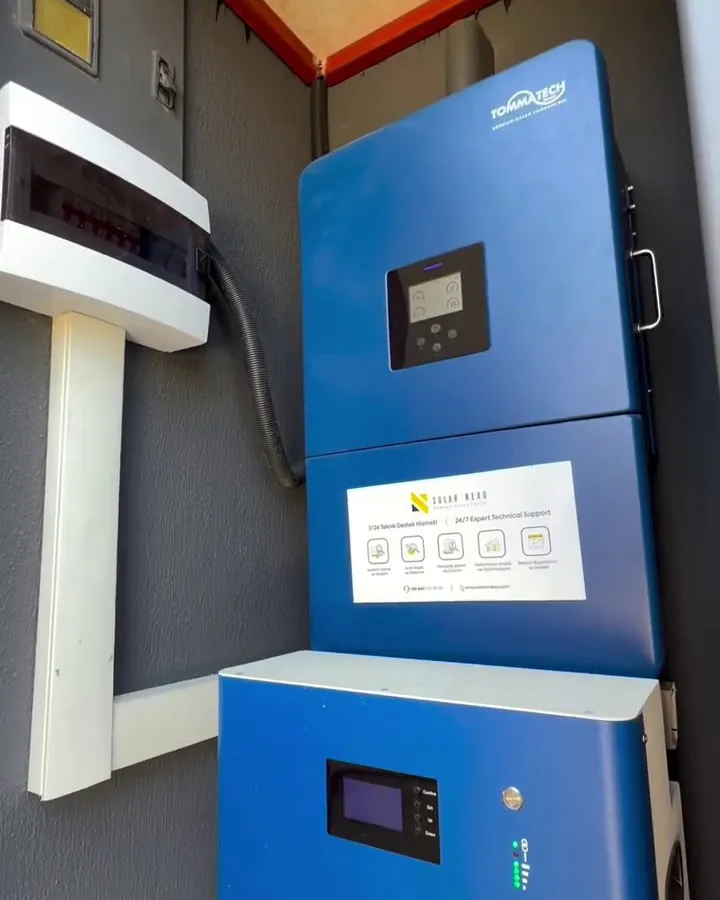
The heart of a system that keeps running during an outage is the hybrid inverter. In normal operation, the hybrid inverter supplies the home with energy from the panels, uses the surplus to charge the battery and works alongside the grid when needed. When the grid goes down, it detects this, disconnects the home from the grid and keeps supplying the loads on its backup output from the battery and the sun.
Nobody has to go out to the garden, refuel or press a button for this switchover. The switchover time varies with the inverter model and the way it is connected; this information is in the manufacturer's technical documentation. It is also worth stressing that battery-free on-grid inverters stop producing when the grid goes down, for safety reasons. So if you want electricity during outages, the system must be designed as hybrid or off-grid.
This is the deciding factor in the solar vs generator question: if the only goal is a lower bill, on-grid may be enough; if you also want to be ready for outages, a hybrid inverter and a battery are essential. For details on choosing an inverter, take a look at our guide to choosing a hybrid inverter.
Sizing the battery for the length of an outage
Battery capacity is set by a simple calculation, not by guesswork. The basic formula is: energy needed (kWh) = average power of critical loads (kW) × outage duration (hours). To work it out step by step:
- List the appliances that must keep running during an outage.
- Note the power on each appliance's rating label and how many hours it will run during the outage; for appliances that cycle on and off, such as fridges, use average consumption.
- Multiply the total average power by the outage length you want to be prepared for.
- Add a margin for the DoD setting and conversion losses.
- Check the inverter rating against the total of appliances that may run at the same time and the starting current of motor-driven appliances.
Worked example (hypothetical values): assume the average total power of your critical loads is 0.8 kW and you want to be ready for an 8-hour night-time outage. You then need 0.8 × 8 = 6.4 kWh of energy. Because a battery is never fully discharged and conversion causes losses, you choose a battery with a higher nominal capacity than this. If the outage happens during the day, the panels cover part of the load directly, so less energy is drawn from the battery.
When doing your own calculation, use the rating labels of your own appliances rather than these example values. In terms of chemistry, LiFePO4 batteries are widely preferred in solar systems; we explain their properties in detail in our article what is a LiFePO4 battery.
The critical load panel: decide in advance what to power
With a battery-based Antalya solar panel system, it is possible to power the whole house for hours, but that requires a large battery and a high-power inverter. The more economical and common approach is to group the appliances that must run during an outage on a separate critical load panel. That way, limited battery capacity is reserved for the loads that really matter.
- Usually connected to the critical load panel: fridge and freezer, router and internet equipment, lighting, security cameras and alarm, water booster pump, and the electronics of the boiler or heating system.
- Usually left off: high-draw appliances such as the oven and hob, the electric element of the water heater, EV charging and the tumble dryer.
- Decided case by case: air conditioners and pool pumps. If battery and inverter capacity allow, one air conditioner can be added to the critical loads.
Settling this split before installation lets you choose the right battery capacity and know in advance what will and will not run during an outage. Because power cuts are one of the most frequently asked-about topics for solar panels in Antalya, we draw up this list together with you during the site survey.
Don't scrap your generator: connecting it to a hybrid system as backup
If you already have a working generator, you don't have to get rid of it when you switch to solar. Some hybrid inverter models have a generator input; when the battery drops below a set level and solar production is insufficient, the generator is brought in to supply the loads and charge the battery at the same time. In systems without a generator input, the two sources can be kept safely apart with a suitable transfer arrangement.
In this setup, the generator is no longer the main source but becomes a backup that only kicks in during long, cloudy winter outages. With fewer running hours, fuel use, noise and maintenance all drop. This approach makes particular sense in areas with harsher winters, such as Elmalı, Korkuteli and high-altitude mountain houses.
Before connecting, the generator's power rating, output voltage and frequency stability must be compared with the specifications of the inverter's generator input. Compatibility is checked against the inverter's technical documentation; connecting an unsuitable generator directly can damage the equipment.
The Manavgat example: preparing for outages with Antalya solar panels and a hybrid inverter
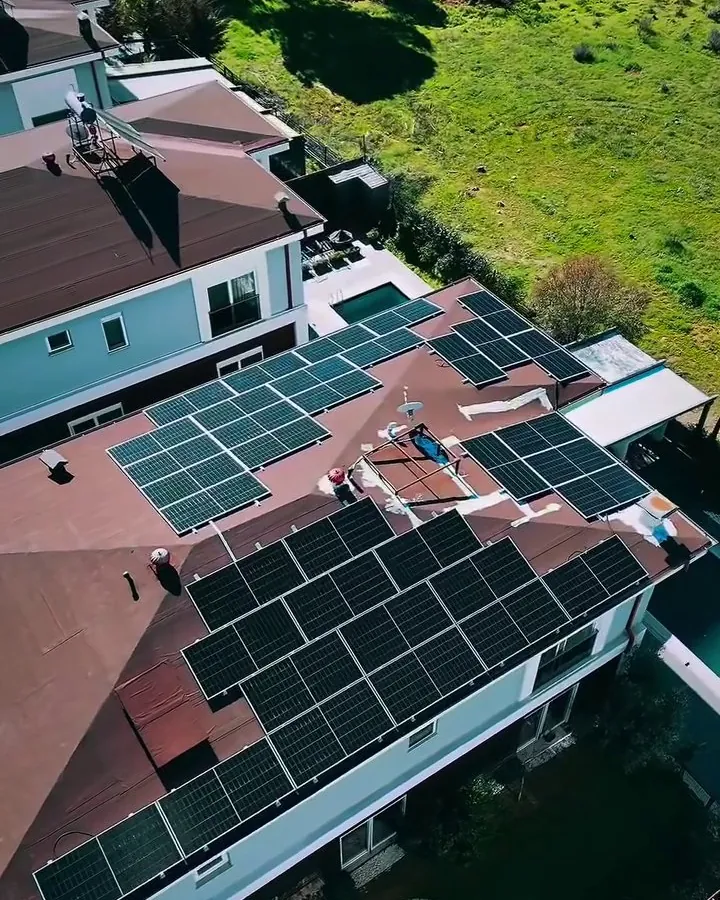
The villa project Solar Nexo completed in Manavgat is a good example of what an alternative to a generator looks like. The system has 20 TommaTech 605 W panels, a 15 kW hybrid inverter and a 15 kWh LiFePO4 battery. 20 × 605 W adds up to 12.1 kWp of installed capacity.
According to PVGIS 5.3, the theoretical annual yield in Manavgat is 1,649 kWh per kWp. On that basis, the theoretical annual output of this 12.1 kWp system is roughly 12.1 × 1,649 ≈ 19,950 kWh; the real figure varies with shading, soiling and orientation. The battery's nominal capacity of 15 kWh is large enough, for example, to theoretically supply an average critical load of 1 kW for about 15 hours; because usable capacity depends on the DoD setting, in practice the time is shorter. During daylight hours, the panels both power the home and recharge the battery.
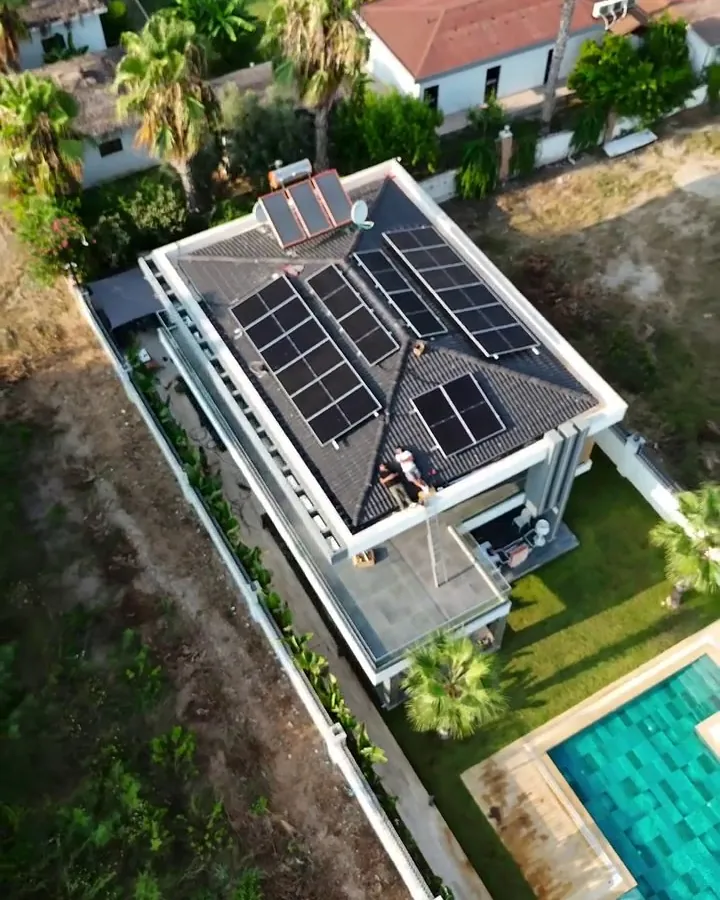
With an Antalya solar energy installation of this kind, there is no fuel, no starting and no noise during an outage, and on days without outages the system keeps producing. You can see similar installations on our Manavgat solar energy page.
Conclusion
The short answer to the solar vs generator question in Antalya is this: a generator is a quick answer to outages, but it comes with fuel, noise, exhaust and maintenance, and contributes nothing on days without outages. A hybrid system with a battery switches in silently and automatically during an outage, and produces power on all the other days too. A correctly sized system for solar energy in Antalya, combined with a critical load panel and, where needed, a backup generator, offers balanced protection against power cuts. Looking at your Antalya solar energy investment from this angle also clarifies your outage plan.
Whichever solar installer you choose, make sure they size the battery from your actual critical loads rather than a standard package. Let's work out together which appliances need to run during an outage and the battery capacity that matches them. The Solar Nexo team carries out free site surveys in Antalya and the surrounding area; to book, call +90 540 007 63 96 or write to us through our contact page. As a solar company in Antalya that also services systems installed by others, we can assess your existing generator on the same visit, and help you compare Antalya solar companies on facts rather than promises.
Frequently asked questions
Can solar energy be used instead of a generator?
Yes, a hybrid solar system with a battery can replace a generator during outages. The hybrid inverter detects that the grid is down and automatically keeps supplying the loads on its backup output from the battery and the panels. There is no fuel, noise or exhaust. However, the backup time is limited by battery capacity and solar production; if outages lasting several days are expected in winter, an existing generator can be connected to the system as a backup.
How much battery do I need for a given number of hours during an outage?
The required capacity is found by multiplying the average power of your critical loads by the outage duration. For example, an average load of 0.8 kW over an 8-hour outage needs 0.8 × 8 = 6.4 kWh of energy. Because a battery is never fully discharged and conversion causes losses, you choose a battery with a nominal capacity above this value. The soundest approach is to do the calculation with your own appliances' rating labels and have it verified during the site survey.
Does an on-grid solar system work during a power cut?
No. Battery-free on-grid systems stop producing when the grid goes down, for safety reasons. The purpose is to protect technicians working on the grid lines during the outage from the risk of electric shock. If you want electricity during outages, the system must be designed with a hybrid inverter and battery, or as a fully independent off-grid system. Existing on-grid systems can also be converted to hybrid with suitable equipment.
Can an existing generator be connected to a hybrid solar system?
In most cases, yes. Some hybrid inverter models have a generator input; when the battery drops below a set level and solar is insufficient, the generator is brought in. In systems without a generator input, the two sources are kept apart with a suitable transfer arrangement. Before connecting, the generator's power rating and its voltage and frequency stability must be compared with the inverter's technical documentation; an incompatible connection can damage the equipment.
What is a critical load panel and why is it needed?
A critical load panel is a separate electrical sub-panel that groups the appliances to be supplied from the battery during an outage. Priority loads such as the fridge, router, lighting, security system and water booster pump are connected to it; high-draw appliances such as the oven and the water heater element are usually left off. This split reserves limited battery capacity for the right appliances and gives longer backup with a smaller, more economical battery.
What warranties come with a battery-based solar system?
On systems installed by Solar Nexo, the panels carry a 30-year performance warranty; the product and material warranty varies by model and is stated in the warranty certificate. Inverters carry a 2-, 3- or 5-year factory warranty depending on power rating and model. TommaTech lithium batteries carry a warranty of 5 years / 8,000 cycles. Manufacturer warranty certificates and technical documents are handed over to the customer when the installation is completed.
Which is quieter and safer, a generator or a solar system?
A battery-based solar system runs silently and produces no exhaust gas. Generators have clearly audible engine noise, and because their exhaust contains carbon monoxide they must not be run in enclosed or semi-enclosed spaces; storing fuel safely also needs extra care. In a solar system, safety comes from proper earthing, surge protection devices and the right choice of cables and fuses. That is why it matters that the installation is properly engineered and complies with standards.
Sources
Want a clear calculation for your roof?
The Solar Nexo team carries out a free site survey at your address in Antalya and designs the system that suits your roof, consumption and budget.