
Short answer
Deciding on solar panels for detached houses in Antalya takes four steps: read your last 12 months of consumption and when it happens, assess the roof (tiled or concrete) and any shading, choose between on-grid and hybrid based on power cuts and night-time use, and, if needed, size the battery in kWh. According to PVGIS, 1 kWp in central Antalya produces a theoretical 1,656 kWh a year.
Key takeaways
- Sizing starts with the kWh consumption on your last 12 months of bills; whether you use power by day or by night determines the system type.
- Tiled roofs use hooks and rails, flat concrete roofs use tilted frames; if the roof is too small, a garden or pergola can be the alternative.
- Frequent power cuts, critical loads or high evening consumption point to a hybrid system; if most consumption is in daytime, on-grid is simpler.
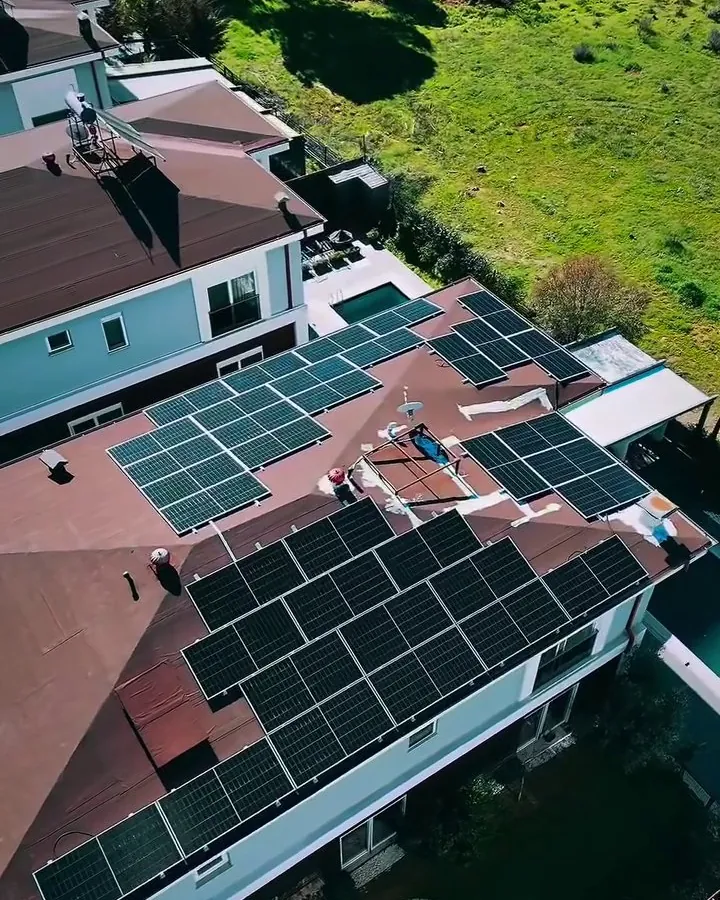
- The real Döşemealtı installation uses 36 × 605 W TommaTech panels (21.78 kWp), a 20 kW hybrid inverter and a 30 kWh LiFePO4 battery.
- Using the PVGIS value for central Antalya, a 21.78 kWp system produces a theoretical 36,068 kWh or so a year, excluding shading and soiling.
- TommaTech lithium batteries come with a 5-year warranty / 8,000 cycles; the panels carry a 30-year performance warranty.
Going solar in a detached house gives you far more options than an apartment does: the roof is yours, the garden or a pergola can serve as extra space, and you choose the system type purely around your own needs. This guide takes the decision about solar panels for detached houses in Antalya in the right order: consumption first, then the roof, then the system type and the battery. The aim is not to sell you a ready-made package; it is to help you sit down at the site survey well prepared.
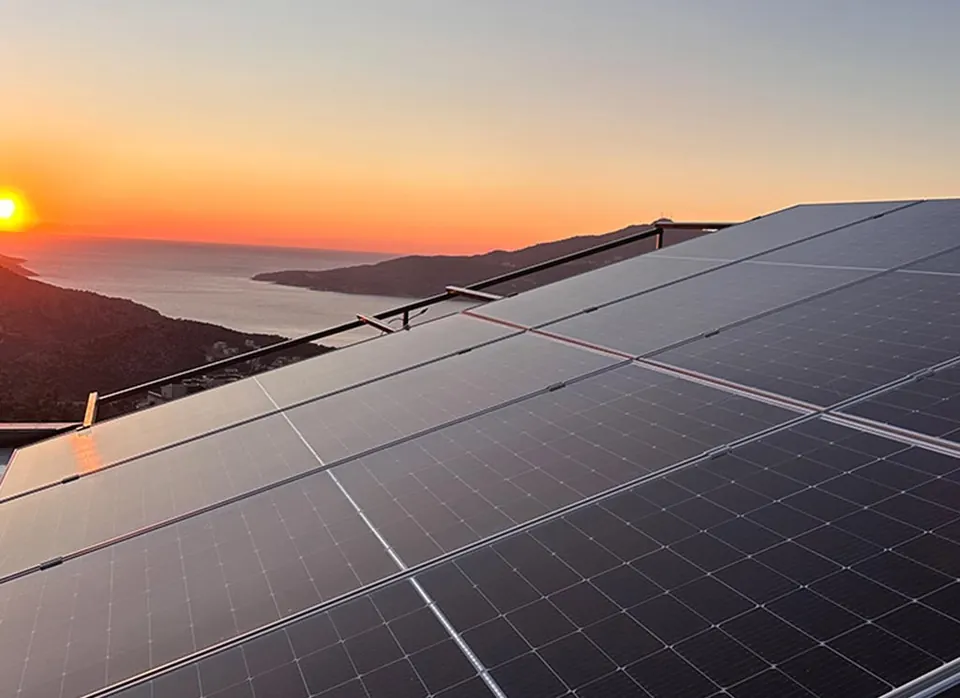
Solar energy in Antalya starts from a strong base. According to PVGIS 5.3, the tool published by the European Commission's Joint Research Centre, 1 kWp of installed capacity in central Antalya, facing south at the optimum 33° tilt, produces a theoretical 1,656 kWh per year. That figure alone does not tell you which system is right, though; how and when your household uses electricity matters far more.
Step 1: Start by Reading Your Consumption
The starting point for correct sizing is your last 12 months of electricity bills. Bills issued in the area served by Akdeniz EDAŞ (AEDAŞ, the local distribution company) show monthly consumption in kWh. Put the summer and winter months side by side and the effect of air conditioning, a pool pump or electric heating becomes obvious straight away. Knowing the annual total is the first step towards a rough estimate of how many kWp you need.
The second question is when during the day your consumption peaks. If someone is at home in the daytime, the air conditioning runs in the afternoon and the washing machine and dishwasher are used in daylight, you will consume most of the output as it is produced. If the house stays empty all day and consumption concentrates in the evening and at night, a battery or net metering comes into play. For a rough capacity estimate, see our guide to how many kW of solar panels you need.
Air conditioning and pool loads
In Antalya's detached houses, the two items that push up the summer bill are usually air conditioning and the pool pump. The good news is that both run when the sun is strongest. PVGIS data puts theoretical output in central Antalya at 168 kWh per kWp in July and 167 kWh in August, the most productive months of the year. Putting the pool pump on a timer so that it runs around midday is one of the easiest ways to raise self-consumption. For more detail, read our article on air-conditioning consumption and solar panels.
Step 2: Assessing a Detached House Roof in Antalya
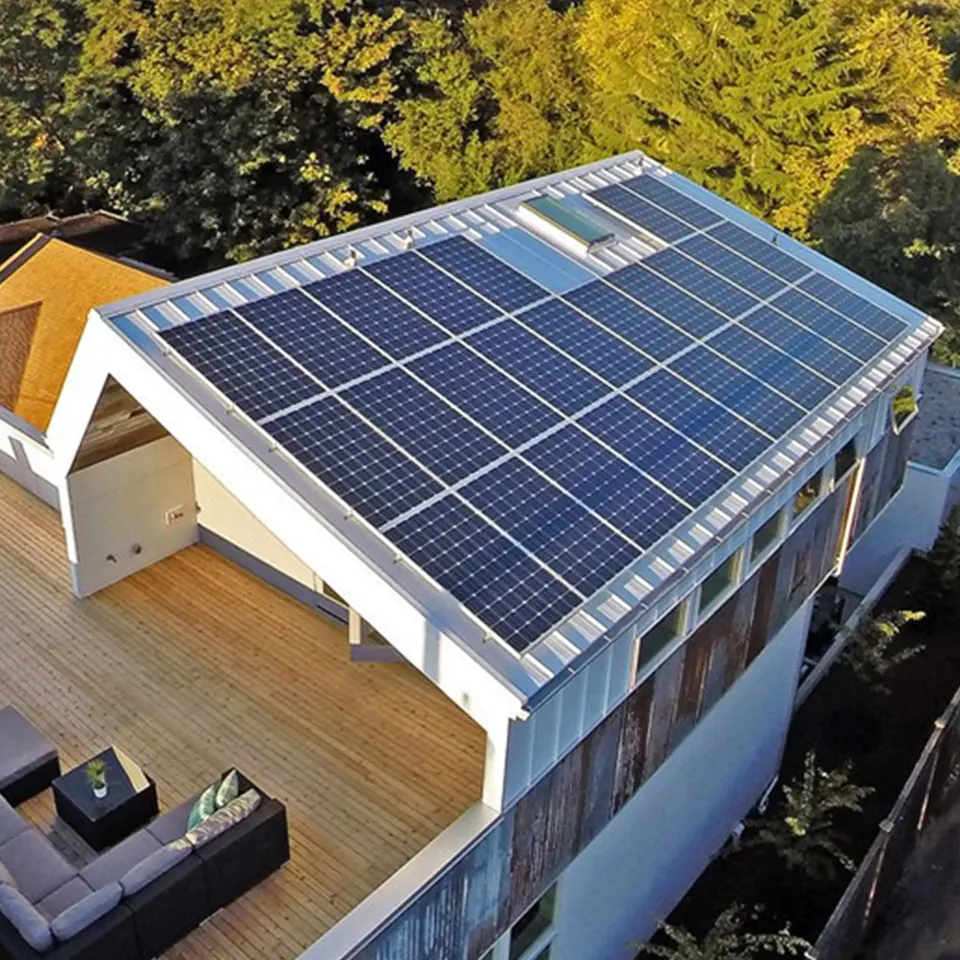
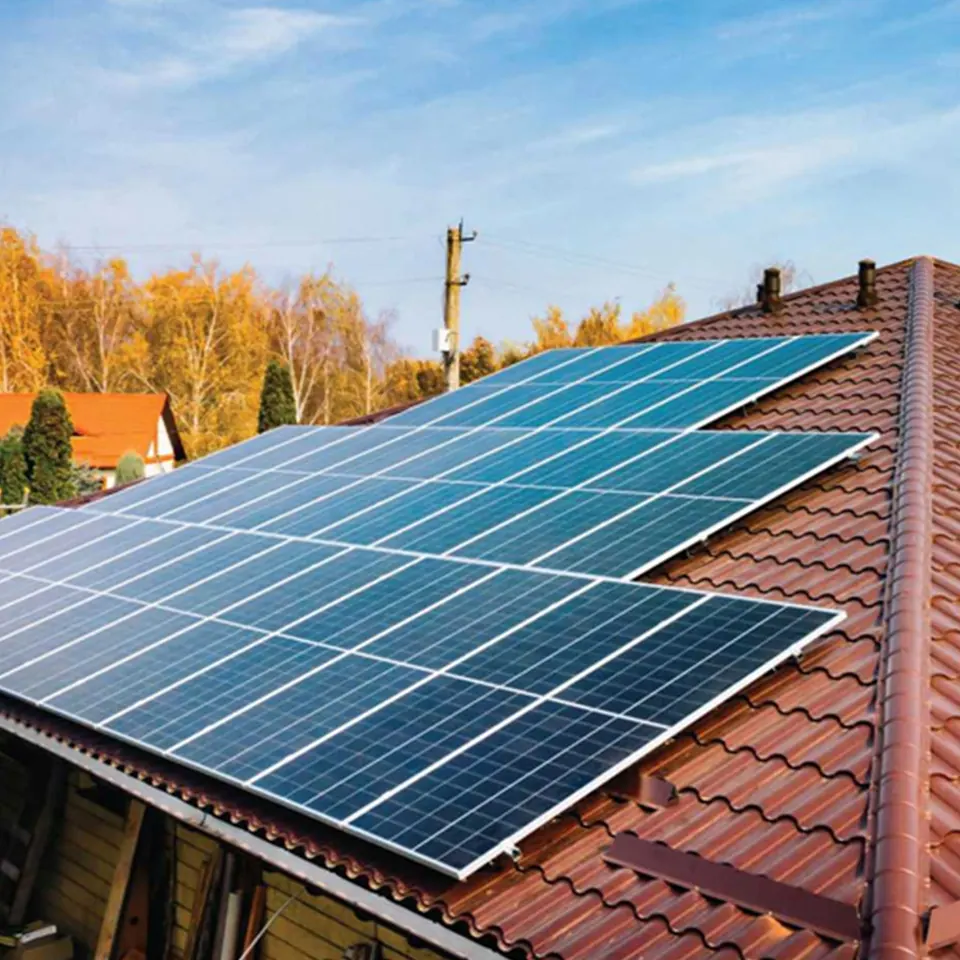
The two roof types we meet most often when fitting solar panels in Antalya are pitched tiled roofs and flat concrete roofs. On a tiled roof, the panels sit on aluminium rails fixed to hooks that are anchored to the roof structure beneath the tiles; the tiles are lifted and put back, so the roof stays watertight. On a flat concrete roof, a tilted mounting frame is used, and on this type of roof it is easier to bring the panels close to the optimum angle.
These are the points any solar installer should check during the survey: the roof's orientation (south, south-east or south-west), shading from neighbouring buildings, trees or chimneys, the condition of the load-bearing structure and the usable net area. If your roof is old and will need renewing within a few years, doing that work before the installation saves you from having to remove and refit the panels later.
When the roof is not enough: garden and pergola
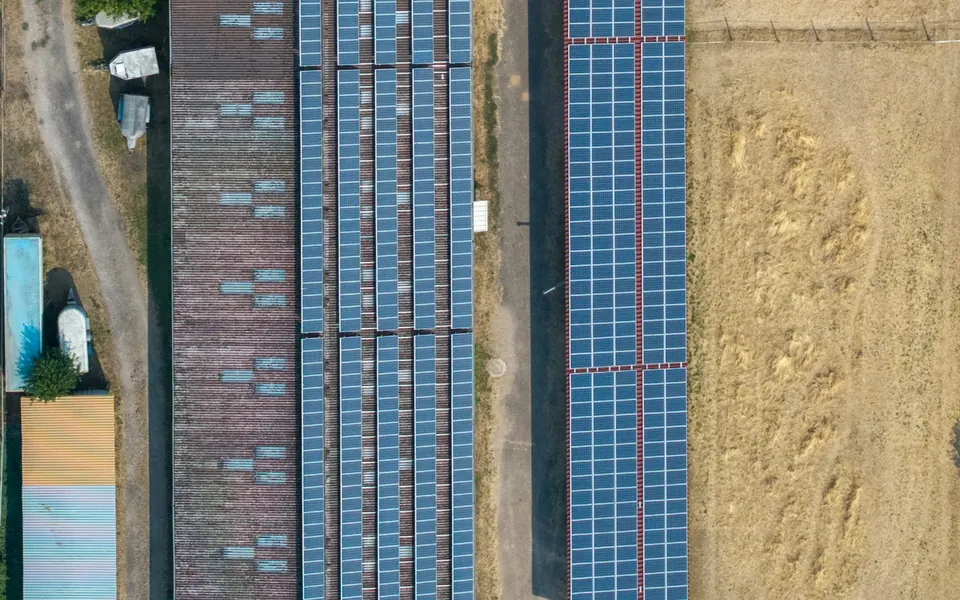
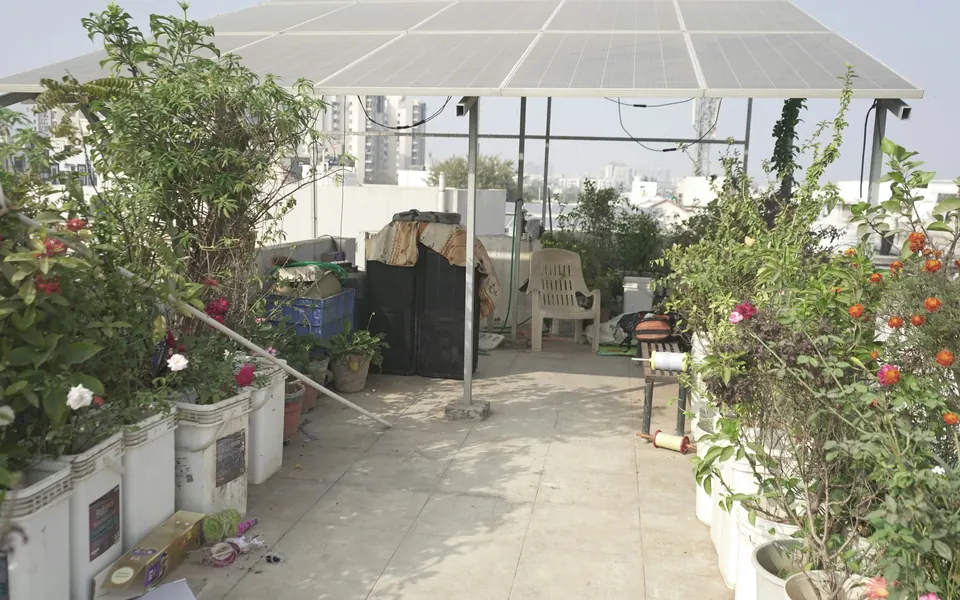
One advantage of a detached house is that there is usable space beyond the roof. A row of panels on a ground-mount system in the garden, or a panel-covered pergola or carport, becomes both a shade structure and an energy source. On a pergola, panel spacing and height are planned to balance appearance against output. Shade analysis matters even more for garden installations than on the roof, because trees and walls can shade panels close to the ground for longer periods.
Step 3: On-Grid or Hybrid?
Choosing the system type sits at the heart of any decision about solar panels for detached houses in Antalya. An on-grid system works in parallel with the grid: the electricity you generate is used in your home first and the surplus is exported to the grid. Because it has no battery, it also shuts down for safety reasons when the grid goes down. A hybrid system combines panels, an inverter and a battery: during the day the surplus charges the battery, and in the evening and during power cuts the house runs on the battery.
Here is a practical rule of thumb. If power cuts are frequent where you live, if the house has loads that cannot tolerate an outage, such as the fridge, the router, security cameras or the water booster pump, or if your evening consumption is high, a hybrid system makes sense. If outages are rare and most consumption happens during the day, an on-grid system is the simpler solution. We cover the technical differences between the two in detail in our hybrid solar energy system guide.
| Situation | On-grid system | Hybrid system |
|---|---|---|
| Frequent power cuts | Shuts down during an outage | Keeps running on the battery |
| High evening and night consumption | Night-time power comes from the grid | Energy stored during the day is used |
| Consumption mostly in daytime | Suitable and simple | Suitable; the battery can be kept small |
| Number of components | Panels, inverter, protection devices | All of these plus a battery and a backup load panel |
| Future expansion | Panels can be added | Depending on the model, battery modules can be added too |
Step 4: Do You Need a Battery, and How Big?
Battery capacity is expressed in kWh and depends on two questions: which appliances must keep running during an outage, and for how long, and how much electricity do you use at night? If only the fridge, lighting, router and water pump need to run during a power cut, the requirement is very different from powering the whole house, air conditioners included. That is why hybrid systems usually include a separate critical-load panel for the circuits that must stay on during an outage.
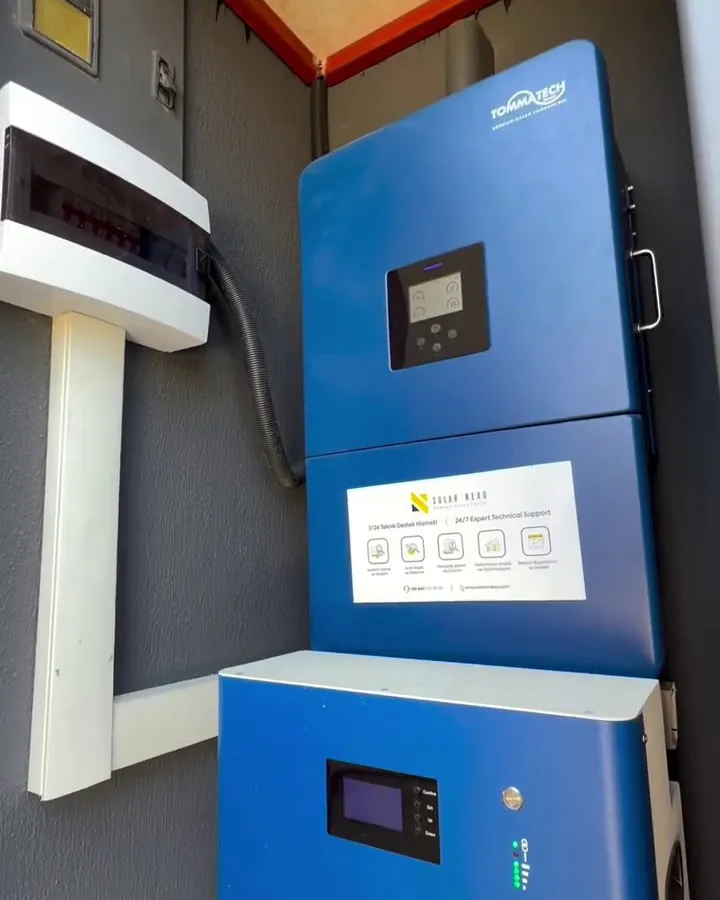
For hybrid installations, Solar Nexo uses TommaTech high-voltage lithium batteries; these LiFePO4 batteries come with a 5-year warranty / 8,000 cycles. Because the batteries are modular, you can start small and add capacity later, as far as the inverter model allows. This lets you phase the initial investment in line with your actual needs.
Real Example: A 36-Panel Hybrid Home in Döşemealtı
To make the theory concrete, let's look at a detached house installation that Solar Nexo completed in Döşemealtı. This home uses 36 TommaTech 605 W panels, a 20 kW hybrid inverter and a 30 kWh LiFePO4 battery. Total panel capacity is 36 × 605 W = 21.78 kWp.
A simple calculation with the PVGIS 5.3 value for central Antalya (1,656 kWh/kWp) puts this system's theoretical annual output at about 21.78 × 1,656 ≈ 36,068 kWh. That figure excludes losses from shading, soiling and orientation; real output varies from site to site. The 30 kWh battery was chosen to carry the daytime surplus into the evening and to keep the house powered during outages.
| Installed capacity | Theoretical annual output (PVGIS, central Antalya) |
|---|---|
| 5 kWp | 8,280 kWh |
| 10 kWp | 16,560 kWh |
| 21.78 kWp (Döşemealtı example) | ≈ 36,068 kWh |
Not every home needs a system of this scale. The Döşemealtı example is the answer for a house with high consumption, a large roof and a clear wish for strong backup during outages. In a smaller house the logic stays exactly the same; only the numbers get smaller. You can find more details of the project on our Döşemealtı hybrid solar energy page.
Net Metering and Timeline for Antalya Solar Energy Systems
For grid-connected on-grid or hybrid systems, an official application is made to Akdeniz EDAŞ so that surplus electricity can be offset through net metering (mahsuplaşma). As of October 2026, under the current regulation, this process can take 8–12 months on average. The installation itself is delivered within 14 working days under contract, which is why the installation schedule and the application schedule need to be planned together at the survey stage.
Another factor that shapes the return on an Antalya solar energy investment is the tariff. Electricity tariffs are set periodically by EPDK (Turkey's energy market regulator), so it is more sensible to work in kWh rather than money when you run the numbers. We explain step by step how net metering works in our article what is a net-metering system.
Antalya Solar Panel Equipment and Warranty Documents
When comparing quotes from different solar companies in Antalya, always ask about the panel model, the cell technology and the warranty certificate. Solar Nexo is an authorised dealer for TommaTech and CW Enerji; its installations use original, invoiced TOPCon N-Type panels from these brands. The panels carry a 30-year performance warranty; the product and material warranty varies by model and is stated on the warranty certificate.
Inverters come with a 2, 3 or 5-year factory warranty depending on their power rating and model. The manufacturer's warranty certificates and technical documents are handed over to the customer when the installation is complete. With the monitoring device you can follow generation, consumption and battery charge level from your phone, and if something goes wrong, 24/7 phone and WhatsApp support is available.
Site Survey Preparation Checklist
Preparing a few documents before the survey speeds up the process, whichever Antalya solar company you invite. With this information, the engineer can measure and advise more accurately on site:
- Your last 12 months of electricity bills, or a consumption statement downloaded from AEDAŞ online services
- Photos of the roof from different angles and, if you know it, the age of the roof
- How often power cuts occur during the year, and which appliances must run during an outage
- Planned new loads: an electric car, a heat pump, a pool or additional air conditioners
- Ideas for alternative areas such as the garden, a terrace or a pergola
Conclusion: Solar Panels for Detached Houses in Antalya Start with Data
With solar panels for detached houses in Antalya, the right order is clear: read your consumption, assess the roof and shading, choose between on-grid and hybrid based on power cuts and evening use, and size the battery to your real needs. The data behind solar energy in Antalya is strong and the region suits solar panels in Antalya well; what makes the difference is adapting that potential correctly to your own home.
Solar Nexo offers a free site survey in Antalya and the surrounding area. To have your home inspected on site and plan a system that matches your consumption, call us on +90 540 007 63 96 or write to info@solarnexo.com.
Frequently asked questions
How many kWp do I need to put solar panels on a detached house?
The capacity you need depends on the total kWh consumption on your last 12 months of bills. According to PVGIS 5.3, 1 kWp in central Antalya produces a theoretical 1,656 kWh a year, so dividing your annual consumption by that figure gives a rough starting point. Shading, roof orientation and soiling losses can increase the real requirement, so final sizing is done at the survey together with roof measurements.
Is on-grid or hybrid better for a detached house?
A hybrid system is the better fit if power cuts are frequent, evening consumption is high or certain appliances must keep running during an outage. If most of your consumption is in the daytime and outages are rare, an on-grid system is the simpler solution. An on-grid system shuts down for safety when the grid fails, whereas a hybrid system keeps supplying power from the battery. The decision is made at the survey using your bills and outage history.
Will my tiled roof leak after solar panels are installed?
With correct mounting, a tiled roof will not leak. The tiles are lifted, the hooks are fixed to the structure underneath and the tiles are put back, so the water path is preserved. That is why choosing hooks that suit the tile type and careful installation matter. If the roof is old or has broken tiles, it is best to renew them before installation, so that the panels never need to be removed later.
How is battery capacity determined for a detached house?
Battery capacity is set in kWh by calculating the total consumption of the appliances that must run during an outage plus your night-time consumption. If only critical loads such as the fridge, lighting and router need power, a small battery may be enough. TommaTech lithium batteries are modular and come with a 5-year warranty / 8,000 cycles; capacity can be increased later as far as the inverter allows.
How much electricity does the 36-panel system in Döşemealtı produce?
The 21.78 kWp system made up of 36 TommaTech 605 W panels produces a theoretical 36,068 kWh or so a year, using the PVGIS 5.3 value for central Antalya (1,656 kWh/kWp). This figure excludes shading, soiling and orientation losses. The system also includes a 20 kW hybrid inverter and a 30 kWh LiFePO4 battery.
Can solar panels be installed in the garden if the roof is too small?
Yes. At detached houses, panels can be installed in the garden on a ground-mount system, or on top of a pergola or carport. Shade from trees and walls has a bigger influence on these installations, so a shade analysis is important. When designing a pergola, panel spacing and height are planned to balance the need for shade against output. Ground installations use flat-ground mounting systems.
How long does a solar installation on a detached house take?
At Solar Nexo, the installation is delivered within 14 working days under contract. For net-metering systems, the official application to Akdeniz EDAŞ is a separate process that can take 8–12 months on average. Because the two timelines differ, they are planned together at the survey stage and the required documents are prepared in advance. You can request a free survey to pin down your timeline.
Sources
Want a clear calculation for your roof?
The Solar Nexo team carries out a free site survey at your address in Antalya and designs the system that suits your roof, consumption and budget.