Short answer
An Antalya energy cooperative is a joint investment in a solar power plant by producer associations, villages or agricultural cooperatives to supply shared facilities such as irrigation, cold storage and packing with electricity from the sun. For success, the legal structure, investment shares, decision-making and maintenance arrangements must be clear from the outset; on regulatory and tax matters, current regulations and expert advice should be the basis.
Key takeaways
- Shared irrigation, cold storage and packing facilities are natural candidates for a cooperative-scale solar plant.
- According to PVGIS 5.3, the theoretical annual yield is 1,719 kWh/kWp in Elmalı and 1,655 kWh/kWp in Korkuteli.
- Investment shares, decision-making, the operations lead, the maintenance fund and exit conditions should be put in writing from the start.
- On licensing, applications and tax, rely on current regulations and expert advice rather than definitive answers.
- Remote monitoring that all partners can access supports transparency in shared investments.
The Antalya energy cooperative model is an approach in which village and producer associations, agricultural cooperatives or a group of producers who want to invest together build and operate a solar power plant (GES) jointly. An investment that a single farmer would struggle to take on alone can make far more sense, both technically and administratively, when it is planned jointly for a shared load such as a common irrigation line, a cold store or a packing facility.
In this article we look at how the potential of solar energy in Antalya can be used for shared agricultural loads, the general points to consider for partnership structure and governance, and the main headings of technical planning. We do not give definitive answers on regulatory or tax matters; in these areas, current regulations and expert advice must be the basis.
What is an Antalya energy cooperative, and who is it suitable for?
When people hear "energy cooperative", they usually think of a structure set up solely to generate electricity. In practice, however, one of the common needs of producer groups in Antalya is to cover the electricity consumption of their existing shared facilities with solar power. The model can therefore be thought of in three different forms:
- An investment by an existing agricultural cooperative: Adding a solar plant to the irrigation, storage or packing facility the cooperative already operates.
- A joint investment at producer association or village level: Producers who use the same water source or the same facility financing the energy investment together.
- A new energy-focused partnership: Members coming together to form a new legal entity solely for the purpose of generating energy.
Which form is appropriate depends on the number of partners, the existing legal structure, the ownership of the facility and where the electricity will be used. This decision is the first issue that needs to be settled, before the technical design.
Which shared agricultural loads in Antalya suit solar?
Antalya's farming areas are highly diverse, from the greenhouses of Kumluca and Finike to the orchards of Korkuteli and Elmalı, and from the plains of Serik and Aksu to the highland villages. This diversity also makes shared energy needs differ.
| Shared facility | Load character | Possible approach |
|---|---|---|
| Shared irrigation (well, booster pump) | Daytime and seasonal; heavy in summer | Direct pump supply with a solar irrigation inverter, or a grid-connected system |
| Cold storage | Continuous all year, with cooling load rising in summer | On-grid or hybrid system; grid or storage for the night-time load |
| Packing and sorting facility | Heavy during the day in harvest periods | Rooftop on-grid system, natural overlap with daytime generation |
| Shared facility far from the grid | Irregular, limited | Off-grid system with battery |
According to PVGIS 5.3 data, assuming 1 kWp of installed capacity, optimum tilt and 14% losses, the theoretical annual yield is around 1,719 kWh/kWp in Elmalı, 1,655 in Korkuteli and 1,656 in central Antalya. These theoretical values show that the potential of solar energy in Antalya is strong not only on the coast but also in the farming areas inland.
Solar energy for shared irrigation
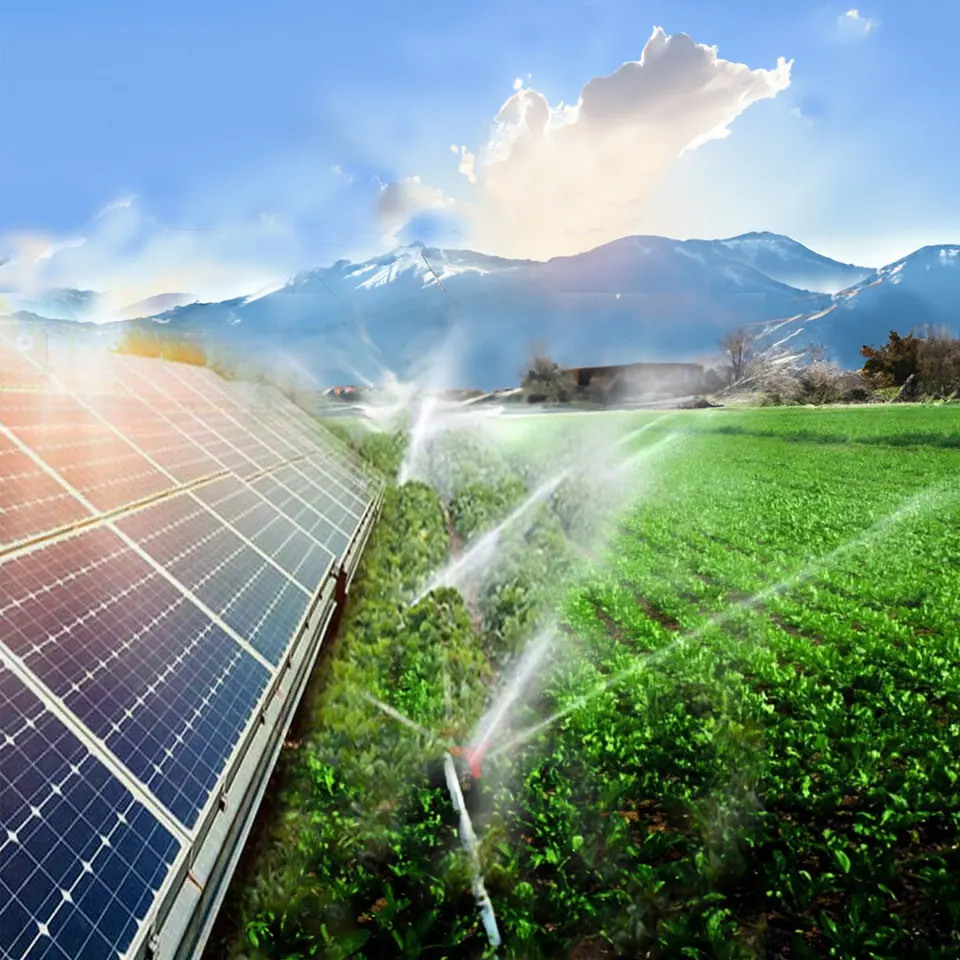
For producers who use the same well or booster line, solar-powered irrigation is the most natural example of a joint investment. Irrigation demand concentrates in summer and during the day, which is exactly when solar generation peaks. Solar irrigation inverters can supply the pump directly from the panels and adjust the pump speed to the changing solar irradiance throughout the day.
For a sound design, information such as the rated power of the existing pump, the well depth, the static and dynamic water levels, the required flow rate and the pumping head needs to be gathered before the site survey. If this data is missing, the panel capacity or inverter selection will be based on guesswork. If the pump is old, replacing it together with installing the solar plant can be considered, because an inefficient pump wastes part of the energy coming from the sun.
In a shared irrigation project, besides the technical design, how the water will be shared among members should also be discussed in advance. If the partners agree in writing which plot is irrigated during the hours of strongest sun, the order of priority on cloudy days and the procedure to follow if the pump fails, operation will run smoothly. For the technical details, see our article on solar-powered agricultural irrigation systems, and for examples specific to the inland districts, our article on solar plants for agricultural irrigation in Korkuteli and Elmalı.
Shared solar plants for cold storage and packing facilities
Cold stores help produce keep its value after harvest, but they are facilities with high electricity consumption because of a cooling load that runs all year and rises in summer. In a cooperative store where many producers keep their produce together, a solar plant directly affects a significant item of shared cost. While daytime generation covers the load of the refrigeration compressors, grid or storage options are considered for night-time consumption. For more information, see our article on solar plants for cold storage.
Packing and sorting facilities, on the other hand, mostly operate during the day. Large roof areas, generation that coincides with consumption and heavy use during the harvest season make these facilities good candidates for a rooftop solar plant. The load-bearing capacity and insulation condition of the roof, however, must be assessed before installation.
Partnership structure and governance: a general framework
A shared solar plant has a long technical life; over that period, partners may change, new members may join or some members may leave. Setting up the governance arrangements clearly from the start is therefore as important as the technical design. The headings below serve as a general checklist; in practice, which legal structure to choose and how to organize it should be decided together with legal and financial advisers.
- Investment shares: How will each partner's contribution to the investment, and the benefit they receive in return, be calculated?
- Decision-making: By what majority and by whom will decisions such as maintenance, repair and expansion be made?
- Operations lead: Who will follow the system, check the monitoring data and handle communication with the service provider?
- Maintenance and reserve fund: Will a shared budget be set aside for periodic maintenance and possible faults?
- Records and transparency: How will generation data, invoices and maintenance records be shared with members?
- Exit and transfer: When a partner wants to leave, how will their share be valued?
When putting the partnership arrangements in writing, the partners can also discuss the system's insurance, how costs will be shared in the event of damage and whether an annual review meeting will be held. These seemingly small details go a long way towards preventing disagreements among partners over the years.
A remote monitoring system is the most practical tool for transparency in shared investments. Allowing more than one authorized person to access generation data also builds trust among the partners.
Regulation and tax for a solar power plant in Antalya: the right questions instead of definitive answers
The most frequently asked questions in shared investments are which subscriptions the electricity generated can be linked to, whether a license is required, in whose name the application will be made and what the tax position is. The answers depend on the scale of the project, the legal structure, the connection point and the regulations in force. As of November 2026, the assessment must be made under the current regulations; in this article we deliberately give no rates, limits or article numbers.
A cooperative or producer association planning a solar plant in Antalya is advised to rely on the current announcements of the following institutions and on the views of its own advisers:
- Energy Market Regulatory Authority (EPDK, the energy market regulator): regulations on generation and grid connection.
- Ministry of Energy and Natural Resources: energy policy and announcements.
- Akdeniz EDAŞ (the local electricity distribution company): connection applications and technical assessment in the region.
- Accountant and legal adviser: legal structure, tax and the partnership agreement.
We summarized the general framework of unlicensed generation in our article on the unlicensed electricity generation regulation; for shared investments, however, the current text and expert advice must always be the basis.
Technical planning for Antalya solar energy cooperative projects
Once the governance framework is clear, technical planning begins. The main points to watch in shared projects are:
- Consumption analysis: The shared facility's consumption over the last 12 months and its seasonal distribution are examined.
- Site selection: The roof or land where the panels will be installed, its distance from the point of consumption and its ownership status are assessed.
- System type: Depending on the timing of the load, an on-grid, hybrid, off-grid or direct pump-fed irrigation system is chosen.
- Equipment: Panels, inverter and any battery are specified according to the load profile and site conditions.
- Monitoring and maintenance plan: A monitoring system the partners can access and a periodic maintenance schedule are designed from the outset.
As an authorized dealer of TommaTech and CW Enerji, Solar Nexo supplies irrigation inverters, irrigation packages, on-grid and hybrid systems and monitoring devices from a single source. During the free site survey, we inspect the shared facility on site and prepare a clear technical summary for the partners. The 30-year performance warranty for panels, the 2, 3 or 5-year factory warranty for inverters depending on the model, and the 5-year or 8,000-cycle warranty for lithium batteries are handed over with the manufacturer documents. You can explore our irrigation solutions on our irrigation systems page.
Conclusion
The Antalya energy cooperative approach is a strong option for meeting the energy needs of shared facilities such as irrigation, cold storage and packing with solar power. The keys to success are the right legal structure, clear governance arrangements, transparent records and a technical design that matches the load profile. On regulatory and tax matters, rely on current regulations and expert advice rather than definitive answers. If you are an Antalya energy cooperative or producer association considering a shared solar plant, you can arrange a free site survey with the Solar Nexo team and see the Antalya solar power plant guide for the general framework.
Frequently asked questions
What is an energy cooperative for?
An energy cooperative allows several people or producers to finance and operate an energy investment together. In farming areas, this model is mostly considered for supplying shared loads such as common irrigation, cold storage or packing facilities with electricity from the sun. An investment that would be difficult to take on alone can become more achievable through a partnership.
Can our existing agricultural cooperative install a solar plant?
It is technically possible for an existing agricultural cooperative to add a solar plant to a facility it operates; however, the conditions and the application route depend on the cooperative's structure, the ownership of the facility and current regulations. As of November 2026, you are advised to confirm the current rules with EPDK, the Ministry of Energy and Natural Resources and Akdeniz EDAŞ sources, and to obtain a legal opinion.
How is solar energy used for shared irrigation?
For shared irrigation, solar energy is usually used by supplying the well or booster pump directly from the panels via a solar irrigation inverter. Irrigation demand concentrating in summer and during the day naturally overlaps with solar generation. Besides the technical design, the partners should also agree in advance on how water is shared among members, the order of priority on cloudy days and the procedure to follow in case of a fault.
How are partners' shares determined in a cooperative solar plant?
Partners' shares are determined through a written arrangement among the partners on how contributions to the investment and the resulting benefits will be shared. There is no single correct formula; criteria such as the amount contributed, the rate of use of the facility or a contribution of land or roof space can be taken into account. Preparing this arrangement with legal and financial advisers reduces the risk of later disputes.
Which system suits a cold storage facility?
An on-grid or hybrid system is usually suitable for a cold storage facility, because the storage load is continuous throughout the year and carries on at night. While the energy generated by the panels during the day covers the load of the refrigeration compressors, night-time consumption is supplied from the grid or a storage system. The final choice should be made after examining the facility's 12-month consumption data and the suitability of the roof.
What is the tax position of a shared solar plant?
It would not be right to give a definitive general answer on the tax position of shared solar investments, because the outcome depends on the legal structure, the purpose of the investment and the regulations in force. We recommend obtaining your accountant's opinion on this and relying on current regulations. On technical design and equipment, however, Solar Nexo can provide detailed information.
How does Solar Nexo support cooperative projects?
For cooperative and producer association projects, Solar Nexo provides a free site survey, consumption analysis, system type selection, equipment supply and installation support. As an authorized dealer of TommaTech and CW Enerji, it offers irrigation inverters, irrigation packages, on-grid and hybrid systems and monitoring devices. After installation, it also provides 24/7 technical support and maintenance and repair services.
Sources
Want a clear calculation for your roof?
The Solar Nexo team carries out a free site survey at your address in Antalya and designs the system that suits your roof, consumption and budget.