Short answer
Antalya petrol station solar is a solar energy system installed on a station's canopy, shop and auxiliary building roofs to cover daytime loads such as shop refrigeration, air conditioning, fuel pumps and the car wash. Because of explosive atmosphere zones, equipment locations and safety distances must be set by expert engineers under current regulations and standards. EV charging infrastructure can be planned in the same project.
Key takeaways
- At stations, shop refrigeration, air conditioning, the car wash and pumps match daytime solar output well.
- For canopy-mounted systems, structural capacity, waterproofing, shading and corporate appearance are assessed together.
- Equipment such as inverters and switchboards must be placed outside explosive atmosphere zones.
- Safety distances are set not by a fixed general rule but by hazardous area classification and current regulations.
- Approval from the fuel distribution company and the property owner is an extra step in station projects.
- When an EV charging unit is planned together with the solar plant, the infrastructure can be designed in one go.
Petrol stations are businesses that consume electricity all day long, with a shop, canopy lighting, fuel pumps, refrigerated cabinets and often a car wash. Their large canopies and shop roofs also offer usable surfaces for solar panels. Antalya petrol station solar projects aim to cover part of the station's consumption with a solar power plant (GES) installed on these surfaces. A fuel forecourt, however, carries a risk of explosive atmospheres, so it must be treated differently from an ordinary commercial roof. In this article we explain the opportunities and the safety framework that has to be respected.
What is Antalya petrol station solar?
A petrol station solar system is a solar energy system installed on areas such as the station canopy, the shop building, the car wash or technical building roofs, designed to cover the station's own consumption. In Antalya, stations on the coastal and inland highways are busy all day, just like those in the city. Because daytime consumption at these stations is high, a large part of the energy generated can be used directly.
The potential of solar energy in Antalya also supports this approach. According to PVGIS 5.3, a 1 kWp system installed at the optimum tilt in central Antalya has a theoretical annual yield of about 1,656 kWh. Since panels on a canopy are usually laid at a low tilt, the real figure will differ from this theoretical reference; an accurate estimate comes from a simulation based on the orientation and pitch of the canopy.
Where does the electricity go at a station? The load profile
Understanding a station's consumption is the first step towards choosing the right system size. Typical load groups and their relationship to solar output can be summarised as follows:
| Load | Operating time | Relationship to solar output |
|---|---|---|
| Shop refrigerated cabinets and freezers | 24/7, heavier in summer | High match for the daytime share |
| Shop air conditioning | During opening hours, heavy in summer | High match |
| Fuel pumps and dispensers | All day, depending on sales | Medium |
| Car wash and air compressor | Mainly daytime | High match |
| Canopy, forecourt and sign lighting | Night | Low; requires the grid or storage |
| Cameras, payment and automation systems | 24/7 | Part of the base load |
During Antalya's long summer, shop refrigeration and air conditioning can account for a significant part of a station's consumption. According to PVGIS monthly data, the theoretical output for 1 kWp in Antalya rises to about 168 kWh in July; in other words, the period of rising cooling demand coincides with the period of high output. Night-time lighting, on the other hand, cannot be covered directly by the sun; this load is supplied from the grid or through a battery set-up. To size the system, at least twelve months of bills and, if possible, hourly load data should be reviewed.
On-grid or hybrid?
At most stations within the city, the goal is to reduce daytime consumption, so an on-grid system is the natural choice. It is important to know that on-grid inverters stop producing for safety reasons when the grid fails; in other words, such a system does not provide backup power on its own. At highway stations outside the city in particular, where outages directly affect sales, a hybrid battery set-up can be considered for selected loads such as payment systems, lighting and shop refrigerators. If the station has a generator, how the solar plant will work alongside it must be defined separately in the electrical design.
Canopy and shop roof: installation areas
At most stations, the largest flat surface is the canopy over the pump islands. Before panels are installed on a canopy, the following issues should be assessed:
- Structural capacity: Canopies are mostly light steel structures. A structural calculation must be done for the extra load of the panels and mounting system and for wind loads.
- Waterproofing and drainage: Mounting fixings must not compromise the waterproofing of the canopy cladding or block rainwater drainage.
- Shading: Totem signs, nearby buildings and trees can cast shade on the canopy.
- Visual identity: Canopies are often part of a brand's corporate image; the visibility of the panels from outside and the cable layout are planned with this in mind as well.
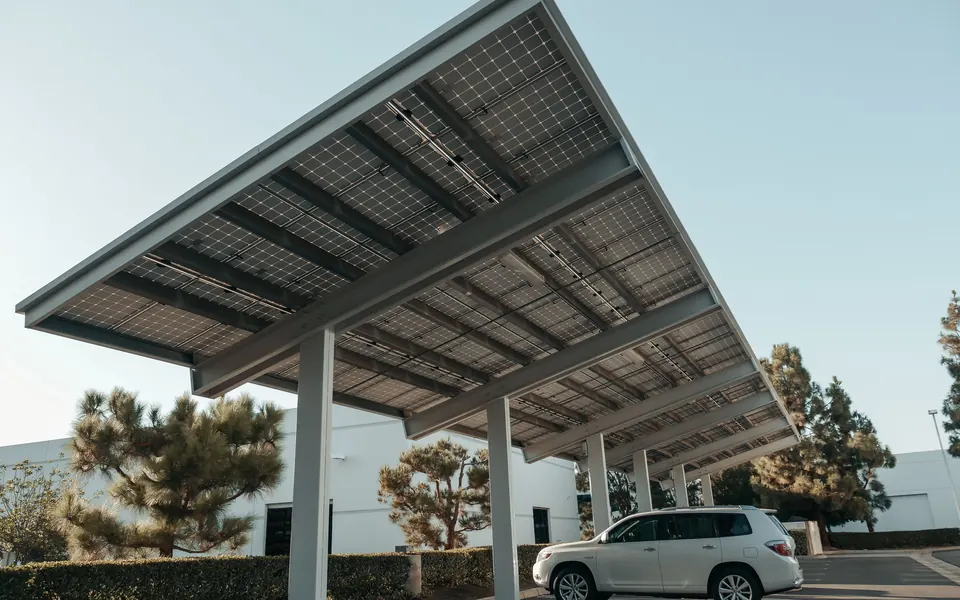
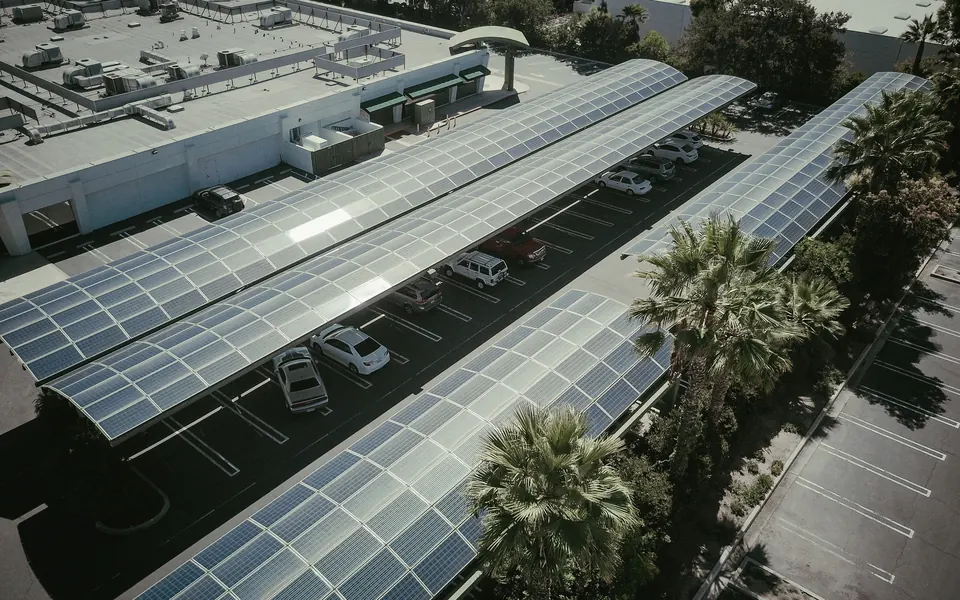
The shop building, the car wash and technical building roofs can also be used as additional generating areas. At some stations, building a carport for customer and staff parking is another option; see our article on carports and car park solar energy for more on this.
Explosive atmosphere zones and safety distances
At petrol stations, areas where fuel vapour may be present are classified according to the risk of explosive atmospheres. These areas usually include the surroundings of the dispensers, the fill points of the underground tanks and the outlets of the tank vent pipes. The boundaries and classes of these zones are determined by a hazardous area classification study based on the layout of the station.
For this reason, solar design at a station must not be carried out like a standard rooftop project. The main principles applied in practice are:
- Placing equipment that can produce sparks, such as inverters, combiner boxes, isolators and switchboards, outside the explosive atmosphere zones,
- Planning DC and AC cable routes so that they do not pass through these zones, or pass through them only with suitable protective measures,
- Clarifying at the design stage which zone class the panels and connection elements on the canopy fall into,
- Installing earthing, equipotential bonding and lightning protection in harmony with the station's existing system,
- Including the solar plant in the station's emergency shutdown arrangement, so that the system can be safely disconnected in an emergency.
In this article we deliberately give no distances in metres. Safety distances and zone boundaries must be determined by expert engineers under current regulations as of November 2026, within the framework of occupational health and safety legislation on explosive atmospheres, the relevant standards, the station's design and the technical requirements of the fuel distribution company it is affiliated with. For the general principles of fire safety, see our article on solar plant fire safety, and on surges and lightning, our article on lightning and storm protection for solar plants.
Design and permitting steps for a petrol station solar power plant in Antalya
When a petrol station is developed as an Antalya solar power plant, the process includes a few extra steps compared with a standard commercial rooftop project. The general flow is as follows:
- Site survey and data collection: Canopy and roof dimensions, structural condition, consumption bills and the existing electrical infrastructure are examined.
- Hazardous area assessment: Equipment locations are determined on the basis of the station's existing classification study.
- Approval of the fuel distributor and the property owner: The approval of the fuel distribution company the station is affiliated with and of the property owner is obtained; obligations under dealership and lease agreements are checked.
- Electrical design and application: The connection application is processed through Akdeniz EDAŞ (the local electricity distribution company).
- Installation planning: Work is planned so that it does not affect station operations or customer safety; separate precautions are taken for any hot work.
- Acceptance and commissioning: Tests, documentation and monitoring set-up are completed.
When installing an Antalya petrol station solar system, the most critical of these steps is getting the equipment layout right from the start from a safety perspective. Changes made later can be both costly and risky.
Planning together with an electric vehicle charging unit
As the number of electric vehicles grows, petrol stations are also putting charging services on their agenda. Planning the solar plant and the charging unit in the same project has several meaningful advantages:
- Part of the daytime charging demand can be covered by output from the canopy and roofs.
- Connection capacity, switchboard capacity and cable infrastructure are planned in one go, reducing later alterations.
- A battery set-up can be assessed separately for the high instantaneous power demand of fast chargers; this requires project-specific calculation.
- The location of charging units must also be chosen with the explosive atmosphere zones in mind.
Because its product range also includes commercial electric vehicle charging stations, Solar Nexo can plan the solar plant and the charging infrastructure together. We cover the general framework of charging infrastructure for businesses in our article on EV charging stations for businesses in Antalya. The conditions for offering charging as a commercial service are subject to the rules of EPDK (Türkiye's energy market regulator) and must be checked separately under current regulations as of November 2026.
Operation and maintenance under the conditions of solar energy in Antalya
Solar energy in Antalya has high potential, but the station environment can cause its own kind of soiling on panel surfaces. Soot and dust from vehicle traffic, dry summer air, spring pollen and, at stations near the coast, salty air can build up on the panel surface and reduce output. Cleaning panels on the canopy requires safe access and coordination with station operations.
Remote monitoring is the practical way to spot drops in output early. When inverter data is tracked daily, losses caused by soiling or faults are detected quickly. Solar Nexo provides 24/7 technical support for the systems it installs and also offers maintenance and repair services for systems installed by other companies. On the product side, as an authorised dealer of TommaTech and CW Enerji, it uses original, invoiced products; panels carry a 30-year performance warranty and inverters a 2-, 3- or 5-year factory warranty.
To see the other topics around investing in a solar power plant in Antalya, the regional data and the process steps in one place, use our Antalya solar power plant guide.
Conclusion
With their heavy daytime consumption and large canopies, petrol stations are good candidates for solar energy. On Antalya petrol station solar projects, however, safety comes before efficiency: taking explosive atmosphere zones into account, placing equipment outside these zones and clarifying the emergency arrangement all require expert design. Including electric vehicle charging infrastructure in the same plan also prepares the station for the future. If you would like to request a free site survey for your station, get in touch with Solar Nexo.
Frequently asked questions
Can solar panels be installed at a petrol station?
Yes, with appropriate design and safety measures, solar panels can be installed at petrol stations. The canopy, shop and auxiliary building roofs are usable surfaces. Because a station has explosive atmosphere zones, however, equipment layout, cable routes and the emergency shutdown arrangement must be designed by expert engineers. Approval from the fuel distribution company and the property owner, as well as the connection application, are handled separately during the process.
Is it safe to put panels on a canopy?
Canopy-mounted installation is a workable solution once structural and safety assessments have been carried out. Because canopies are light steel structures, a structural calculation is needed for panel and wind loads. It must also be clarified at the design stage which hazardous zone class the equipment on the canopy falls into. Equipment that can produce sparks, such as inverters and combiner boxes, must be placed outside explosive atmosphere zones.
How many metres should the safety distances be?
It would be wrong to answer this question with a general figure in metres. Distances and zone boundaries are determined by the station's hazardous area classification study, occupational health and safety legislation on explosive atmospheres, the relevant standards and the technical requirements of the fuel distribution company. This assessment must be carried out by expert engineers on the basis of the station's own design, under current regulations as of November 2026.
Which loads at a station can be covered by solar energy?
Loads that run during the day match solar output most closely. Shop refrigerated cabinets, shop air conditioning, the car wash, the air compressor and pumps running during the day fall into this group. Canopy and sign lighting that runs at night cannot be covered directly by the sun; it is supplied from the grid or through a battery set-up. To find the right system size, at least twelve months of consumption data should be reviewed.
Can a solar plant and an EV charging unit be installed together?
Yes, the solar plant and the EV charging unit can be planned in the same project. This approach allows connection capacity, switchboard capacity and cable infrastructure to be designed in one go. Part of the daytime charging demand can be covered by solar output. The location of charging units must also be chosen with explosive atmosphere zones in mind. The conditions for commercial charging services must be checked separately under EPDK rules.
How does the station environment affect panel maintenance?
The station environment can soil panel surfaces faster because of soot and dust from vehicle traffic. In Antalya, dry summer air, spring pollen and, at stations near the coast, salty air add to this effect. That is why regular cleaning and remote monitoring are important. Cleaning work on the canopy should be planned with safe access and in coordination with station operations.
How does Solar Nexo work on station projects?
During a free site survey, Solar Nexo inspects the dimensions and structural condition of the canopy and roofs, the consumption data and the electrical infrastructure on site. Equipment layout is planned on the basis of the station's hazardous area assessment. Original, invoiced TommaTech and CW Enerji products are used and warranty documents are handed over. If requested, a commercial EV charging station is included in the same project, and 24/7 technical support is provided after installation.
Sources
Want a clear calculation for your roof?
The Solar Nexo team carries out a free site survey at your address in Antalya and designs the system that suits your roof, consumption and budget.